Slip #3, Chatham Historic Dockyard

Slip #3, Chatham Historic Dockyard

Main Gate Road, Chatham Historic DockyardChathamKent,   ME4 4TZ,   United Kingdom

Slip #3 is one of the historic dry docks at Chatham Historic Dockyard in Kent, England. Built in the 18th century, this slipway was a critical part of the dockyard’s shipbuilding and repair operations, where some of the Royal Navy’s most famous ships were constructed and launched. Today, Slip #3 is preserved as part of the dockyard’s heritage and serves as a fascinating exhibit for visitors, showcasing the engineering and craftsmanship that made Chatham a leader in naval shipbuilding for over 400 years.
Historic Dockyard Warehouses and Tall Ship&  ‐ 
photo by ,
©www.mgaylard.co.uk.
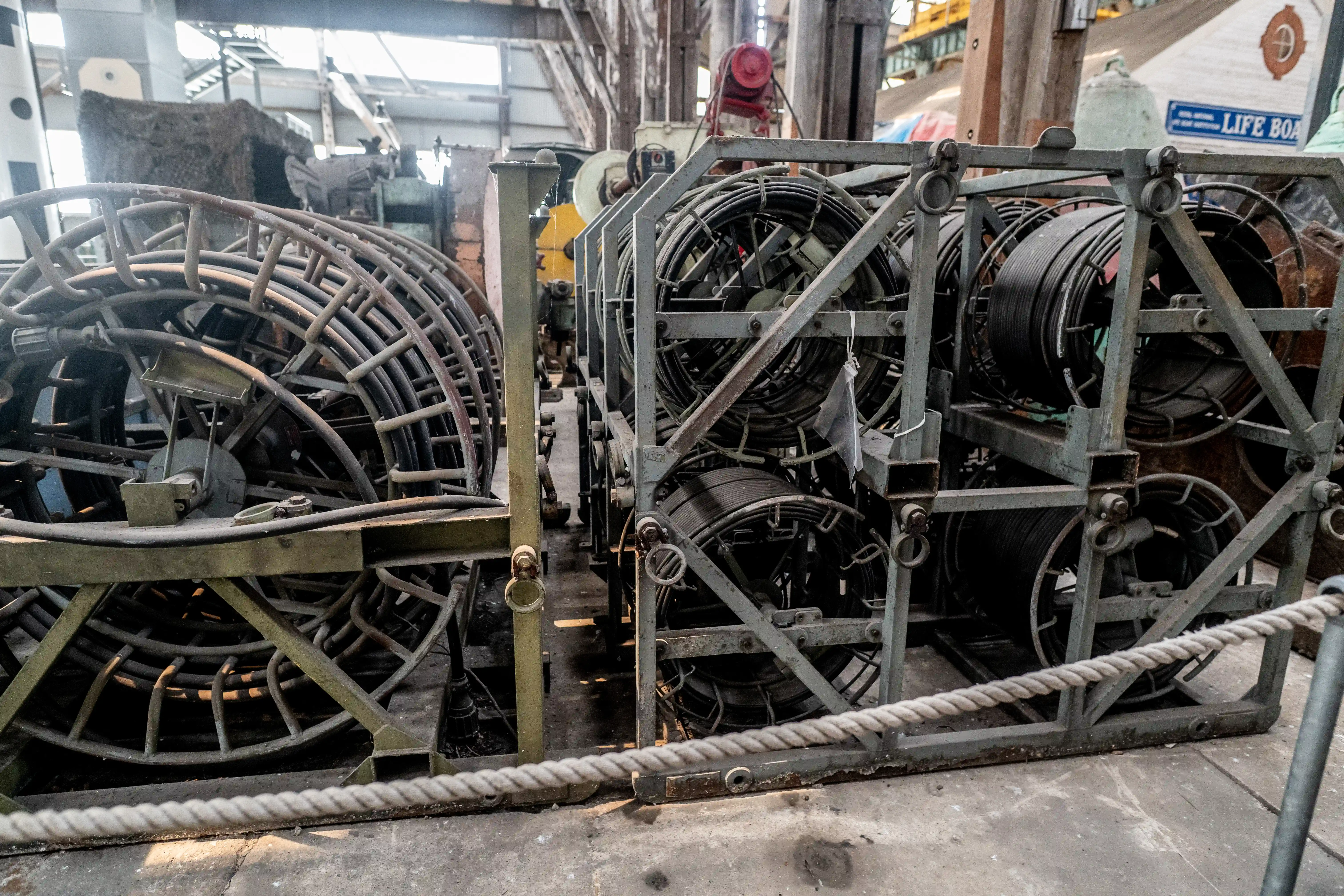
Industrial metal racks holding large spools of dark cable or rope, with a
Industrial Cable Spools and Maritime Equipment Storage&  ‐ 
photo by ,
©www.mgaylard.co.uk.
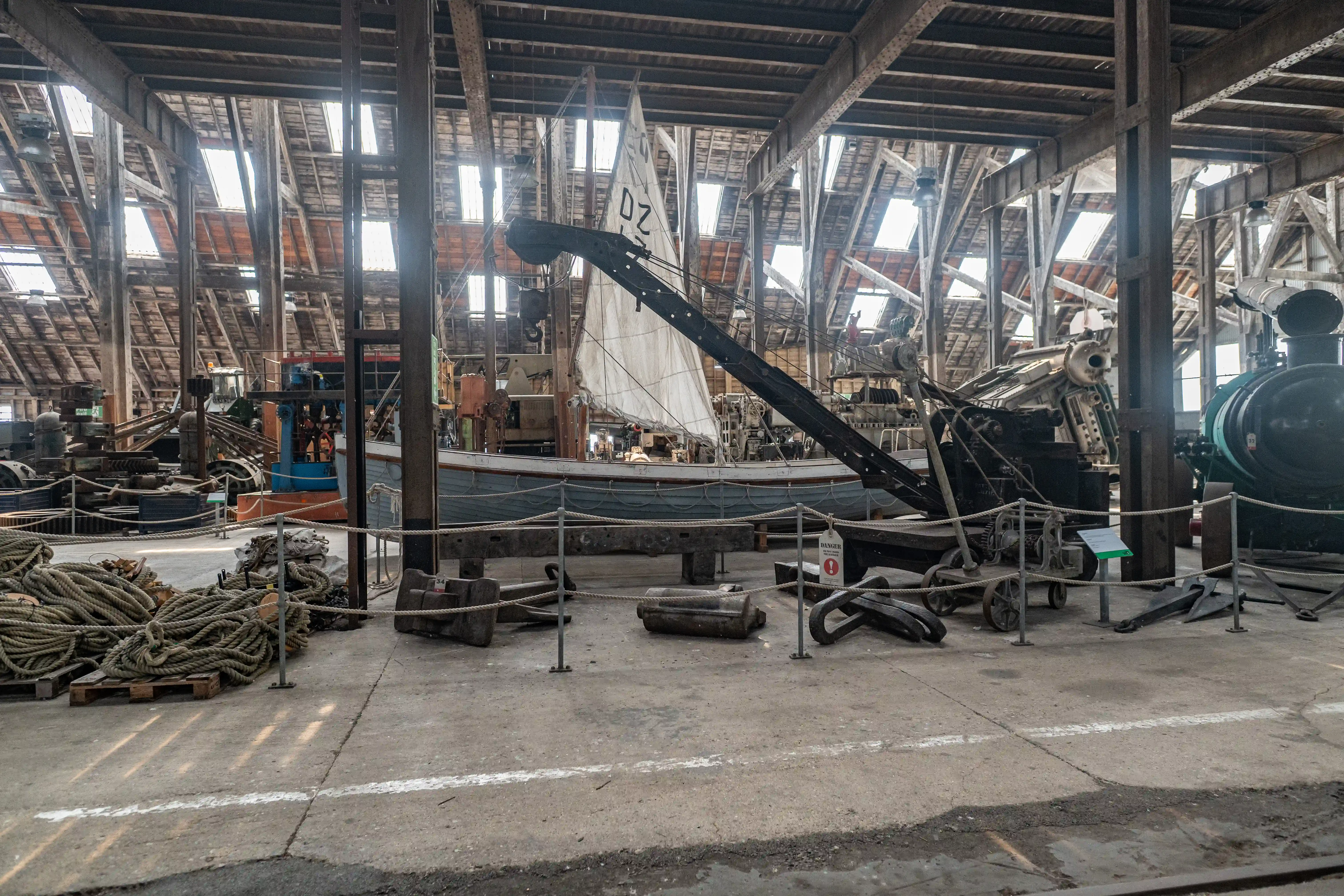
A museum exhibit displaying a boat with sails, a large crane, and various industrial maritime artefacts inside a large hall with a wooden beamed roof.
Maritime Museum Exhibition Hall&  ‐ 
photo by ,
©www.mgaylard.co.uk.
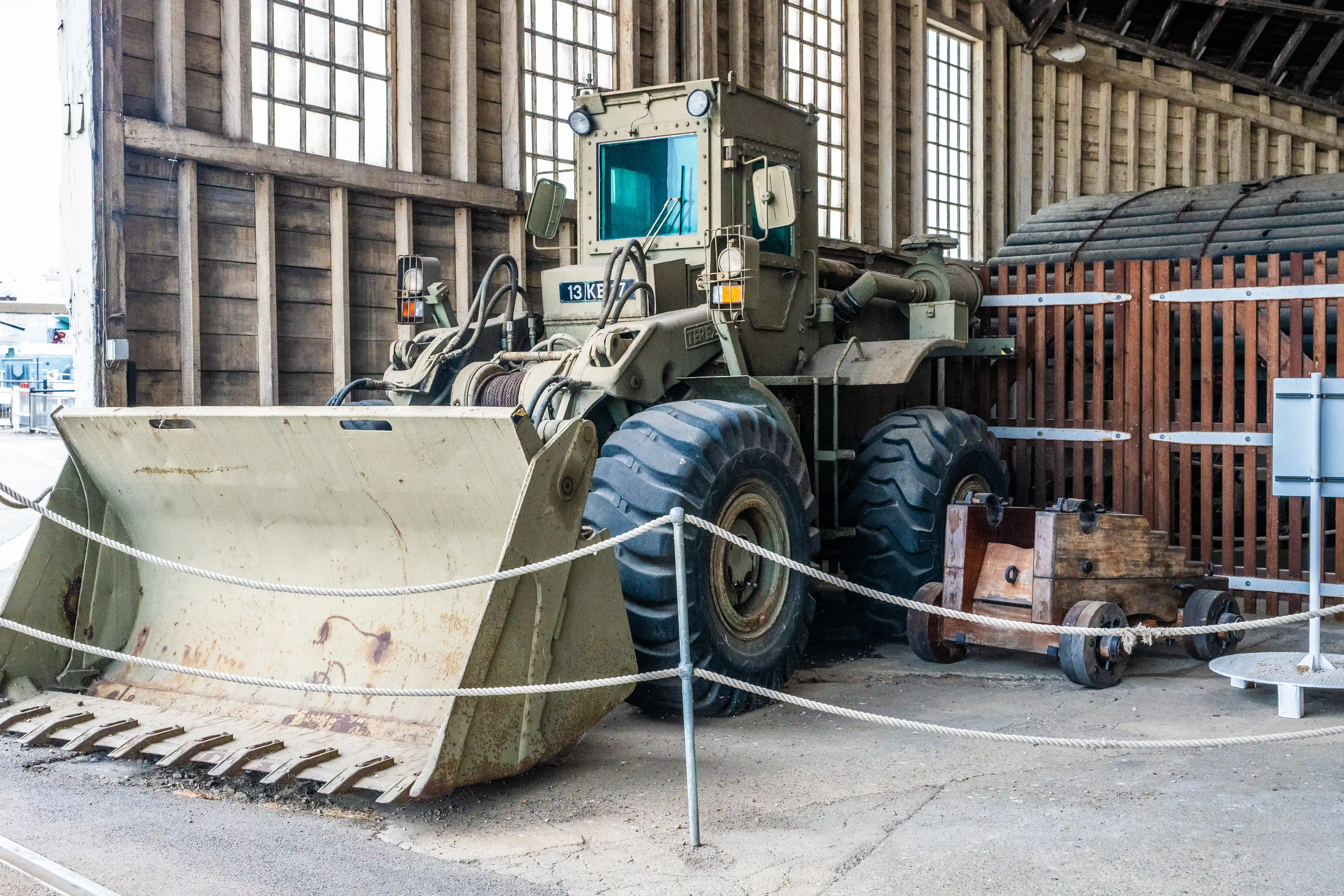
A large, olive-green earthmover with a wide bucket and large tyres is parked indoors, with a small wooden cart to its right.
Interior view of a vintage earthmover and a wooden cart within a large wooden building&  ‐ 
photo by ,
©www.mgaylard.co.uk.
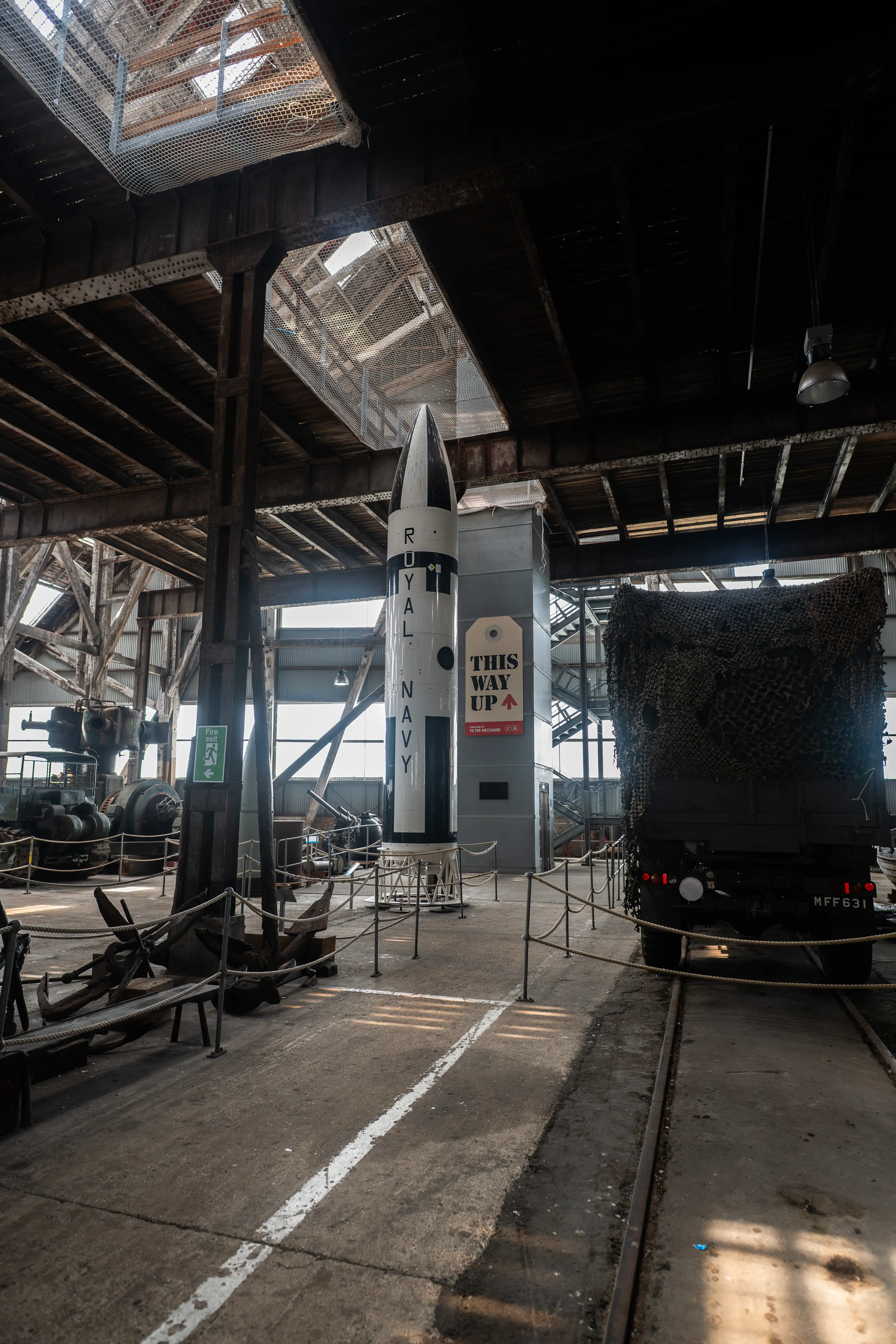
Royal Navy Missile Display>
                               <figcaption>
                                    <meta itemprop= Exhibition of Historical Military Vehicles- Royal Engineers Museum&  ‐ 
photo by ,
©www.mgaylard.co.uk.
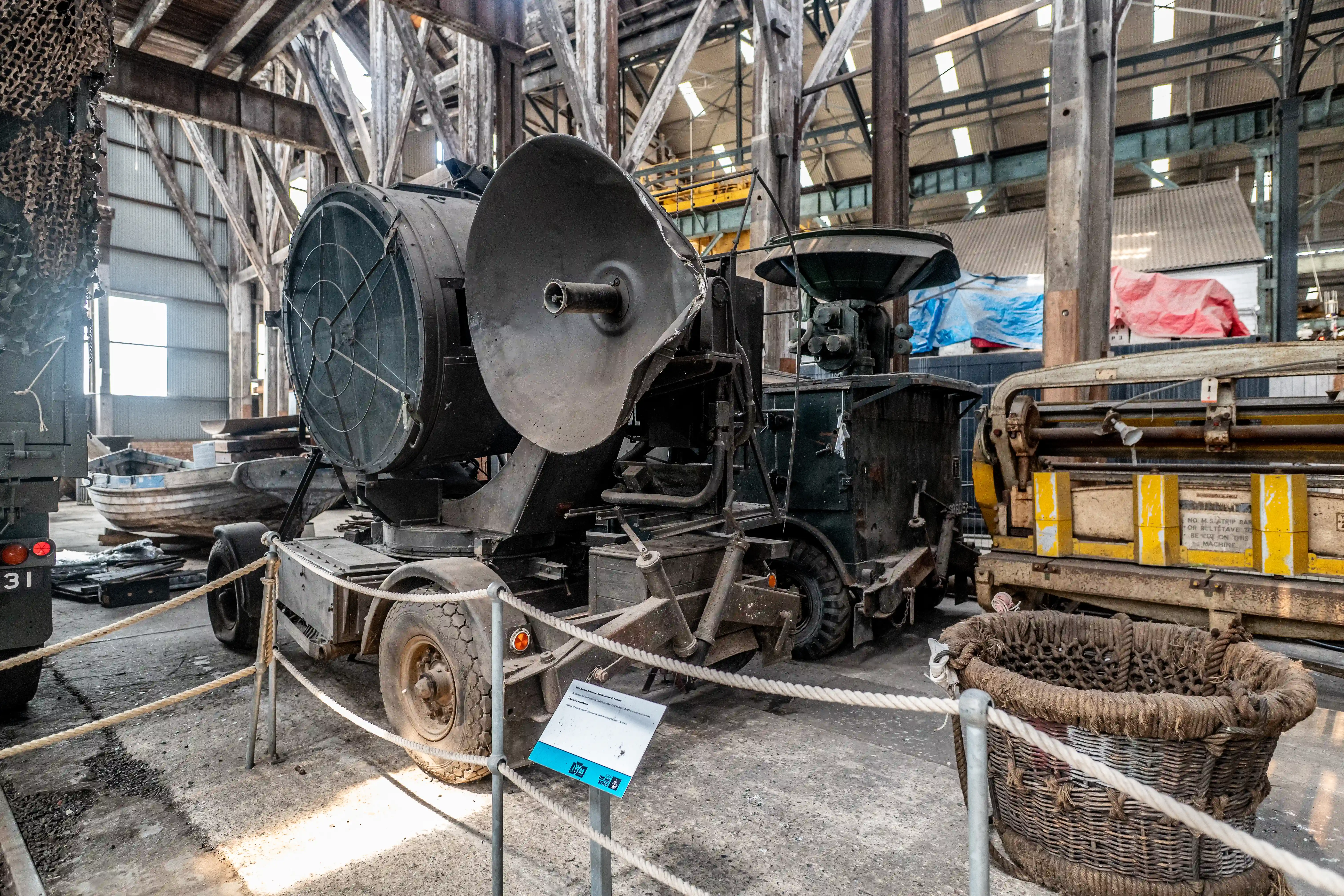
A vintage military searchlight with a large dish sits on a trailer inside a large, wooden-beamed warehouse.
Vintage Military Searchlight and Equipment in Warehouse Display&  ‐ 
photo by ,
©www.mgaylard.co.uk.
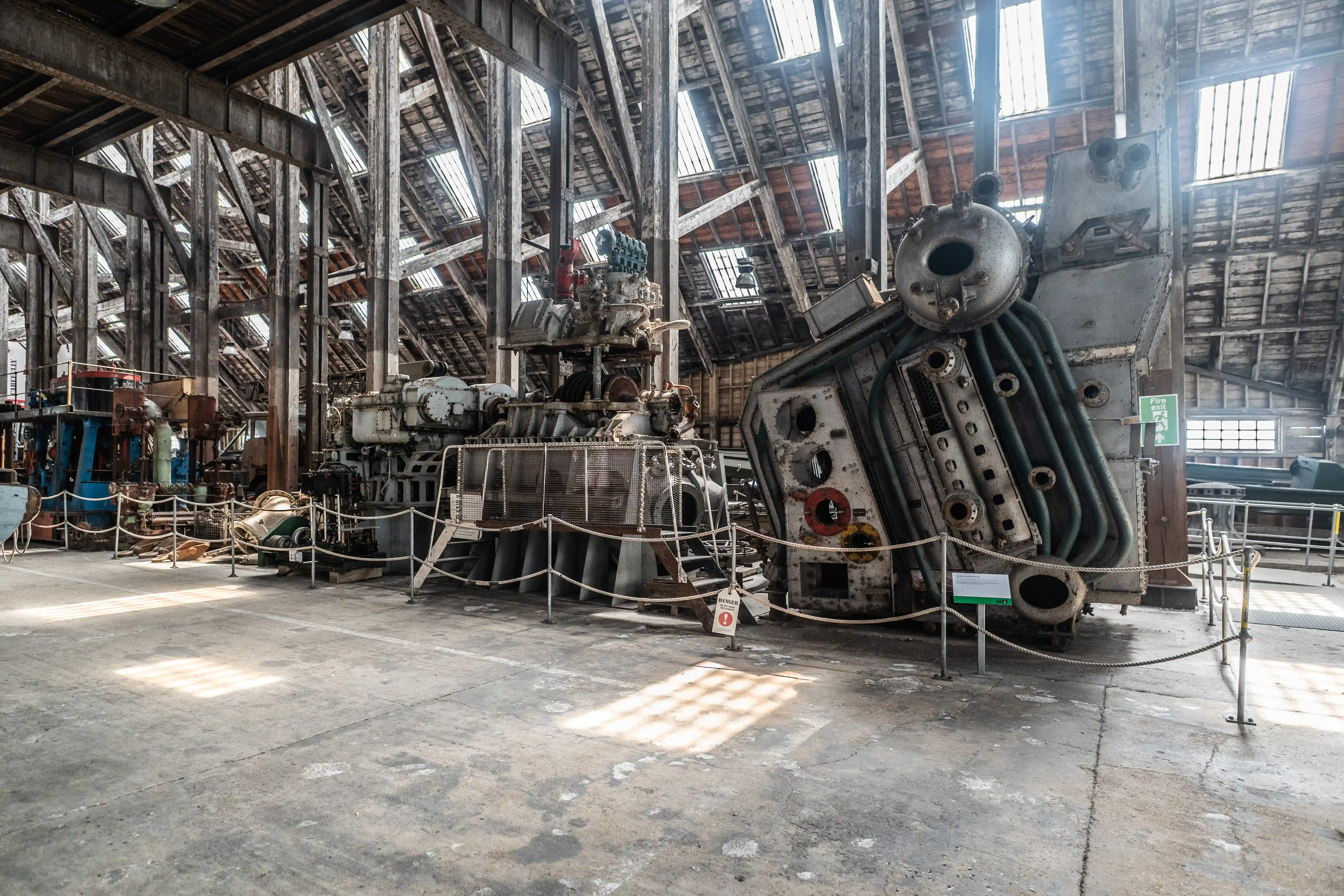
 Interior view of a large industrial building with antique machinery and skylights.
An Exhibition of Old Industrial Machinery in a Vast Building&  ‐ 
photo by ,
©www.mgaylard.co.uk.
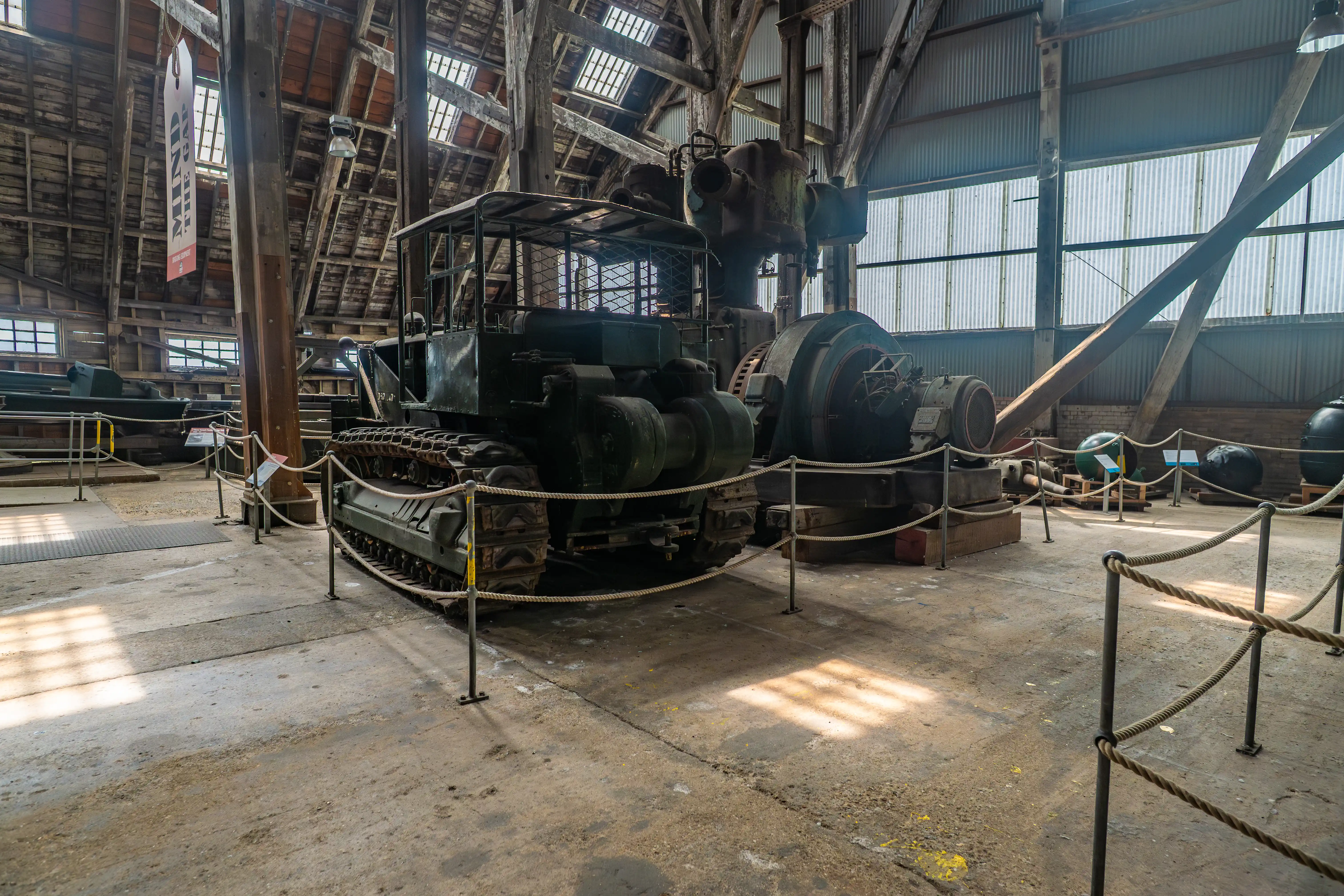
A large, green tracked vehicle and industrial machinery are on display in a dimly lit hangar with wooden beams and corrugated metal walls. Rope barriers are in the foreground, and sunlight streams through the windows.
Vintage Industrial Machinery in a Historic Hangar&  ‐ 
photo by ,
©www.mgaylard.co.uk.
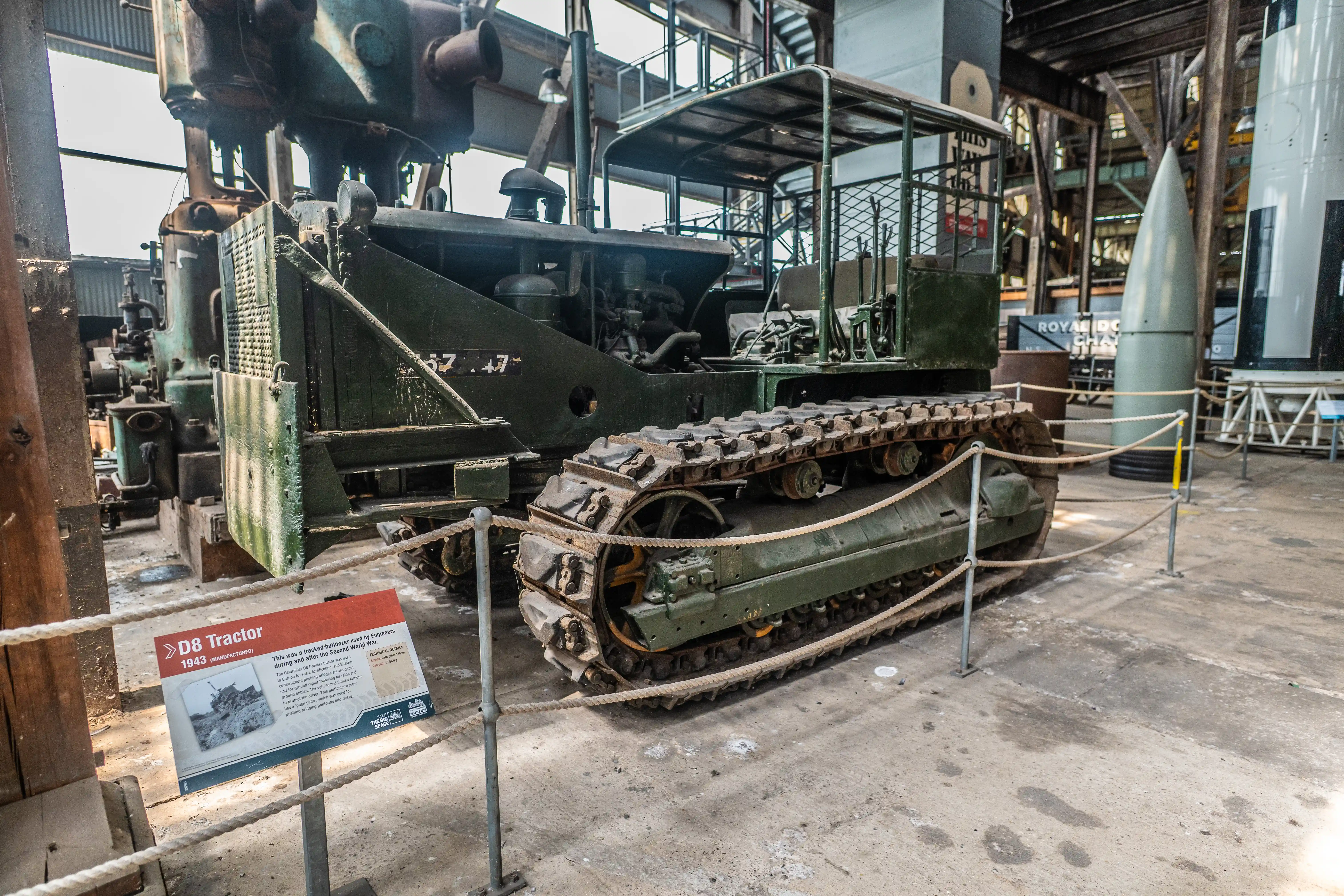
An olive-green, tracked D8 tractor from 1943 is displayed indoors. A descriptive sign is in the foreground. Other large industrial items and a rocket are visible in the background.
Vintage D8 Tractor on Display at the Royal Engineers Museum&  ‐ 
photo by ,
©www.mgaylard.co.uk.
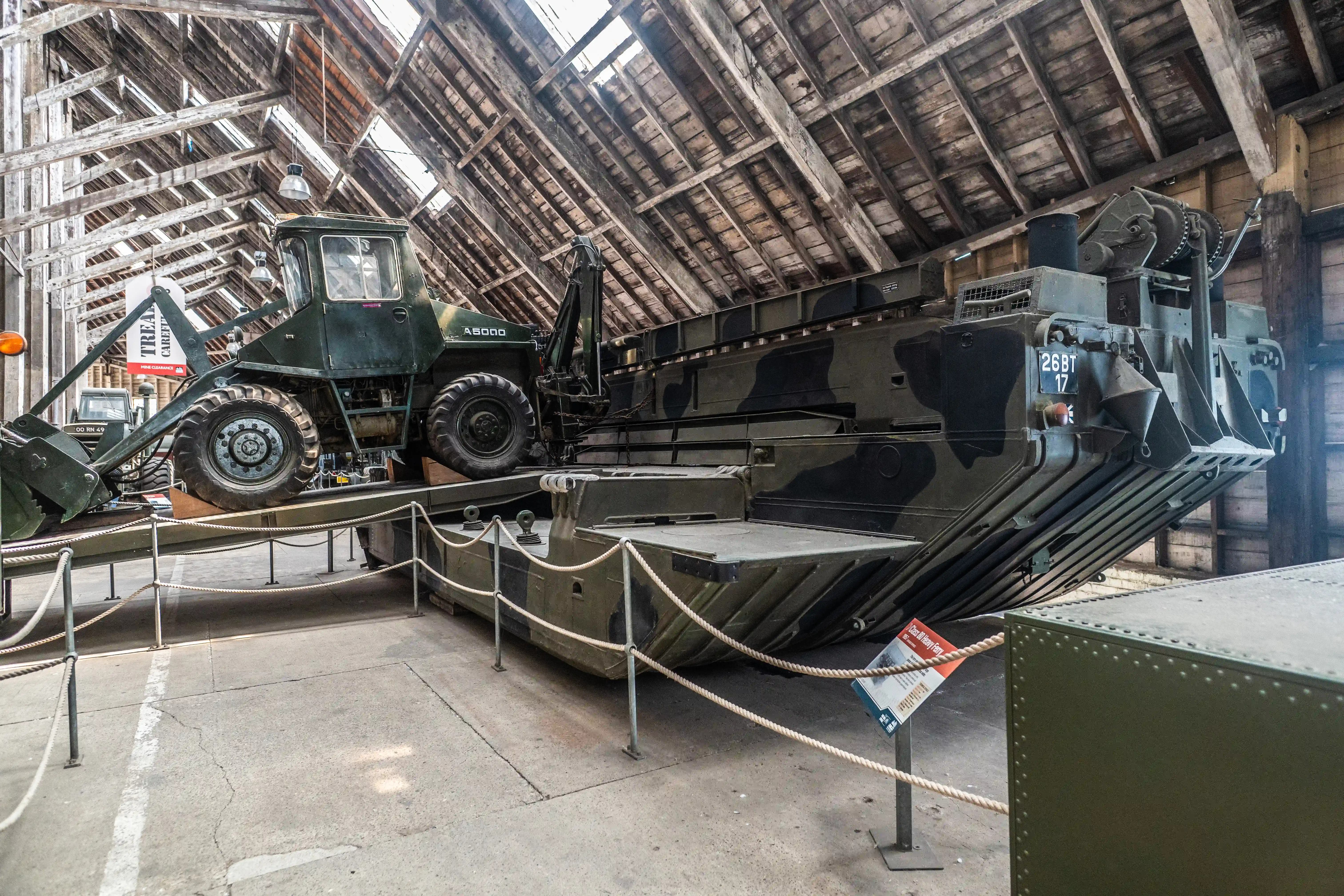
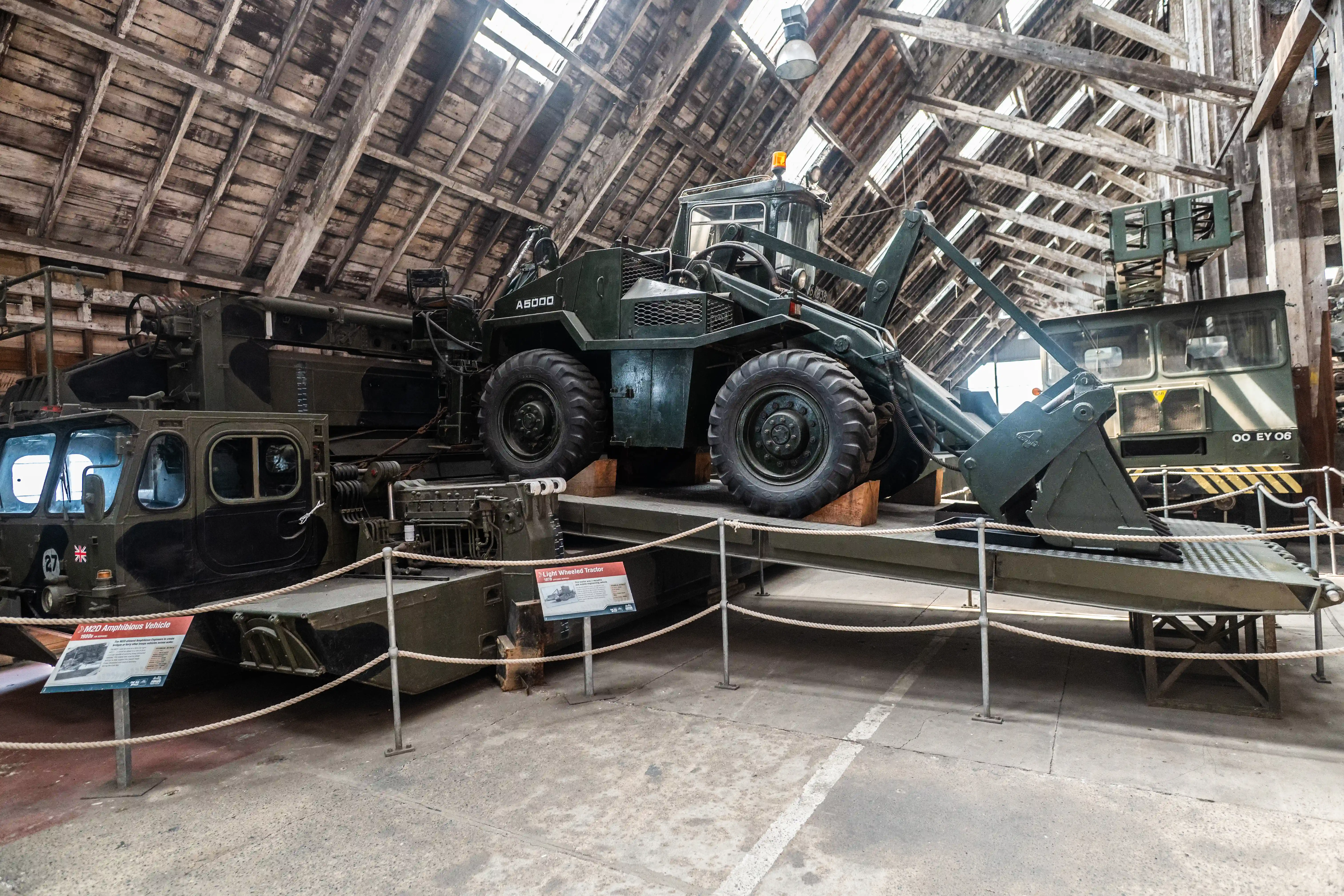
A dark green, camouflage-painted military amphibious vehicle, a Class 80 Heavy Ferry, rests on display in a wooden hangar. A wheeled loader vehicle is positioned on its deck. Rope barriers surround the exhibit.
Royal Engineers Museum Military Amphibious Vehicle Display&  ‐ 
photo by ,
©www.mgaylard.co.uk.
Exhibition of Historical Military Vehicles
Exhibition of Historical Military Vehicles- Royal Engineers Museum&  ‐ 
photo by ,
©www.mgaylard.co.uk.
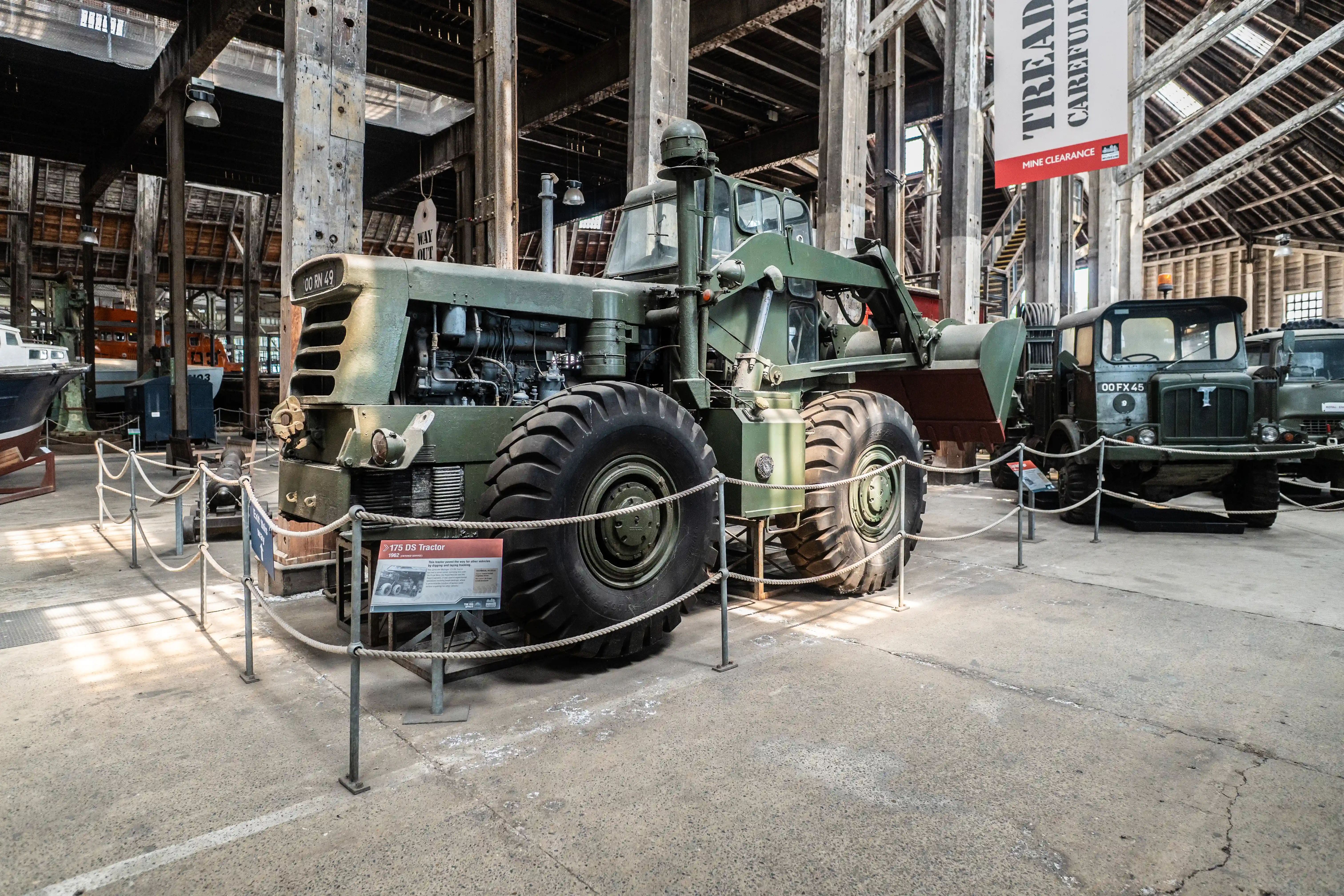
An olive-green military tractor with oversized tires and a front loader is displayed in a museum warehouse. Two military trucks are parked behind it. Ropes and stanchions guide visitors, and a banner reading TREAD CAREFULLY MINE CLEARANCE hangs overhead.
Royal Engineers Museum Military Tractor and Trucks Exhibit&  ‐ 
photo by ,
©www.mgaylard.co.uk.
A collection of olive-drab military vehicles
Royal Engineers Museum&  ‐ 
photo by ,
©www.mgaylard.co.uk.
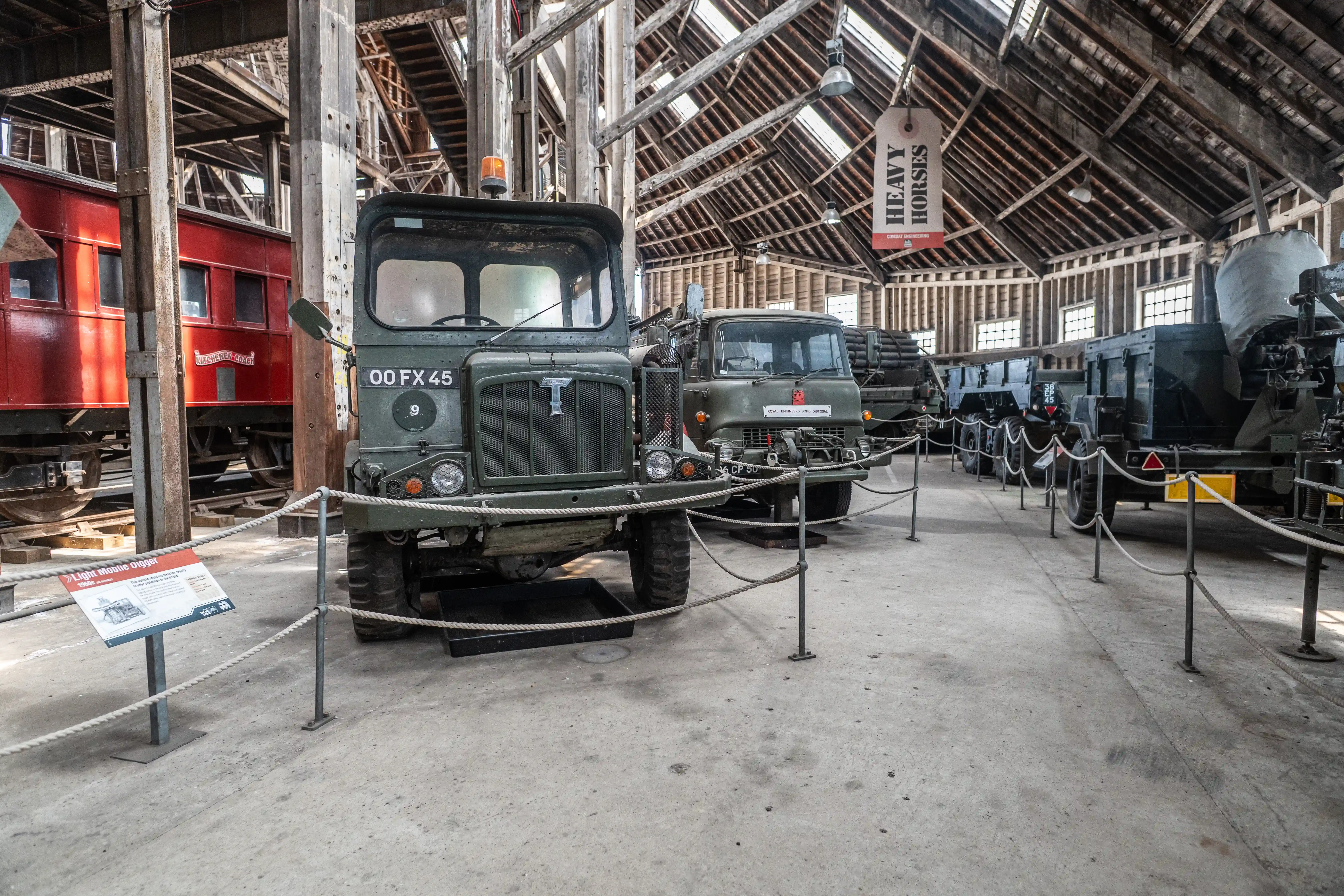
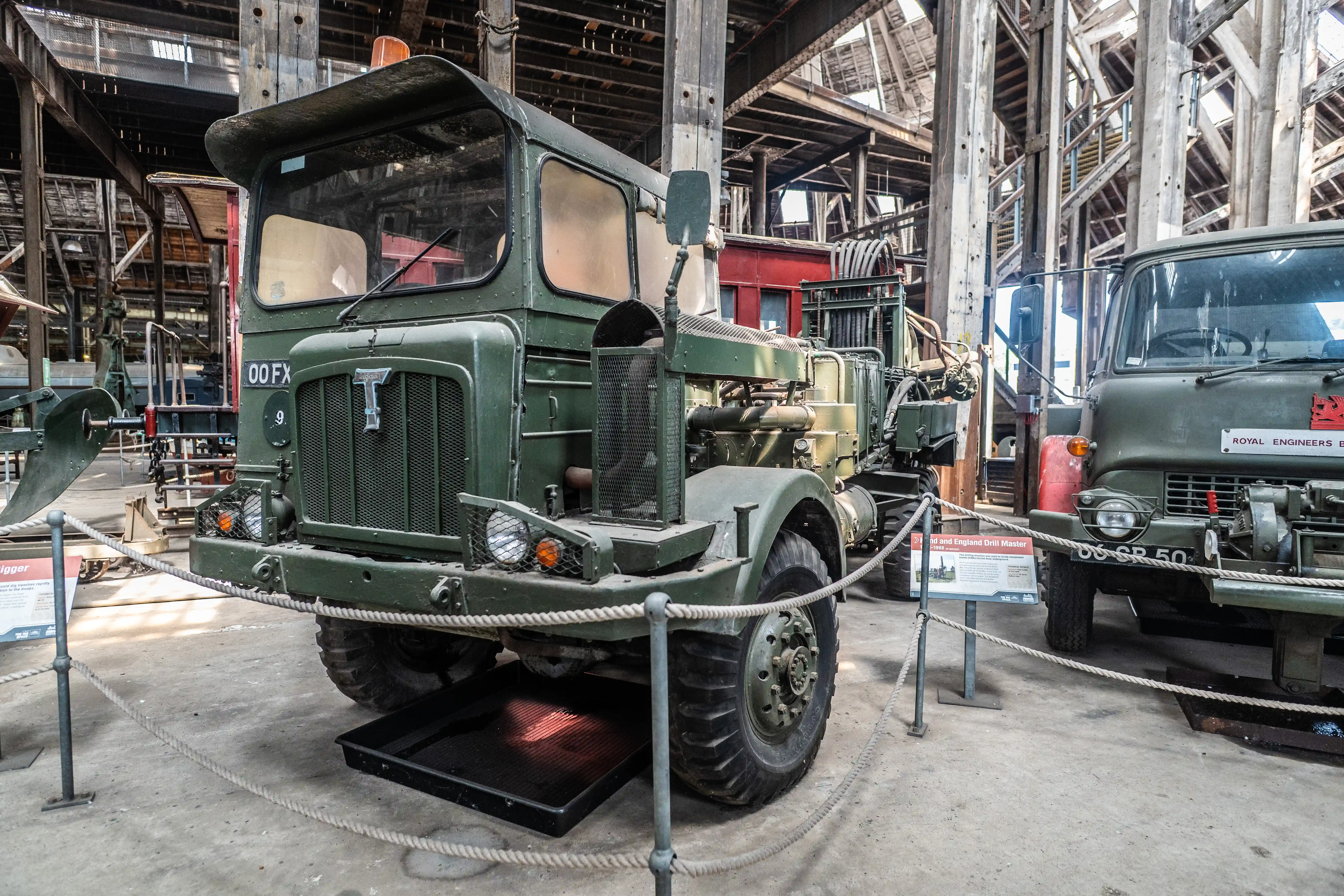
A close-up shot of a green vintage military truck with a large grille and
Royal Engineers Museum Vintage Military Truck Exhibition&  ‐ 
photo by ,
©www.mgaylard.co.uk.
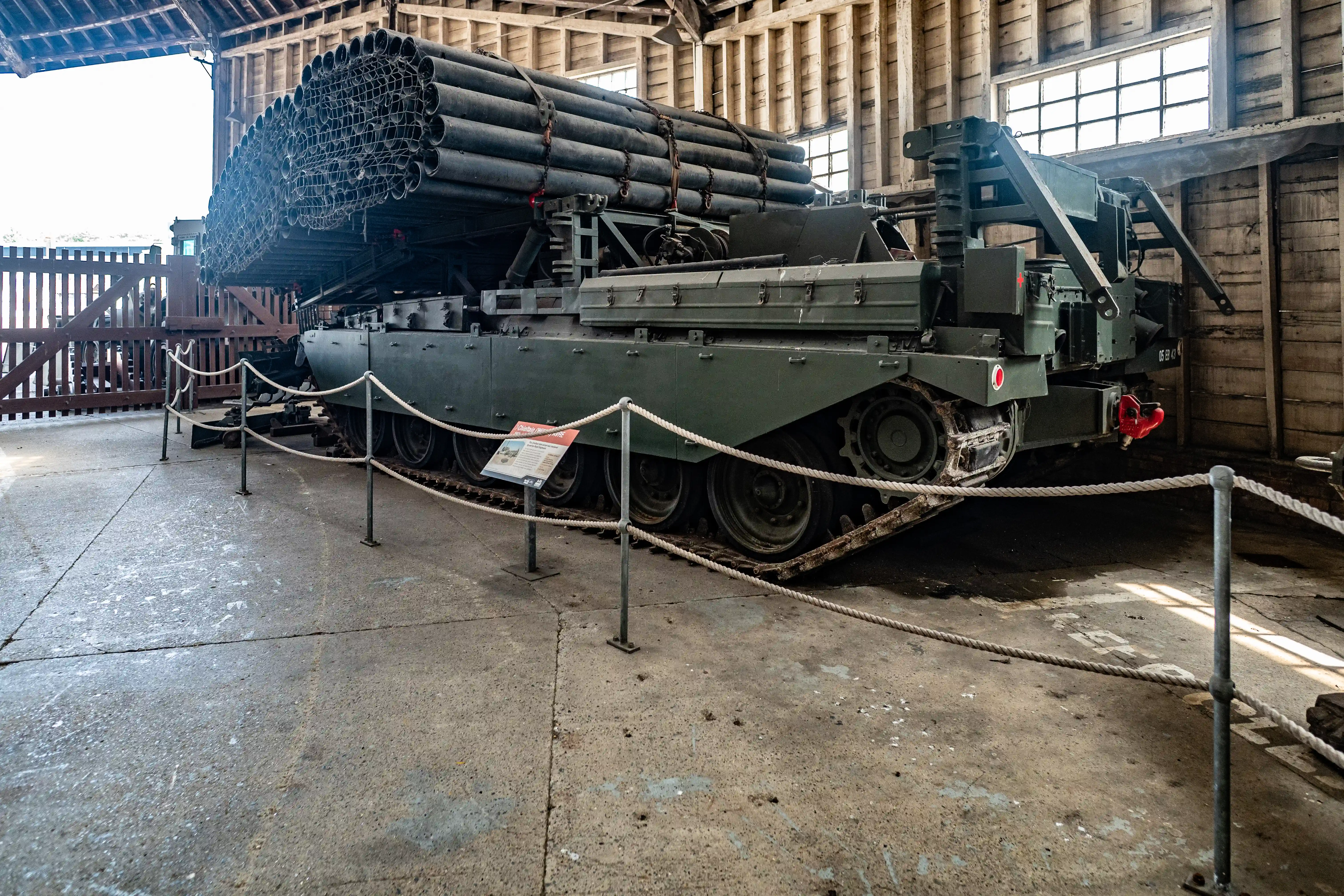
A tracked military vehicle with a large bundle of tubes mounted on top, displayed inside a rustic wooden building.
British Army Engineering Vehicle&  ‐ 
photo by ,
©www.mgaylard.co.uk.
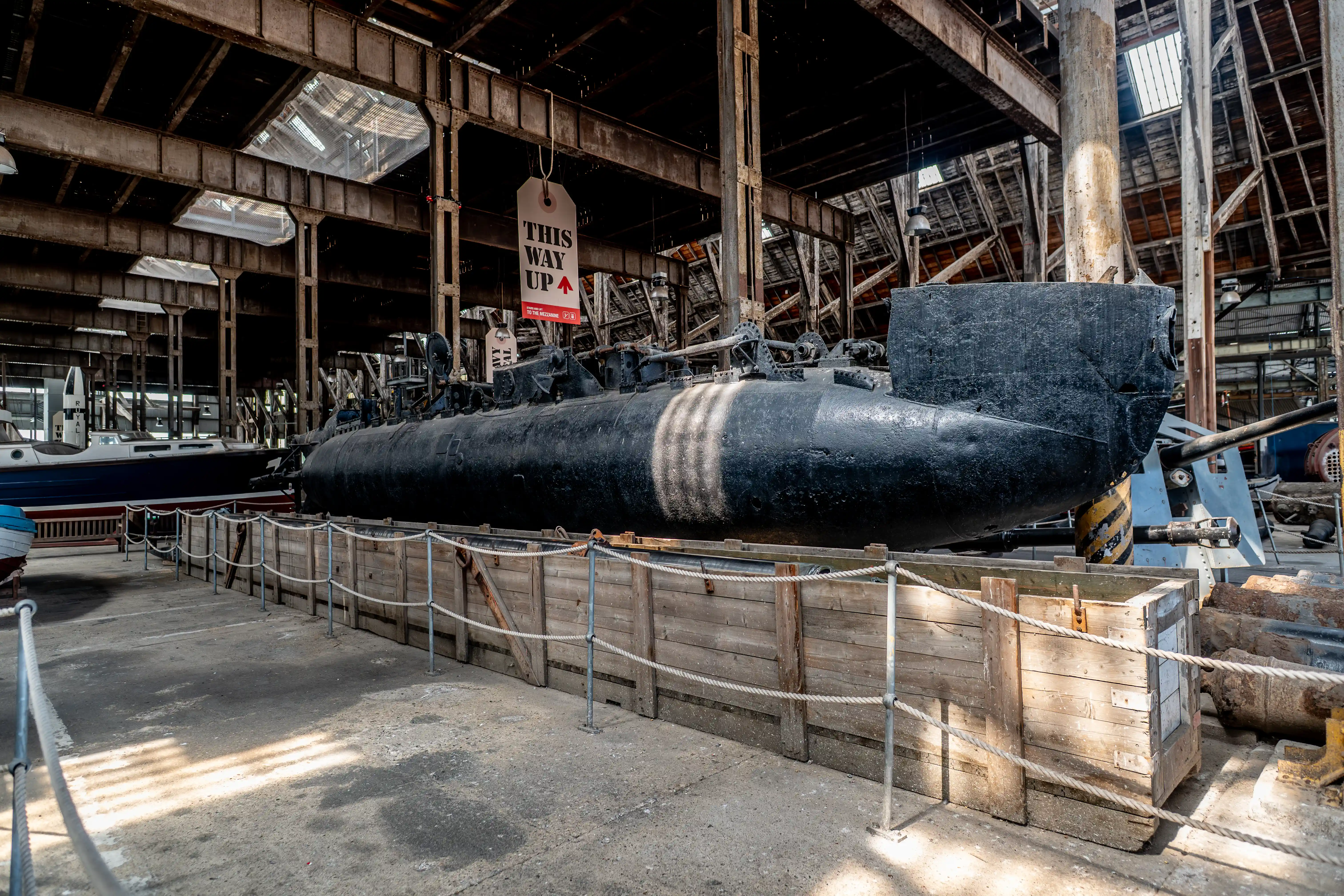
Historic Dockyard Chatham Slip 3 Midget Submarine&  ‐ 
photo by ,
©www.mgaylard.co.uk.
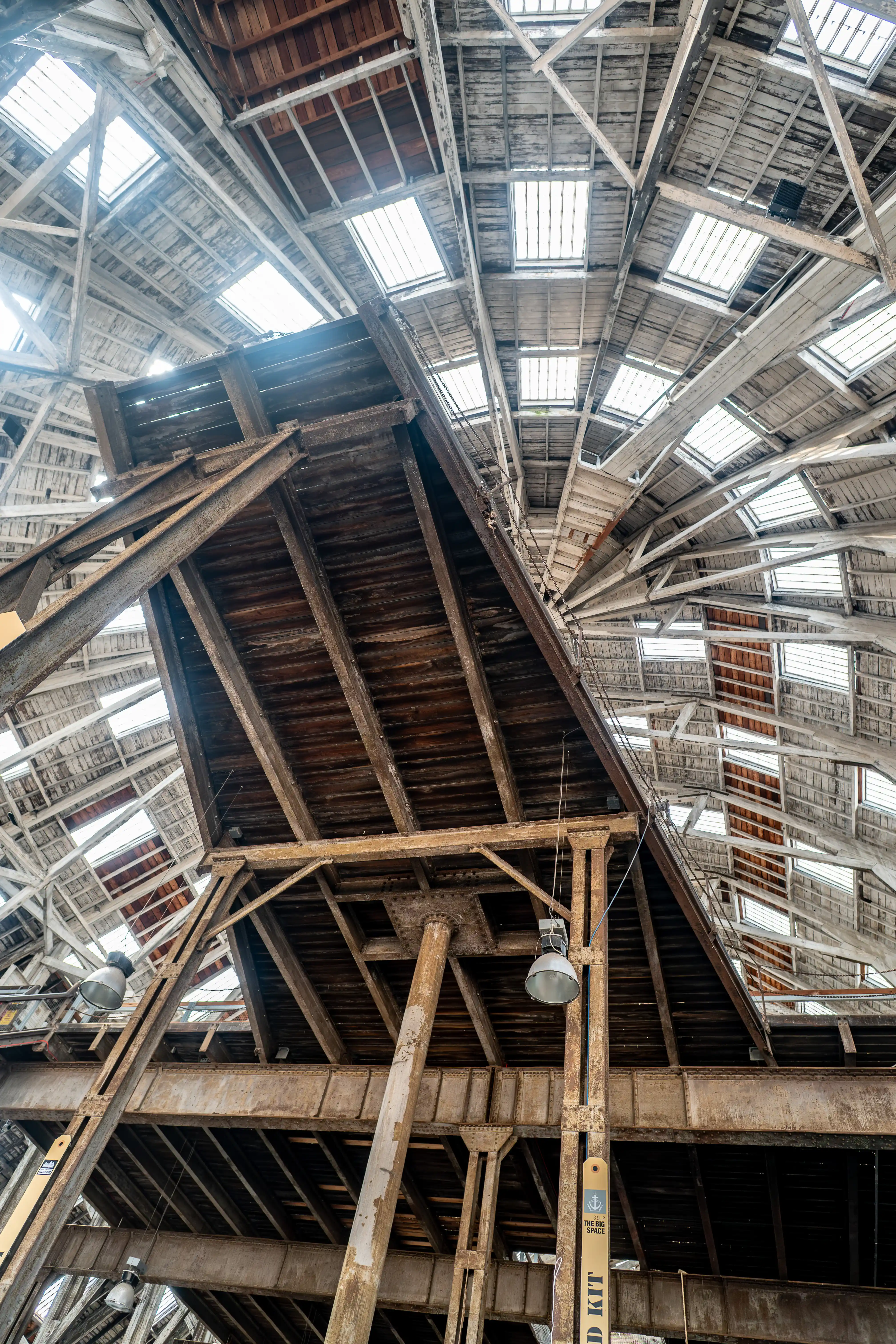
View from below inside a large industrial structure showing a geometric pattern of wooden rafters and steel beams against a backdrop of many rectangular skylights.
Interior View of Industrial Building with Skylights and Exposed Structure&  ‐ 
photo by ,
©www.mgaylard.co.uk.
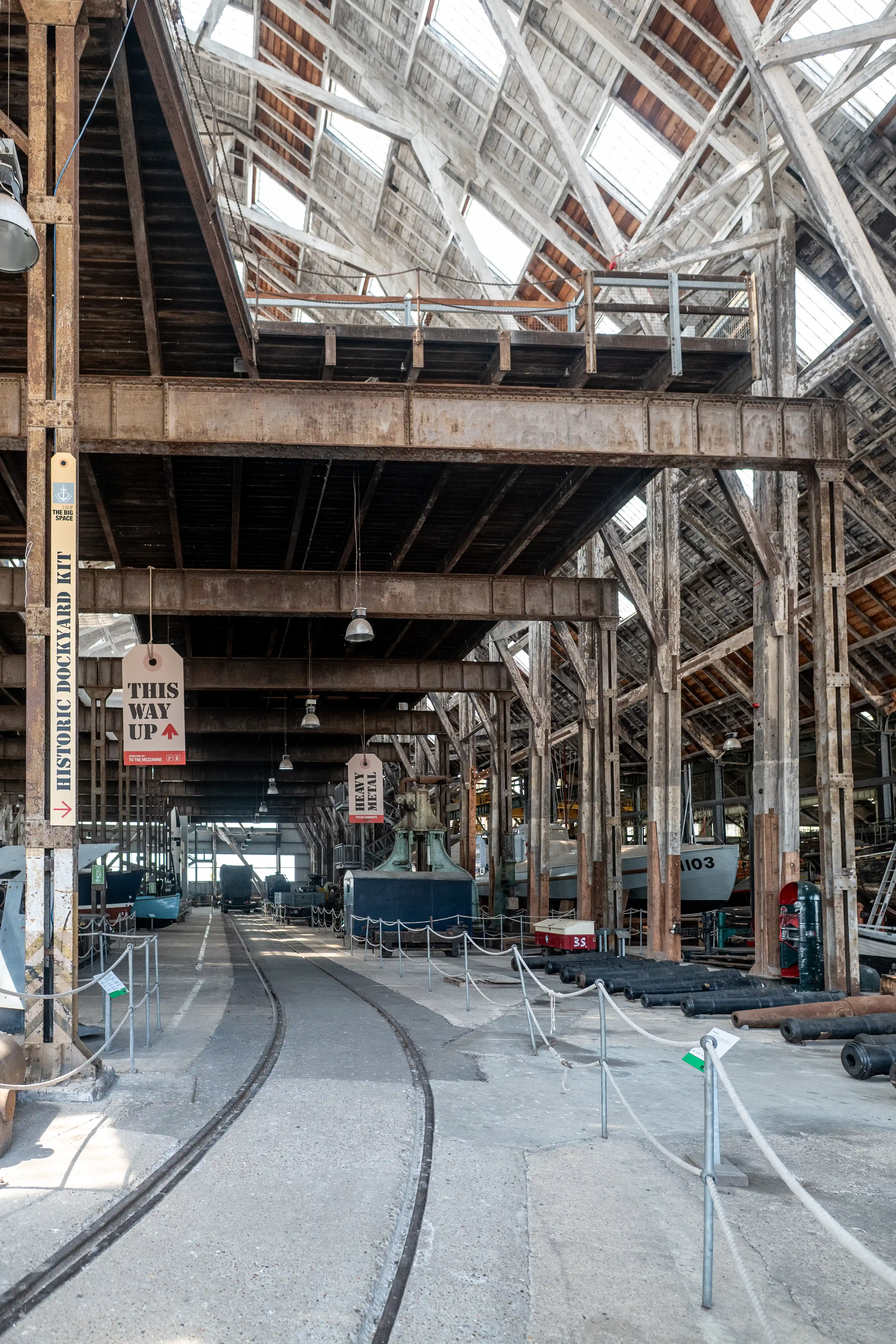
Interior view of a large, old dockyard building with exposed wooden beams, metal gantries, and a glass-panelled roof. In the foreground, a curved railway track runs past displays of cannons and naval artefacts, including a boat labelled 1103. Informational signs are visible.
Historic Dockyard Chatham Slip 3&  ‐ 
photo by ,
©www.mgaylard.co.uk.
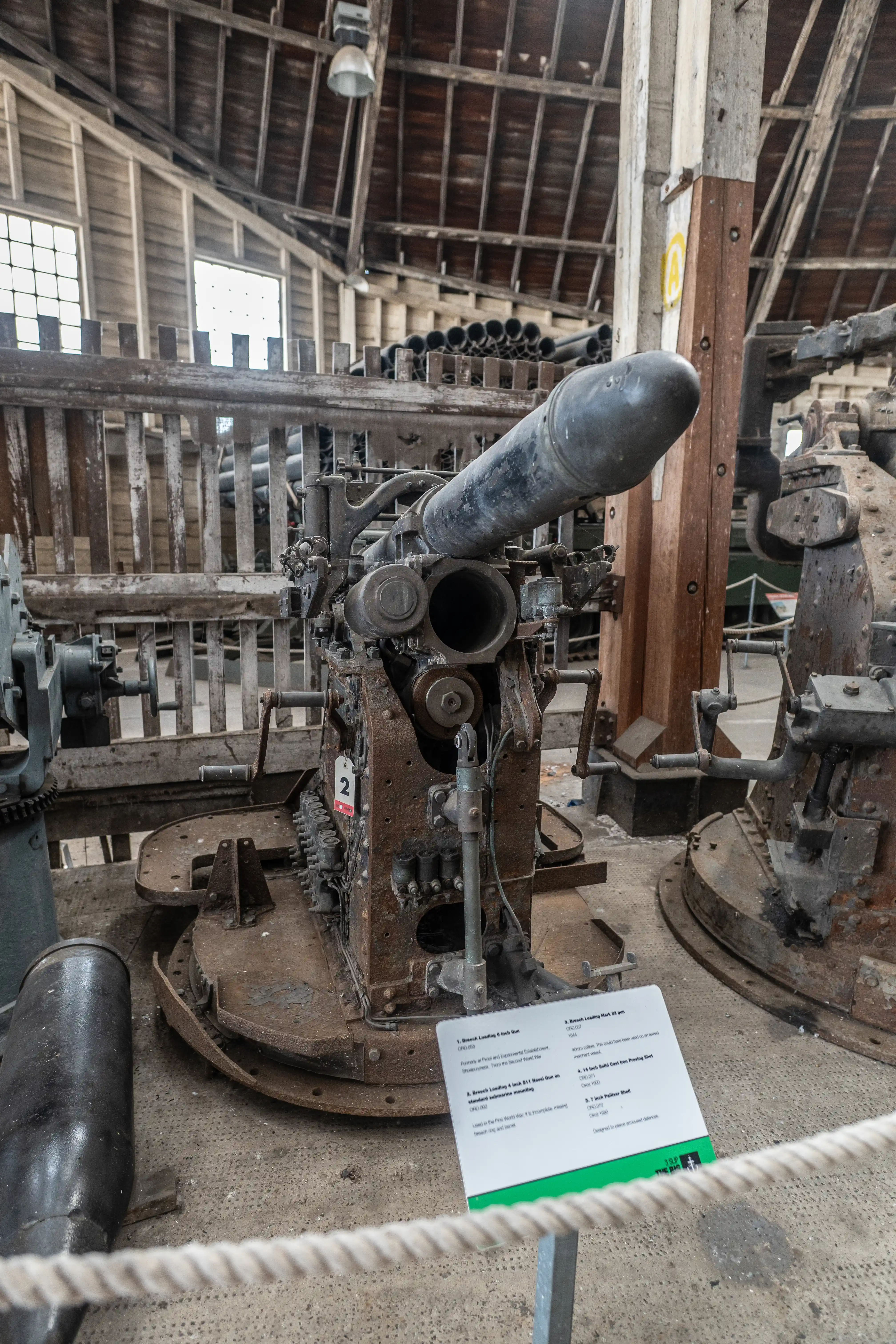
A heavy, dark grey naval gun with a thick barrel and complex machinery is displayed in a barn-like building, with a shell lying on the floor to its left.
Historical Naval Gun Display - Museum Exhibit&  ‐ 
photo by ,
©www.mgaylard.co.uk.
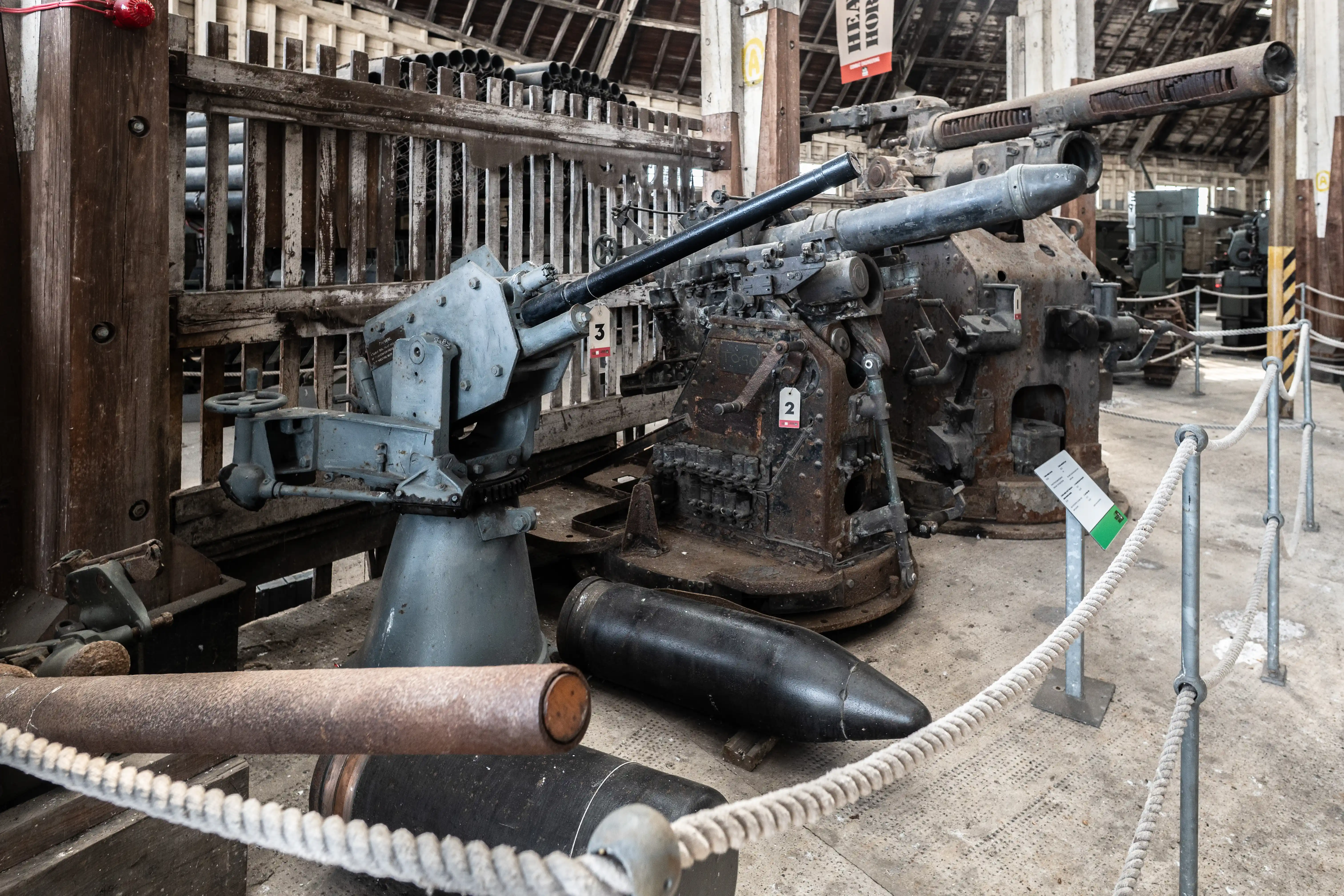
A museum display of antique artillery pieces and large shells, with focus on a grey anti-aircraft gun and a rusted, larger cannon.
Historical Artillery Exhibition&  ‐ 
photo by ,
©www.mgaylard.co.uk.
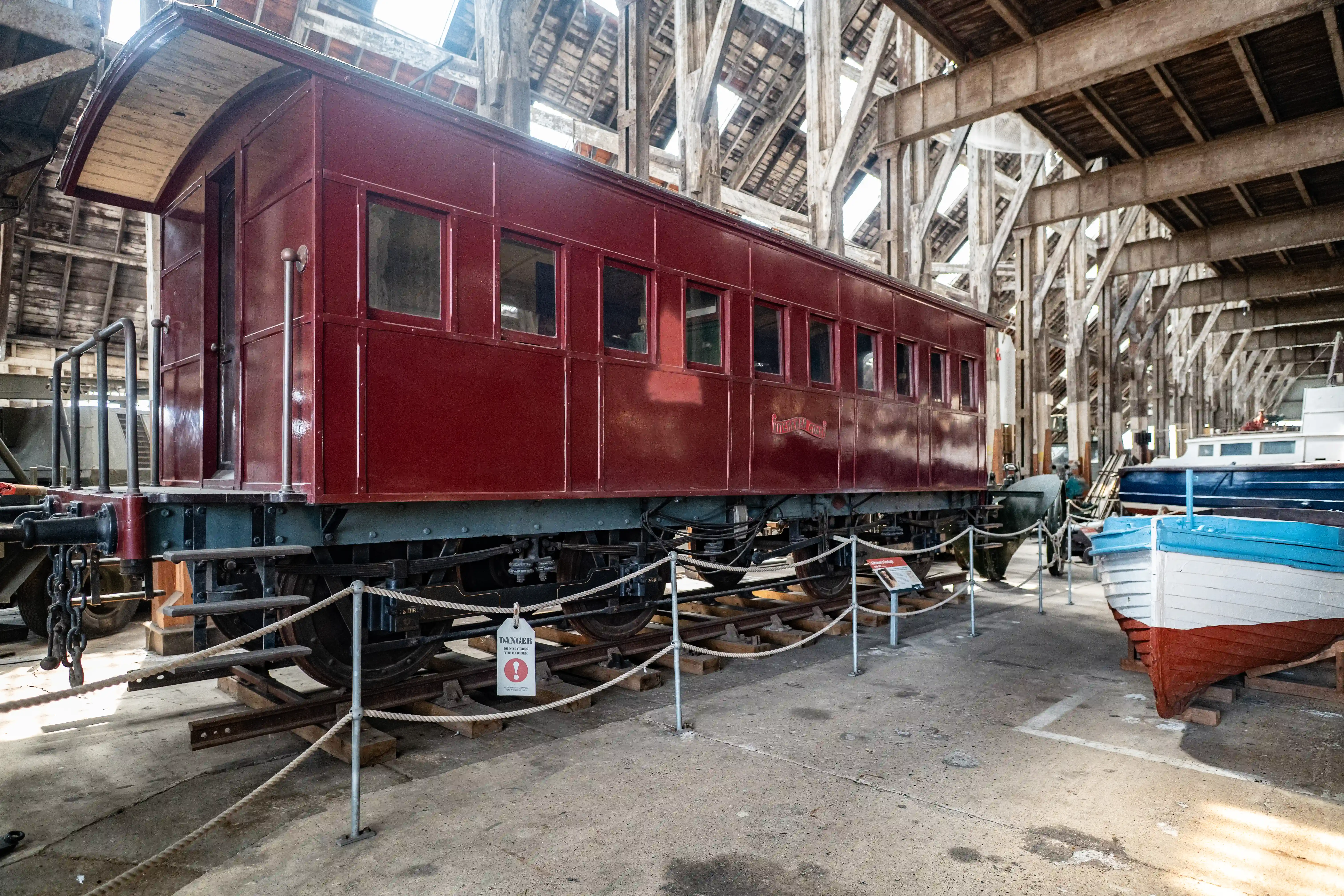
A detailed view of the side of a vintage maroon railway carriage with multiple windows, resting on railway tracks inside a cavernous warehouse with exposed wooden beams. Several boats are visible in the background.
Maroon Heritage Train Carriage and Boats Display&  ‐ 
photo by ,
©www.mgaylard.co.uk.
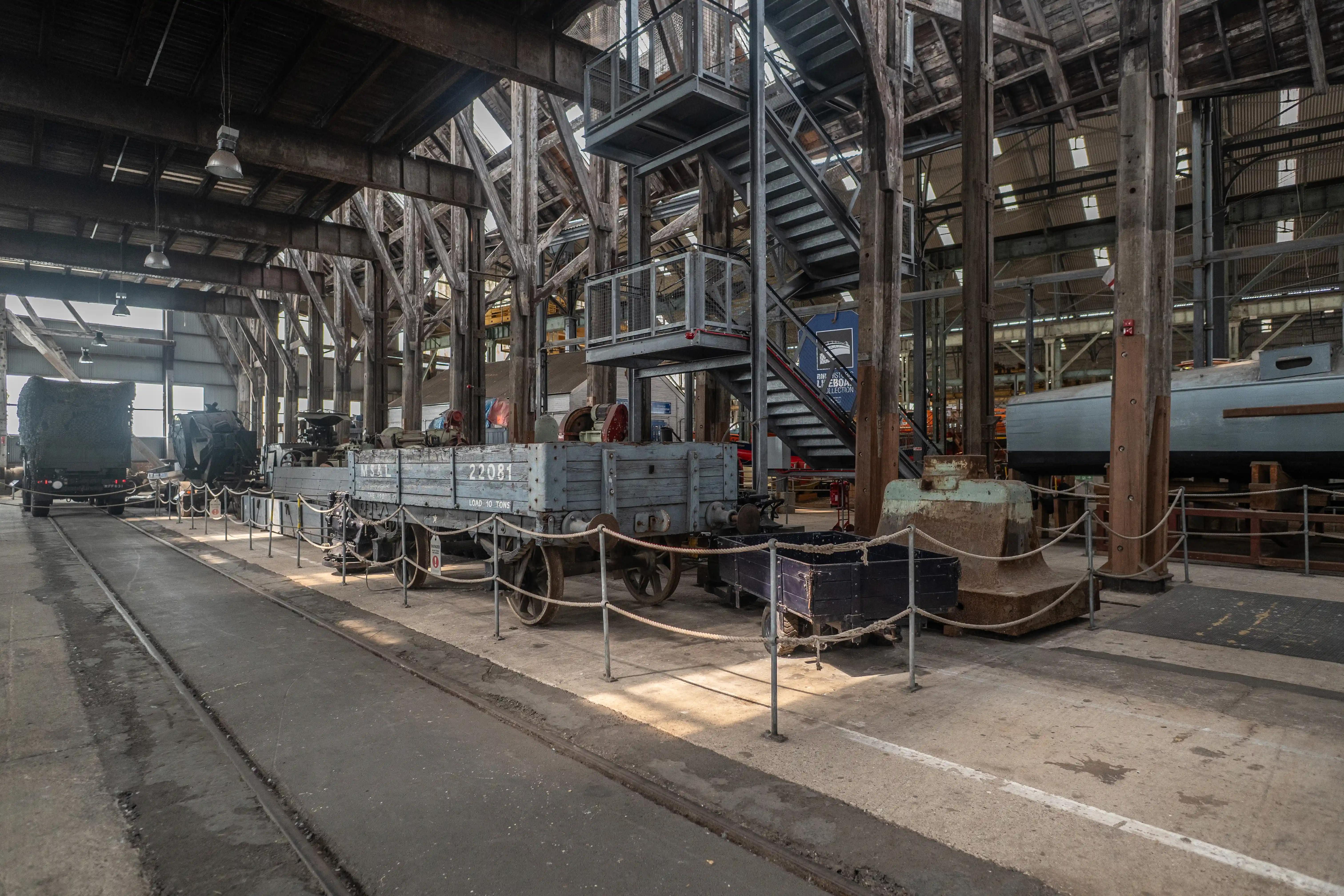
 Interior view of a grand, old railway workshop with wooden and metal beams, vintage grey wagons on tracks, a large industrial machine, and a grey boat on stands.
Historic Railway Workshop Interior with Vintage Wagons and Boat&  ‐ 
photo by ,
©www.mgaylard.co.uk.
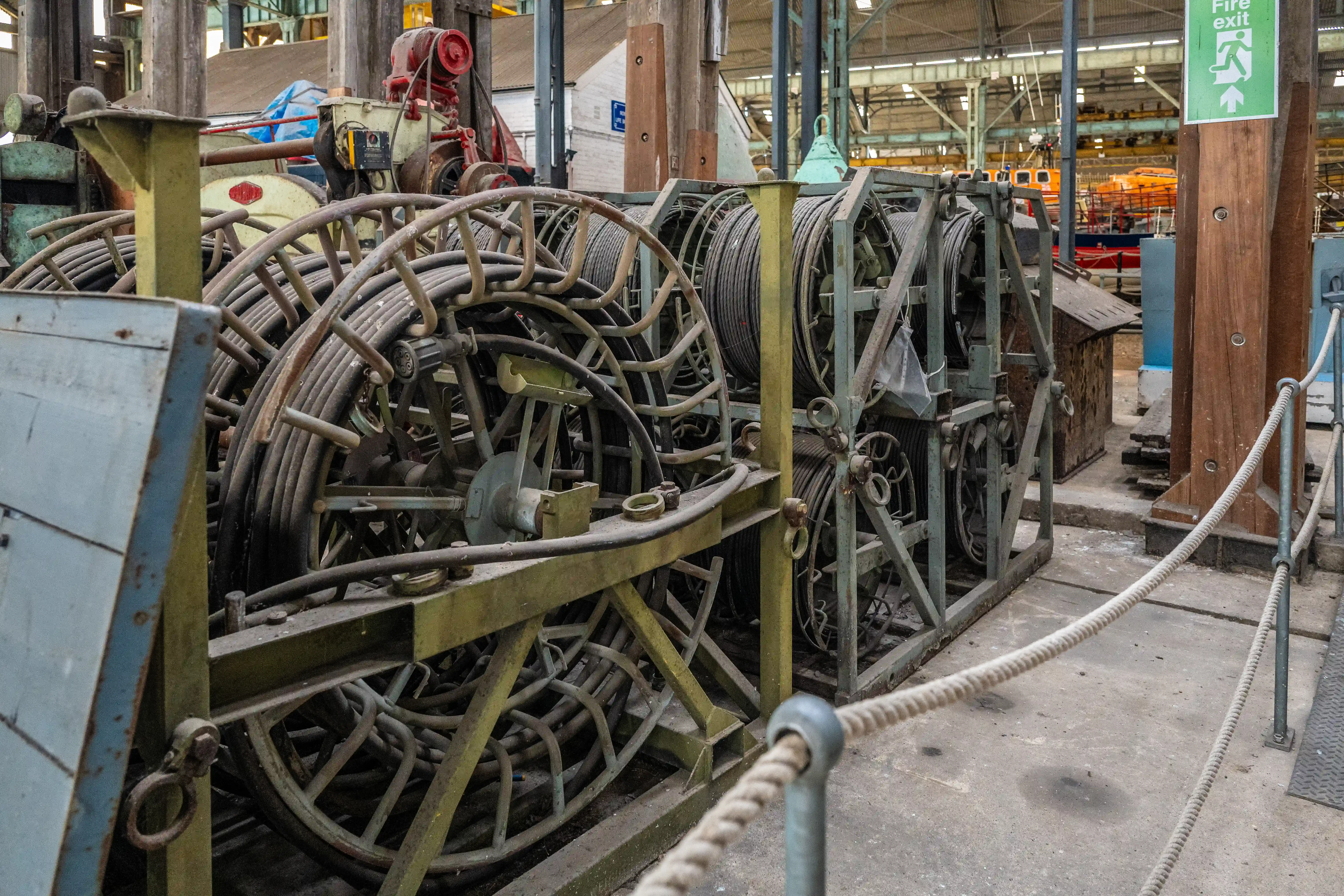
Industrial cable reels and machinery in a workshop, with a fire exit sign in the background.
Industrial Workshop with Cable Reels and Machinery&  ‐ 
photo by ,
©www.mgaylard.co.uk.
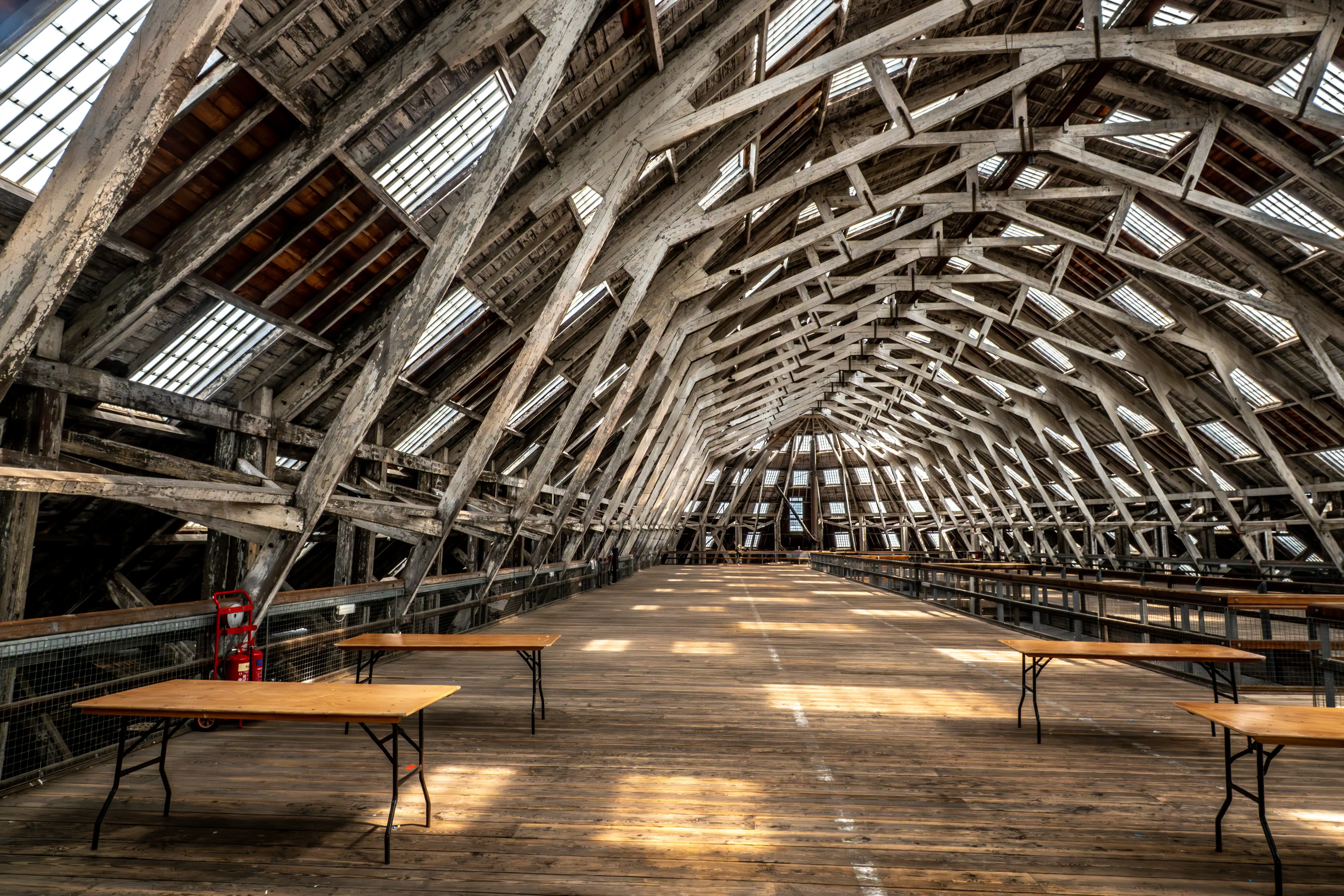
Interior view of a large, aged wooden arched roof structure with numerous skylights, a wooden floor, and several empty folding tables.
Historic Dockyard Chatham Slip 3 Mezzanine Floor&  ‐ 
photo by ,
©www.mgaylard.co.uk.
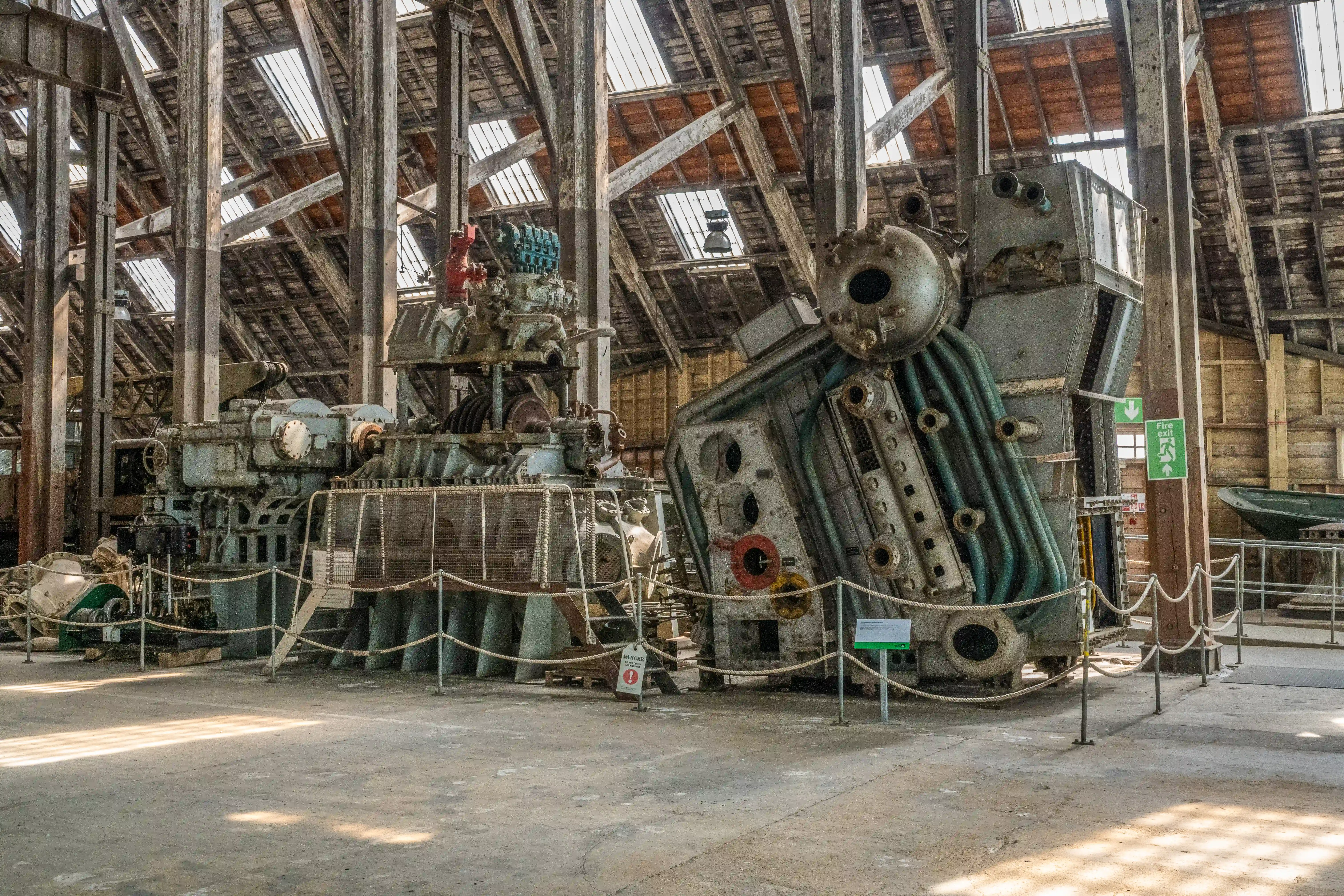
Two large, old industrial engines on display inside a workshop with a high wooden roof and skylights.&  ‐ 
photo by ,
©www.mgaylard.co.uk.
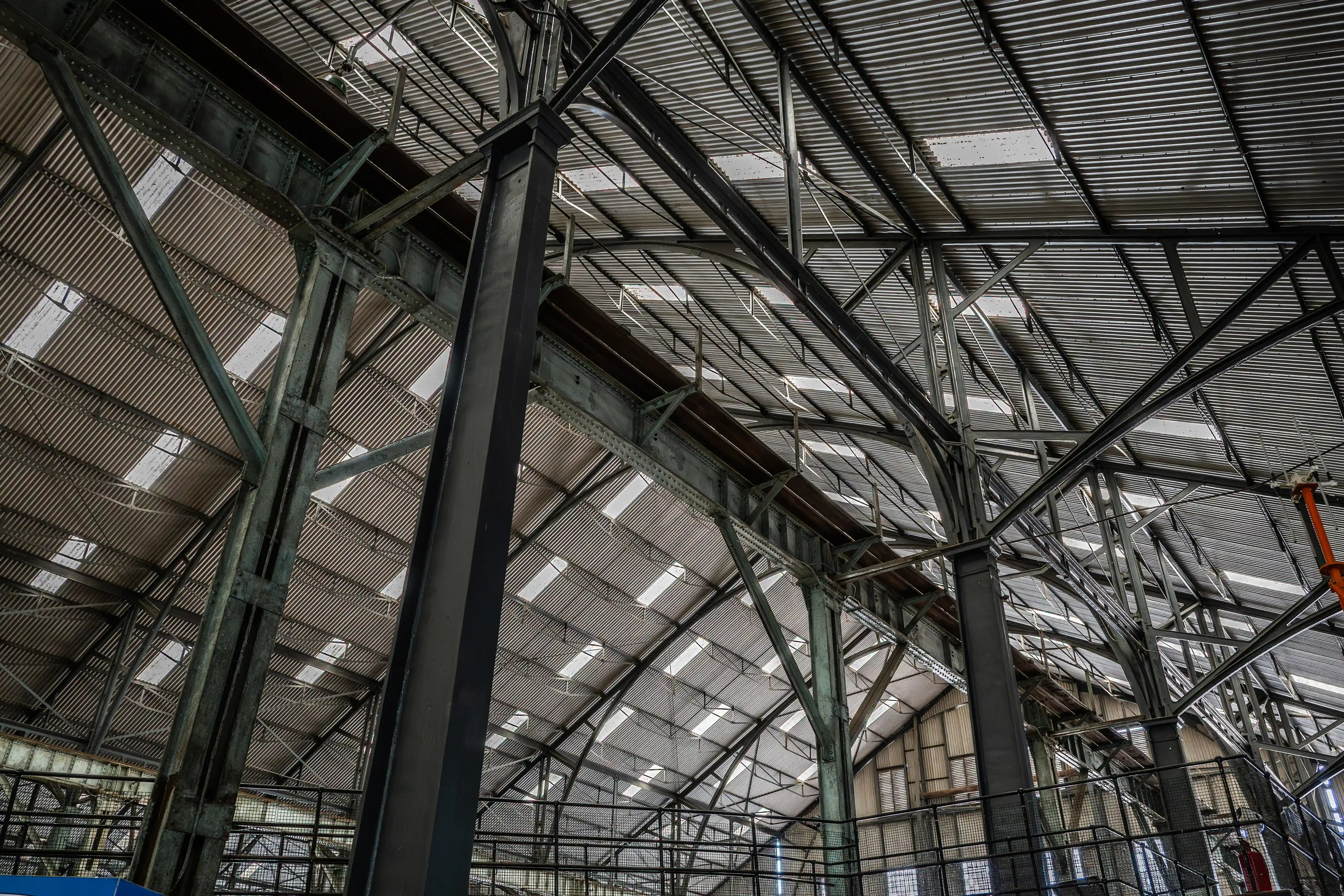
A low-angle shot of the underside of a large industrial building's roof, showing a complex network of dark grey steel beams, columns, and trusses supporting corrugated metal roofing with rectangular skylights.
Intricate Metal Roof Structure with Skylights&  ‐ 
photo by ,
©www.mgaylard.co.uk.
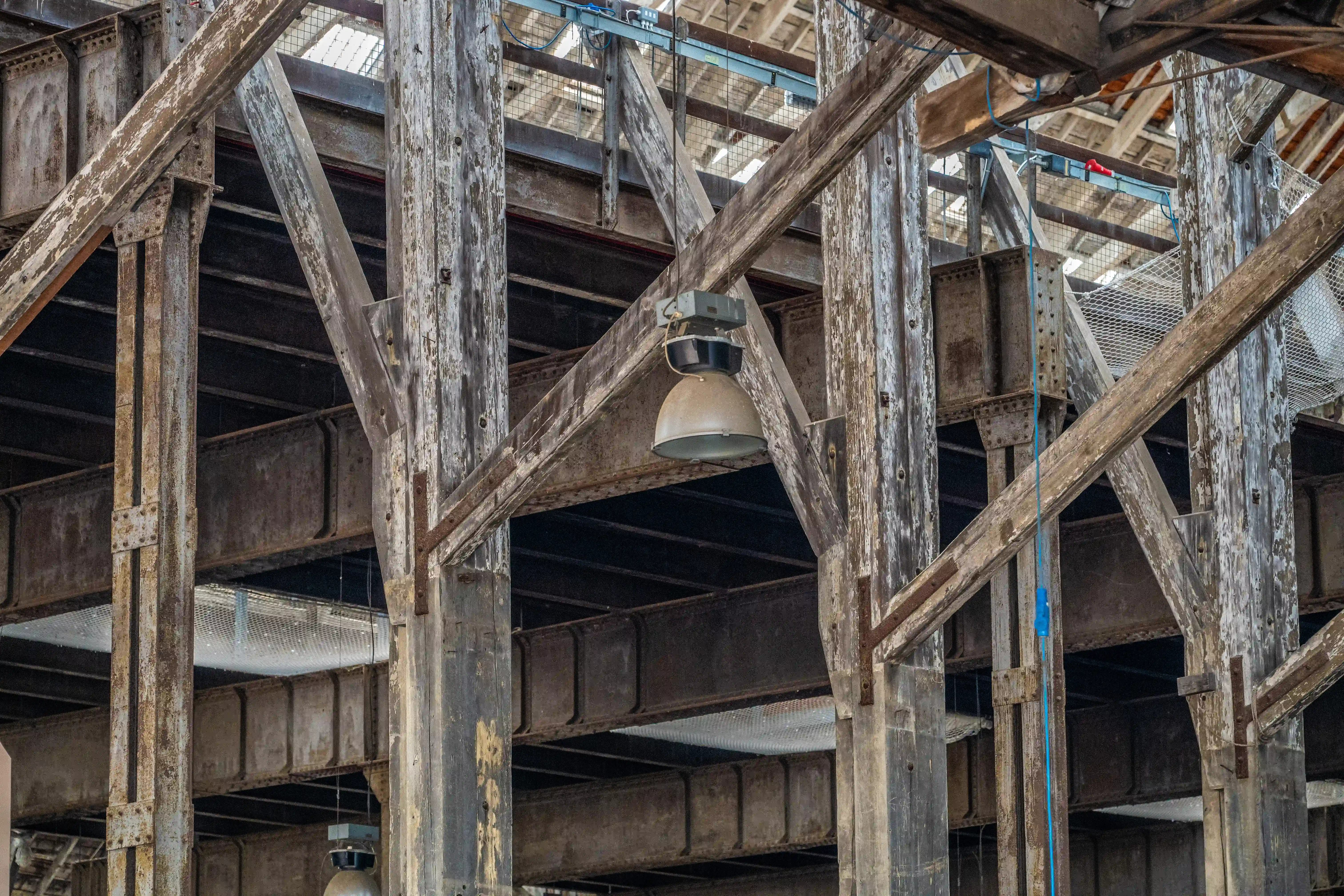
 Interior of an industrial building with weathered wooden posts and beams crisscrossing with exposed steel girders. A large bell-shaped industrial light fixture hangs from above.
The Structural Heart of an Old Industrial Building&  ‐ 
photo by ,
©www.mgaylard.co.uk.
Open the full set flickr button this page

Chatham Historic Dockyard: A Masterpiece of Maritime Engineering

Slip #3 at Chatham Historic Dockyard in Kent, UK, is home to the RNLI Historic Lifeboat Collection, the UK’s largest collection of historic lifeboats. This covered slip, built in 1848, now houses 17 iconic lifeboats, including vessels from 1897 to modern designs, such as the Arun class and Blue Peter inflatable lifeboats. The collection highlights the evolution of lifeboat technology and the bravery of RNLI crews who have saved thousands of lives at sea. Visitors can explore interactive displays, archive films, and audio clips that bring the 200-year history of the RNLI to life

A Monument to 19th-Century Innovation

Slip #3 at Chatham Historic Dockyard is a Grade I-listed architectural marvel, a testament to the ingenuity of the Royal Navy’s shipbuilding heyday. Built in 1836 and covered in 1838, it was designed by Sir Robert Seppings, a pioneering shipwright whose work revolutionized naval construction. The slip’s massive timber-framed roof, spanning 300 feet (91 meters) in length and 146 feet (44.5 meters) in width, was the largest wide-span timber structure in Europe at the time of its construction. Its cantilevered design—a daring feat of engineering—allowed for the construction and repair of some of the Navy’s largest vessels, including sailing ships and early ironclads. The slip’s gracefully curved "apse" at the landward end was specifically designed to accommodate the bow of a ship, a detail that highlights the precision and foresight of its creators.

From Shipbuilding to a Museum of Giants

Originally one of the dockyard’s most critical covered slips, Slip #3 was part of a network of five interconnected slips (Nos. 3–7) built between 1838 and 1855 to streamline ship construction during the age of sail. While the other slips were later adapted for iron and steel shipbuilding, Slip #3 remained a symbol of the wooden ship era, its timber framework a rare survival of early industrial architecture. After the dockyard’s closure in 1984, Slip #3 was repurposed as "The Big Space", a vast exhibition hall that now houses an eclectic collection of historic artifacts from the Chatham Historic Dockyard Trust, Royal Engineers Museum, and Imperial War Museum. Here, visitors can marvel at giant maritime objects, from massive ship models and anchors to heavy machinery and vehicles, all displayed under the soaring, cathedral-like roof

A Star of the Silver Screen

Slip #3’s dramatic interior and historic atmosphere have made it a favorite filming location. It was featured in Guy Ritchie’s Sherlock Holmes (2009), where its timber beams and industrial charm provided the perfect backdrop for a fictional 19th-century London shipyard. The slip’s versatility and grandeur continue to attract filmmakers, adding a layer of modern cultural significance to its already rich heritage

A Symbol of Chatham’s Maritime Legacy

Today, Slip #3 stands as a monument to Chatham’s golden age of shipbuilding. Its preservation is a tribute to the skill and craftsmanship of the dockyard workers who built and maintained the Royal Navy’s mightiest vessels. For visitors, stepping into Slip #3 is like entering a time capsule—a chance to stand beneath the same roof that once sheltered the construction of warships, to admire the artistry of its timber framework, and to connect with the legacy of a dockyard that shaped British naval history. Whether you’re a history buff, an architecture enthusiast, or simply someone who appreciates grand industrial spaces, Slip #3 is a must-see at Chatham Historic Dockyard

References

www.clayarchitecture.comhistoricengland.org.ukwww.hmdb.orgthedockyard.co.ukHistoric Buildings , Text generated by Mistral AI , Text generated by Microsoft CoPilot , generated by Google's AI Image Describer -->

The Victorian Ropery, Chatham Historic Dockyard

The Victorian Ropery, Chatham Historic Dockyard

Main Gate Road, Chatham Historic DockyardChathamKent,   ME4 4TZ,   United Kingdom

The Victorian Ropery at Chatham Historic Dockyard is one of the most unique and well-preserved industrial buildings of its kind in the world. Built in the 19th century, this impressive structure was designed to produce rope for the Royal Navy’s ships, using traditional techniques and machinery. Today, it stands as a testament to the ingenuity and craftsmanship of the Victorian era and offers visitors a fascinating glimpse into the dockyard’s industrial heritage.
 Interior view of a traditional rope making factory with numerous long ropes hanging and laid out on wooden floors, illuminated by natural light casting shadows.
Historic Rope Factory Interior with Hanging Ropes&  ‐ 
photo by ,
©www.mgaylard.co.uk.
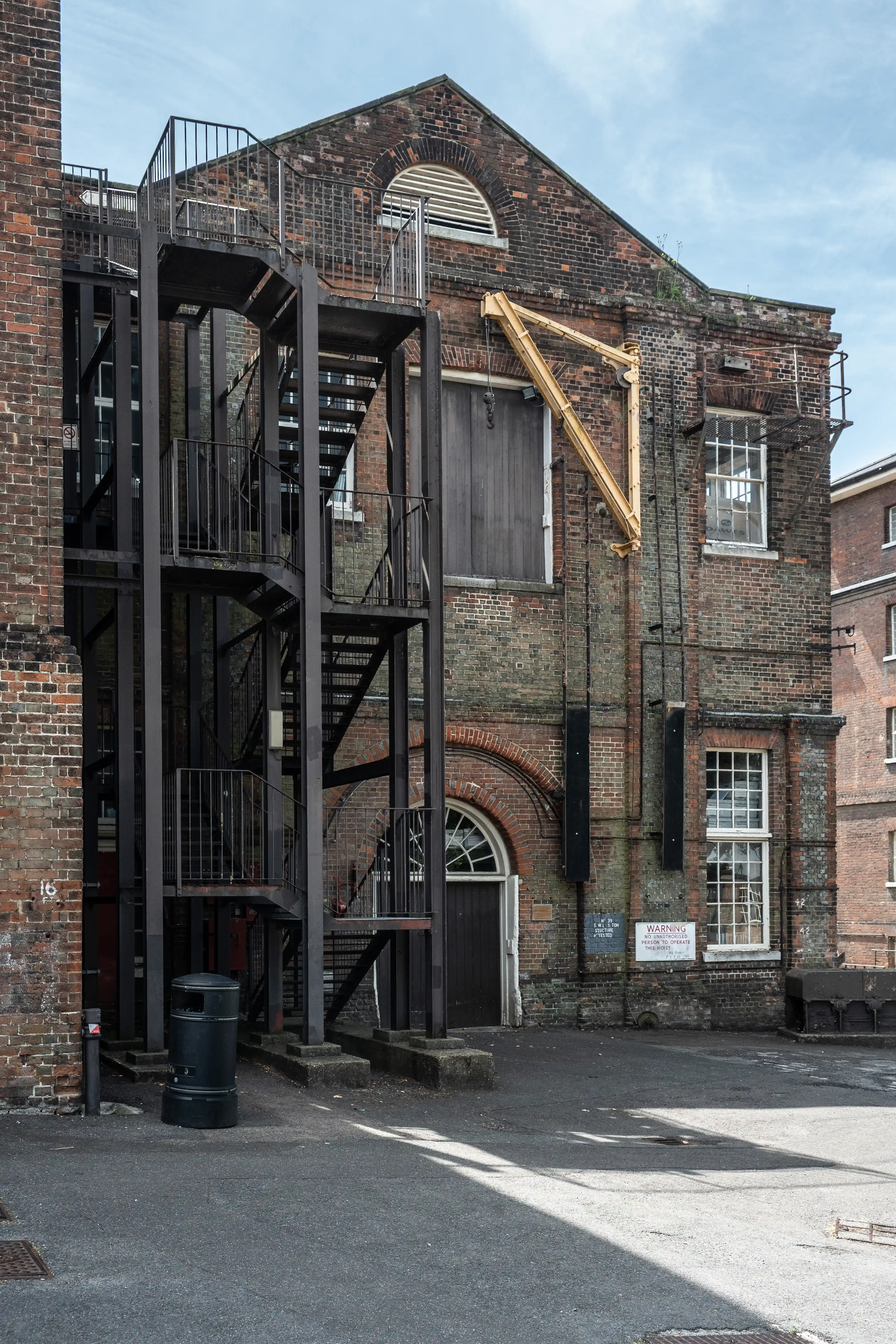
A multi-story red brick industrial building with a prominent black metal fire escape system and a yellow gantry crane attached to its side.
Exterior view of a historic industrial building with a fire escape and crane&  ‐ 
photo by ,
©www.mgaylard.co.uk.
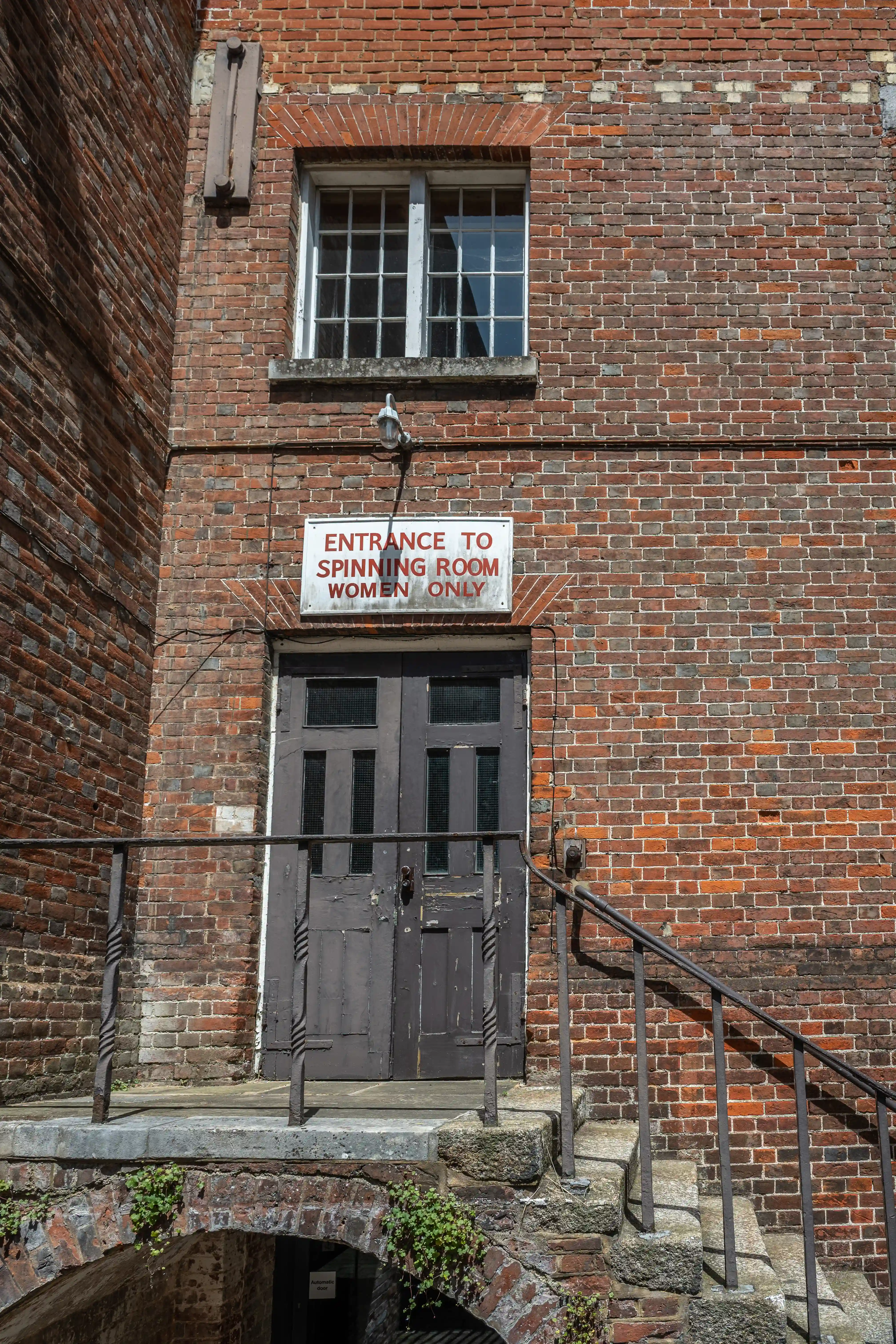
Red brick building entrance with a sign indicating
Entrance to Spinning Room, Women Only&  ‐ 
photo by ,
©www.mgaylard.co.uk.
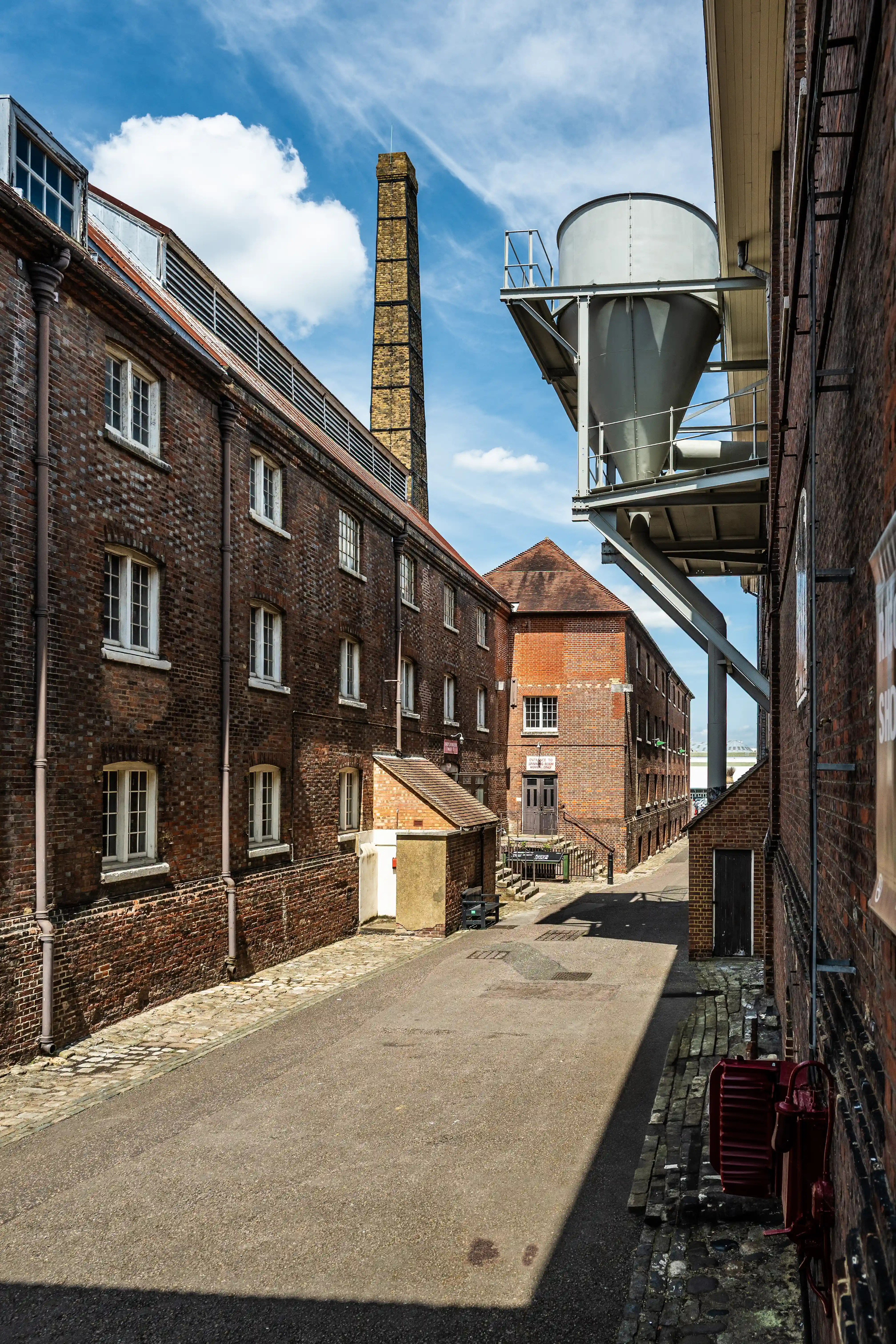
A narrow street lined with red-brick industrial buildings under a blue sky with clouds. A tall chimney and a suspended industrial silo are visible.
Old Brick Factory with Chimney and Silo on a Sunny Day&  ‐ 
photo by ,
©www.mgaylard.co.uk.
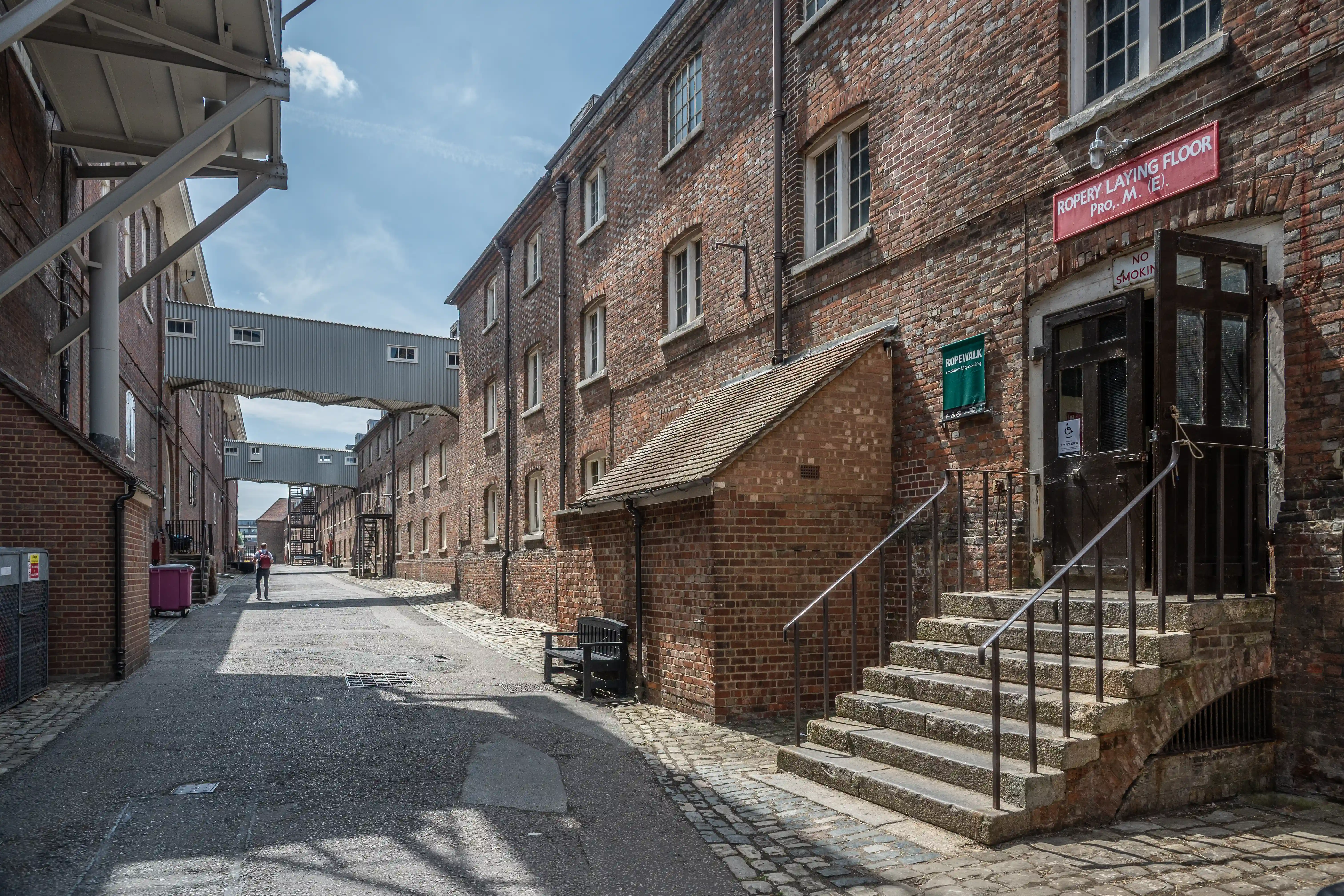
An exterior view of a historic industrial complex with red brick buildings connected by modern metal skywalks over a paved alleyway.
Industrial Heritage Site with Skywalks&  ‐ 
photo by ,
©www.mgaylard.co.uk.
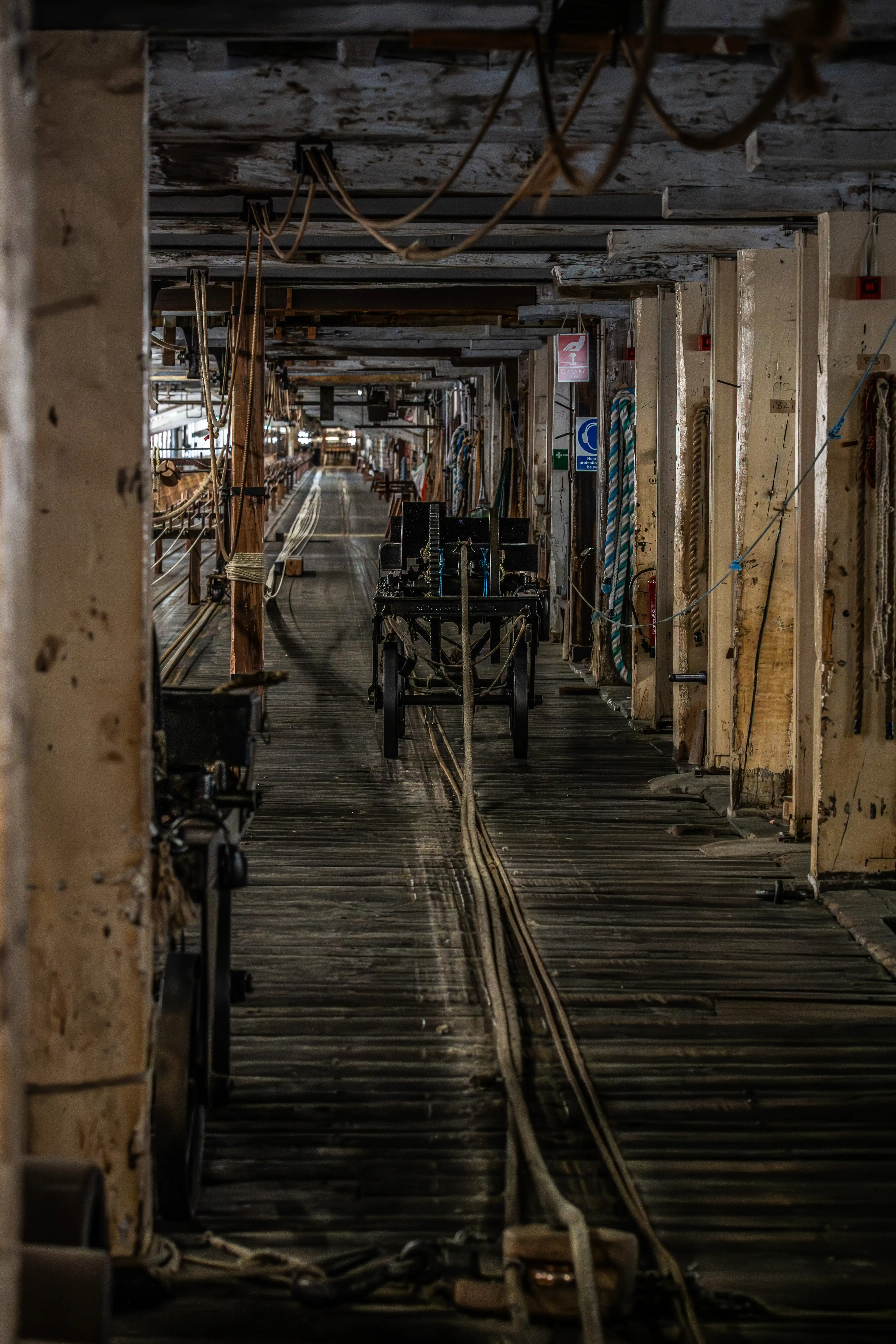
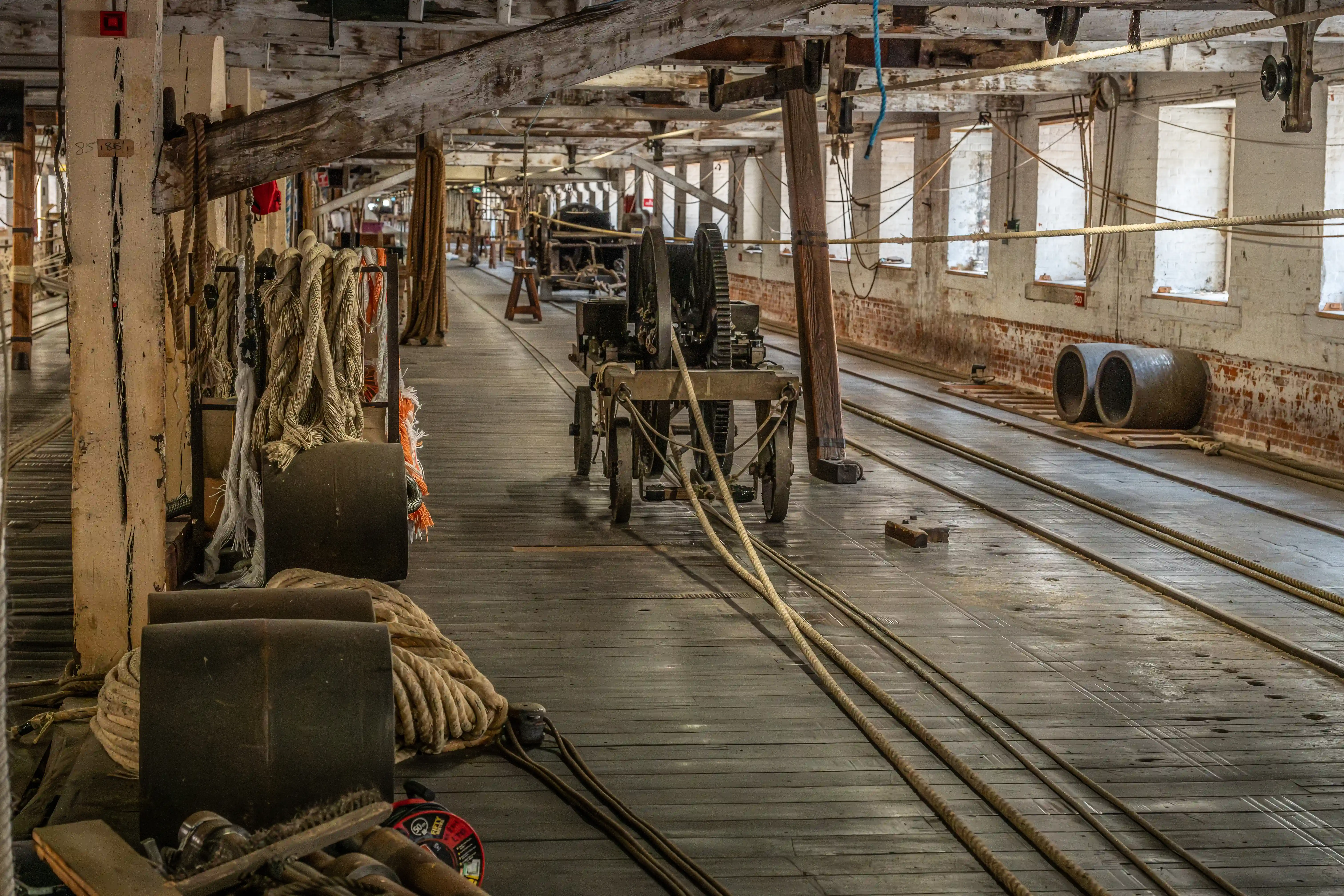
An old, empty factory interior with a wooden floor, tracks, and a wheeled cart, featuring hanging ropes and a sense of industrial abandonment.
Echoes of Industry: Abandoned Textile Mill&  ‐ 
photo by ,
©www.mgaylard.co.uk.
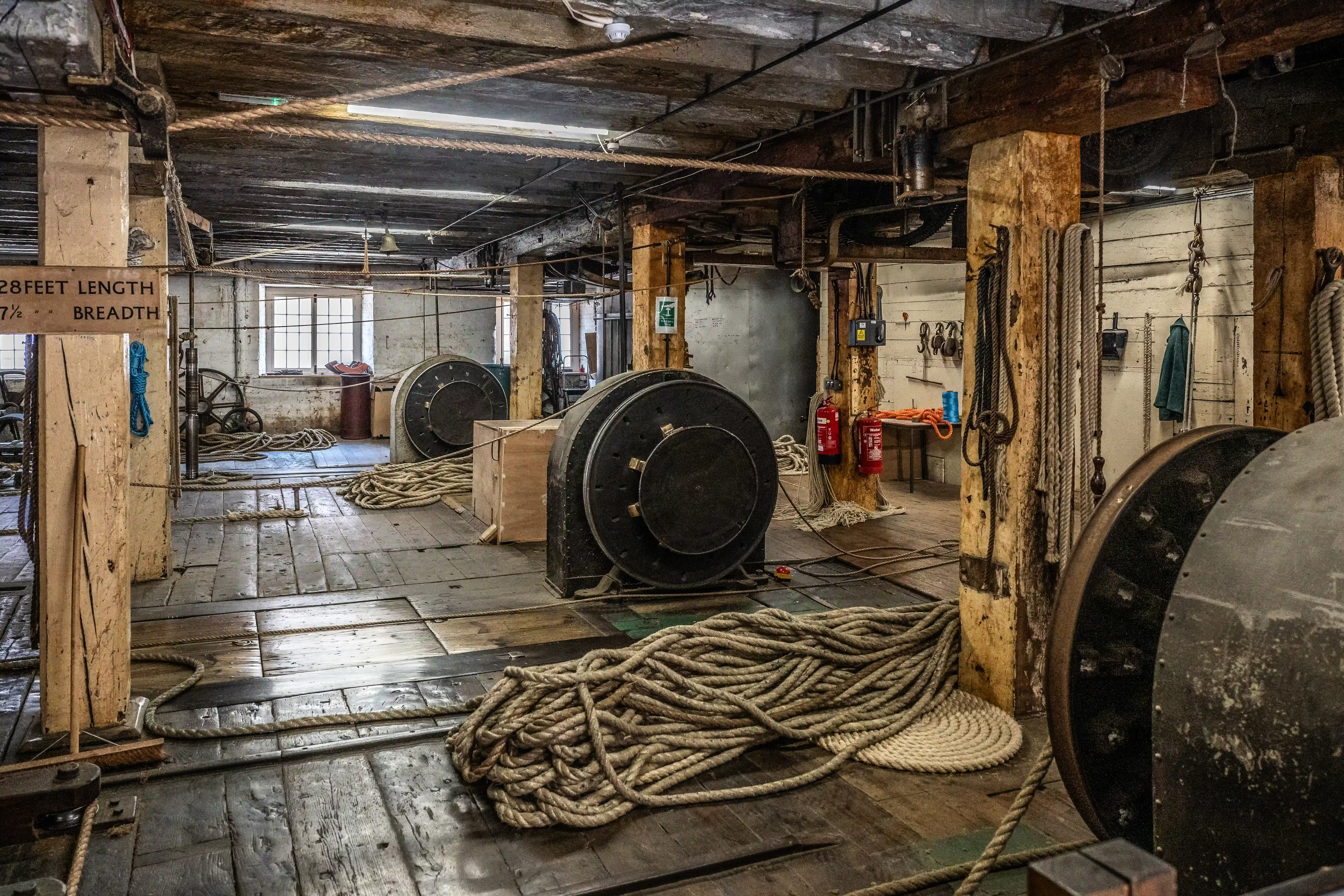
Interior of a disused rope factory with large spools of rope, wooden floor, and exposed industrial machinery.
Inside a Historic Rope Factory - Industrial Heritage  ‐ 
photo by ,
©www.mgaylard.co.uk.
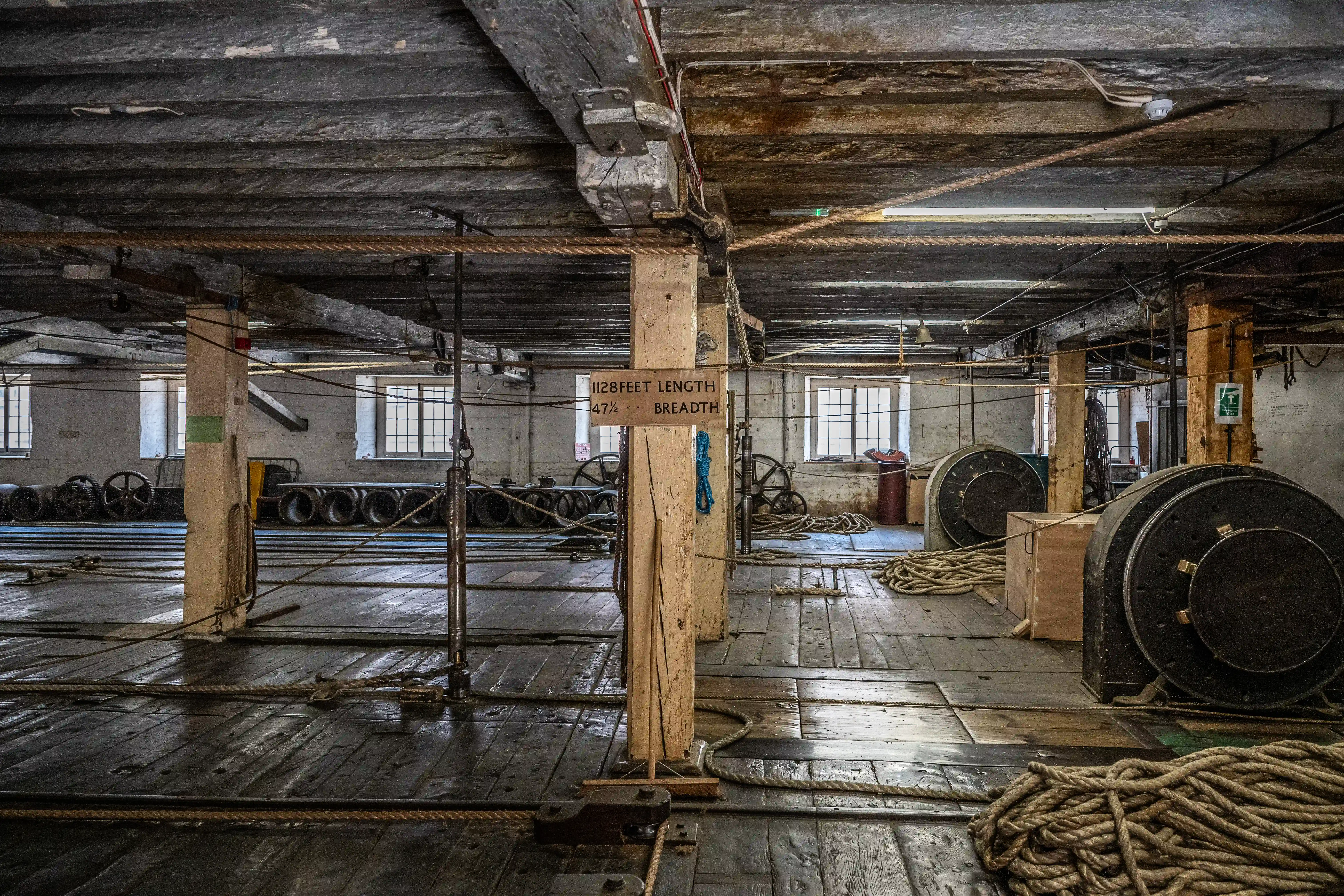
Interior of an old industrial building showing a wooden floor, exposed beams, large spools of rope, and windows.
Industrial Rope Storehouse  ‐ 
photo by ,
©www.mgaylard.co.uk.
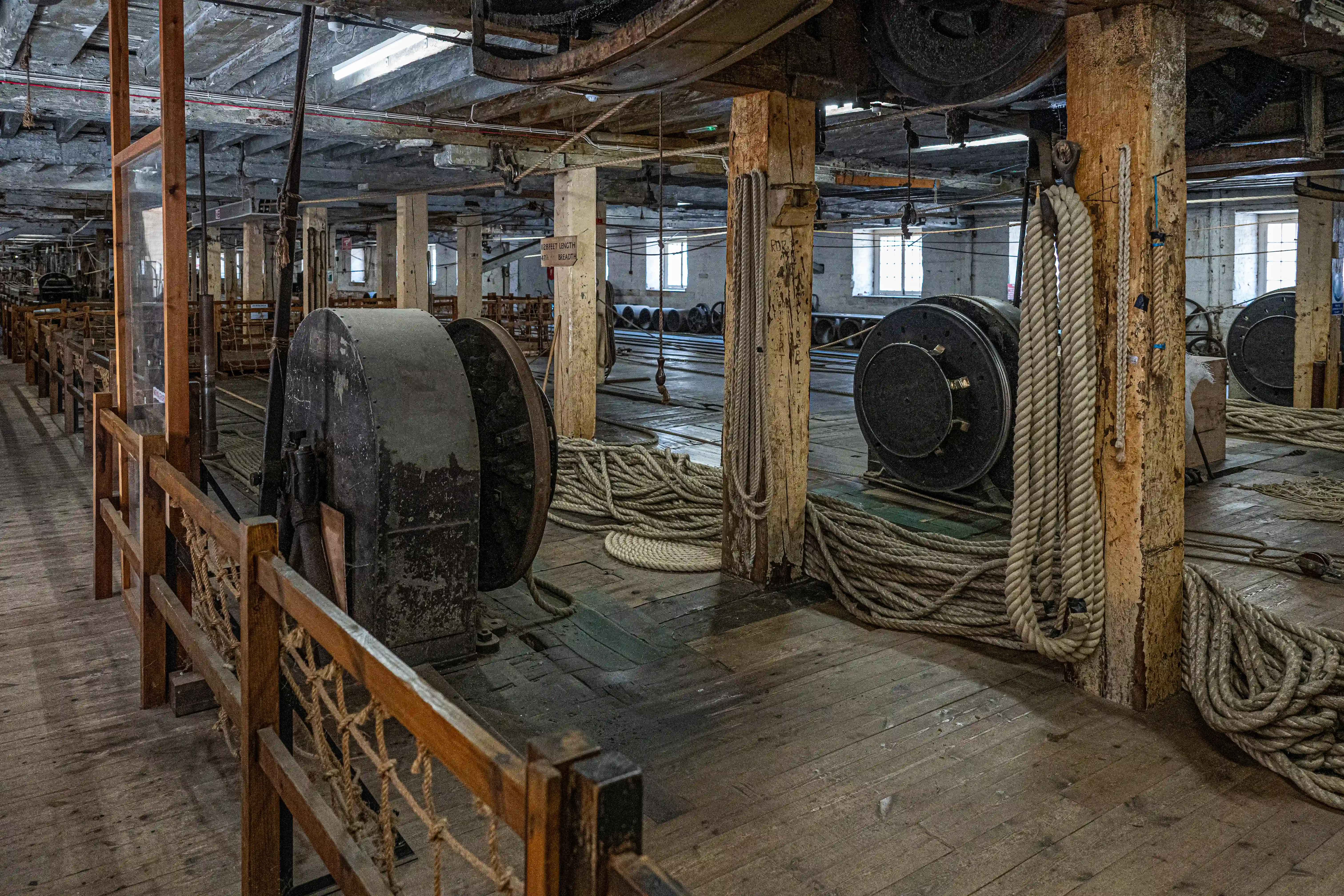
An interior view of an old industrial workshop, with large coiled ropes, winding machinery, wooden pillars, and a sign indicating rope measurements.
The Rope Maker's Haven  ‐ 
photo by ,
©www.mgaylard.co.uk.
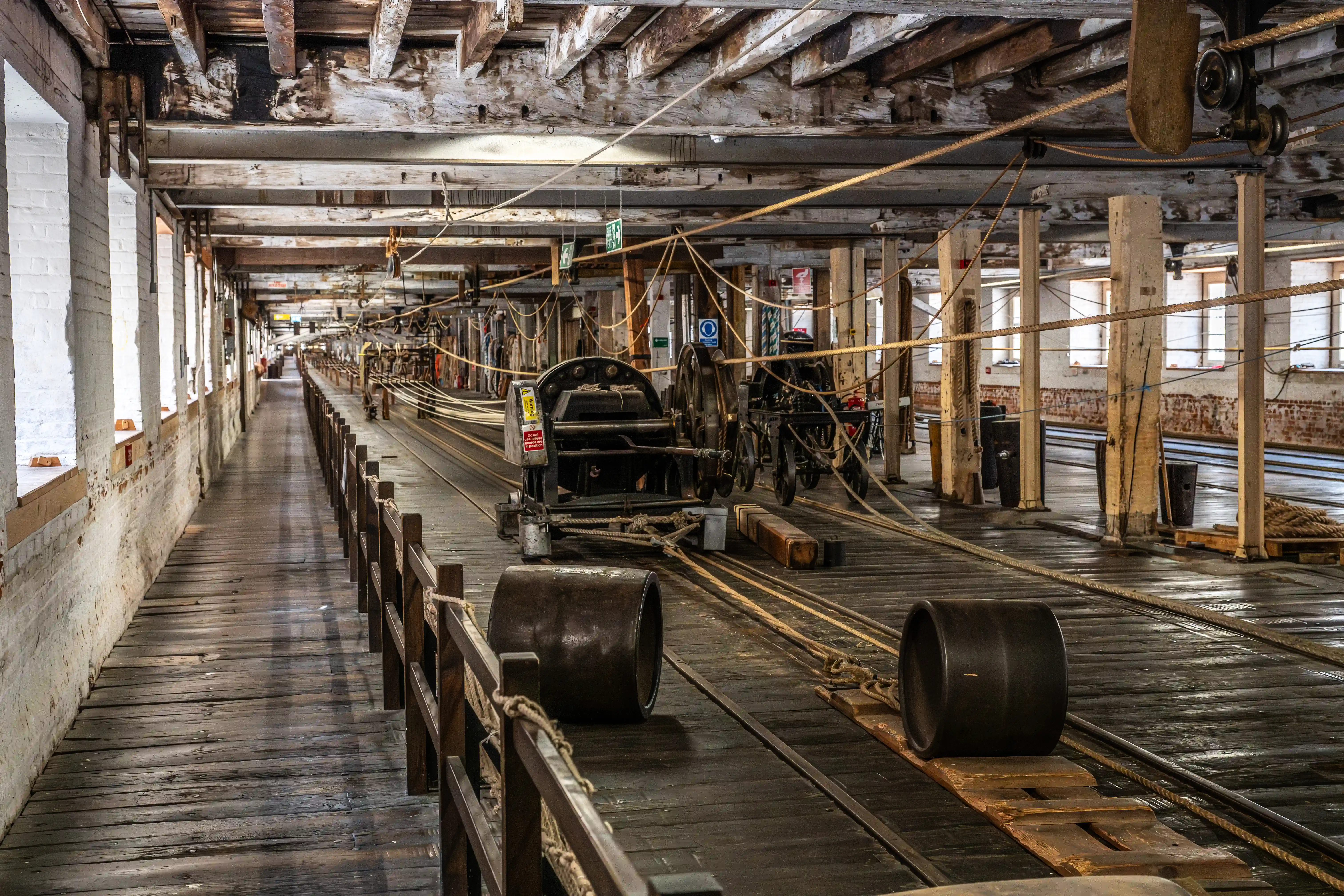
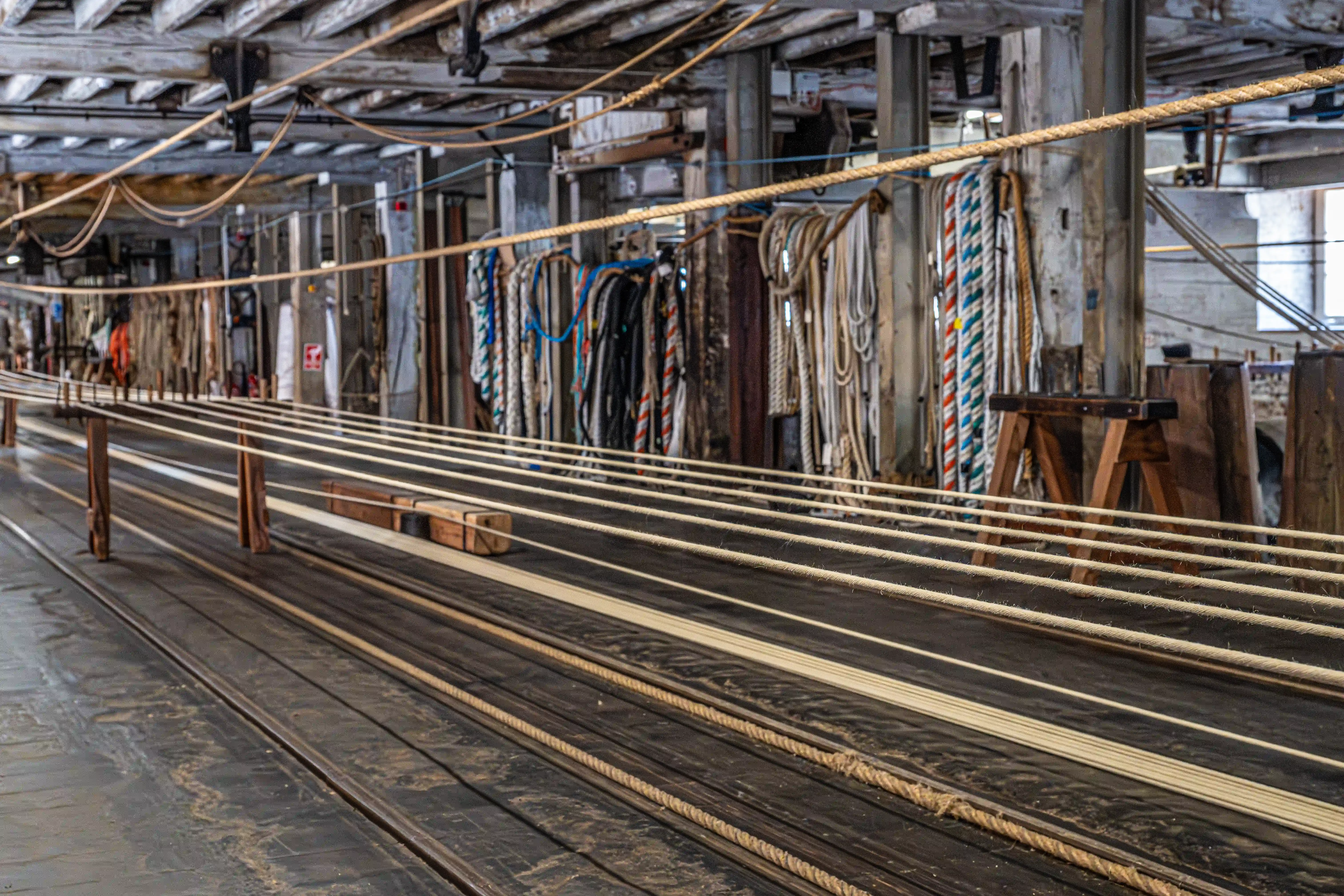
Interior view of an old rope walk with wooden floors, exposed beams, various coils and lengths of thick rope, and industrial machinery on wheels. Sunlight filters through large windows on the right.
Vintage Rope Making Facility Interior  ‐ 
photo by ,
©www.mgaylard.co.uk.
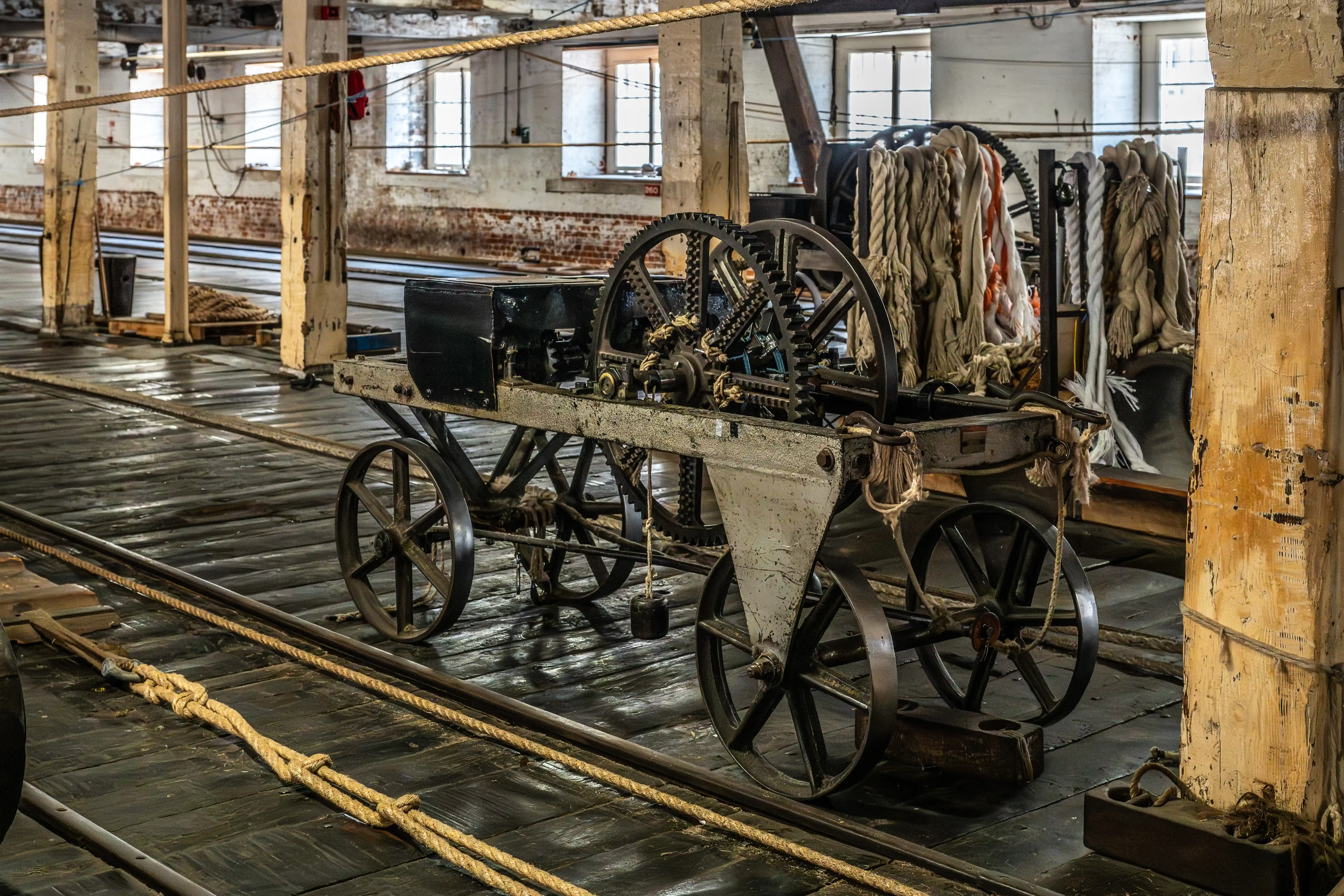
A close-up of a rustic, wheeled industrial machine with large metal gears and spoked wheels, set on a weathered wooden floor amidst coiled ropes and wooden support beams in a dimly lit workshop.
Industrial Heritage: A Close-Up of Vintage Machinery and Ropes  ‐ 
photo by ,
©www.mgaylard.co.uk.
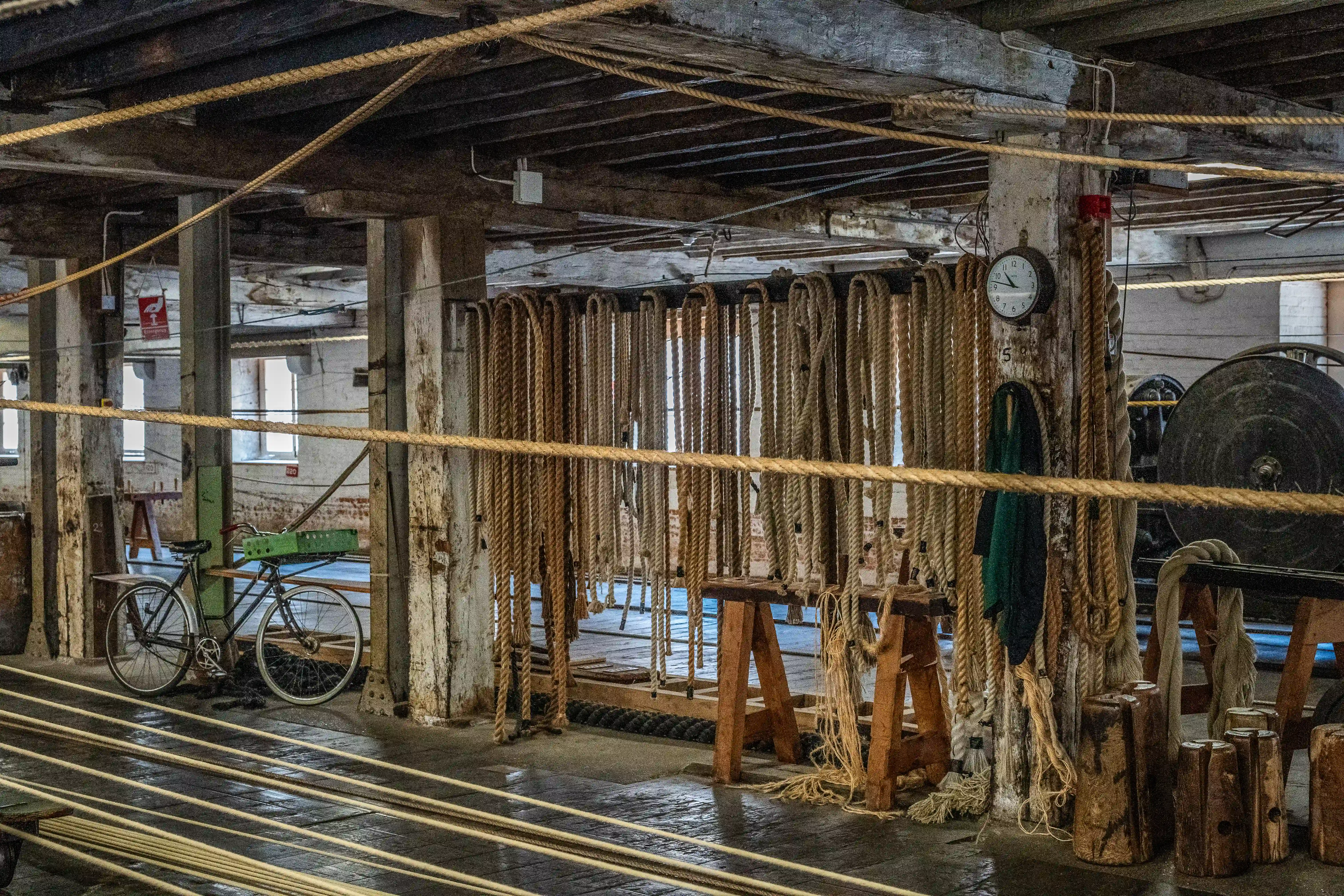
Interior of an old rope-making workshop with many thick, natural fibre ropes hanging and coiled, wooden beams, a vintage bicycle, and a wall clock.
Historic Rope Workshop Interior  ‐ 
photo by ,
©www.mgaylard.co.uk.
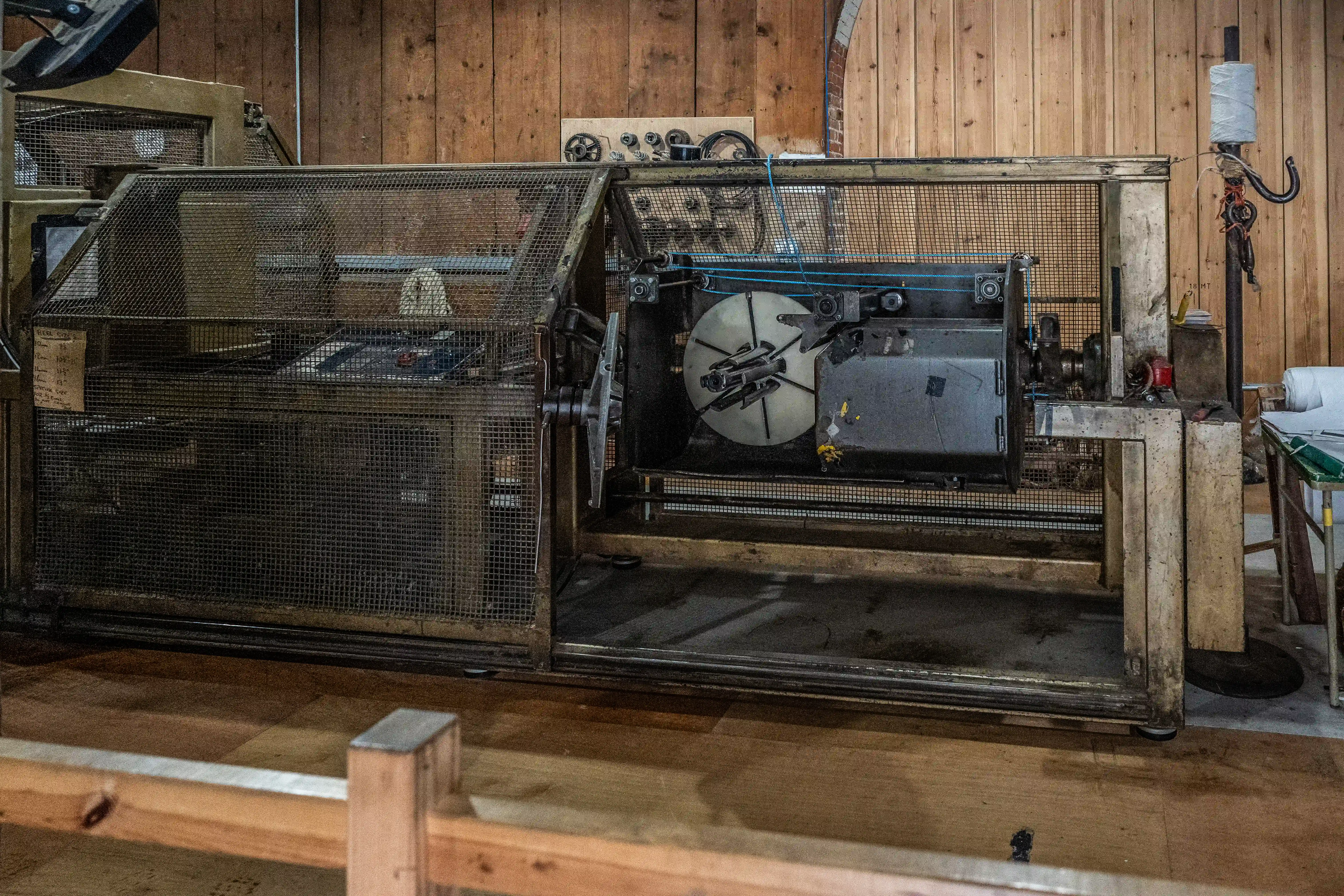
Industrial machine with wire winding mechanism, enclosed in wire mesh, in a workshop setting with wooden walls.
Industrial Wire Winding Machine in Workshop  ‐ 
photo by ,
©www.mgaylard.co.uk.
Industrial machine with wire winding mechanism, enclosed in wire mesh, in a workshop setting with wooden walls.
Industrial Wire Winding Machine in Workshop  ‐ 
photo by ,
©www.mgaylard.co.uk.
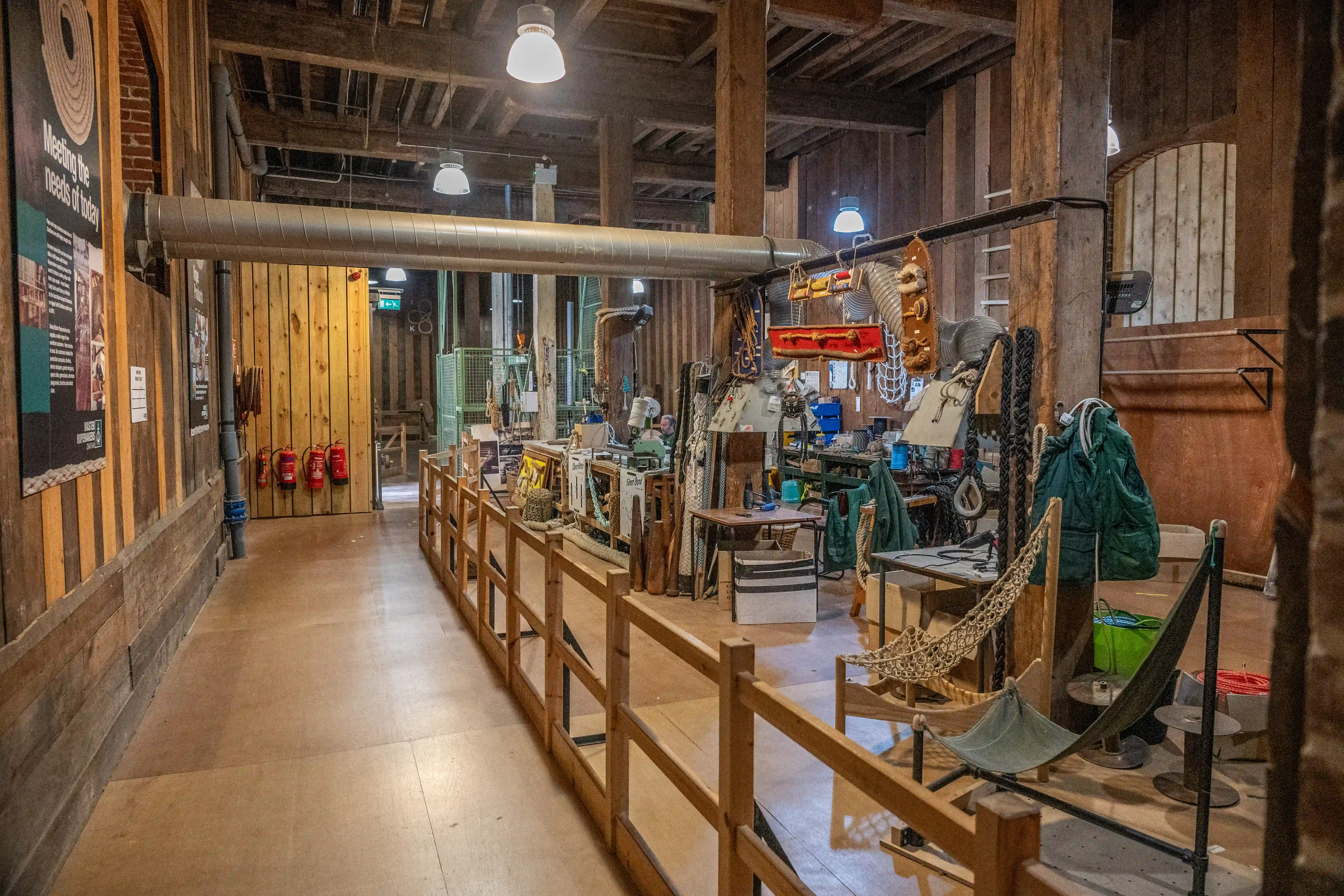
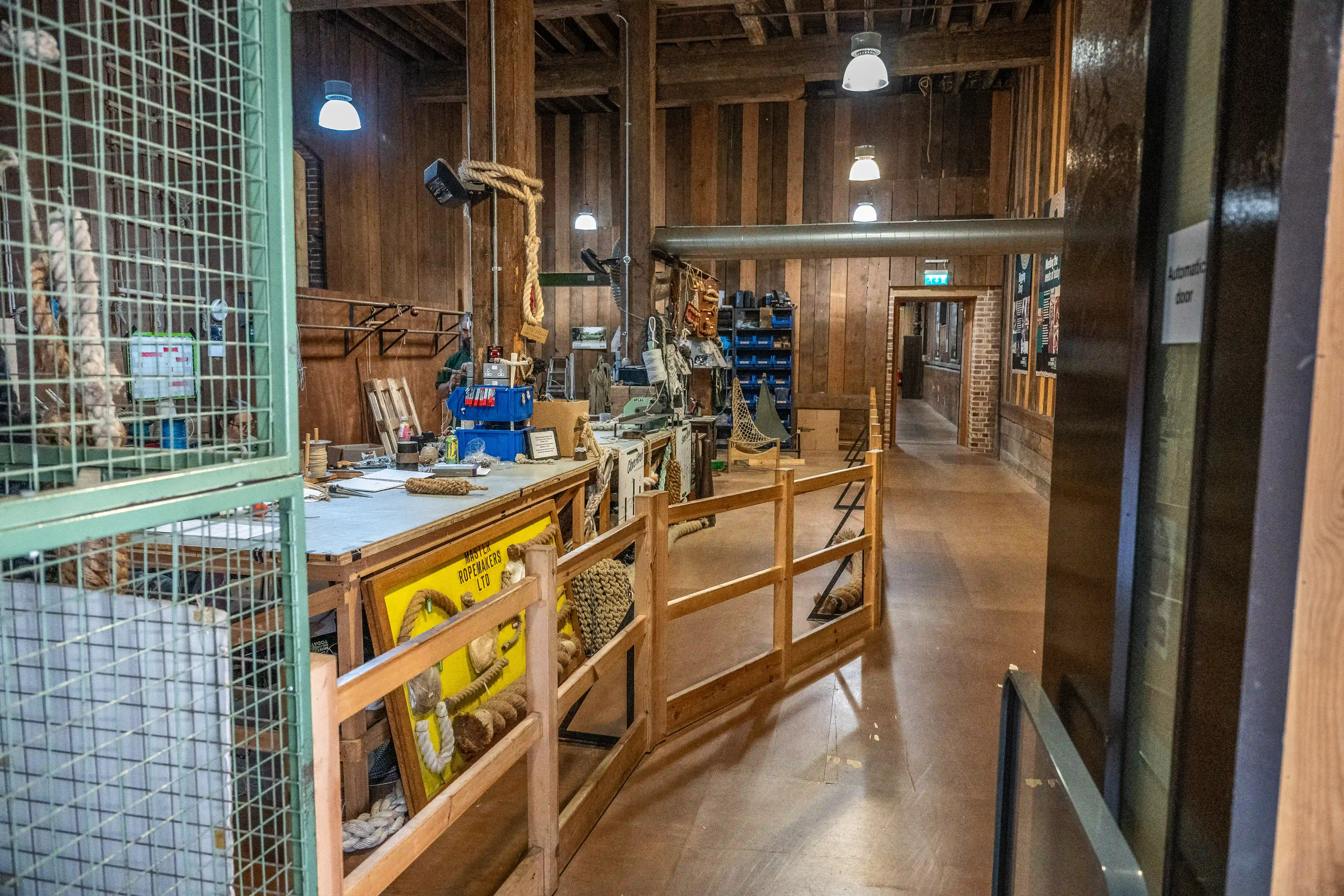
Interior view of a historical industrial workshop with wooden structures, display cases, tools, ropes, and a suspended duct.
Industrial Workshop Display - Vintage Machinery and Tools  ‐ 
photo by ,
©www.mgaylard.co.uk.
 Interior of a rope making workshop with wooden walls, rope displays, tools, and a cage.
Rope Making Workshop Exhibit Interior  ‐ 
photo by ,
©www.mgaylard.co.uk.
Open the full set flickr button this page

The Ropery at Chatham Historic Dockyard: A Living Legacy of Maritime Craftsmanship

The Victorian Ropery at Chatham Historic Dockyard is a unique and historic attraction where rope has been made for over 400 years, since 1618. It is the only one of the original four Royal Navy ropeyards still in operation today. The quarter-mile-long ropewalk features original Victorian machinery and buildings, and visitors can watch Master Ropemakers demonstrate traditional ropemaking techniques—the same methods used to supply Nelson’s HMS Victory and other legendary ships. The Ropery Gallery offers an atmospheric journey through the lives of ropemakers past and present, and the site remains a working ropery, producing rope for modern markets using centuries-old craftsmanship

Four Centuries of Rope-Making Excellence

The Ropery at Chatham Historic Dockyard is a testament to 400 years of British maritime tradition, where the art of rope-making has been practiced continuously since the 16th century. Established as part of the Royal Navy’s Chatham Dockyard, the Ropery was built in 1728 and later expanded in 1812, becoming one of the four original Royal Navy Ropeyards. Its Hemp Houses, Yarn Houses, and double Rope House formed the heart of a vast, integrated manufacturing complex, where miles of rope were produced to rig the mightiest ships of the Royal Navy, including Nelson’s HMS Victory. At its peak, the Ropery’s 346-meter (1,135-foot) ropewalk was the longest brick building in Europe, capable of producing 300-meter ropes by hand—a process that required skill, strength, and precision from its workers

A Masterpiece of Industrial Architecture

The Ropery is not just a functional building—it’s a masterpiece of 18th and 19th-century industrial architecture. Its Grade I-listed structures are a rare survival of the Georgian and Victorian eras, showcasing the innovative design that allowed Chatham to dominate naval rope production for centuries. The timber-framed roof, cast-iron columns, and original machinery (including steam-powered equipment introduced in 1836) reflect the evolution of technology within the dockyard. Unlike other ropeyards that fell into disuse, Chatham’s Ropery endured, adapting to the shift from sail to steam and continuing to supply high-quality rope for both military and commercial purposes

From Naval Necessity to Living Museum

Today, the Ropery is the only one of the original four Royal Navy Ropeyards still in operation, and it remains a vibrant, working part of Chatham Historic Dockyard. The Master Ropemakers—a team of skilled artisans—continue to produce rope using traditional techniques, ensuring that the ancient craft is preserved for future generations. Visitors can:
  • Watch live demonstrations of rope-making on the historic ropewalk, where the same methods used in the age of sail are still employed.
  • Explore the Ropery Gallery, which tells the stories of the workers—from the 18th-century laborers to the modern-day craftsmen—who have kept this tradition alive.
  • Marvel at the scale of the operation, with the quarter-mile-long ropewalk and the original Georgian and Victorian equipment still in use.
  • Purchase rope made on-site, from authentic naval rigging to decorative and commercial products, ensuring that the Ropery’s legacy lives on in the modern world
The Ropery also supplies rope for historic ships, including HMS Victory, maintaining a direct link to its naval heritage. Its preservation is a tribute to the thousands of workers who toiled here, their skill and dedication ensuring that the Royal Navy’s ships were rigged with the finest rope in the world.

A Symbol of Chatham’s Enduring Spirit

The Ropery is more than a building or a museum—it’s a living symbol of Chatham’s maritime soul. Its survival through centuries of change—from the age of sail to the modern era—is a testament to the enduring importance of traditional craftsmanship. For visitors, the Ropery offers a unique opportunity to step back in time, to witness history in action, and to connect with the legacy of the men and women who made Chatham the heart of British naval power. Whether you’re a history enthusiast, an architecture lover, or simply someone who appreciates the art of craftsmanship, the Ropery is a must-see at Chatham Historic Dockyard.

References

thedockyard.co.ukwww.historyhit.com Our uildingswww.nationalhistoricships.org.uken.wikipedia.org , Text generated by Mistral AI , Text generated by Microsoft CoPilot , generated by Google's AI Image Describer
To the top
Powered by w3.css. The images are all stored on link to www.gaylard.co.uk Photostream on Flickr   This website is hosted by link to 123Reg Web Hosting