HOME

Jerez de la Frontera

Cadiz Province

Andalusia

Bodegas Tío Pepe

Jerez de la Frontera ,   Andalusia,   Spain

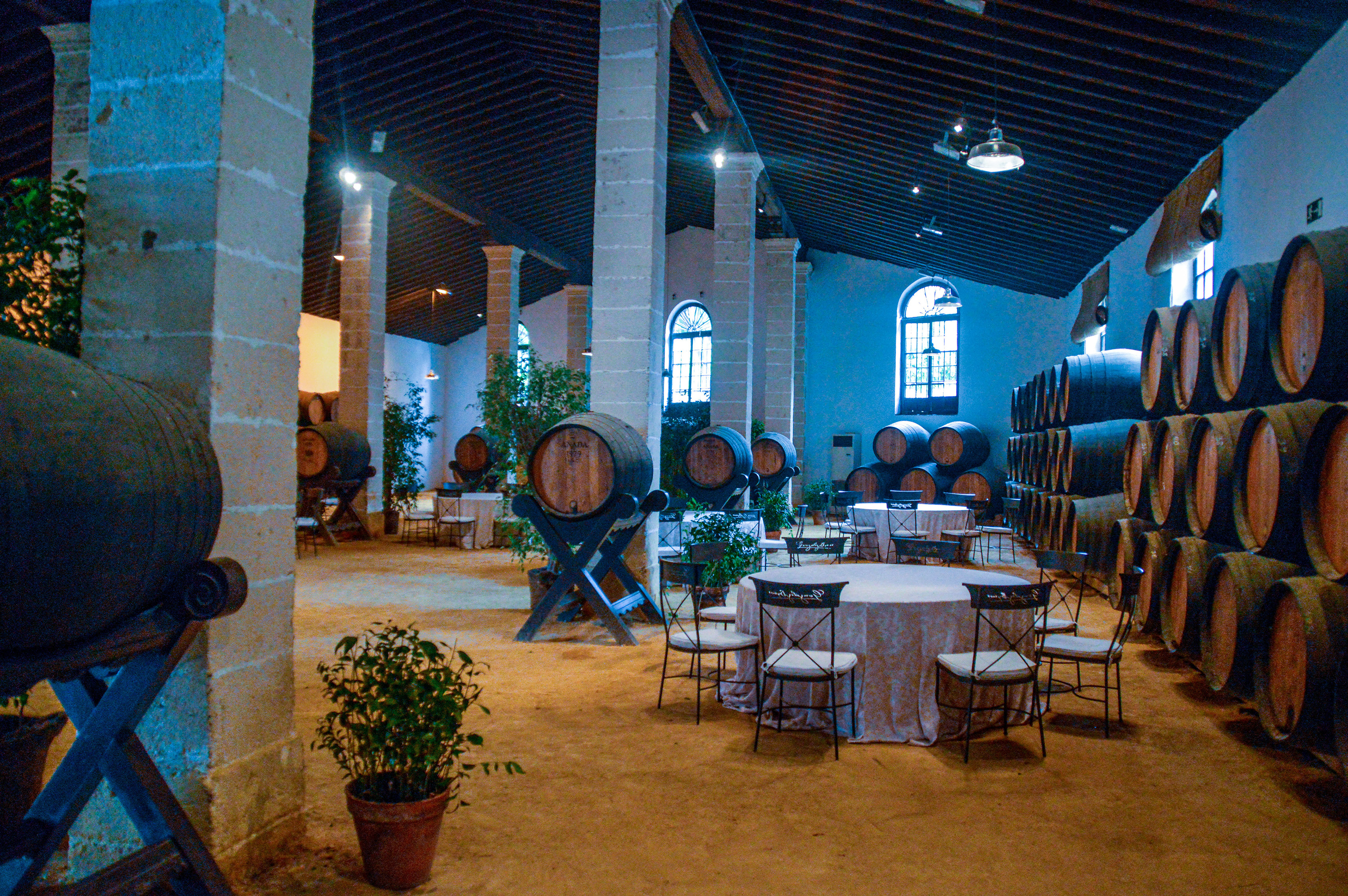
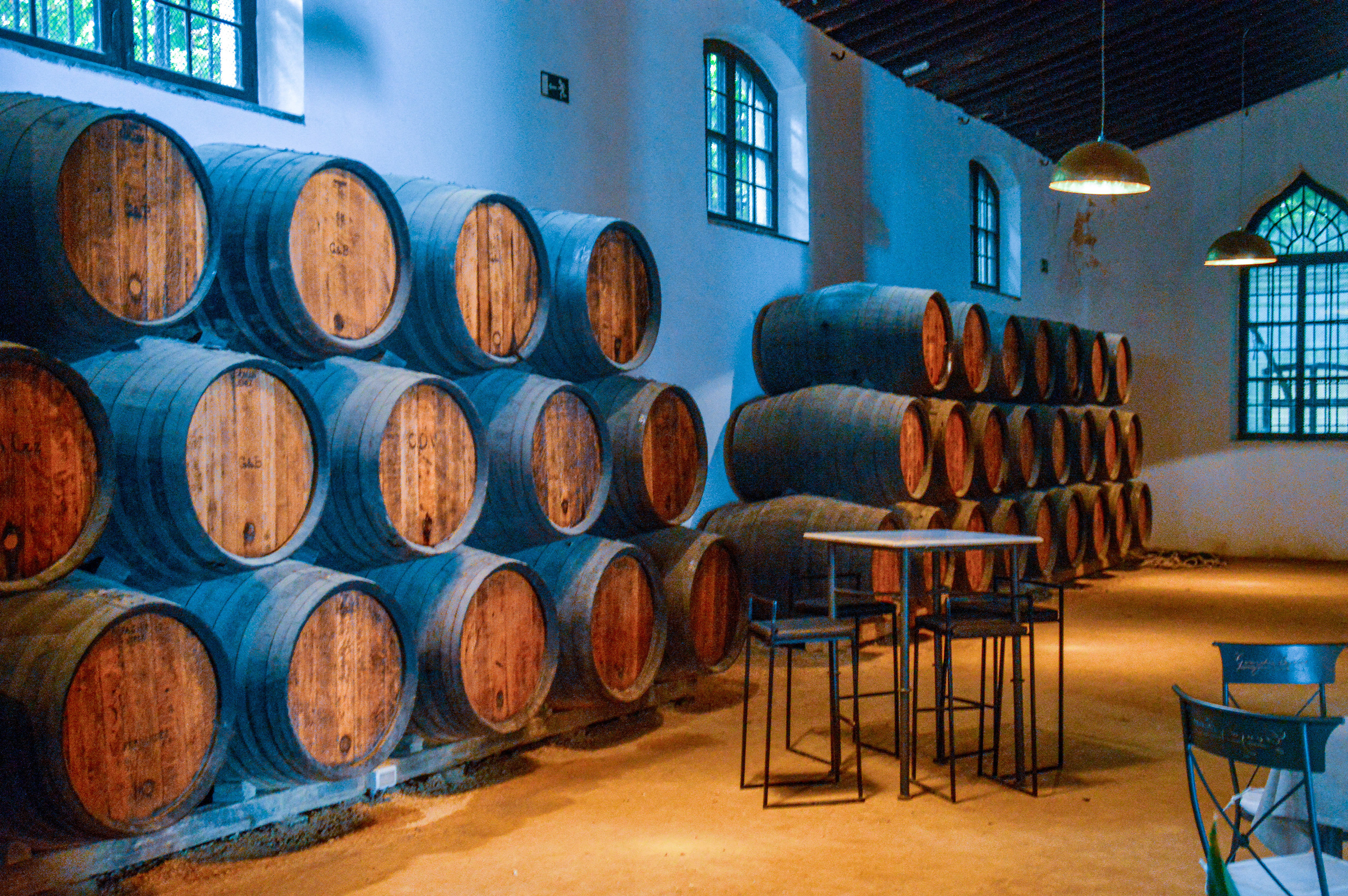
Bodegas Tío Pepe is one of the most famous and historic sherry bodegas in Jerez de la Frontera, Spain. Founded in 1835, it is renowned for producing the world-famous Tío Pepe Fino sherry. The bodega offers guided tours, allowing visitors to explore its historic cellars, learn about the traditional sherry-making process, and enjoy tastings of their award-winning wines. The bodega is also known for its distinctive architecture and cultural significance in the region.
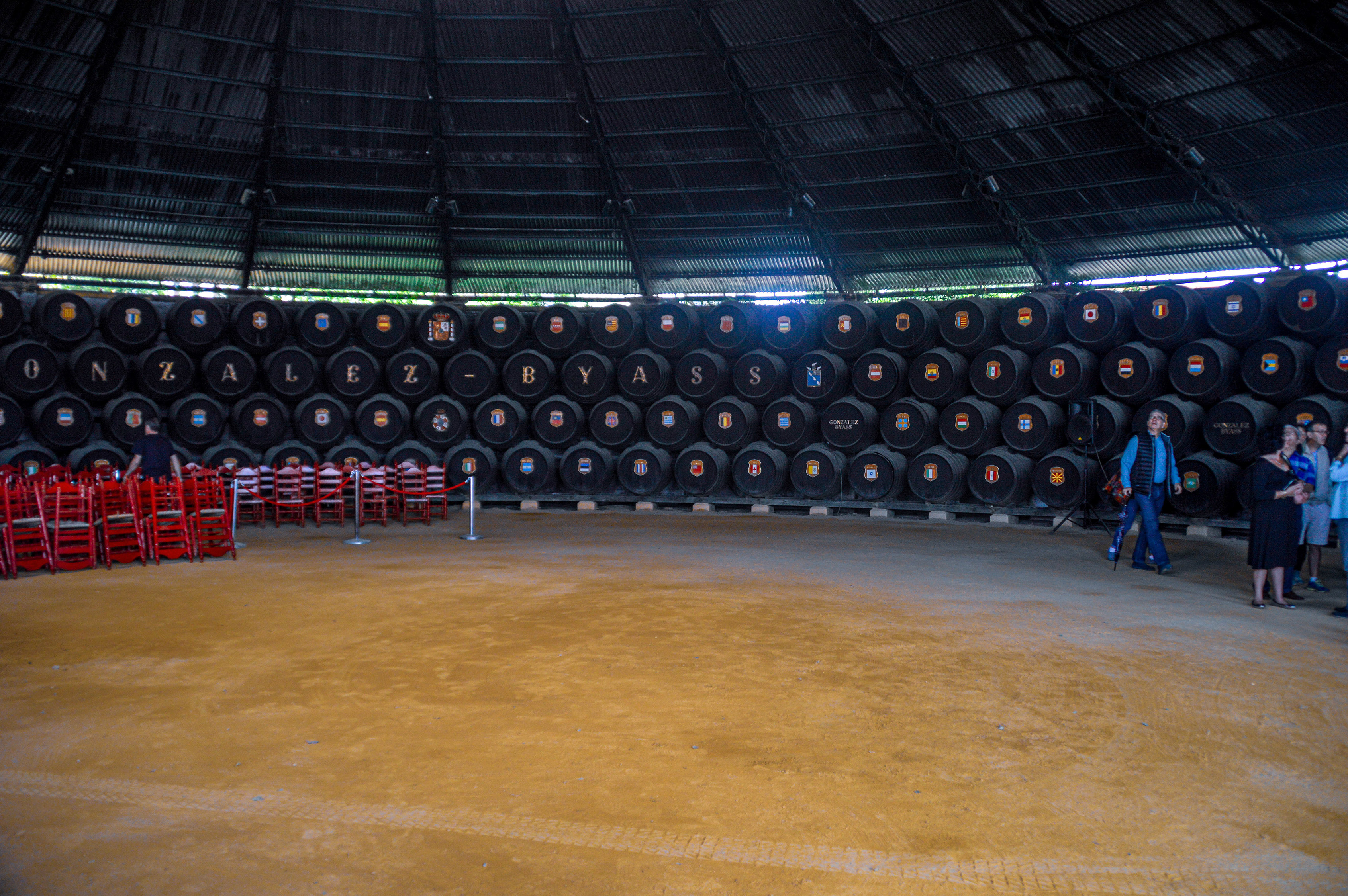
Tio Pepe Bodega
Gonzales-Byass Bodego ‐ photo by ,
©www.mgaylard.co.uk.
4
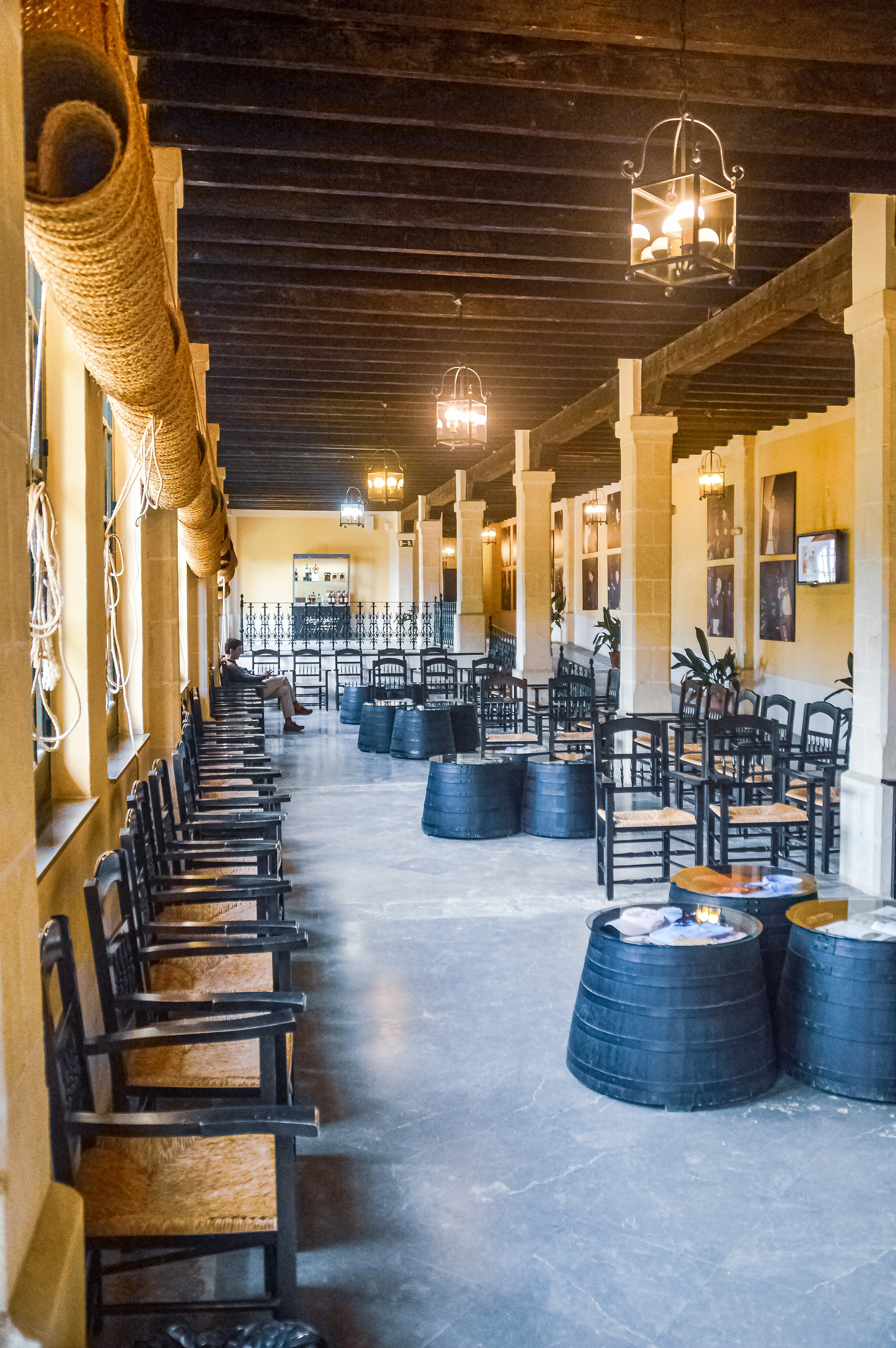
Reception
Reception ‐ photo by ,
©www.mgaylard.co.uk.
Horse Ring
Horse Ring ‐ photo by ,
©www.mgaylard.co.uk.
a man riding a white horse
a man riding a white horse ‐ photo by ,
©www.mgaylard.co.uk.
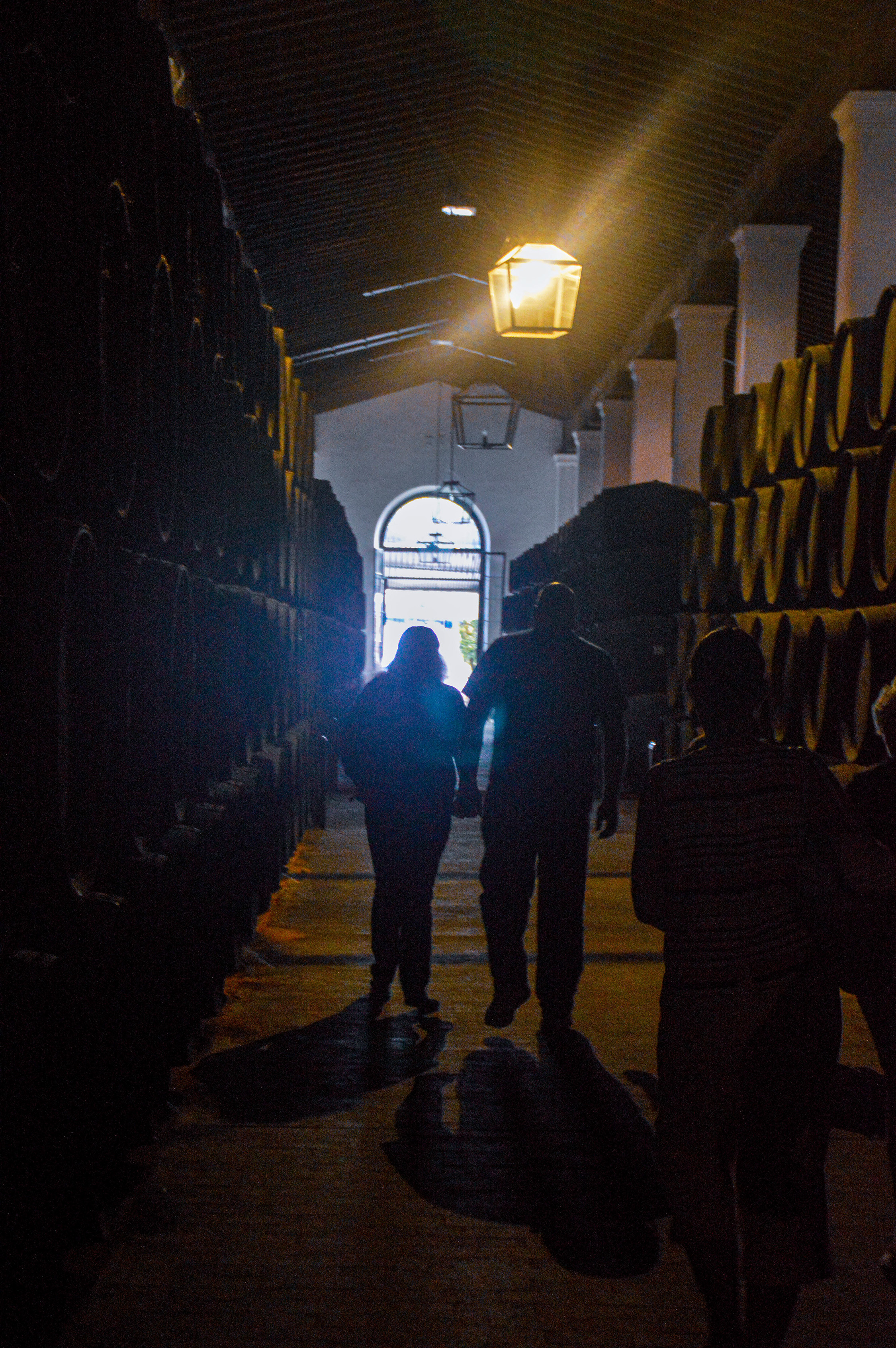
dimly lit corridor
dimly lit corridor ‐ photo by ,
©www.mgaylard.co.uk.
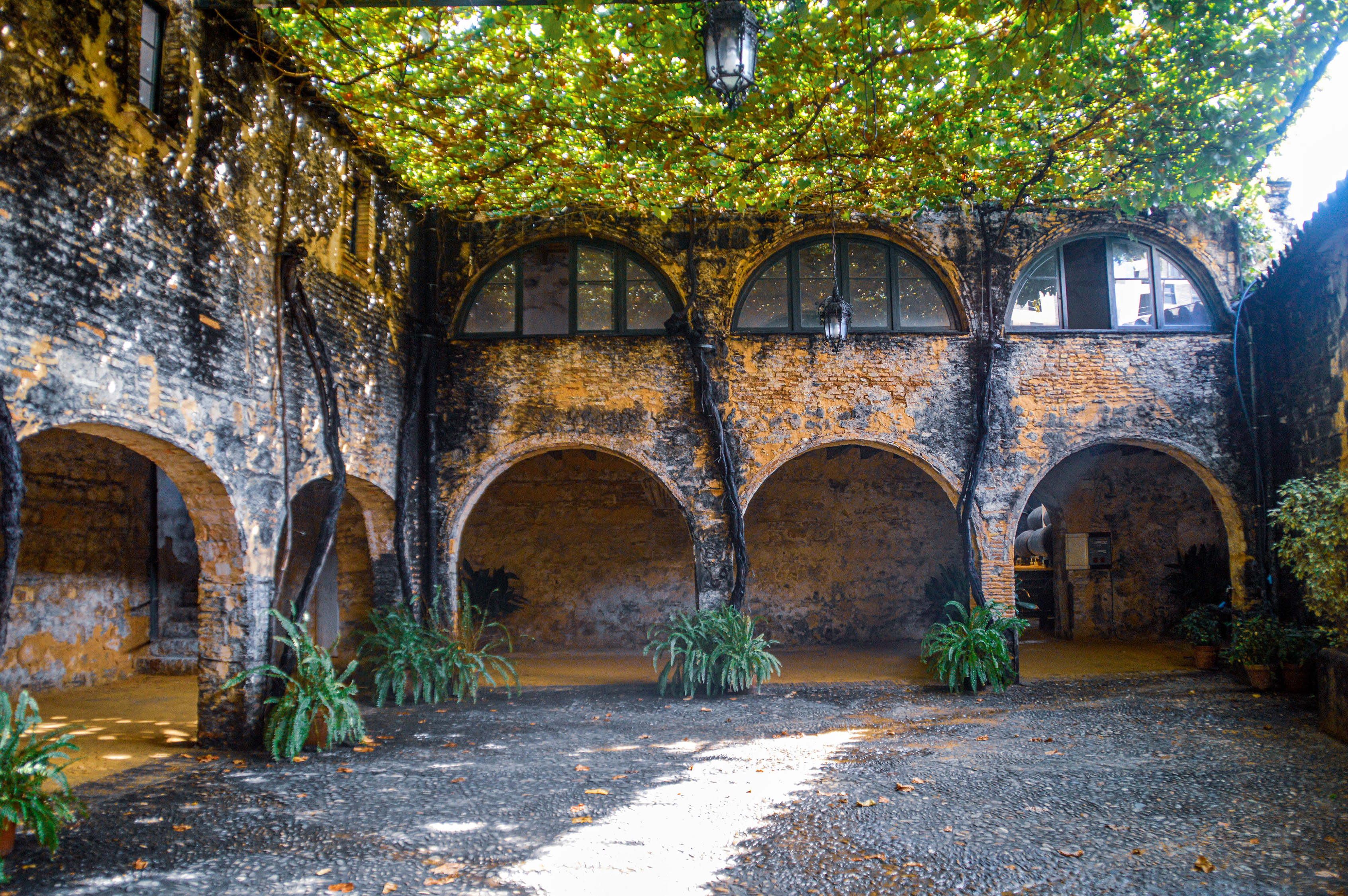
rustic courtyard with arched stone walls and windows
rustic courtyard with arched stone walls and windows ‐ photo by ,
©www.mgaylard.co.uk.
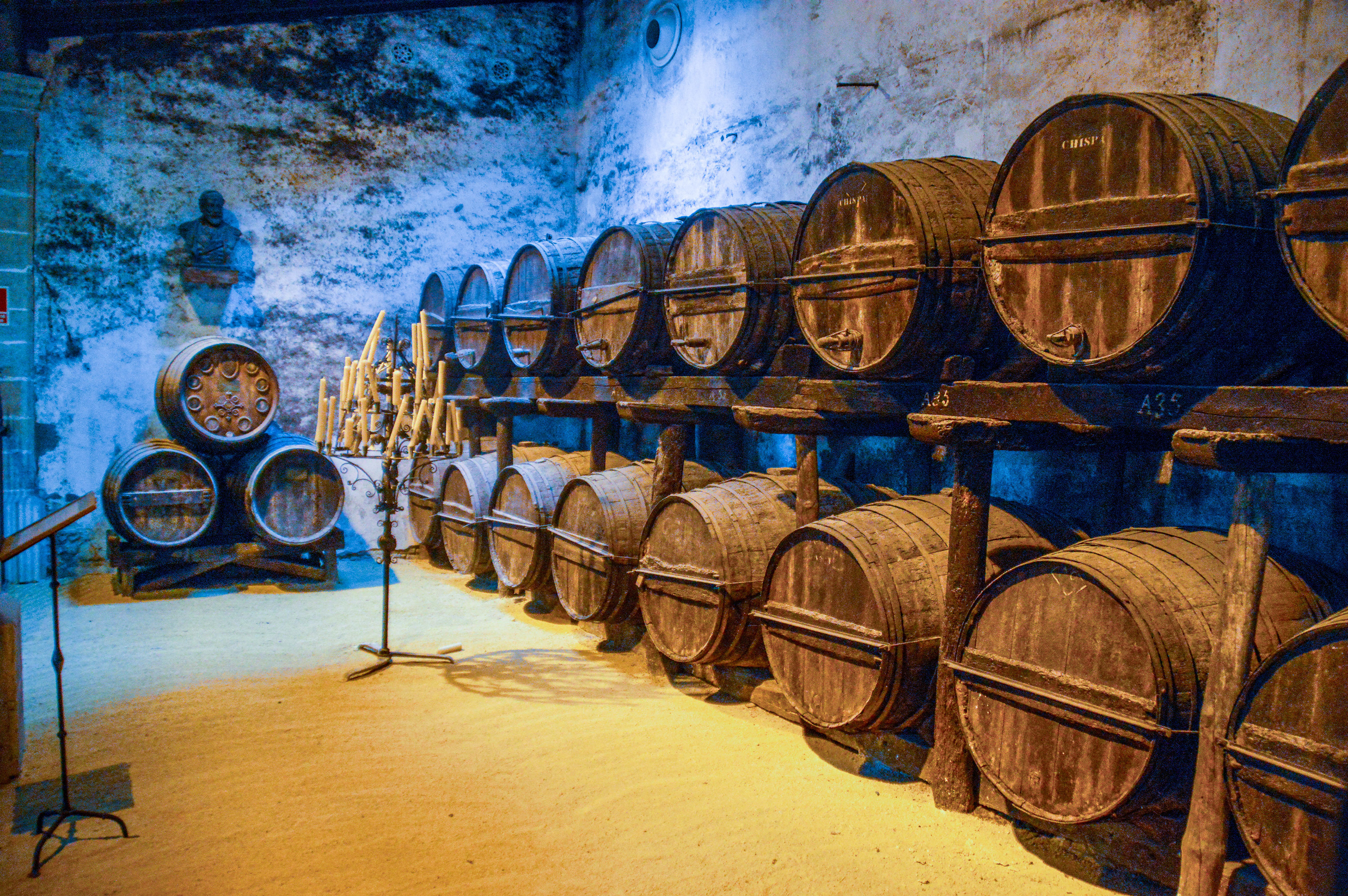
wooden barrels stacked in rows
wooden barrels stacked in rows ‐ photo by ,
©www.mgaylard.co.uk.
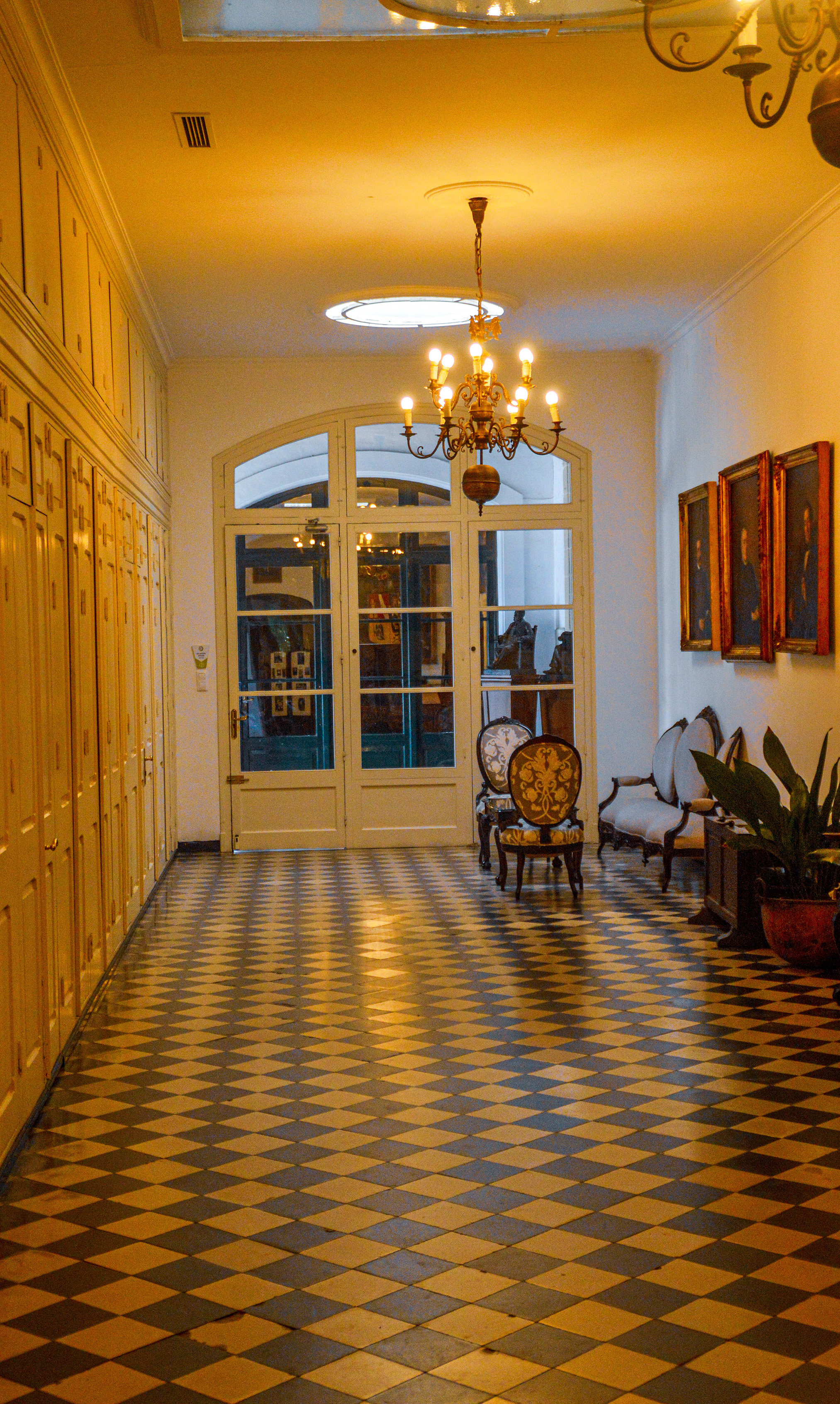
an elegant, vintage-style hallway
an elegant, vintage-style hallway ‐ photo by ,
©www.mgaylard.co.uk.
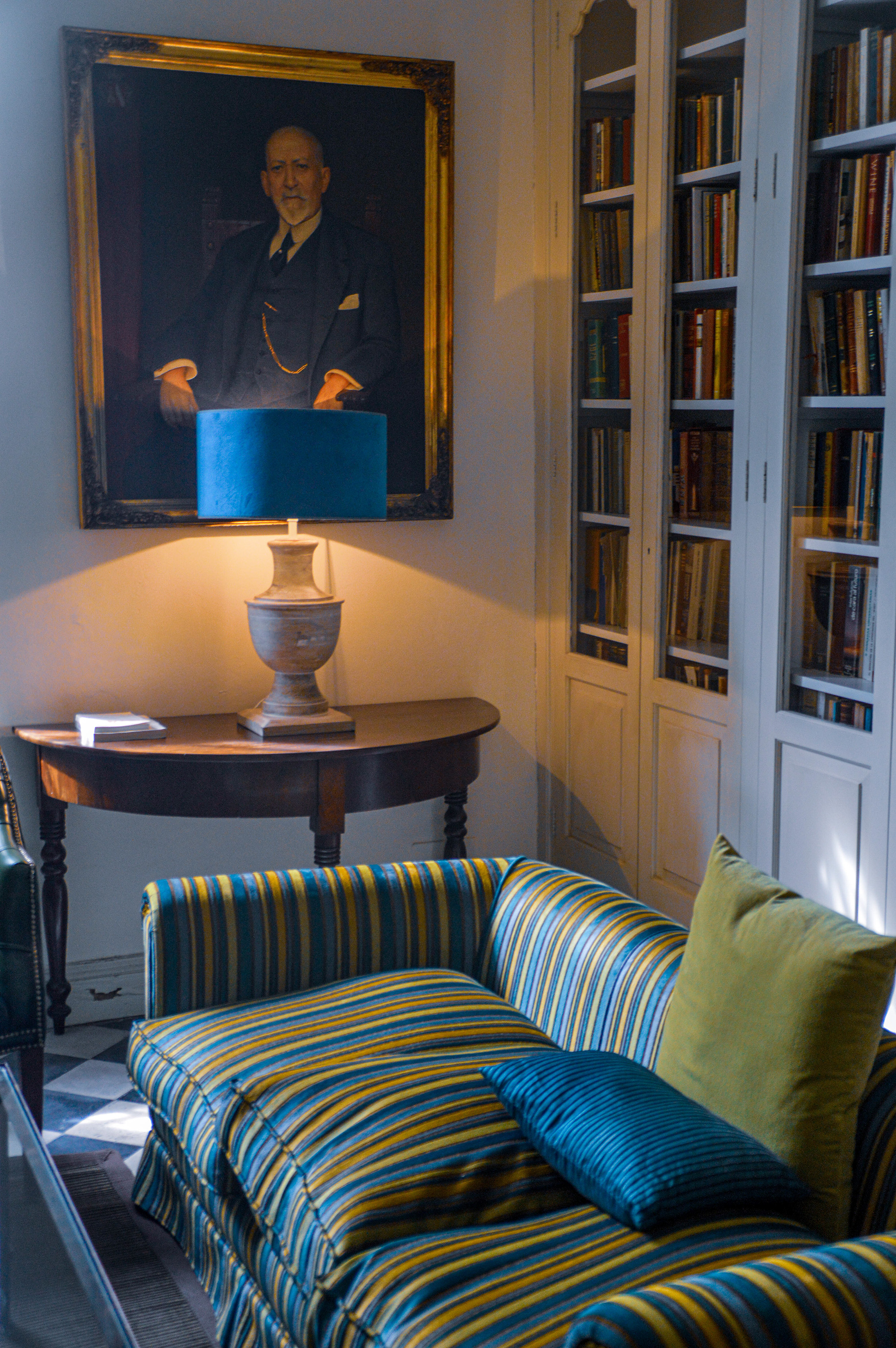
a cozy, well-lit room with a vintage aesthetic
a cozy, well-lit room with a vintage aesthetic ‐ photo by ,
©www.mgaylard.co.uk.
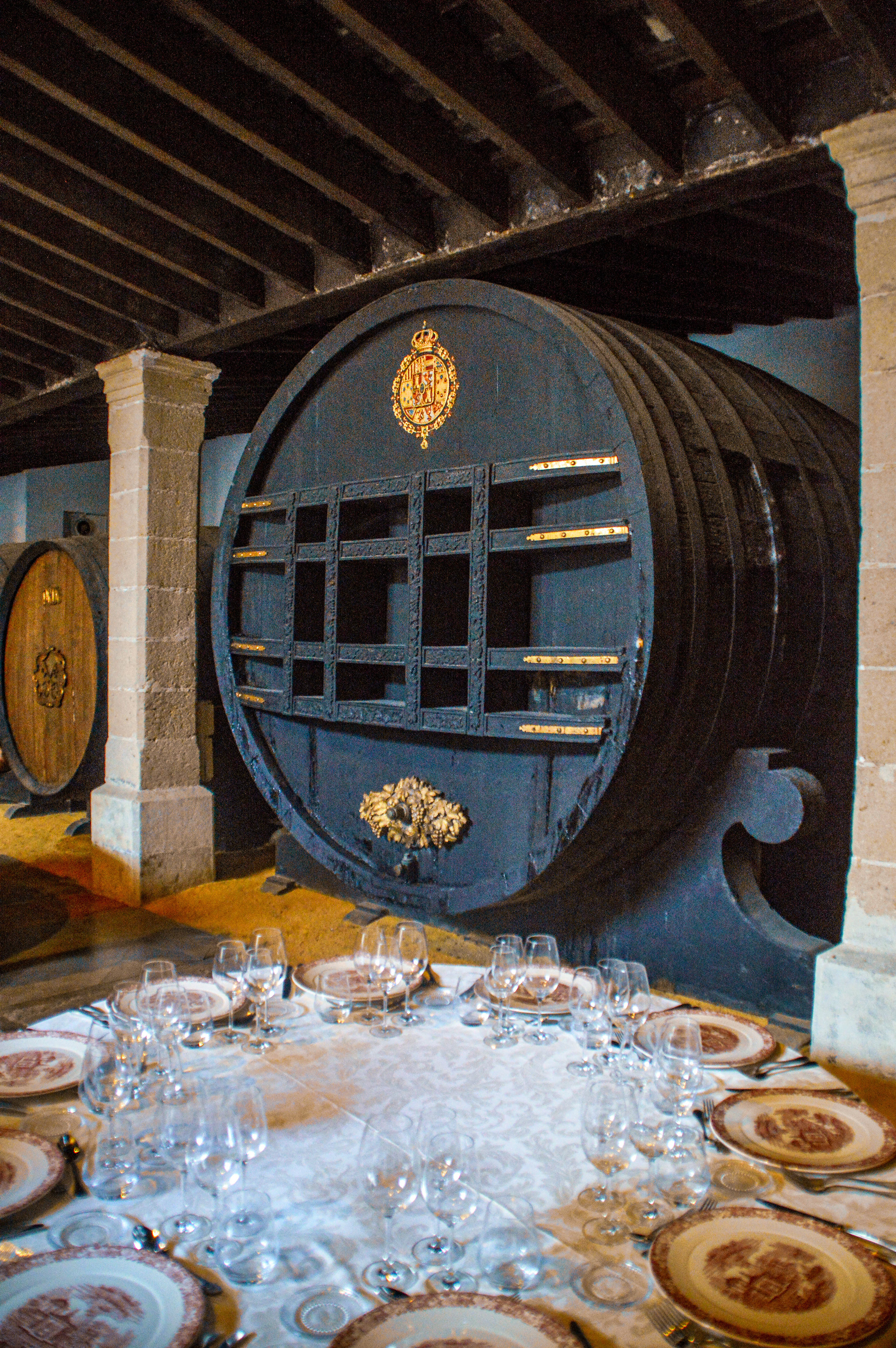
ornate barrel
ornate barrel ‐ photo by ,
©www.mgaylard.co.uk.
 a white building adorned with black wrought-iron windows
a white building adorned with black wrought-iron windows ‐ photo by ,
©www.mgaylard.co.uk.
a wine cellar or tasting room
a wine cellar or tasting room ‐ photo by ,
©www.mgaylard.co.uk.
 a storage room filled with stacks of wooden barrels
a storage room filled with stacks of wooden barrels ‐ photo by ,
©www.mgaylard.co.uk.
barrels stacked in an arched, stone-walled room
barrels stacked in an arched, stone-walled room ‐ photo by ,
©www.mgaylard.co.uk.
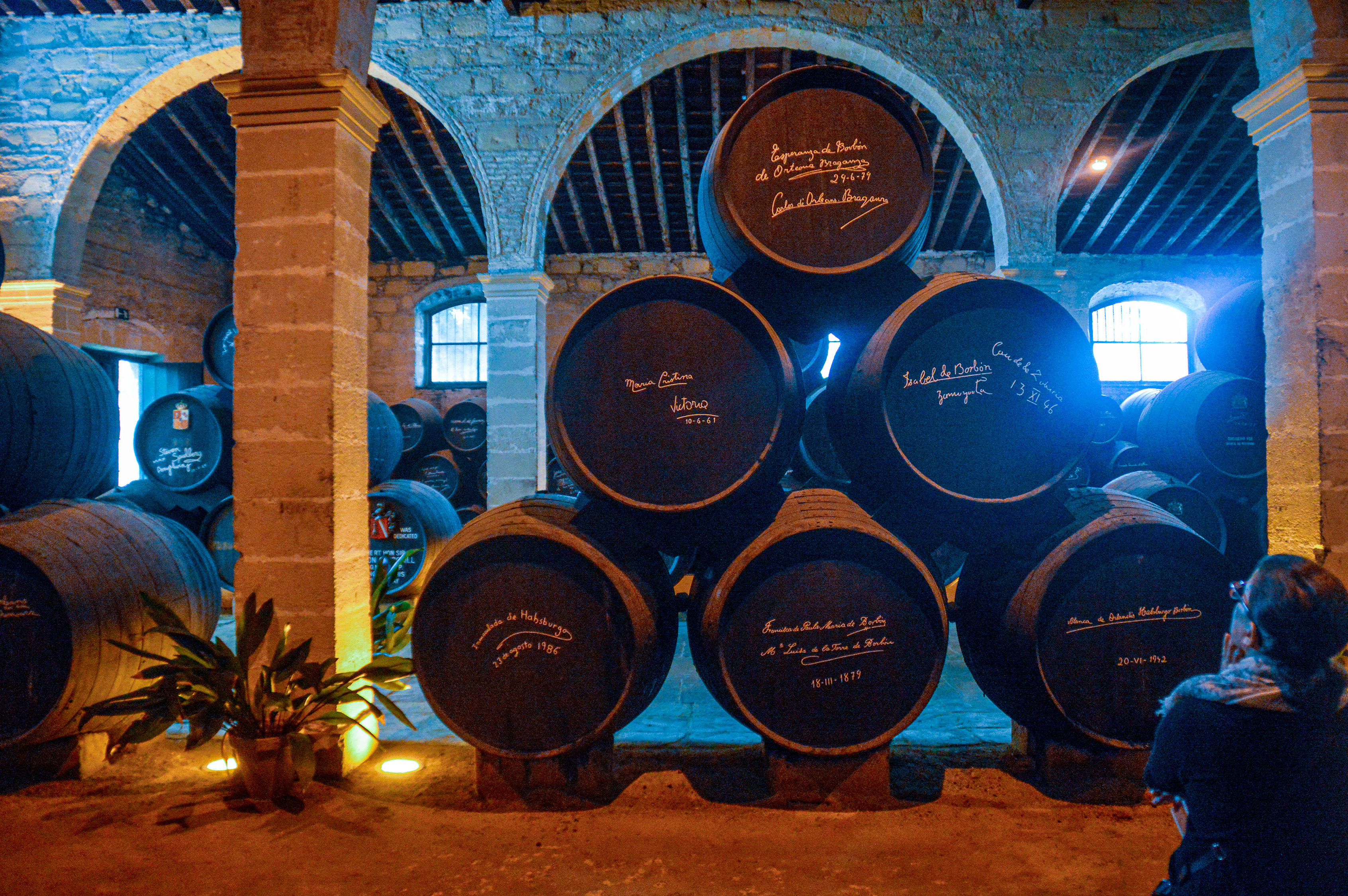
notable individuals who have signed the barrels
notable individuals who have signed the barrels ‐ photo by ,
©www.mgaylard.co.uk.
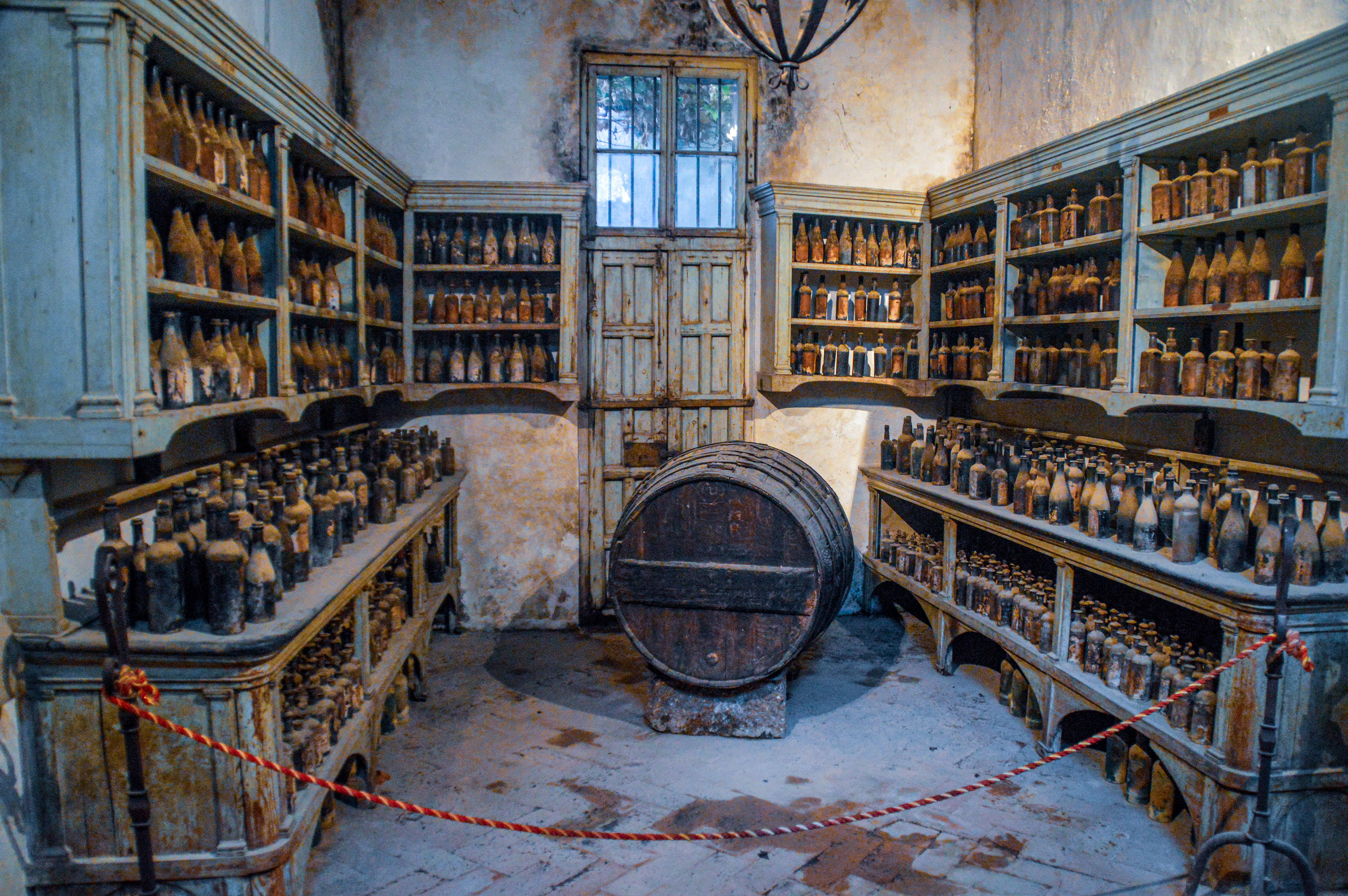
various bottles and containers of different sizes and shapes
various bottles and containers of different sizes and shapes ‐ photo by ,
©www.mgaylard.co.uk.
rows of wooden barrels
rows of wooden barrels ‐ photo by ,
©www.mgaylard.co.uk.
shelves containing various bottles
shelves containing various bottles ‐ photo by ,
©www.mgaylard.co.uk.
Denominación de Origen Jerez de la Frontera
Denominación de Origen Jerez de la Frontera ‐ photo by ,
©www.mgaylard.co.uk.
Open the full set flickr button this page

Bodegas Tío Pepe

Bodegas Tío Pepe is the historic sherry winery complex in Jerez de la Frontera, founded by González Byass and now one of the most iconic enotourism destiSpains in the world. It’s a full architectural and cultural micro-city: Andalusian patios, vine-shaded lanes, 19th-century bodegas, and the famous Calle Ciegos — voted among the most beautiful streets globally.

Historic wine cellars from the 19th and early 20th centuries, showcasing the evolution of sherry production
The world’s largest weather vane, a quirky emblem of the site’s identity
The Tío Pepe Icon — a global brand symbol present in over 100 countries
The Bodega-Hotel — a luxury stay inside the winery grounds, blending heritage and hospitality
Art collections including the “Tío Pepe bottles” emerging art series
Tío Pepe is a perfect example of how architecture, agriculture, and civic identity braid together: The vine-covered streets create a living canopy — a microclimate and a metaphor for sheltering tradition. The barrel cathedrals (Los Apóstoles, La Constancia) operate like ritual chambers of fermentation and memory. The Calle Ciegos functions as a symbolic threshold: a shaded, almost cloister-like passage where time feels suspended. The brand icon — the bottle with red jacket and hat — is a piece of vernacular pop-mythology, a civic mascot as much as a wine label.
Visitors typically move through:
Historic bodegas with vast barrel stocks and solera systems
Outdoor vine-shaded lanes
Interpretive spaces explaining sherry production
Tasting rooms with fino, amontillado, palo cortado, and brandy pairings
Tours range from classic tastings to private, curated experiences.

References

www.tripadvisor.comwww.tiopepe.comwww.turismojerez.com , Text generated by Microsoft CoPilot

Medina-Sidonia

Andalusia,   Spain

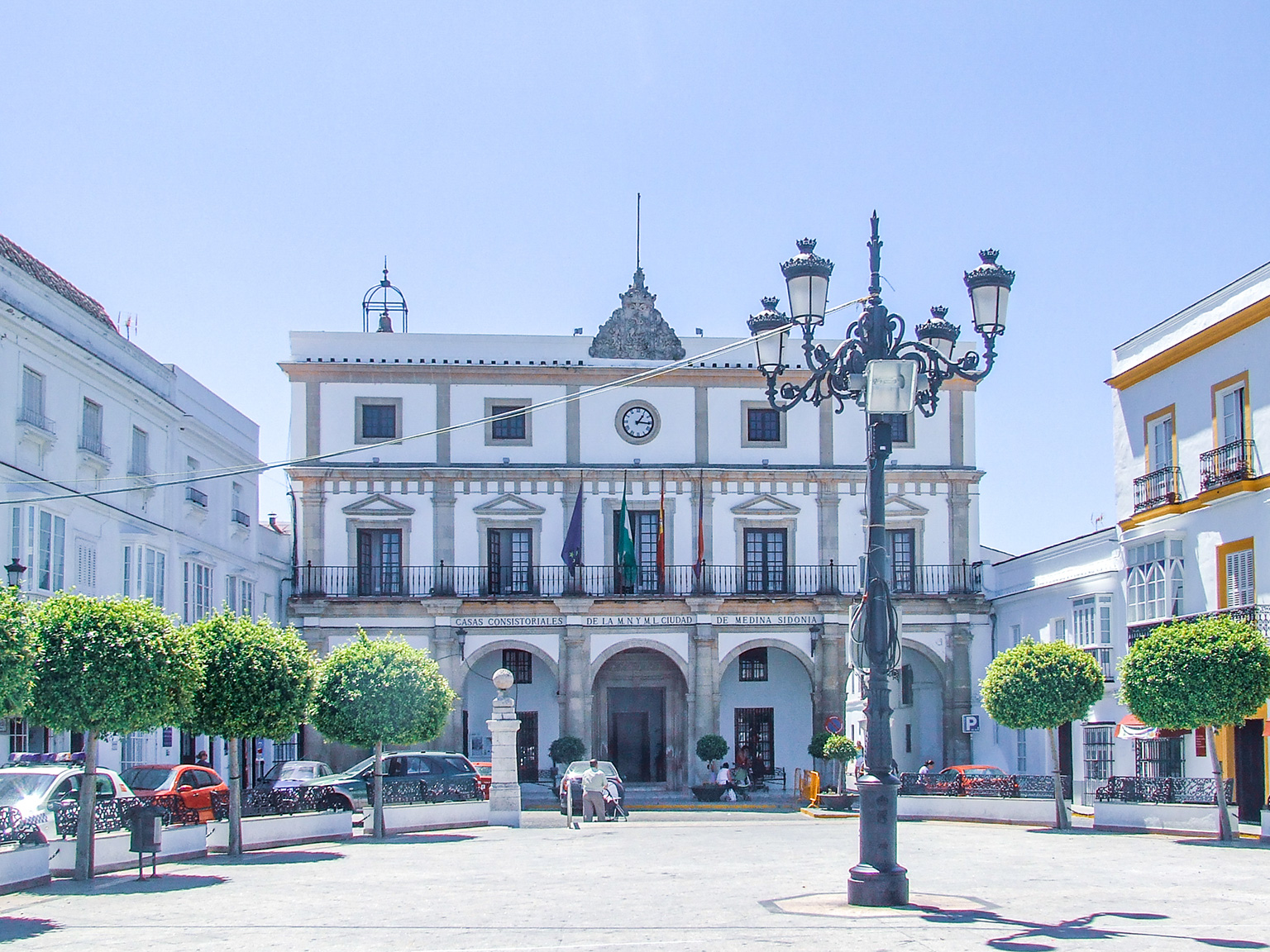
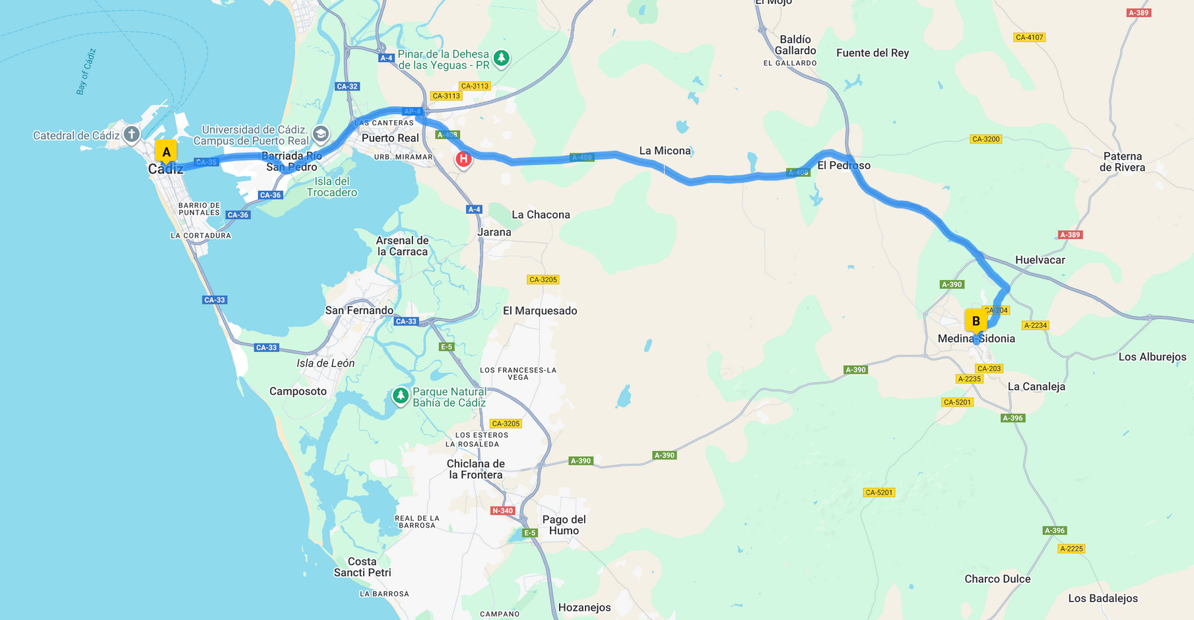
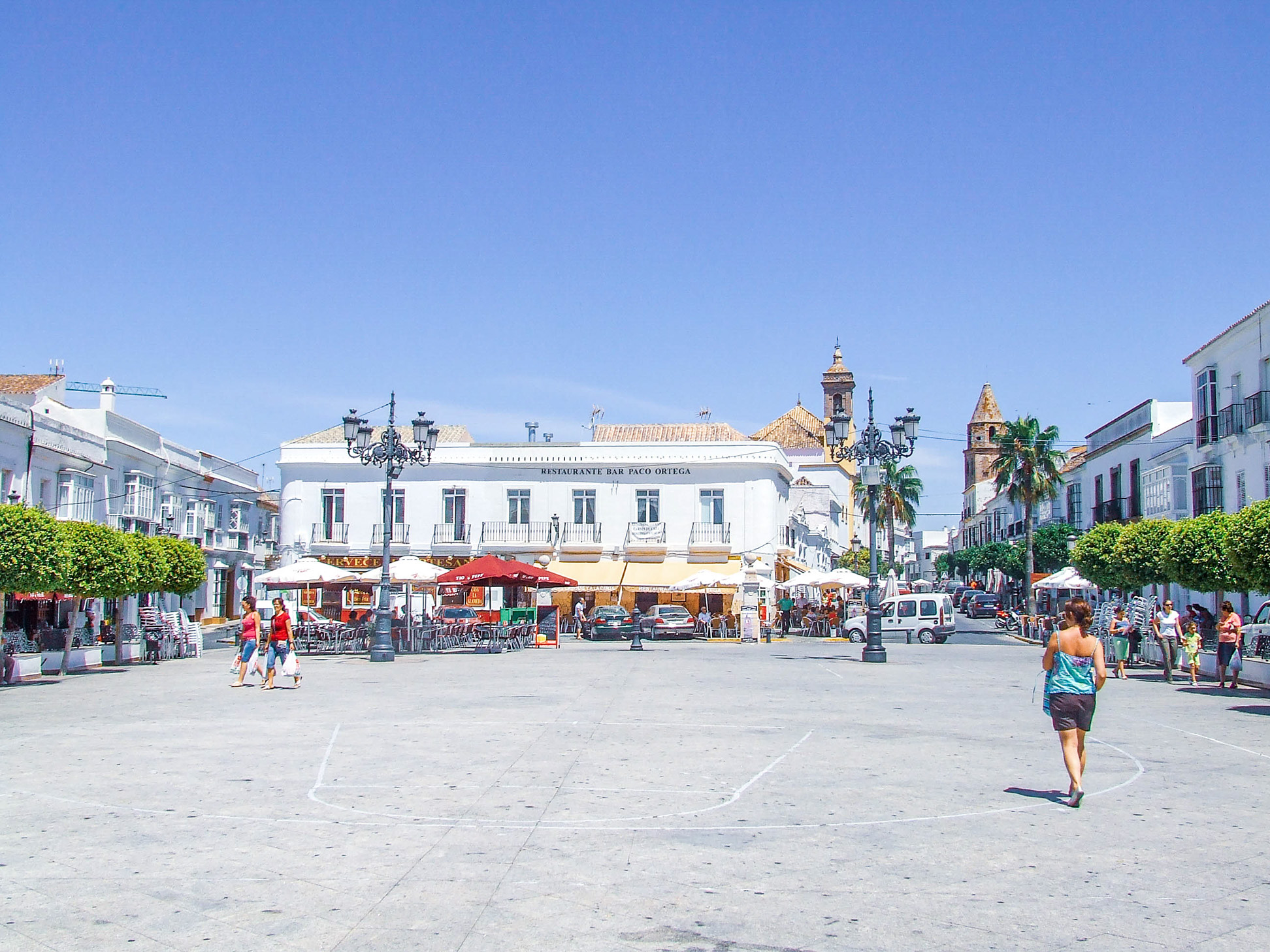
Medina-Sidonia is a historic town located in the province of Cádiz, in the Andalusia region of southern Spain. Known for its rich history and cultural heritage, Medina-Sidonia is one of the oldest towns in Europe, with roots dating back to Phoenician and Roman times. The town is famous for its well-preserved old quarter, impressive churches, and panoramic views from its hilltop setenil. Medina-Sidonia is also renowned for its traditional sweets, particularly "alfajores," and its annual Holy Week processions.
prominent bell tower
prominent bell tower ‐ photo by ,
©www.mgaylard.co.uk.
town square
town square ‐ photo by ,
©www.mgaylard.co.uk.
Town Hall
Town Hall ‐ photo by ,
©www.mgaylard.co.uk.
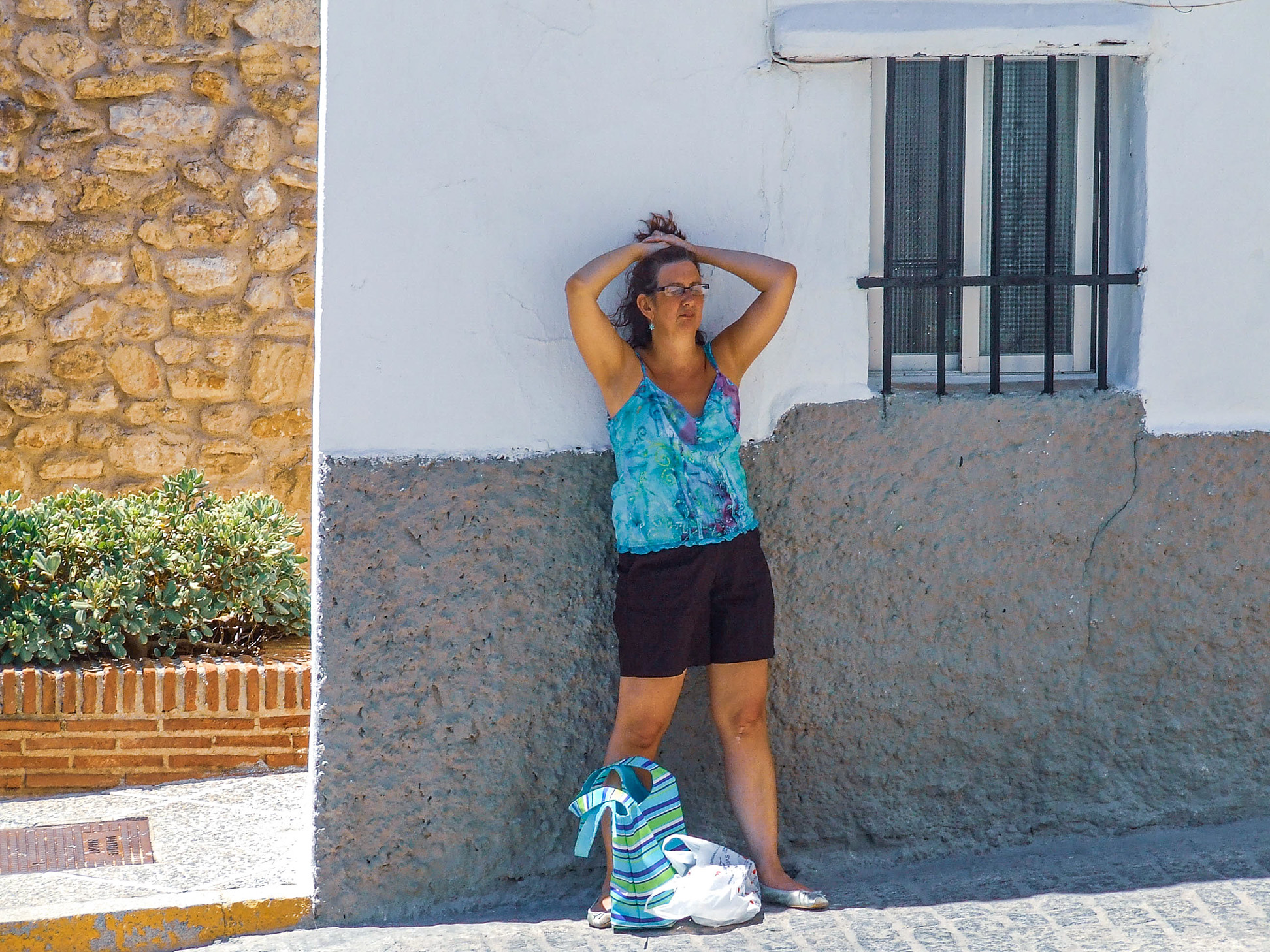
Feeling The Heat
Feeling The Heat ‐ photo by ,
©www.mgaylard.co.uk.
Gothic architectural style
Gothic architectural style ‐ photo by ,
©www.mgaylard.co.uk.
Plaza
Plaza ‐ photo by ,
©www.mgaylard.co.uk.
Open the full set flickr button this page

Medina-Sidonia

Medina-Sidonia is a white hilltop city with deep layers of Phoenician, Roman, Visigothic, Islamic, and early-modern Spanish history. Because of its elevation, it has long served as a strategic military site.

Considered by some to be one of the oldest cities in Europe.
Originates from Phoenician Asido, later Asido Caesarina Augusta under Rome.
Became a major ducal seat in the 15th century, home of the powerful Dukes of Medina Sidonia.
Produced Alonso Pérez de Guzmán, the admiral who commanded the Spanish Armada in 1588.
The name itself blends Arabic “Medina” (city) with Sidonia (of Sidon) — literally “City of Sidon”.
Medina-Sidonia is famous for its pastry tradition, especially convent-made sweets — a recurring theme in the search results.

References

en.wikipedia.orgwww.andaluciamia.comwww.andalucia.com , Text generated by Microsoft CoPilot

Setenil de las Bodegas

Andalusia,   Spain

Setenil de las Bodegas is a charming and unique village located in the province of Cádiz, within the Andalusia region of southern Spain. Famous for its distinctive houses built into the rock formations of the surrounding gorge, Setenil offers a breathtaking blend of natural beauty and traditional Andalusian architecture. The village is also known for its delicious local cuisine, particularly its cured meats and pastries.
Setenil de las Bodegas
Setenil de las Bodegas ‐ photo by ,,
©www.mgaylard.co.uk.
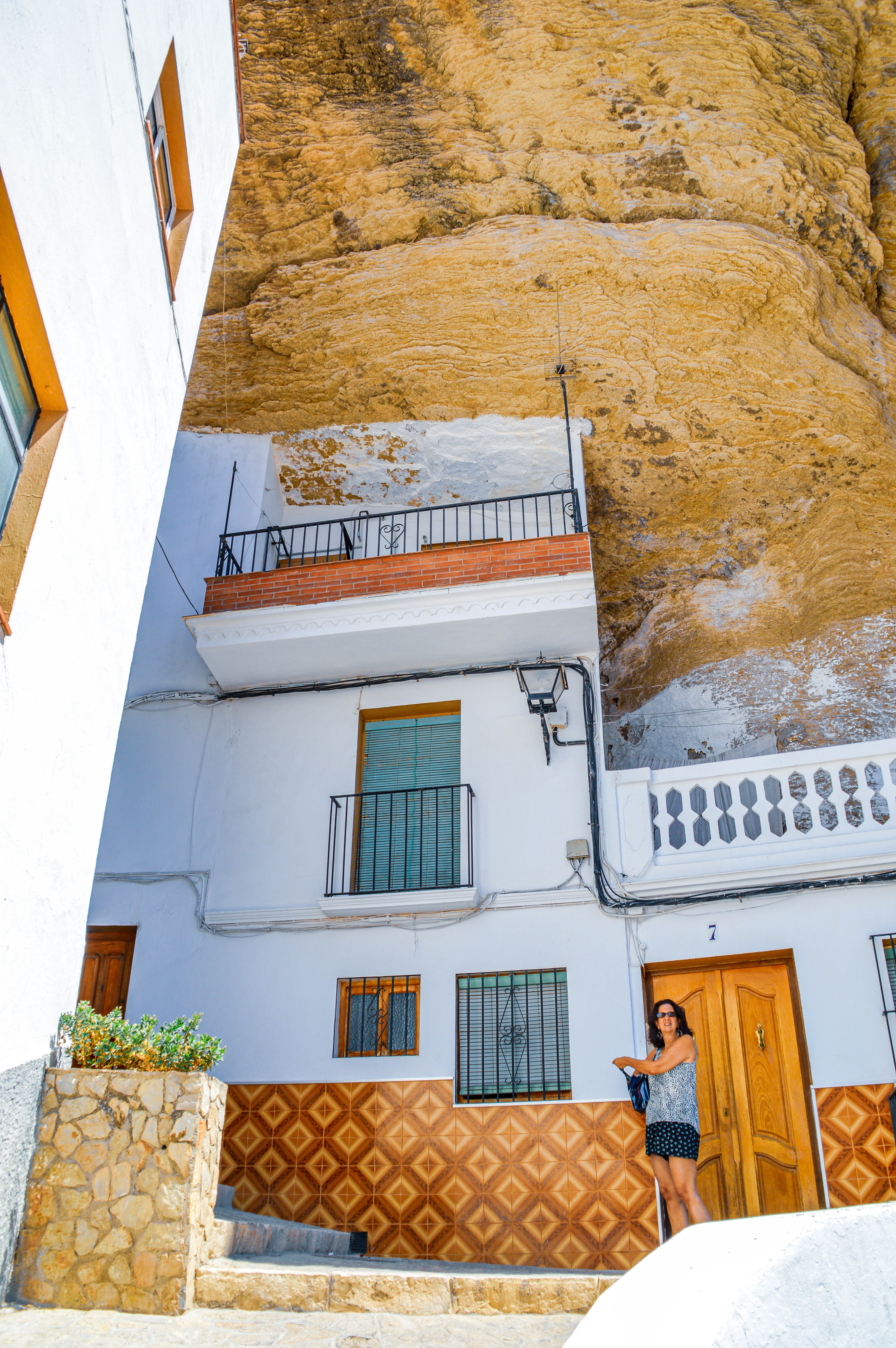
The house has a combination of white walls, wooden doors, and patterned tiles
The house has a combination of white walls, wooden doors, and patterned tiles ‐ photo by ,
©www.mgaylard.co.uk.
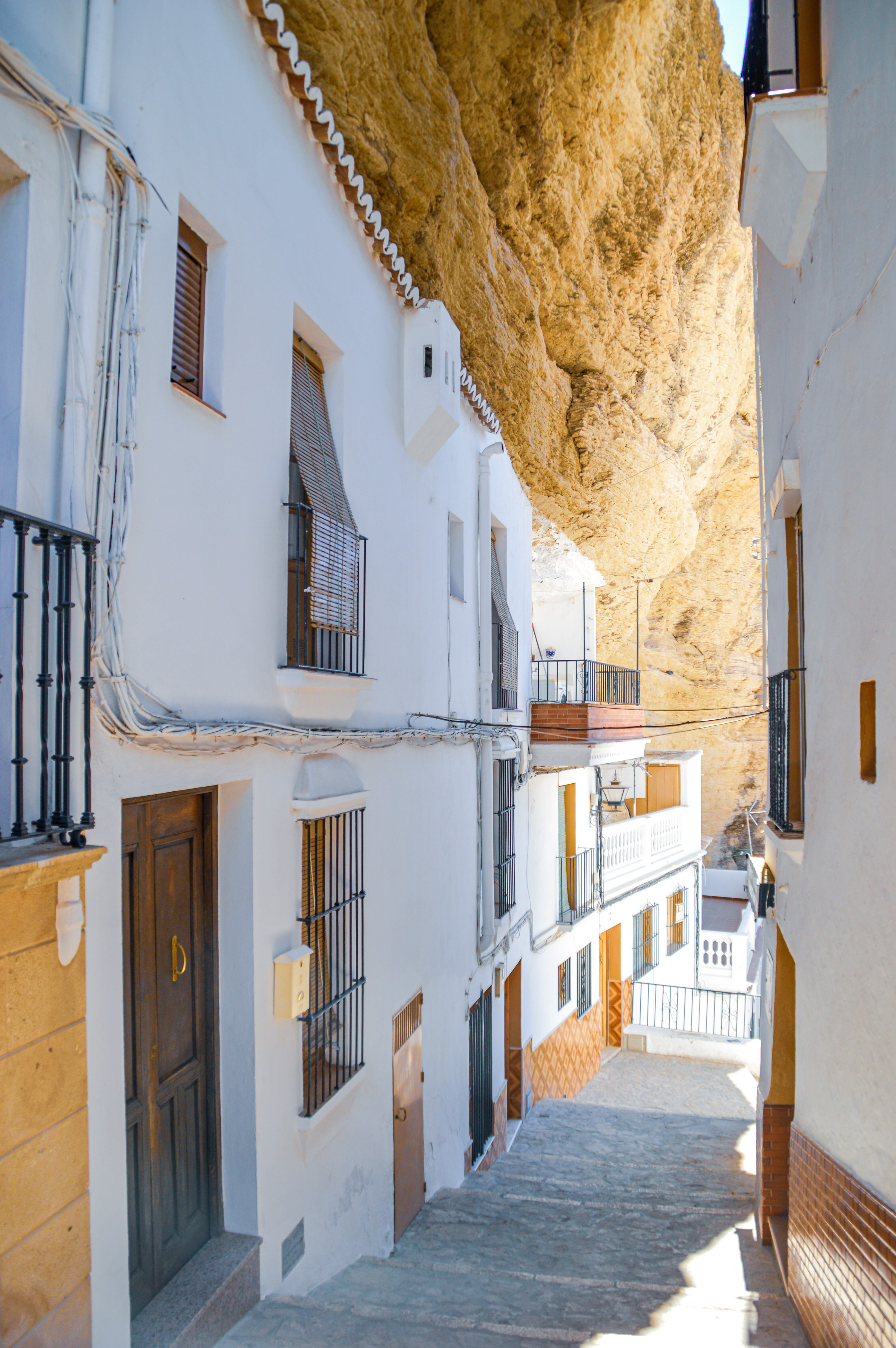
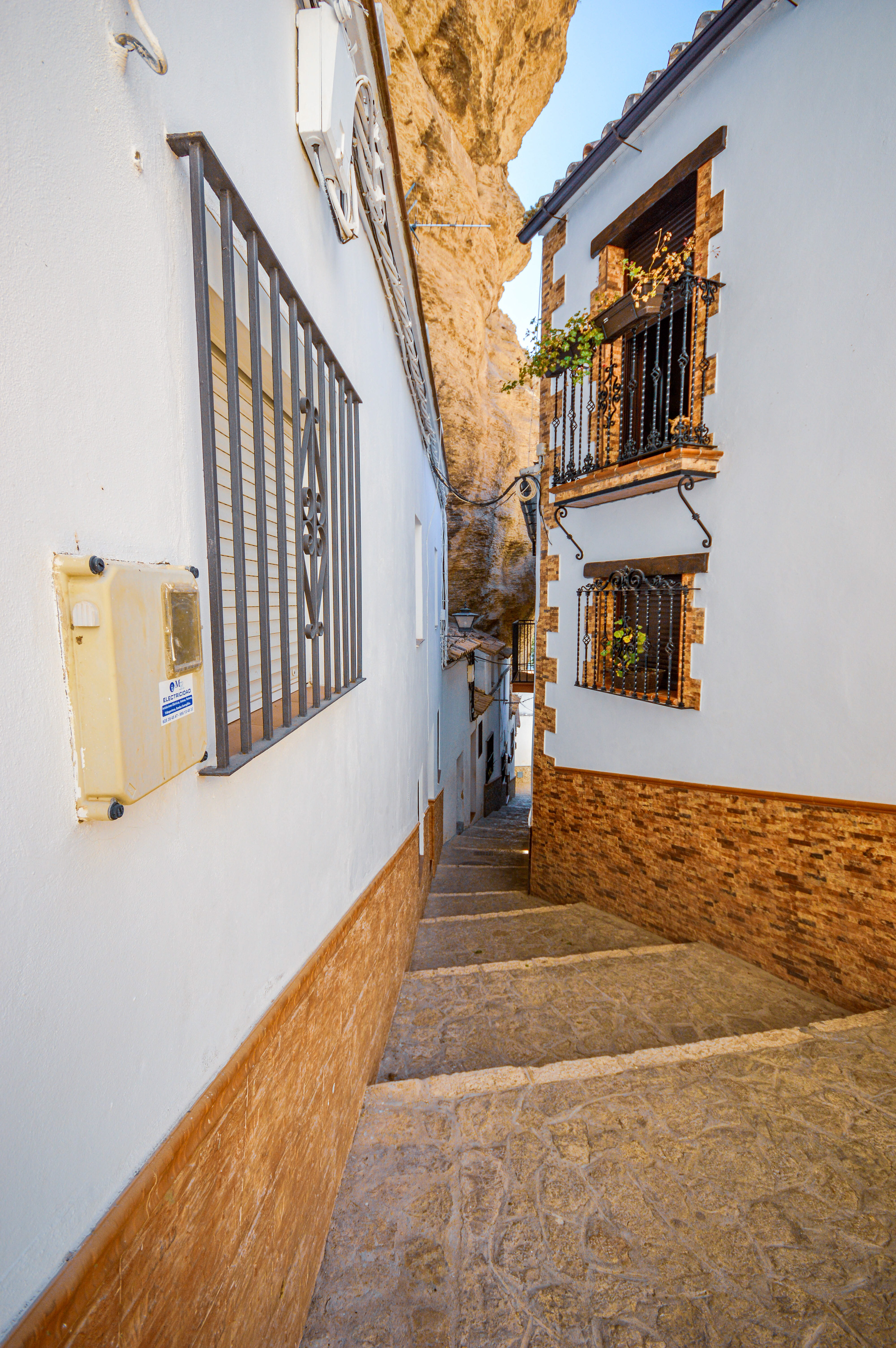
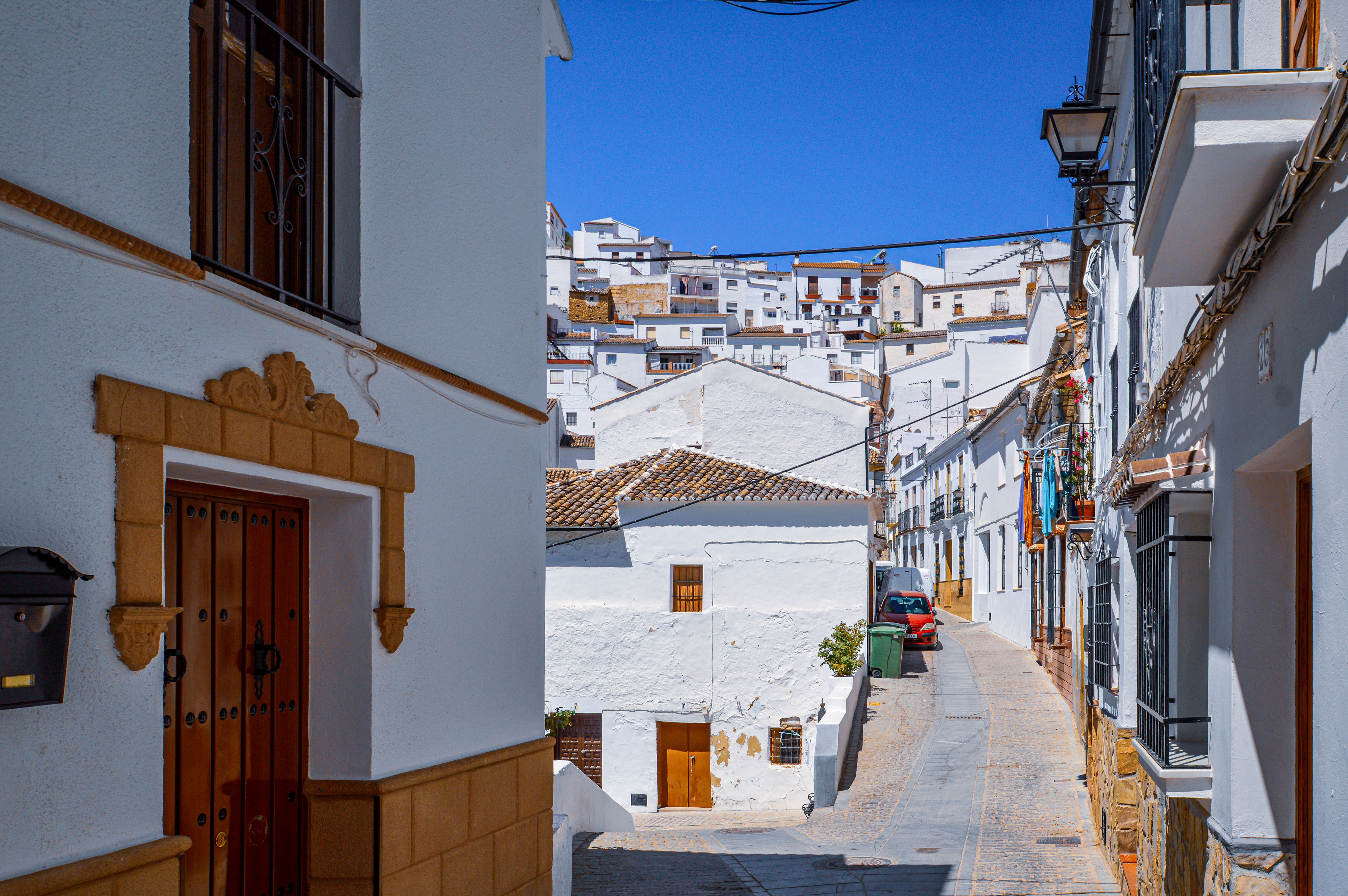
a narrow, steep street
a narrow, steep street ‐ photo by ,
©www.mgaylard.co.uk.
a narrow, steep staircase
a narrow, steep staircase ‐ photo by ,
©www.mgaylard.co.uk.
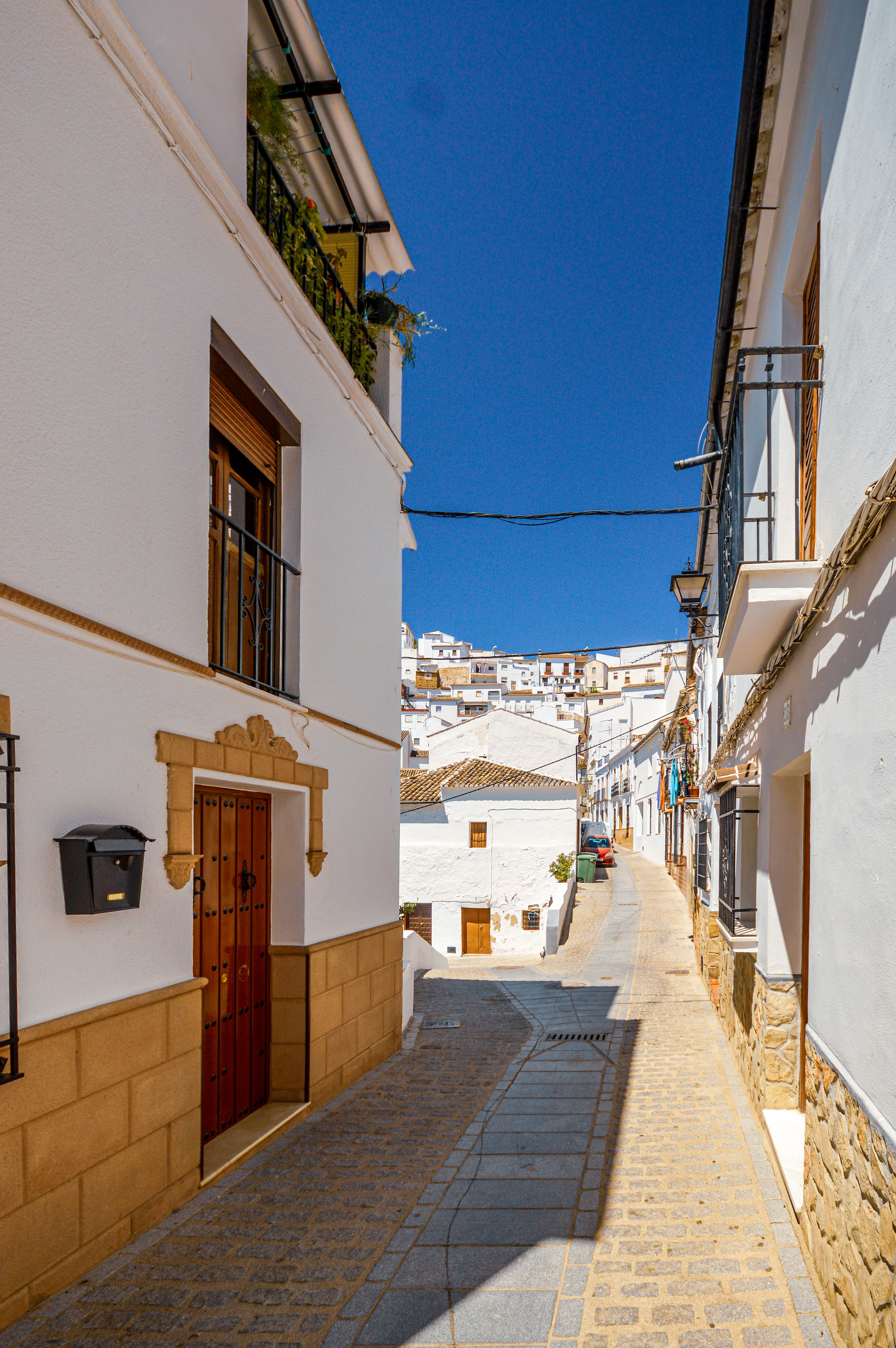
The buildings are predominantly white with terracotta accents,
The buildings are predominantly white with terracotta accents, ‐ photo by ,
©www.mgaylard.co.uk.
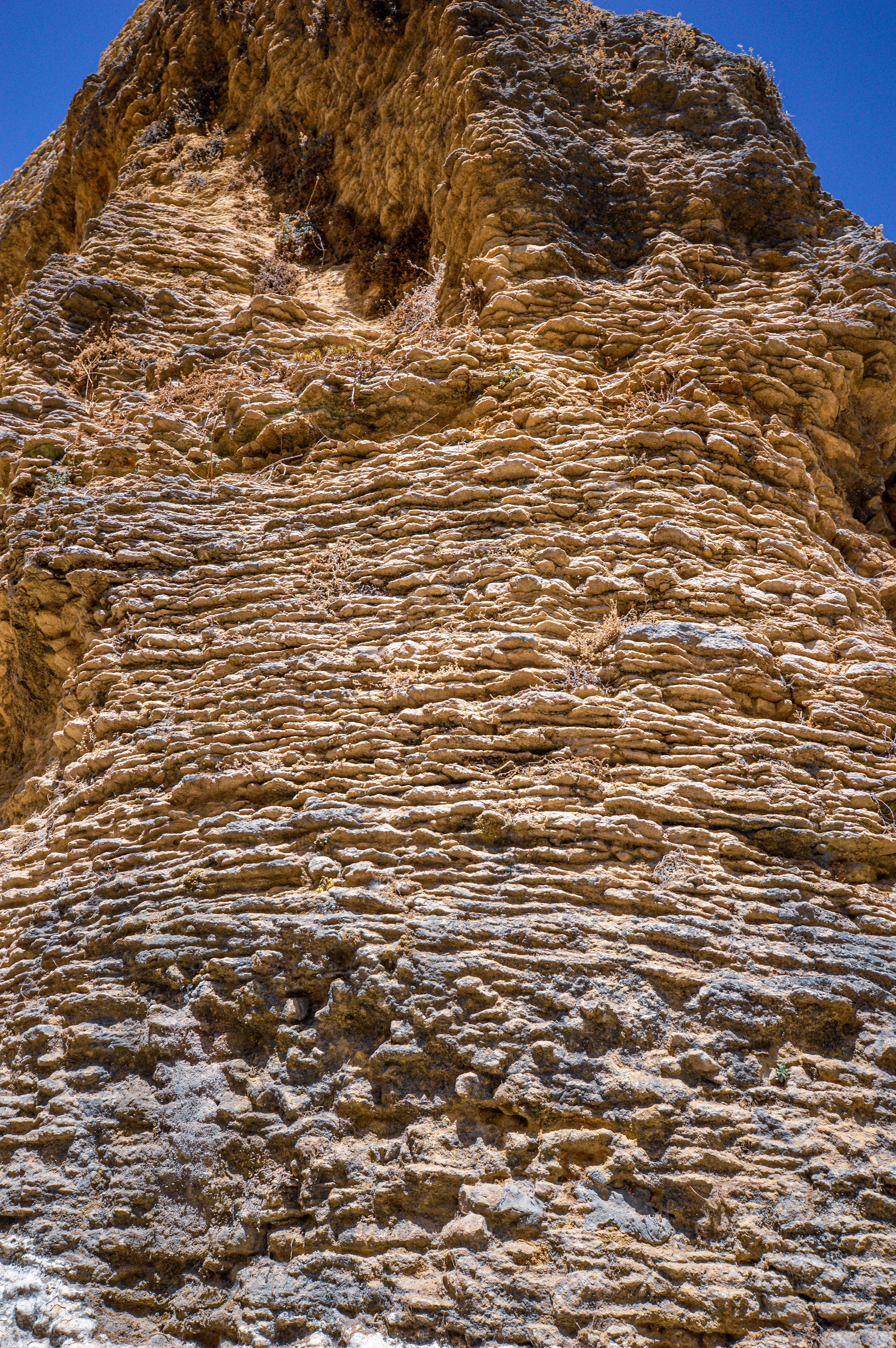
distinct horizontal layers of sedimentary rock
distinct horizontal layers of sedimentary rock ‐ photo by ,
©www.mgaylard.co.uk.
whitewashed village
whitewashed village ‐ photo by ,
©www.mgaylard.co.uk.
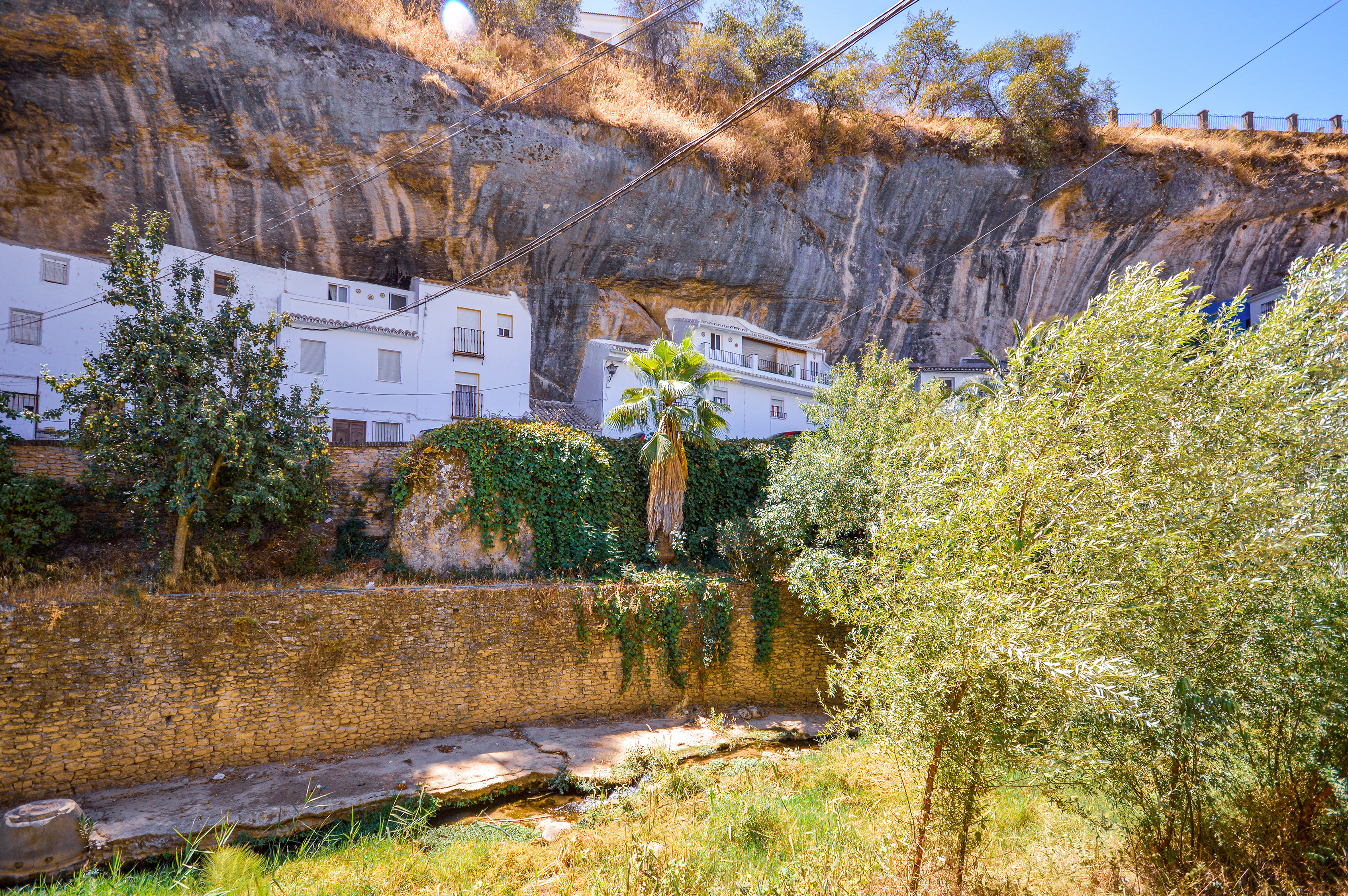
small village nestled against a rocky cliff
small village nestled against a rocky cliff ‐ photo by ,
©www.mgaylard.co.uk.
Open the full set flickr button this page

Setenil de las Bodegas

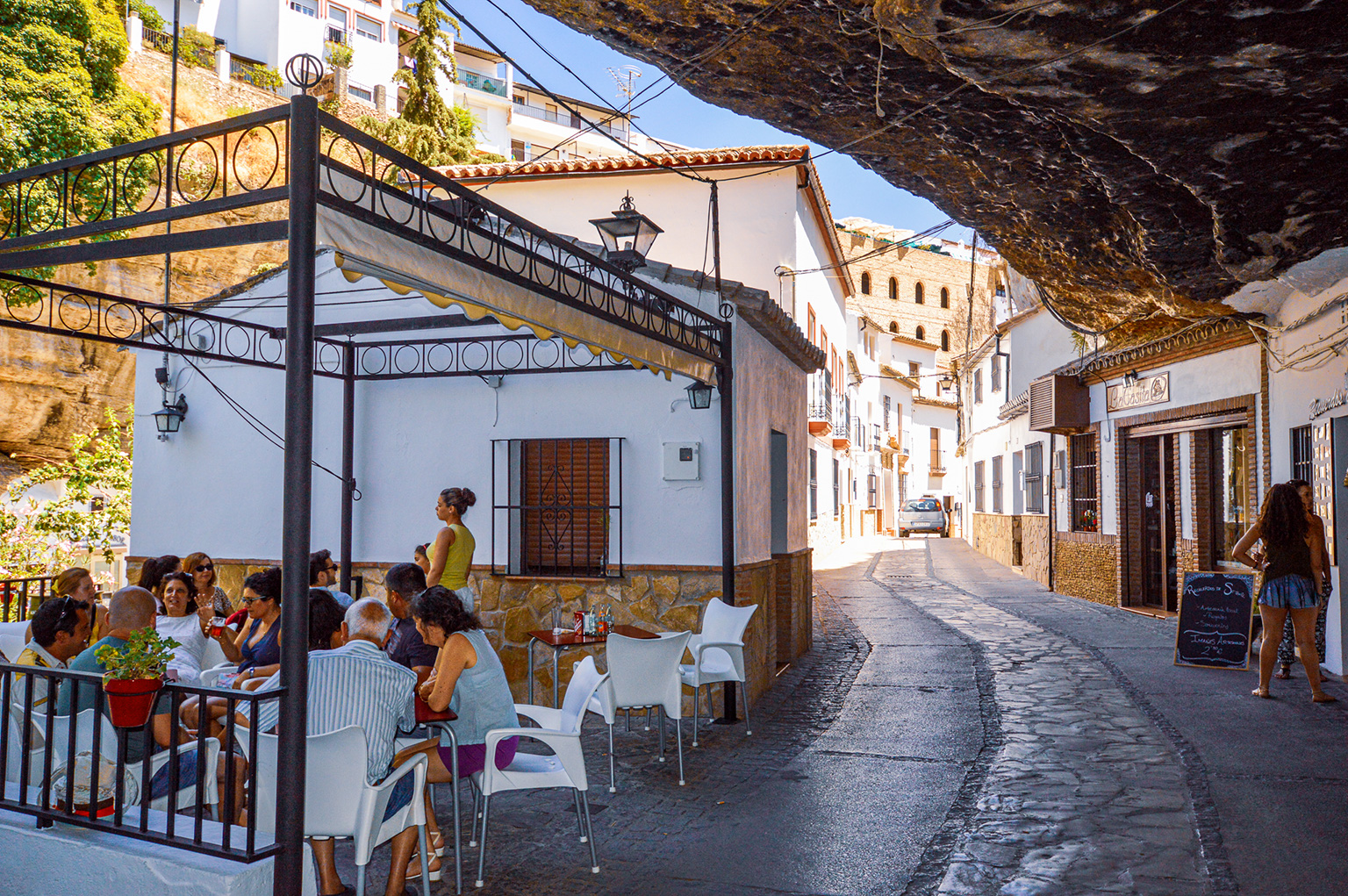
Setenil de las Bodegas is one of Andalusia’s most visually striking pueblos blancos — a town where streets, homes, and bodegas are literally built beneath and into enormous overhanging rock formations. It sits in the province of Cádiz, within the Sierra de Cádiz comarca.

Houses are built directly under massive rock overhangs, using the cliff as a natural roof and insulation. This creates the famous streets Calle Cuevas del Sol and Calle Cuevas de la Sombra where sunlight and shadow become architectural elements. This is a perfect example of the kind of natural–civic–symbolic intersection you love to map: geology shaping settlement, settlement shaping culture.
The site shows prehistoric habitation, with nearby cave societies dating back 25,000+ years. The fortified Moorish town dates to at least the 12th-century Almohad period. Its name is traditionally linked to septem nihil — “seven times nothing” — referencing seven failed Christian sieges before its fall in 1484 during the Reconquista. “De las Bodegas” refers to its historic wine-storage caves, which maintained ideal temperatures for aging wine.

References

en.wikipedia.orgthepetitewanderer.comwww.tripadvisor.co.uk , Text generated by Microsoft CoPilot
To the top
Powered by w3.css. The images are all stored on link to www.gaylard.co.uk Photostream on Flickr   This website is hosted by link to 123Reg Web Hosting