HOME Army Flying Museum Beaulieu Palace House National Motor Museum - Cars Bucklers Hard Fort Nelson Lymington Portsmouth Harbour Royal Navy Ships Historic Dockyard National Historic Fleet Southampton Watercress Heritage Railway Winchester Hampshire England

Army Flying Museum

Army Flying Museum

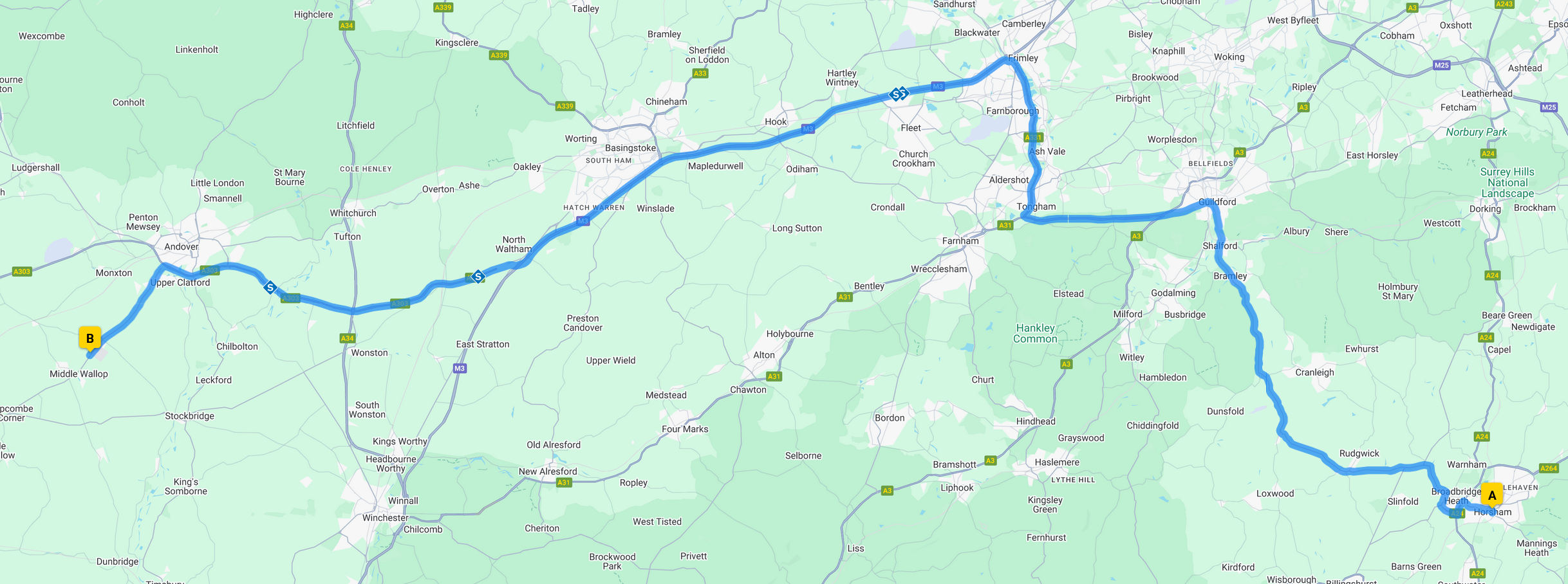
Middle WallopStockbridgeHampshire,   SO20 8DY,   United Kingdom

The Army Flying Museum is a specialized aviation museum located at Middle Wallop, Hampshire, England, dedicated to preserving and showcasing the history of British Army aviation. Housed in the historic hangars of the former RAF Middle Wallop, the museum features a collection of aircraft, artifacts, and exhibits that tell the story of Army aviation from its early days to the present. The museum offers visitors a unique and immersive experience, celebrating the bravery, innovation, and achievements of British Army aviators.
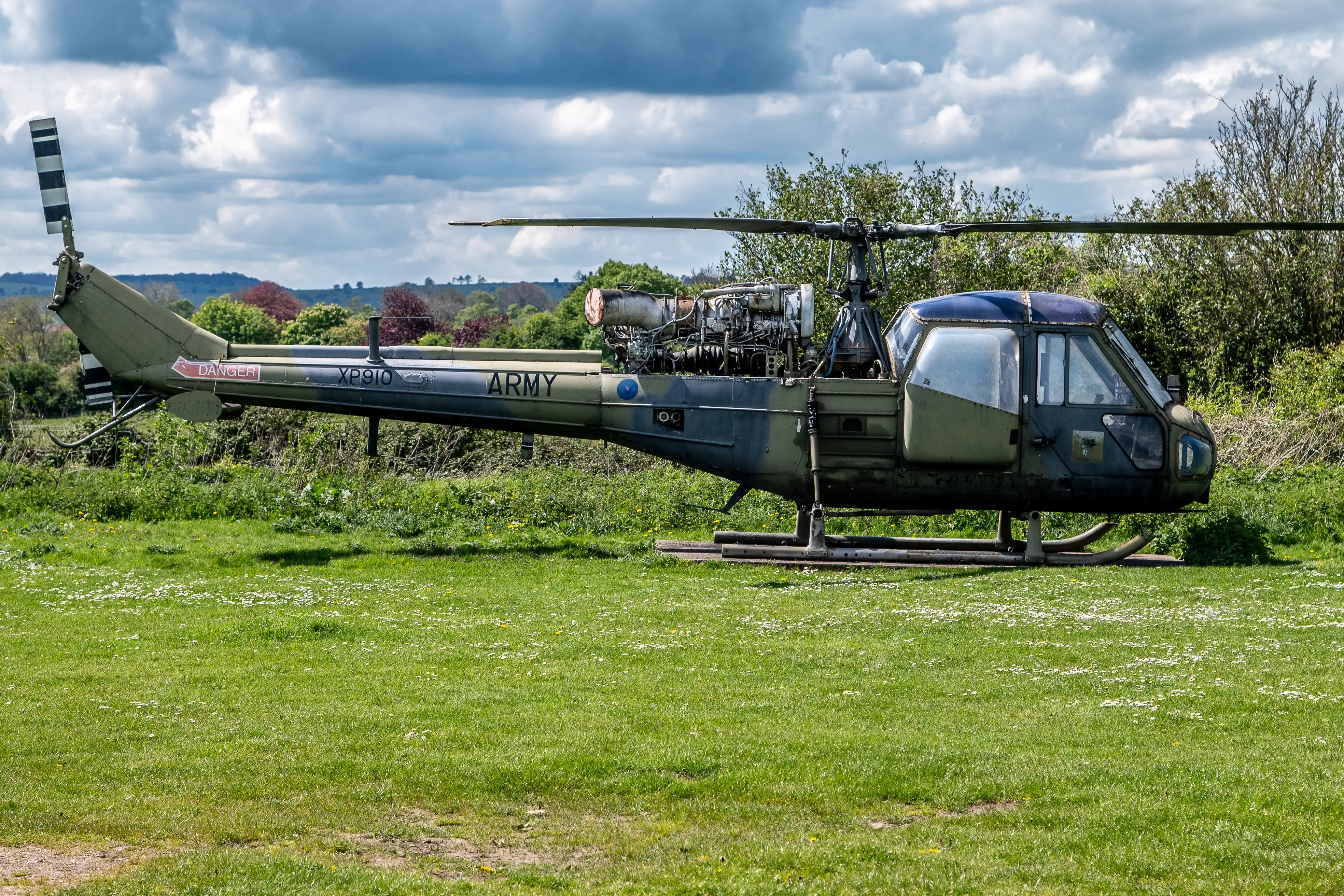
Olive-green British Army helicopter on a grassy field with open engine compartment and tail code XP910.
British Army Helicopter – XP910 on Field
photo by
©www.mgaylard.co.uk.
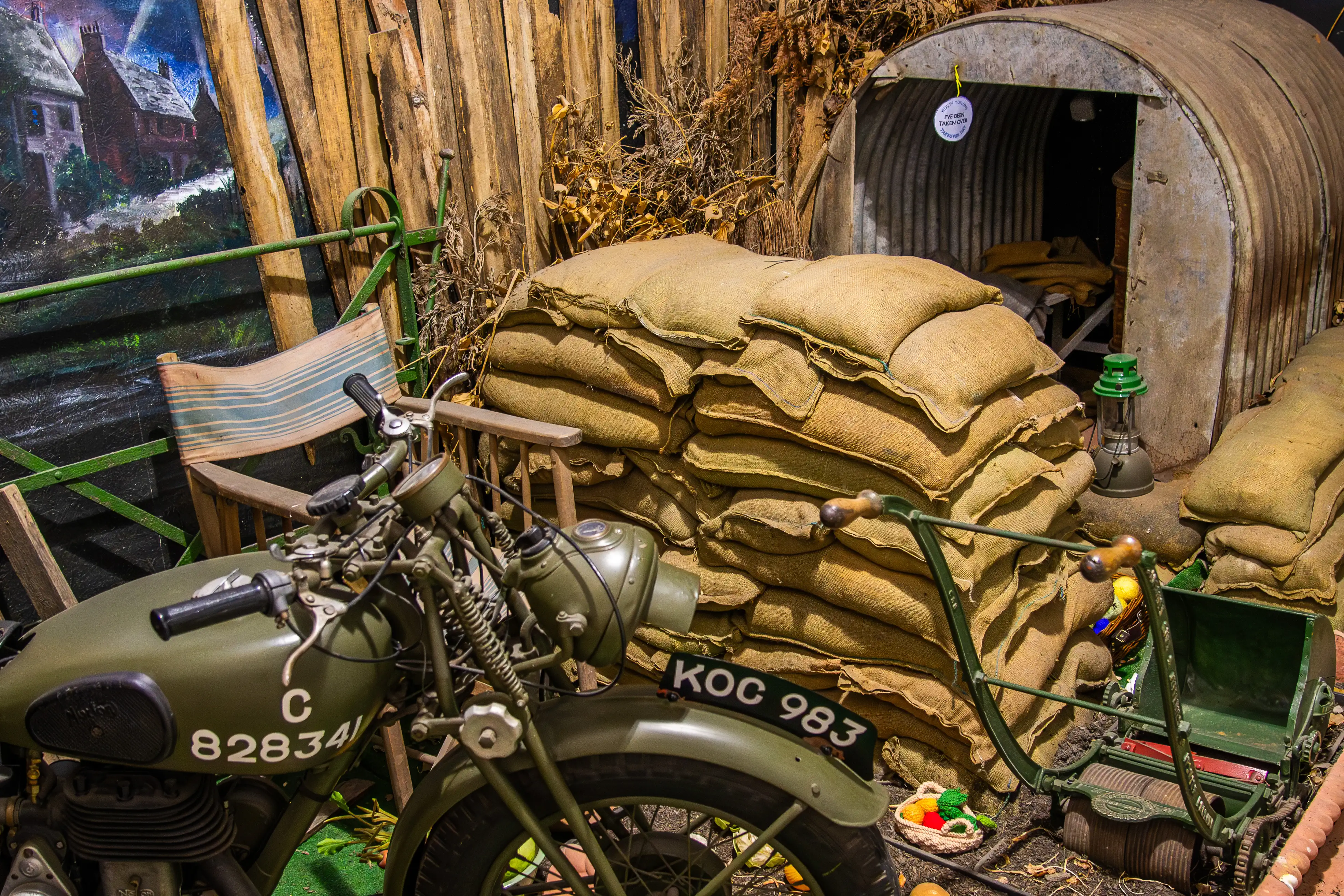
A vintage military motorcycle with the markings 'KOC 983' and 'C 828341' parked in front of a makeshift shelter made of sandbags. A striped deck chair, a green lantern, and a wooden fence are visible, with a painted rural house in the background
Wheels of History: A Military Motorcycle in a Wartime Encampment
photo by
©www.mgaylard.co.uk.
1940's_house_20240504_780_8294_(1).webp
Wheels of History: A Military Motorcycle in a Wartime Encampment
photo by
©www.mgaylard.co.uk.
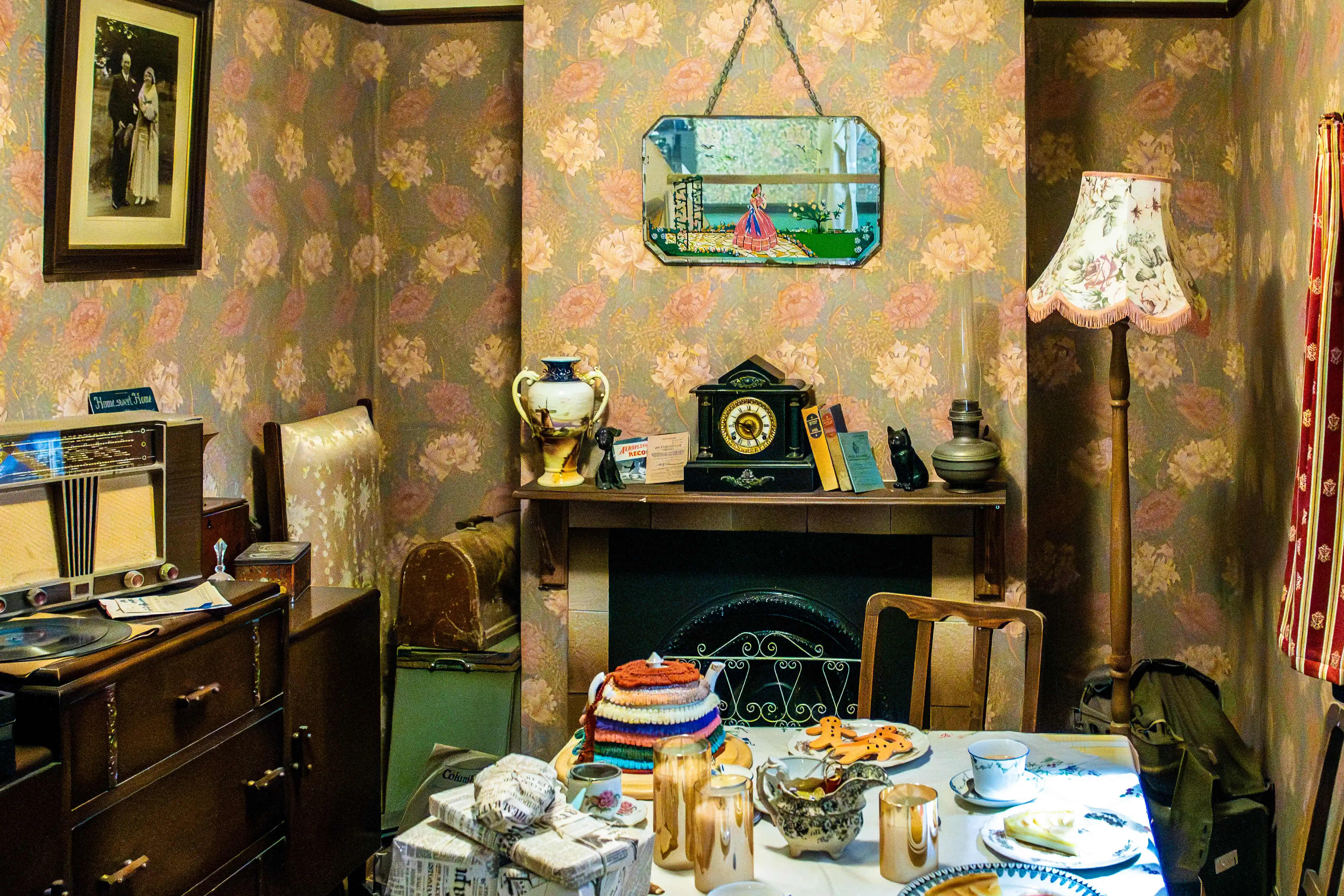
This image presents a meticulously recreated or preserved vintage living room, likely from the 1950s. The walls are covered in a distinctive floral wallpaper featuring a pattern of large, faded pink and yellow flowers against a muted grey-green background. To the left, a framed sepia-toned photograph of a formal couple hangs on the wall above a vintage wooden dresser. The dresser supports a classic 1950s radio with glowing indicators and a turntable, alongside a few vinyl records. A chair with a patterned fabric is partially visible behind the dresser. The focal point of the room is a fireplace, adorned with a dark mantelpiece. On the mantel sits a decorative urn, a small black figurine of a dog, a 'Aeroplane Record' pamphlet, a classic black mantel clock with a gold face, two books, and another black cat figurine. Above the mantelpiece, an octagonal mirror with a bevelled edge hangs from a chain, reflecting a scene of a woman in a pink dress in a garden. In front of the fireplace, a small table is set for tea. It features a teapot covered in a colourful knitted cosy, a delicate teacup and saucer, a plate with ginger-nut biscuits shaped like animals, and a slice of cake on another plate. A decorative teapot or gravy boat and several metallic candle holders are also present. To the left of the table, several packages wrapped in newspaper and tied with string are stacked. To the right of the fireplace, a tall wooden floor lamp with a fringed floral lampshade stands. A vintage kerosene lamp sits on a side table next to it. A striped curtain hangs on the far right wall. The overall impression is one of a well-lived-in, comforting space, rich with personal items and the aesthetic of a bygone era.
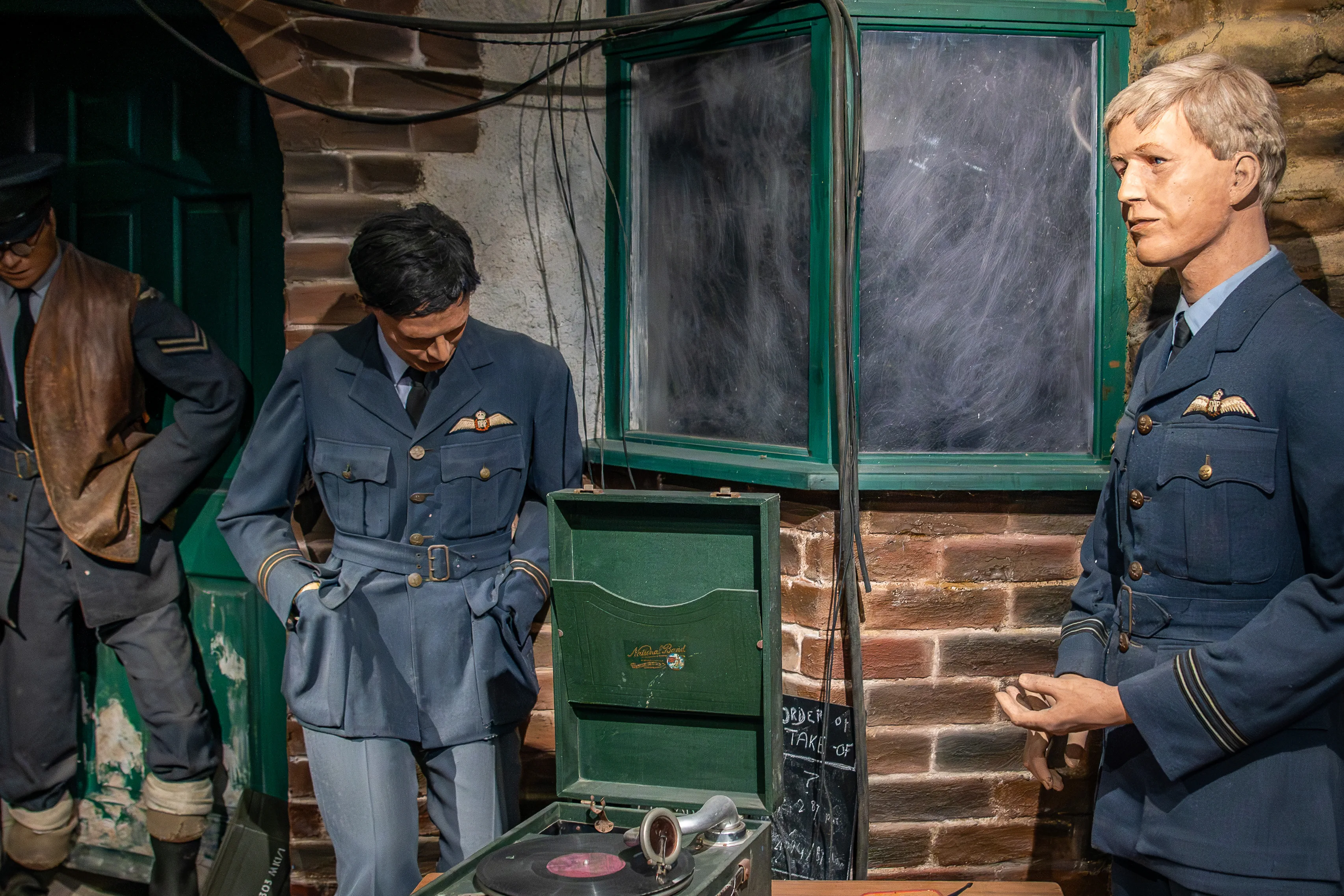
The image shows a staged interior of a 1940s-themed house. Two life-like figures wearing blue-grey uniforms with brass buttons and decorative chest patches stand in the room. In the foreground, a green cabinet opened to reveal a turntable record player sits on a small platform, with the lid propped up and a turntable visible. A green-framed window with dusty glass panels is set into the brick wall behind them, and the brickwork runs across the scene. On the left, another figure is partially visible, looking down as if handling or carrying something off-frame. In the right foreground, a figure stands facing slightly left with hands positioned near the waist. The overall setting uses period-appropriate colours and textures—brick, worn metal, and utilitarian furnishings—to recreate a lived-in wartime or post-war
1940's house
photo by
©www.mgaylard.co.uk.
Close scene from a 1940s house display: uniformed staff beside a green record player cabinet in front of a brick wall and a green-framed window.
The image shows a staged interior of a 1940s-themed house. Two life-like figures wearing blue-grey uniforms with brass buttons and decorative chest patches stand in the room. In the foreground, a green cabinet opened to reveal a turntable record player sits on a small platform, with the lid propped up and a turntable visible. A green-framed window with dusty glass panels is set into the brick wall behind them, and the brickwork runs across the scene. On the left, another figure is partially visible, looking down as if handling or carrying something off-frame. In the right foreground, a figure stands facing slightly left with hands positioned near the waist. The overall setting uses period-appropriate colours and textures—brick, worn metal, and utilitarian furnishings—to recreate a lived-in wartime or post-war
Uniformed Display with Green Record Player
photo by
©www.mgaylard.co.uk.
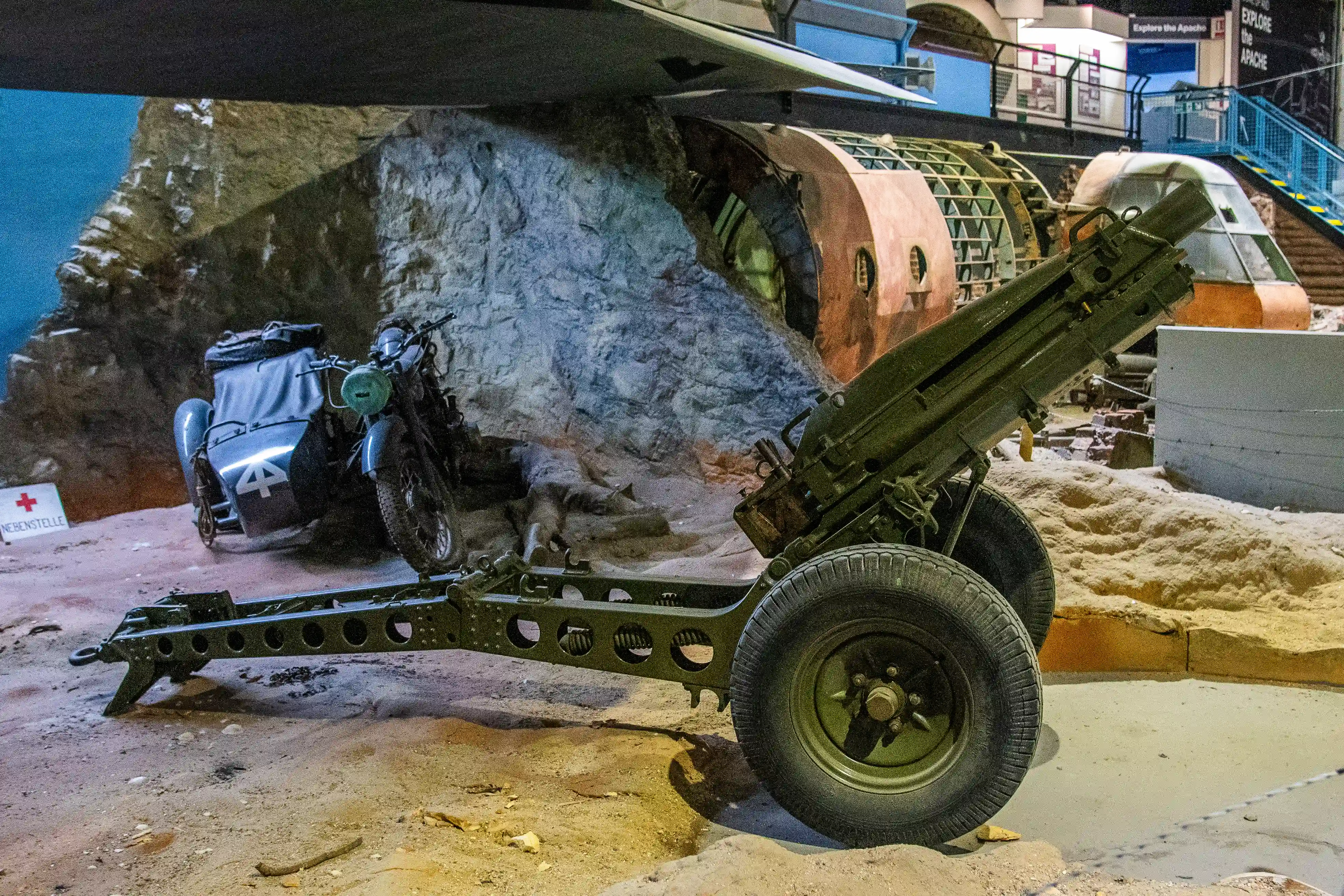
A green artillery gun is positioned in the foreground of a museum exhibit. Behind it, a dark blue motorcycle with a sidecar is parked. In the background, a rocky display and part of an aircraft fuselage are visible.
Military History Exhibit: Artillery and Motorcycle
photo by
©www.mgaylard.co.uk.
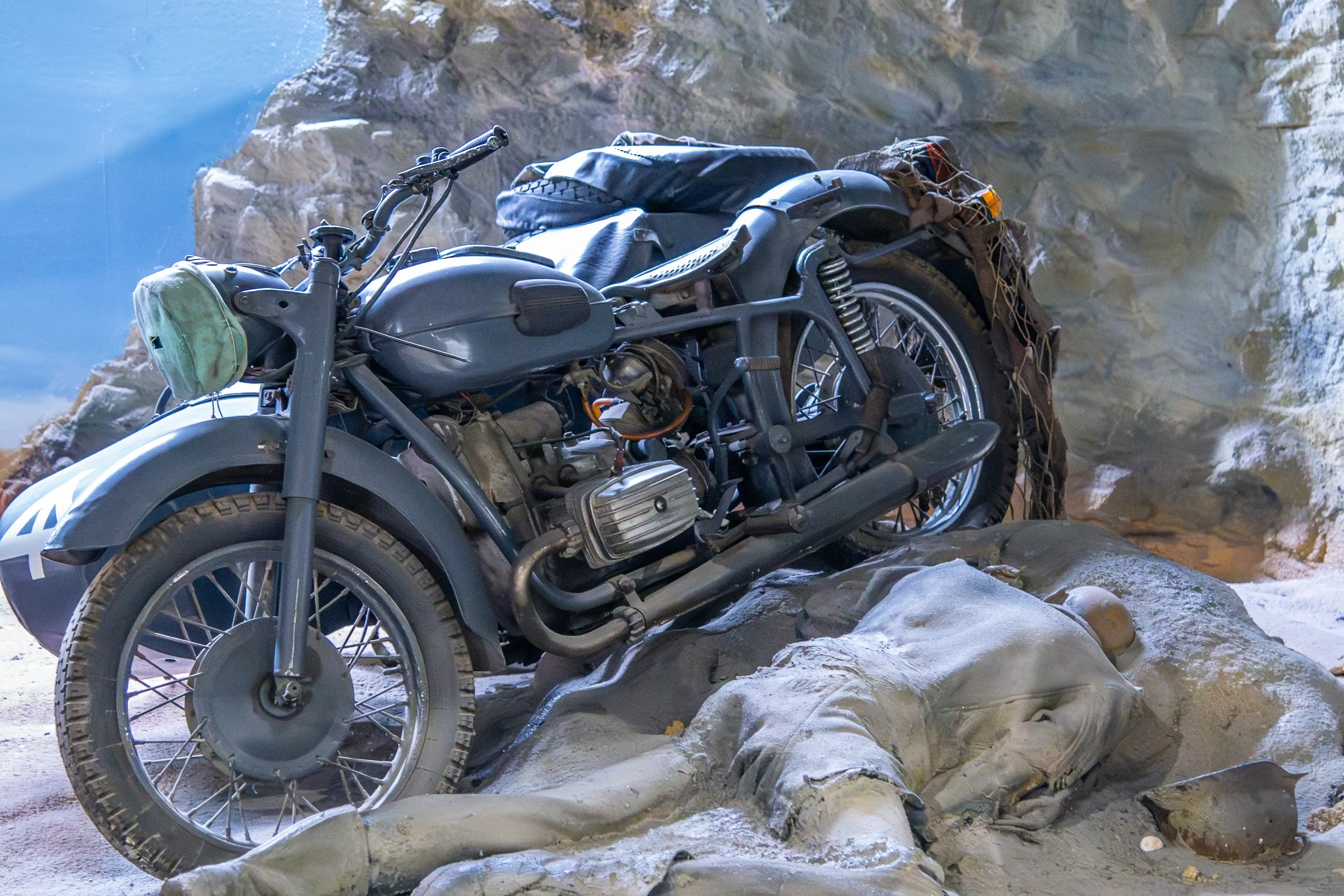
A grey military motorcycle is parked beside a mannequin of a fallen soldier dressed in wartime clothing, lying on a sandy, rocky surface, with a painted rocky background.
Airborne Artillery
photo by
©www.mgaylard.co.uk.
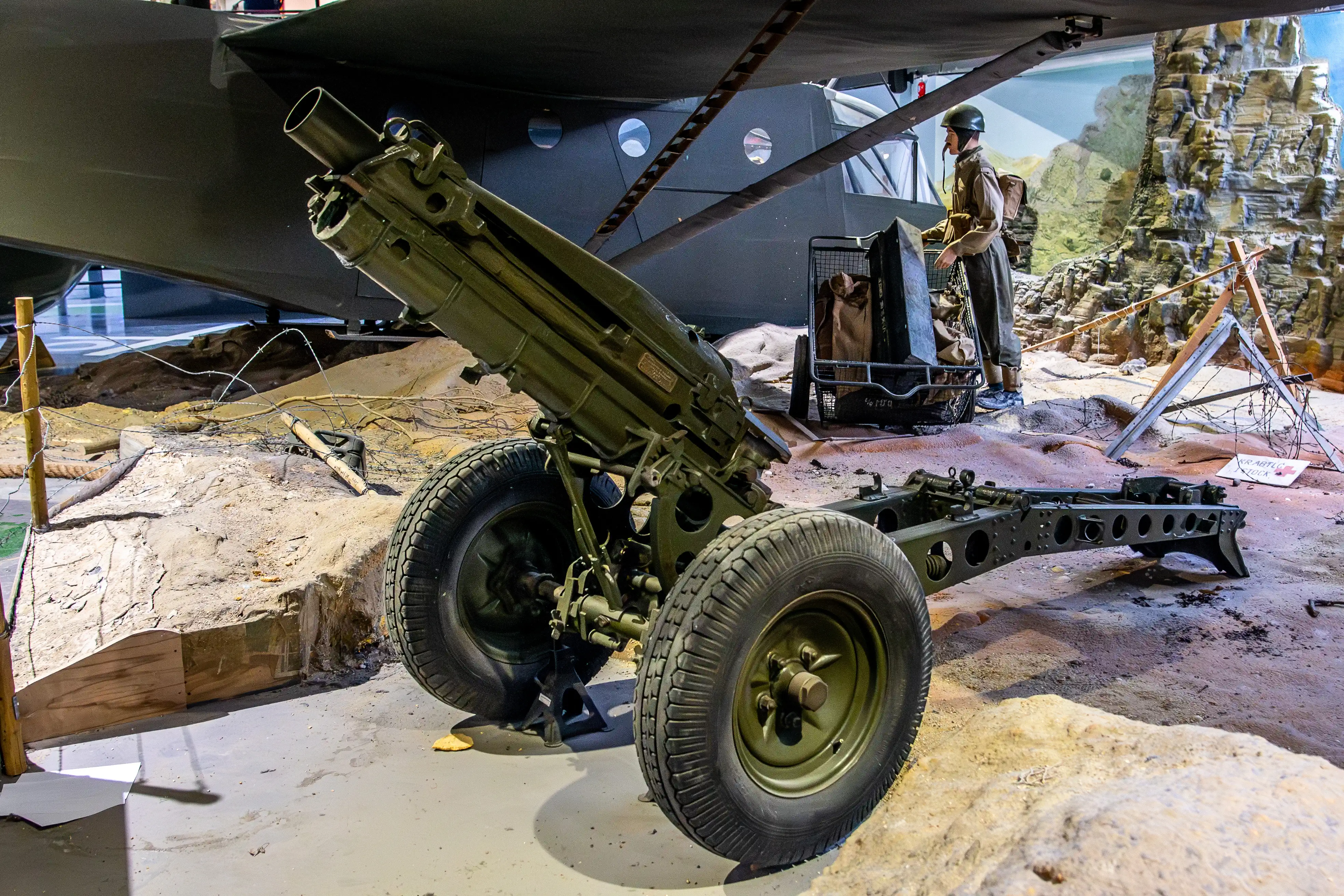
A military artillery gun with large wheels is displayed in a museum exhibit, angled towards the viewer. In the background, part of a dark-coloured aircraft is visible, along with a mannequin in a military uniform standing near a cart and a rocky landscape.
Museum Exhibit: Artillery Gun and Battlefield Diorama
photo by
©www.mgaylard.co.uk.
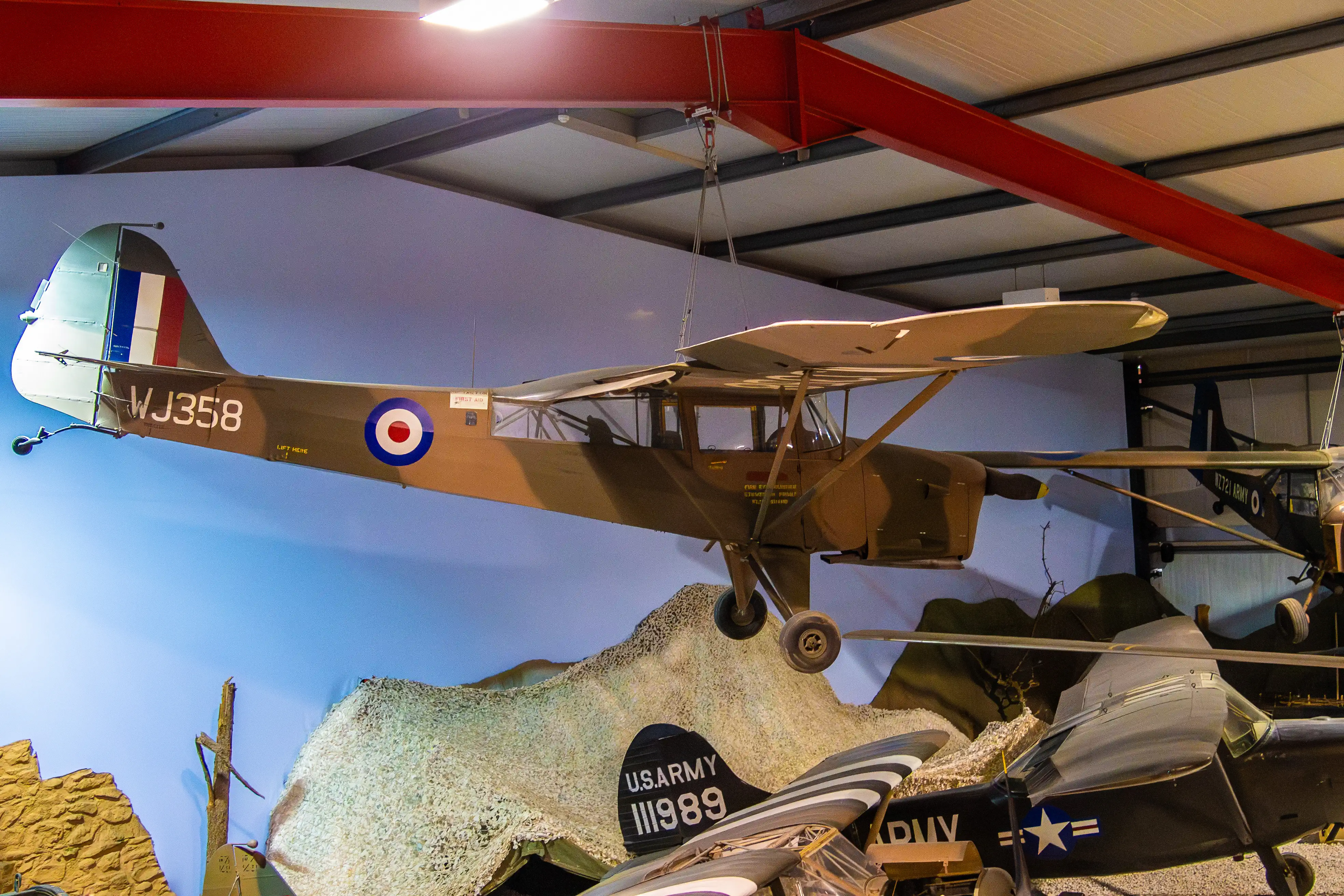
Museum display of a military Auster AOP aircraft with the circular RAF-style roundel and propeller visible.
Auster AOP Aircraft on Museum Display
photo by
©www.mgaylard.co.uk.
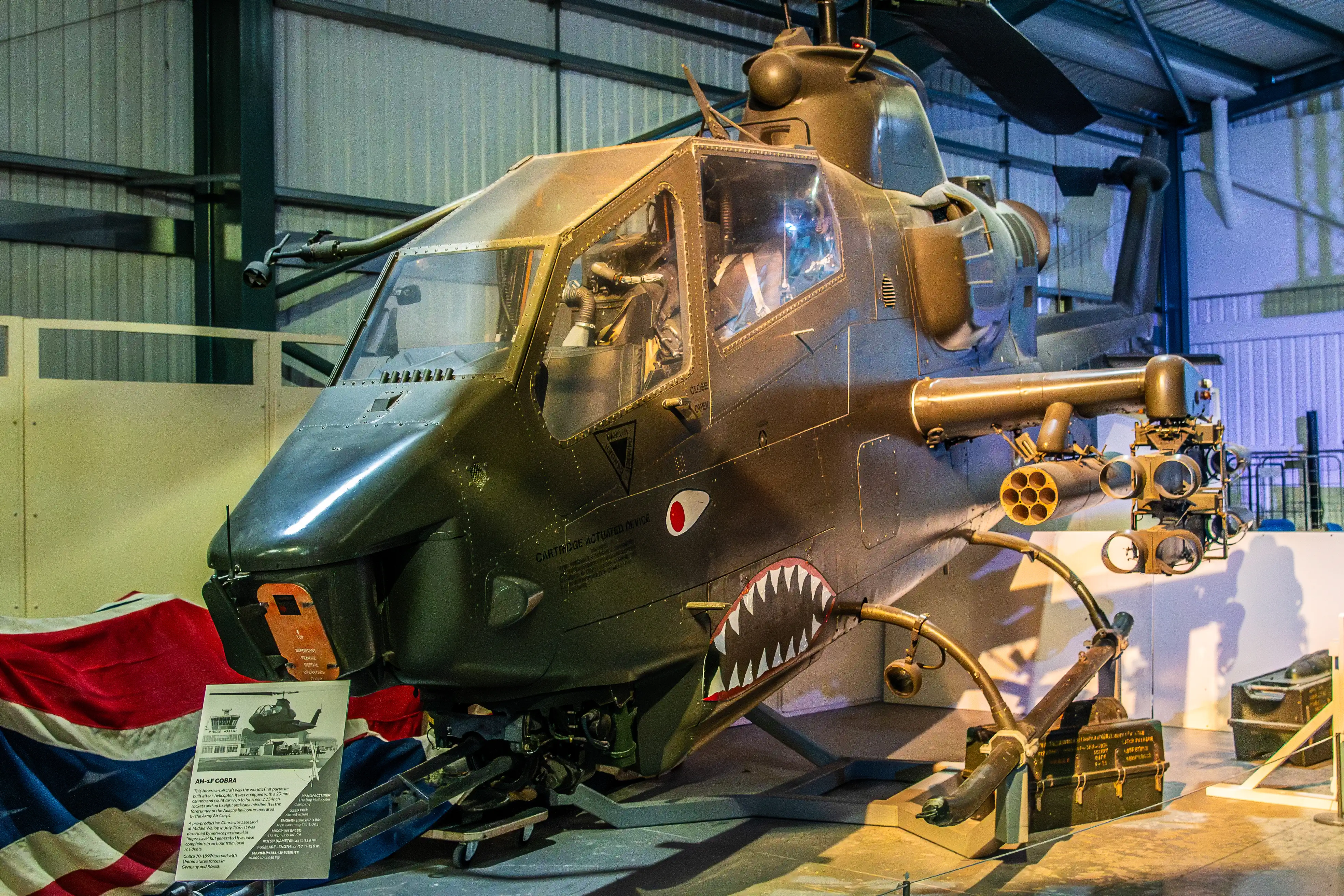
A dark green AH-1S Cobra attack helicopter with a shark-mouth graphic and weaponry is parked indoors, with a Union Jack flag to its left and an information sign in the foreground.
AH-1S Cobra Attack Helicopter with Shark Mouth
photo by
©www.mgaylard.co.uk.
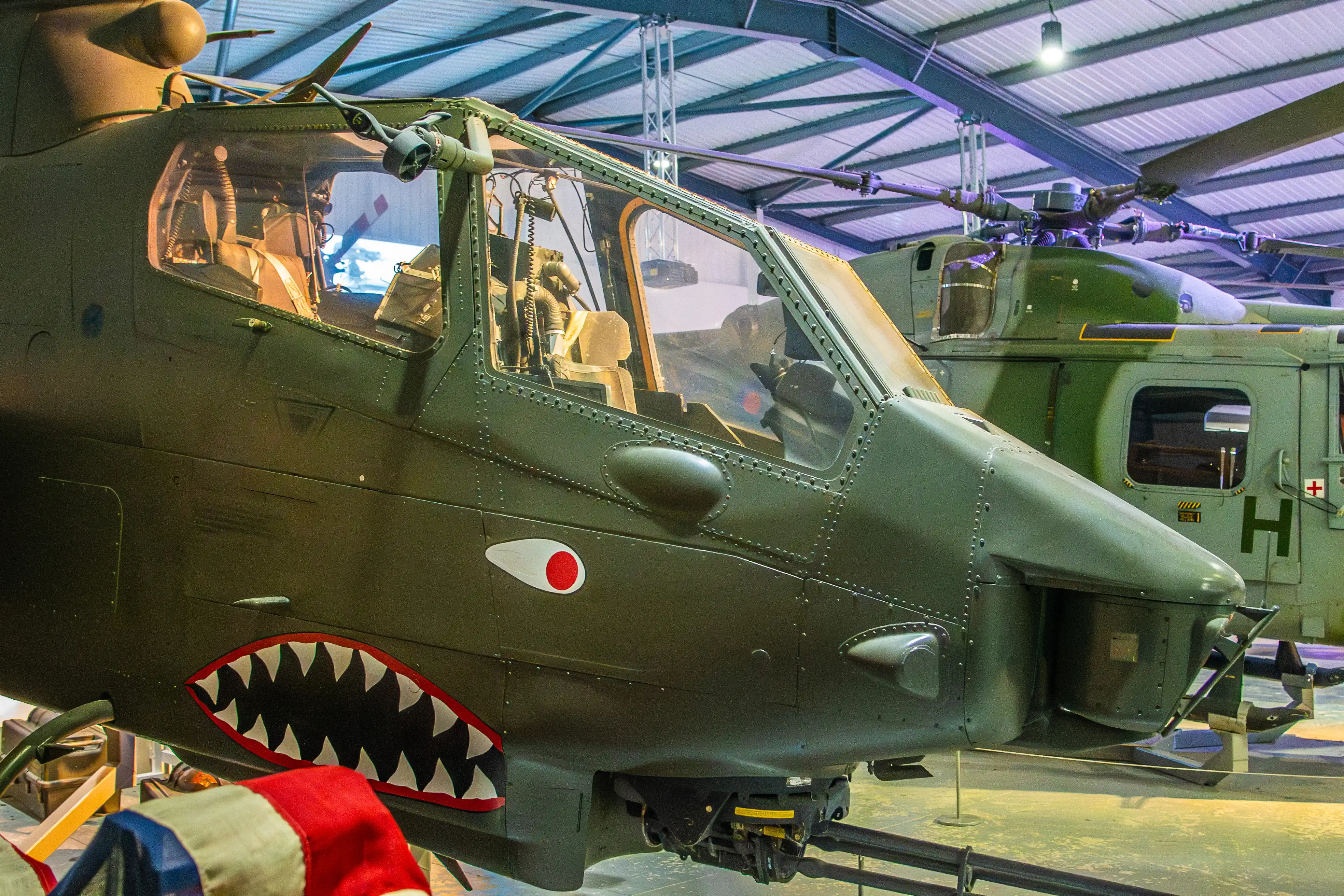
Close-up of the nose of a green military attack helicopter with a large, black shark mouth painted on its side, a white-outlined red circle insignia, and a glimpse into the cockpit. A second helicopter is behind it.
Shark-Mouthed Apache Helicopter in Exhibition
photo by
©www.mgaylard.co.uk.
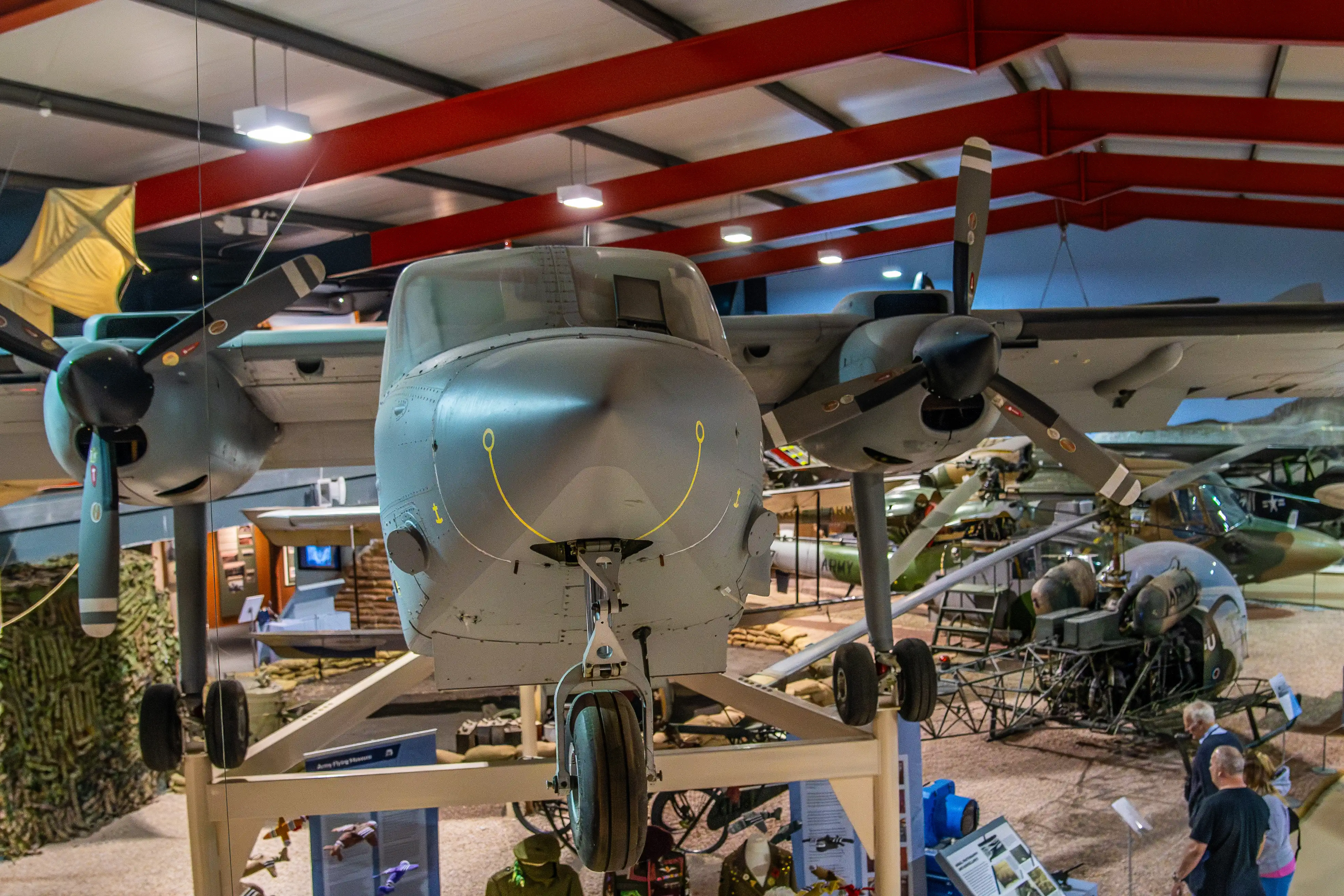
A grey twin-engine propeller aircraft is displayed prominently in a museum. Its nose is facing the camera and has a yellow marking. Other aircraft and visitors are visible in the background within the hangar.
Britten-Norman BN-2 Islander
photo by
©www.mgaylard.co.uk.
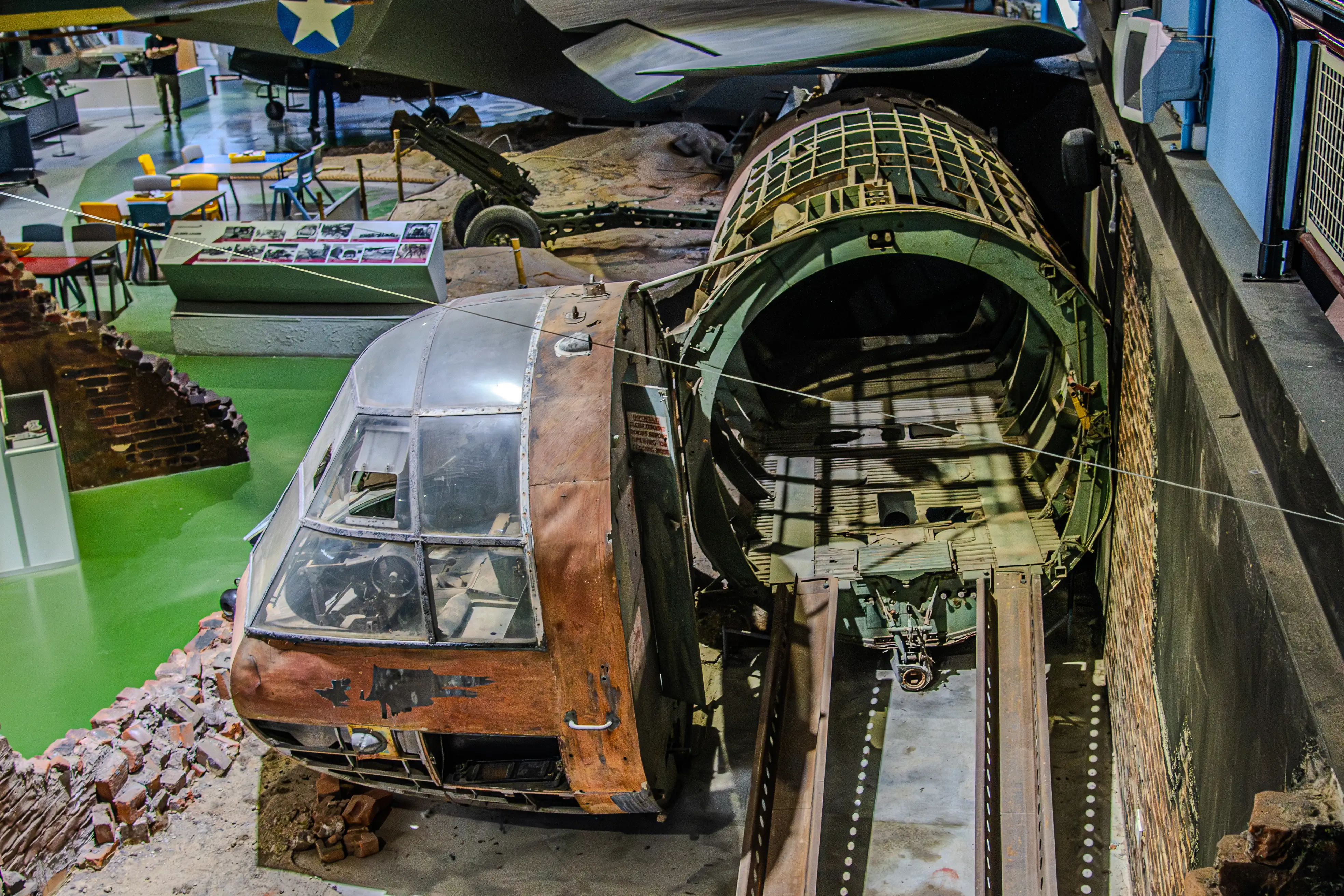
Overhead view of a museum exhibit featuring the front cockpit section and a portion of the hollow fuselage of a large aircraft, presented as if damaged and in a simulated ruin environment.
Horsa MK.2
photo by
©www.mgaylard.co.uk.
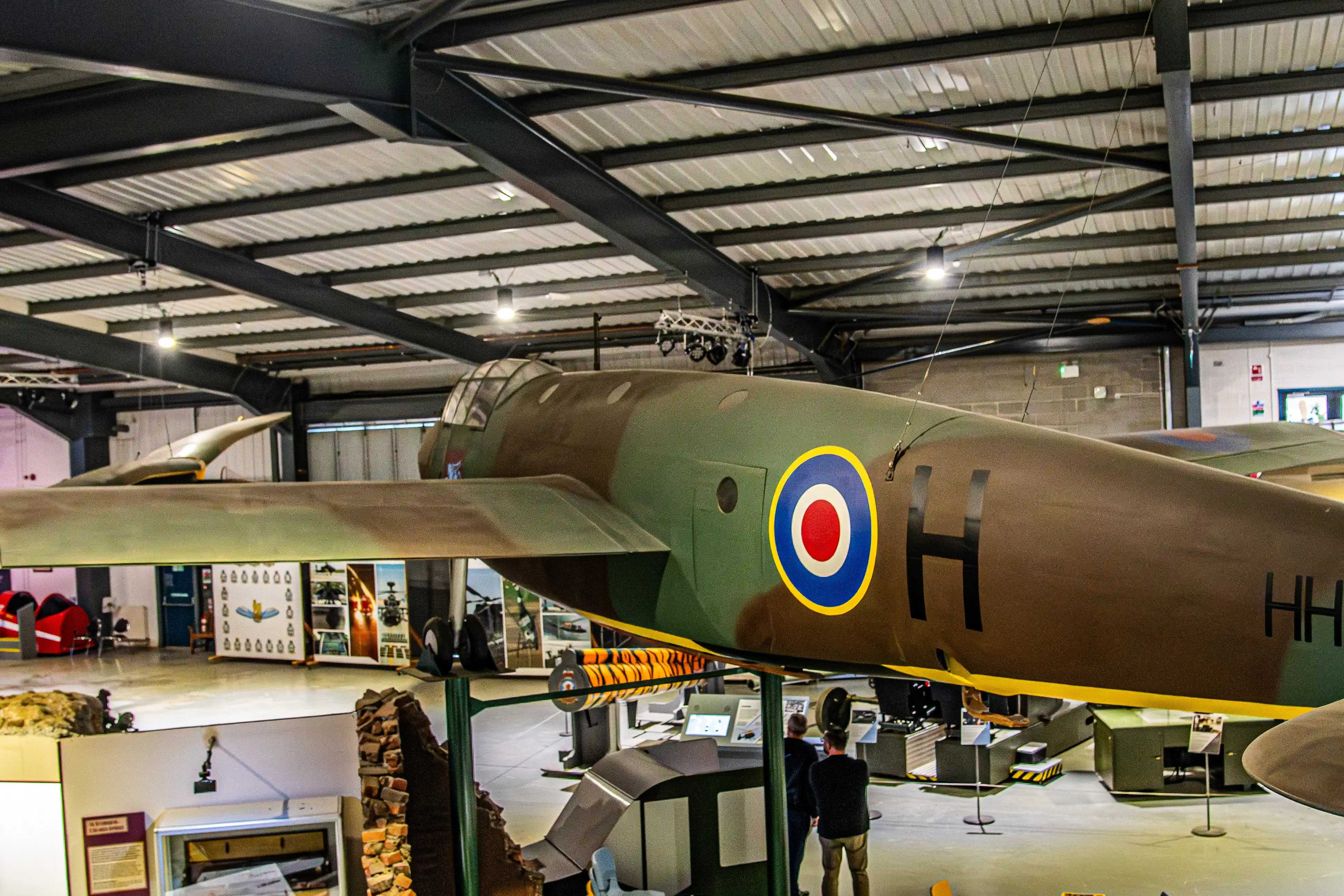
Olive-green aircraft on display in a museum hangar, showing RAF-style roundel and “H” marking along the fuselage.
Hotspur Aircraft on Museum Display
photo by
©www.mgaylard.co.uk.
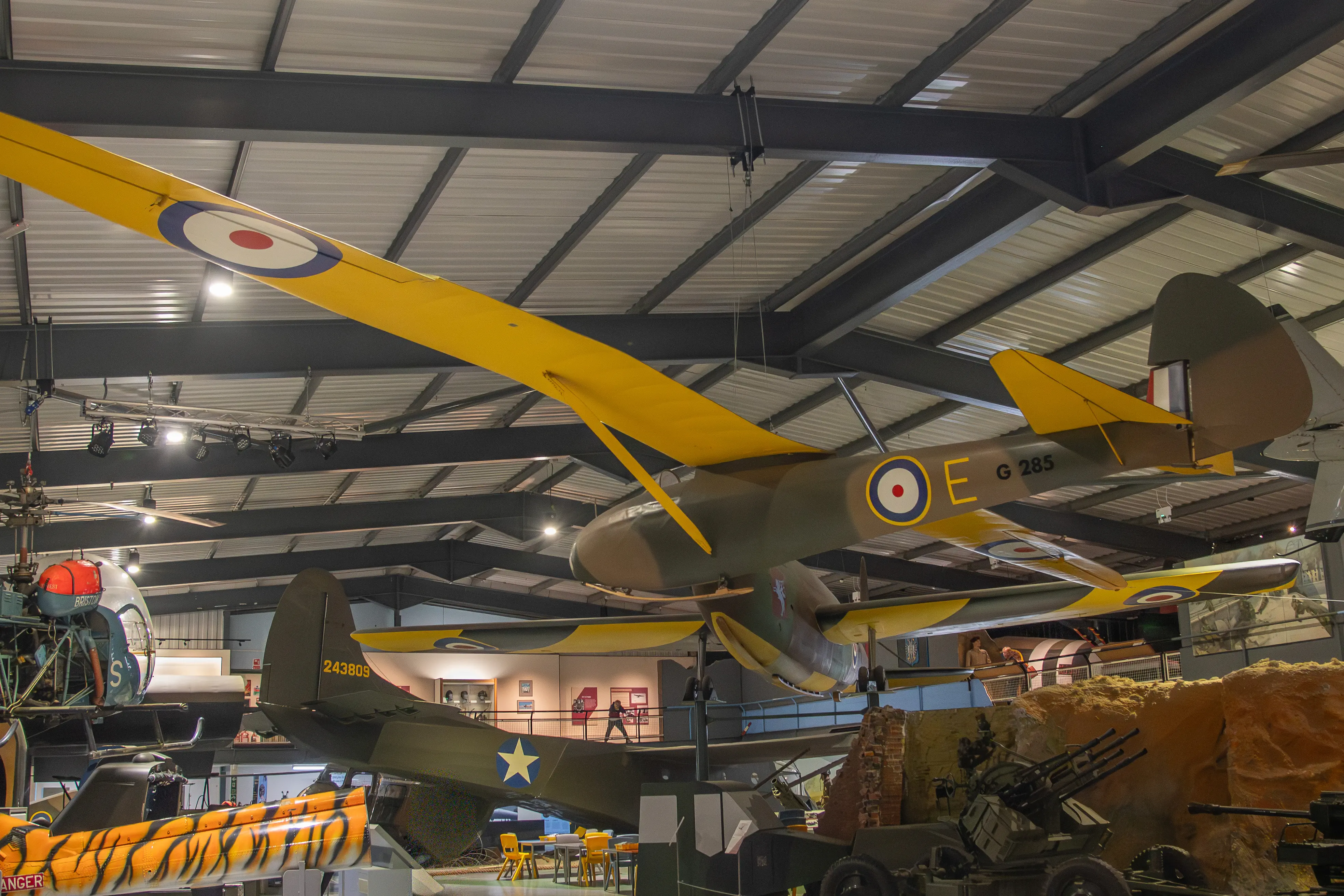
Indoor aviation museum showing a suspended World War II British glider with camouflage and yellow wings, surrounded by other military aircraft and vehicles.
Kirby Kite - Slingsby T.6/T.23 Kirby Kite
photo by
©www.mgaylard.co.uk.
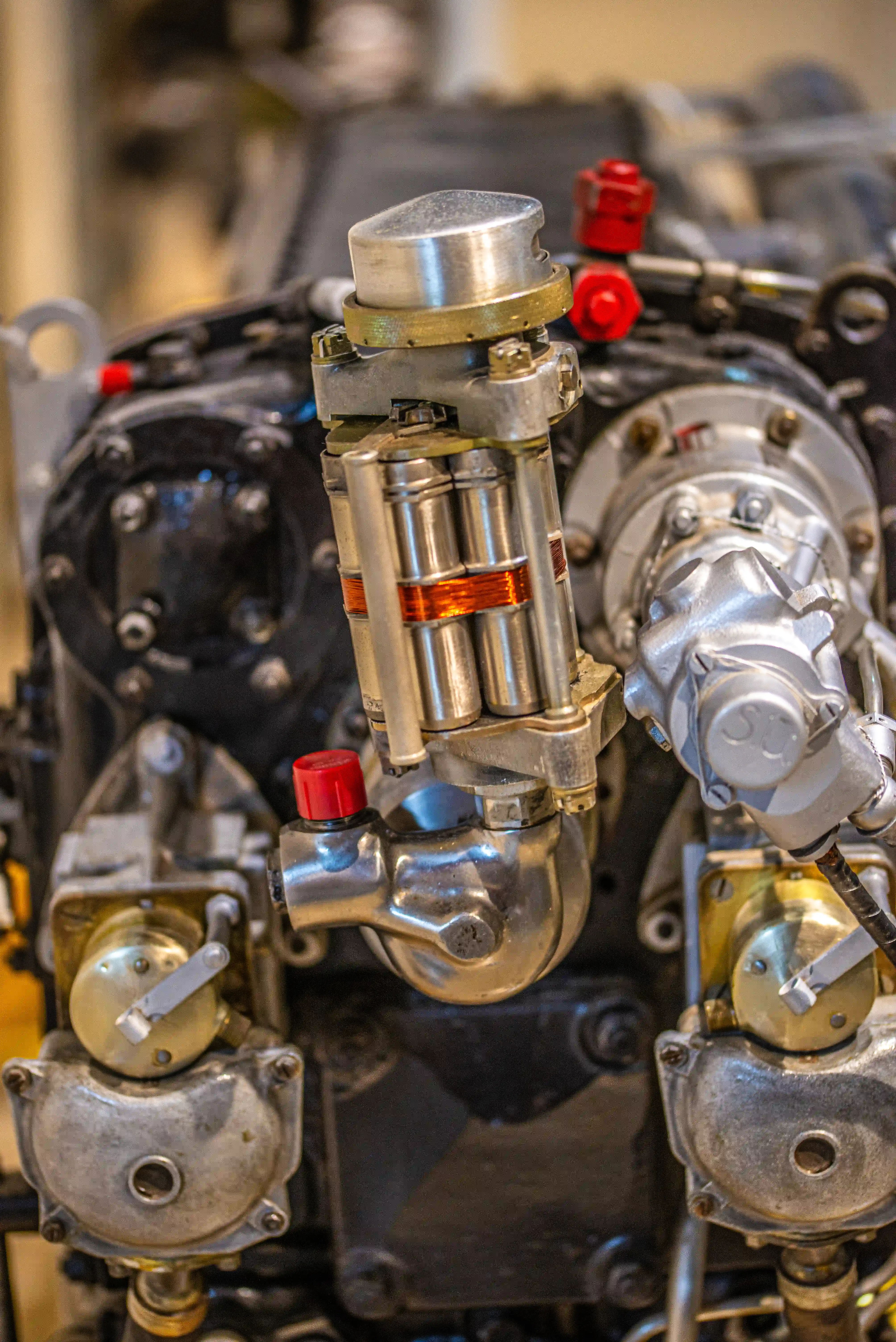
Close-up photograph of a complex mechanical assembly with metal housings, bolts, copper coils and valves.
Pratt & Whitney R-985 Wasp Junior  ‐ photo by ,
©www.mgaylard.co.uk .
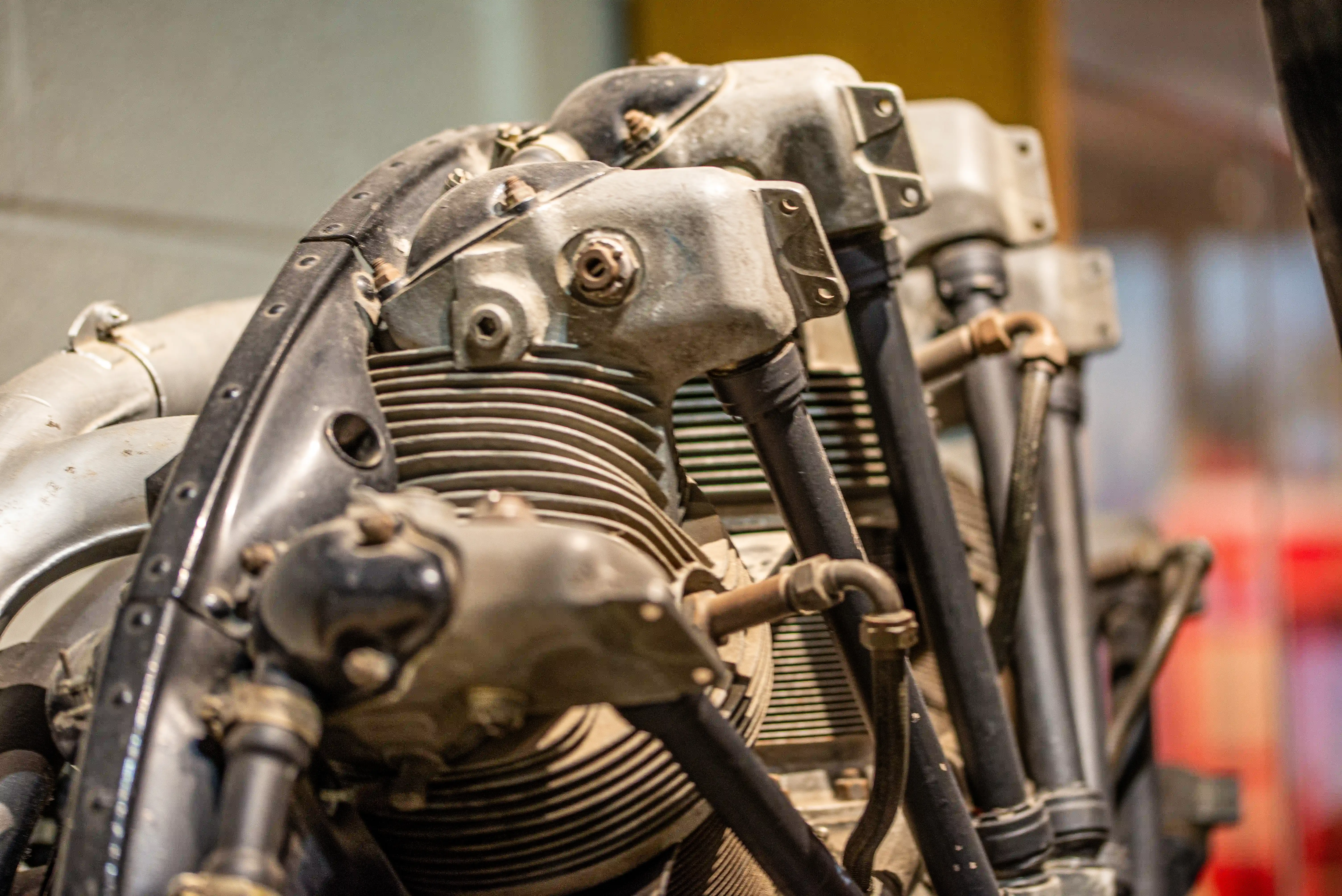
Close-up view of a grey and silver vintage radial aircraft engine's cylinders and associated metal parts.
Pratt & Whitney R-985 Wasp Junior  ‐ photo by ,
©www.mgaylard.co.uk .
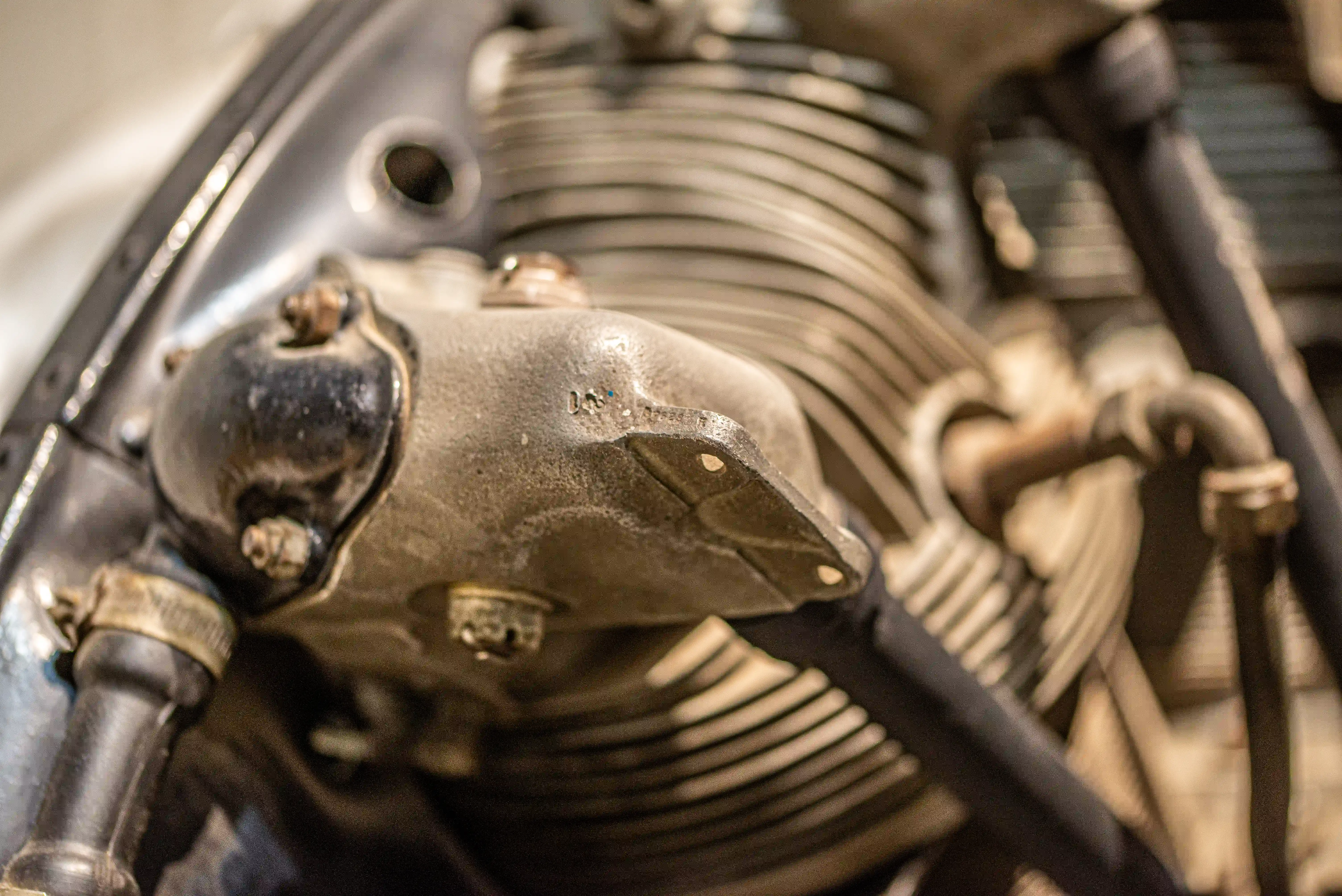
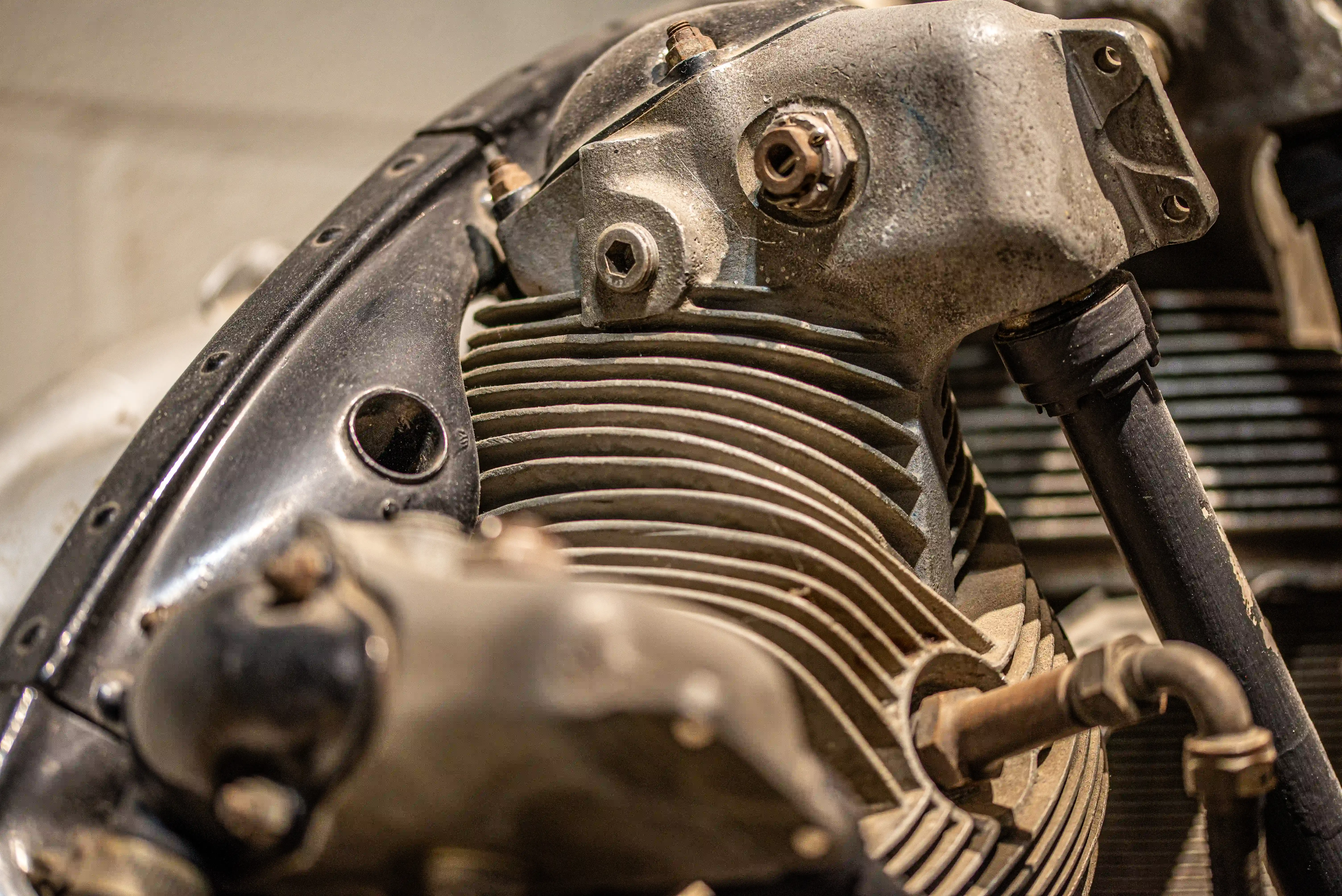
Close-up, slightly blurred image of a vintage aircraft engine's finned cylinder head, showing metal pipes, bolts, and a dark casing.
Pratt & Whitney R-985 Wasp Junior  ‐ photo by ,
©www.mgaylard.co.uk .
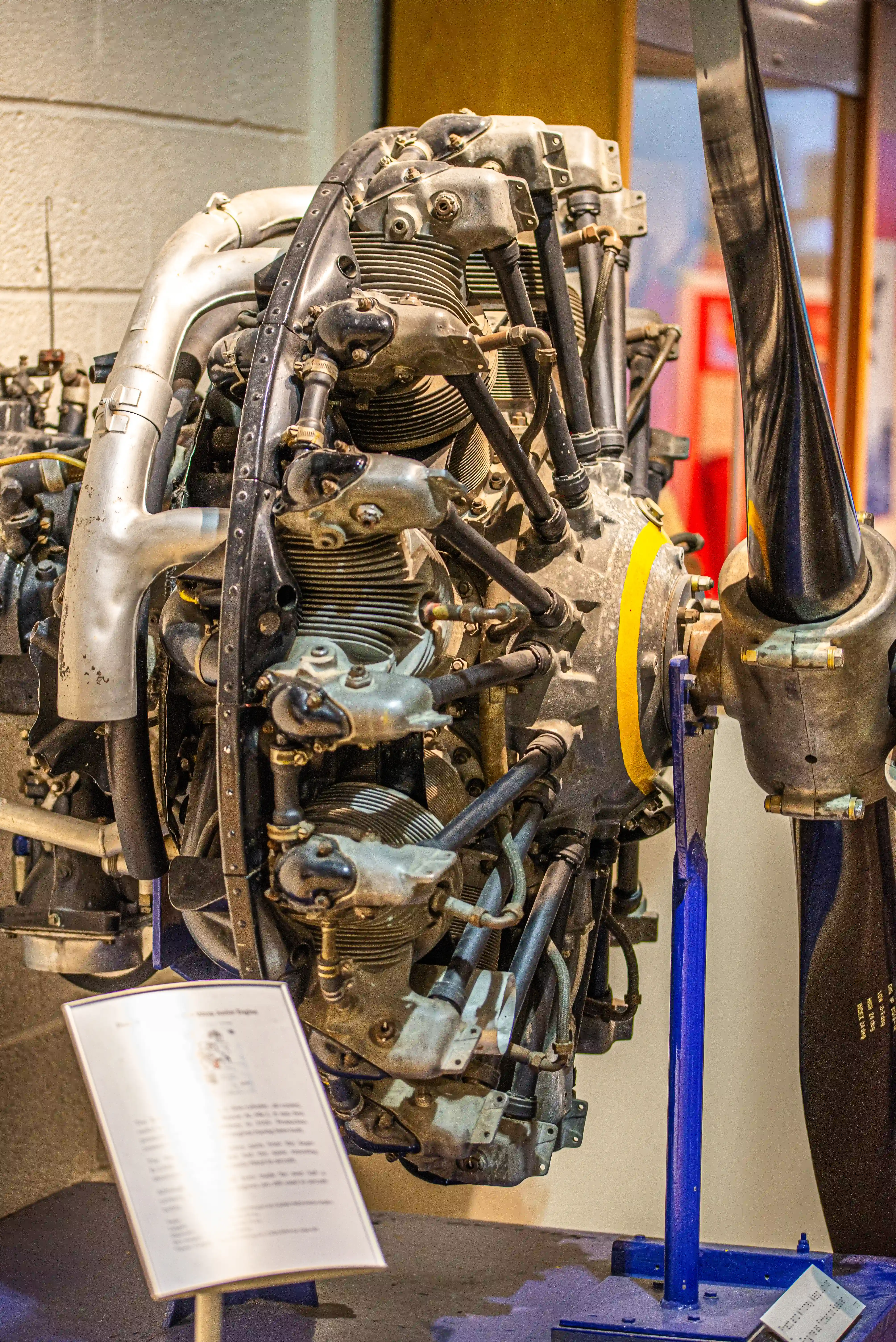
Close-up of a vintage radial aircraft engine with multiple cylinders, exposed plumbing, and a propeller, presented for display in a museum setting.
Pratt & Whitney R-985 Wasp Junior  ‐ photo by ,
©www.mgaylard.co.uk .
Extreme close-up of a metal hose fitting with a braided flexible pipe and a hexagonal nut, connected to a ribbed metal surface, suggesting an engine or mechanical component.
Pratt & Whitney R-985 Wasp Junior  ‐ photo by ,
©www.mgaylard.co.uk .
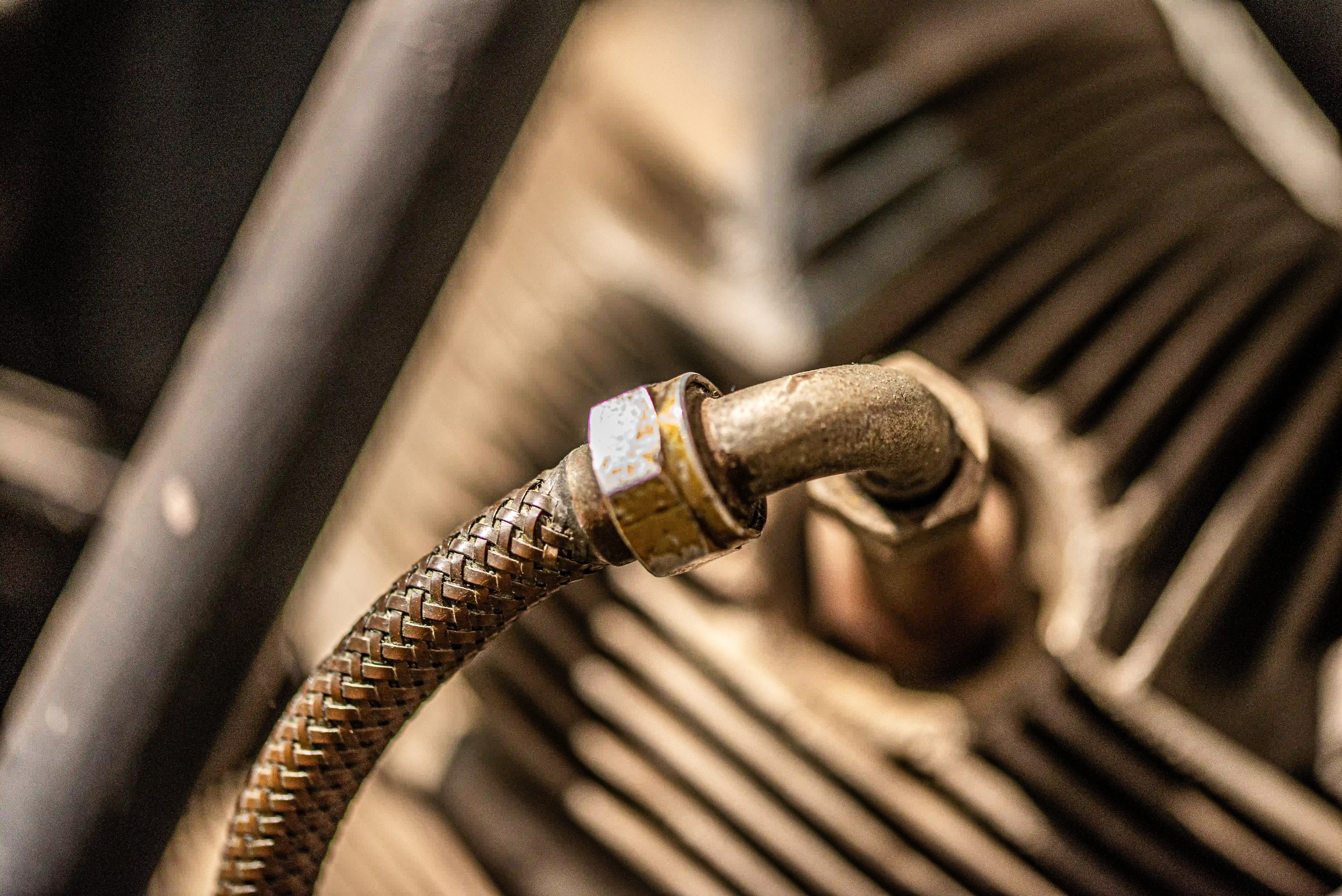
Close-up of a metal braided hose connected to a metal pipe fitting on a textured, finned surface.
Engine Hose Connection Detail  ‐ photo by ,
©www.mgaylard.co.uk .
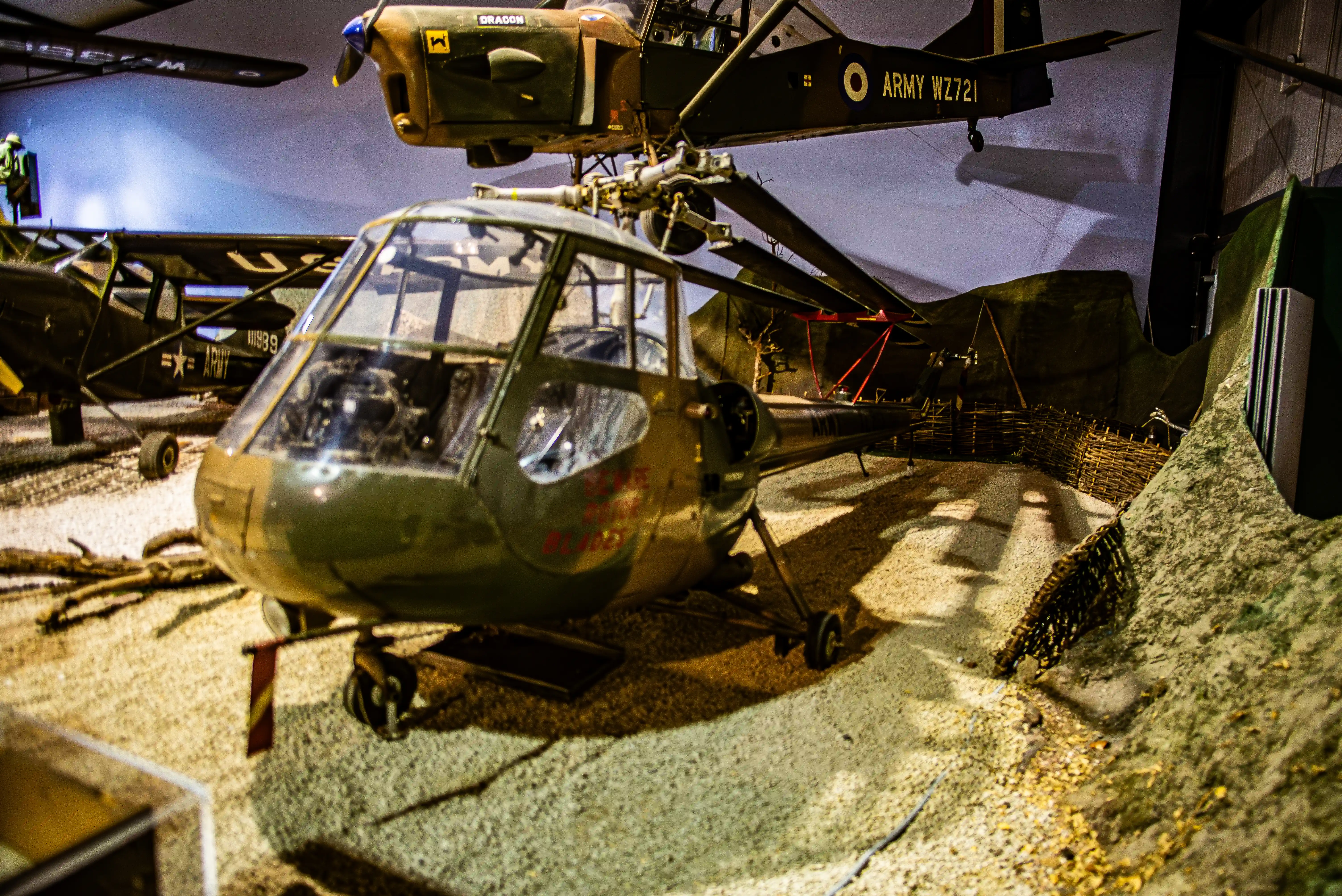
A close-up view of a green military helicopter with a clear cockpit, parked on a gravel-covered floor in a museum exhibit. Other vintage aircraft are visible in the background.
Museum Exhibit of Vintage Military Helicopters and Aircraft
photo by
©www.mgaylard.co.uk.
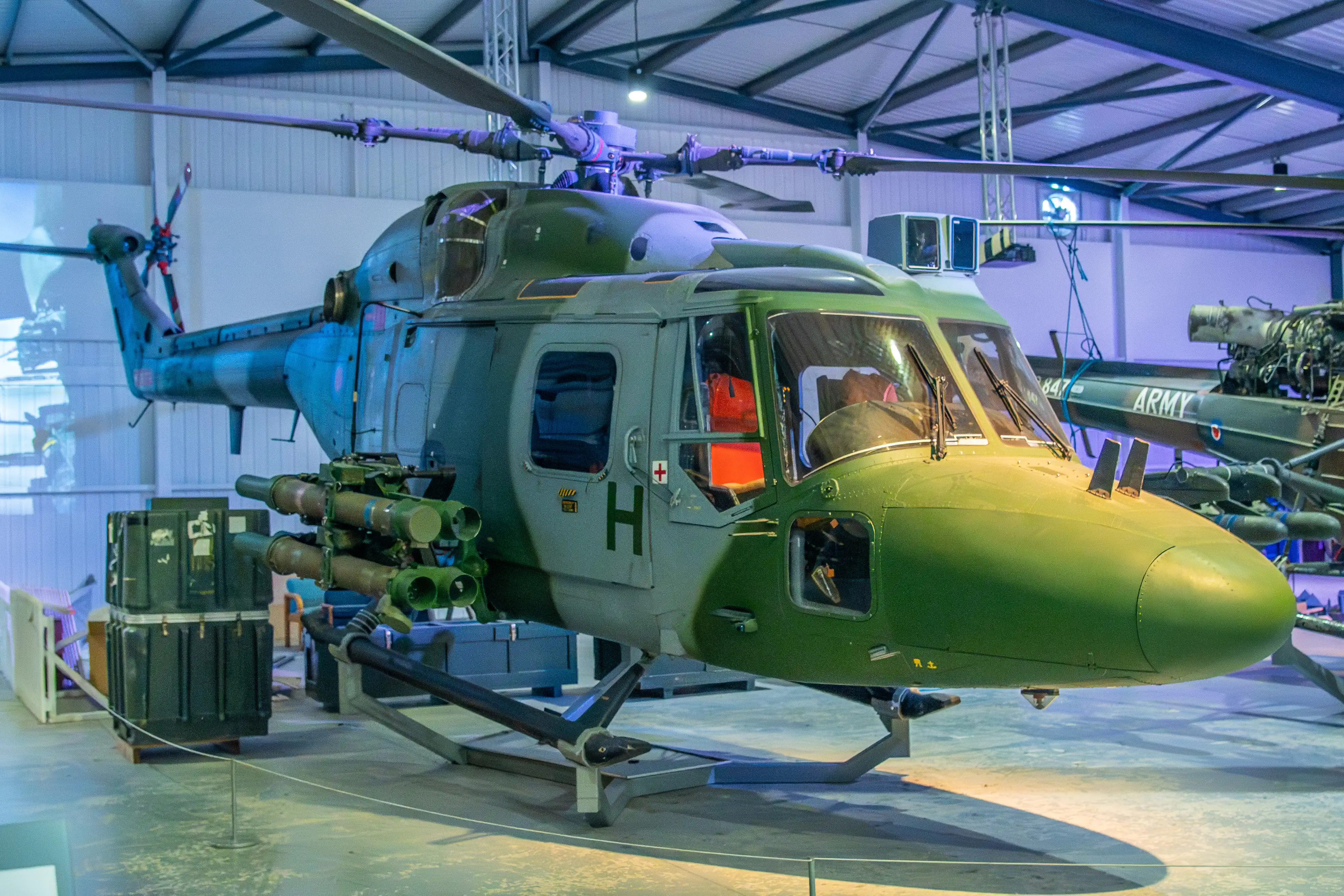
A military helicopter with rotors and missile launchers, painted in camouflage, stands on a display in a hangar.
Westland Lynx Helicopter Armament Display
photo by
©www.mgaylard.co.uk.
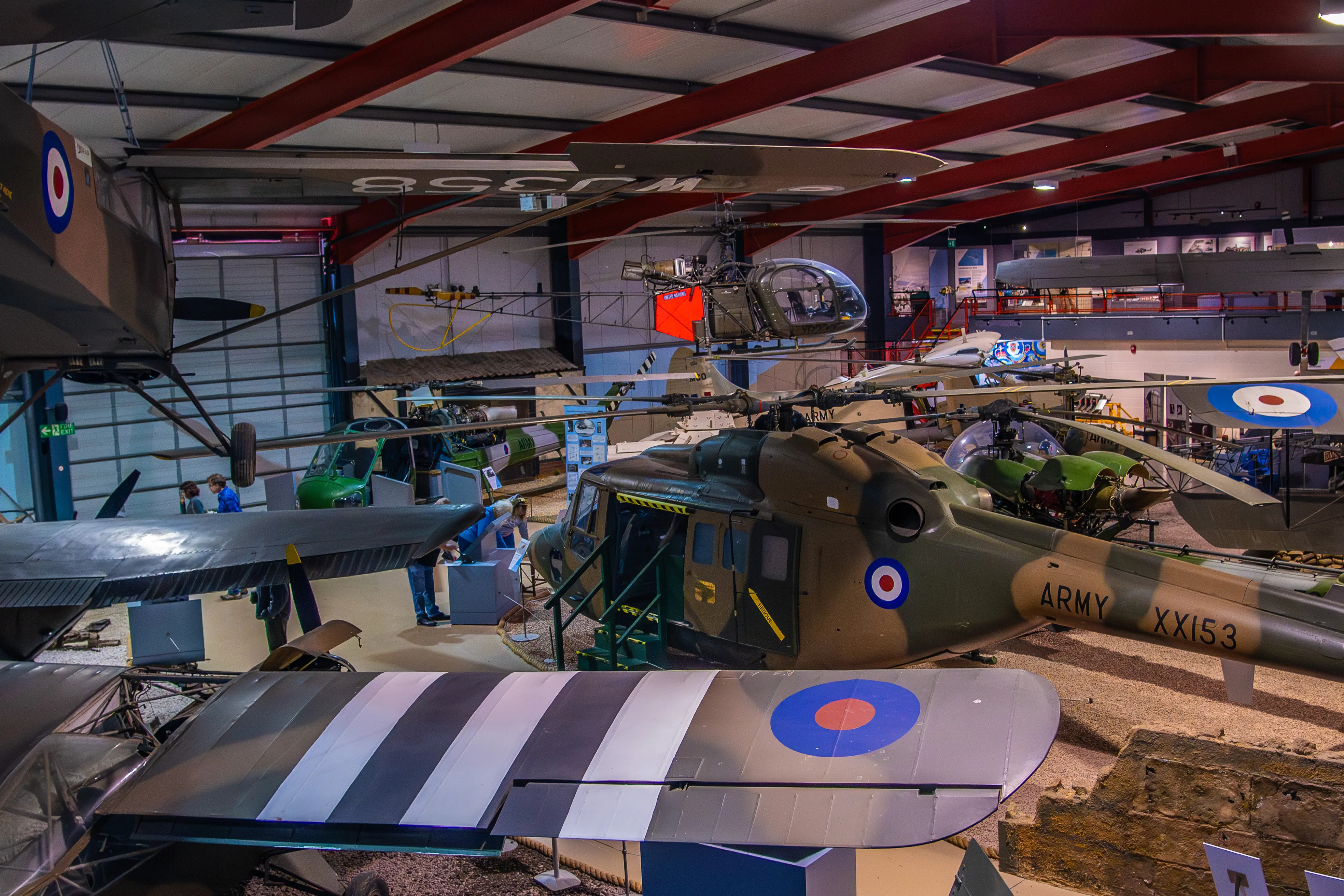
Indoor aviation museum with historic military aircraft and helicopters, including a camouflage helicopter marked “ARMY XX153” and vintage RAF aircraft.
Military Aviation Exhibit – Historic Aircraft and Helicopters
photo by
©www.mgaylard.co.uk.
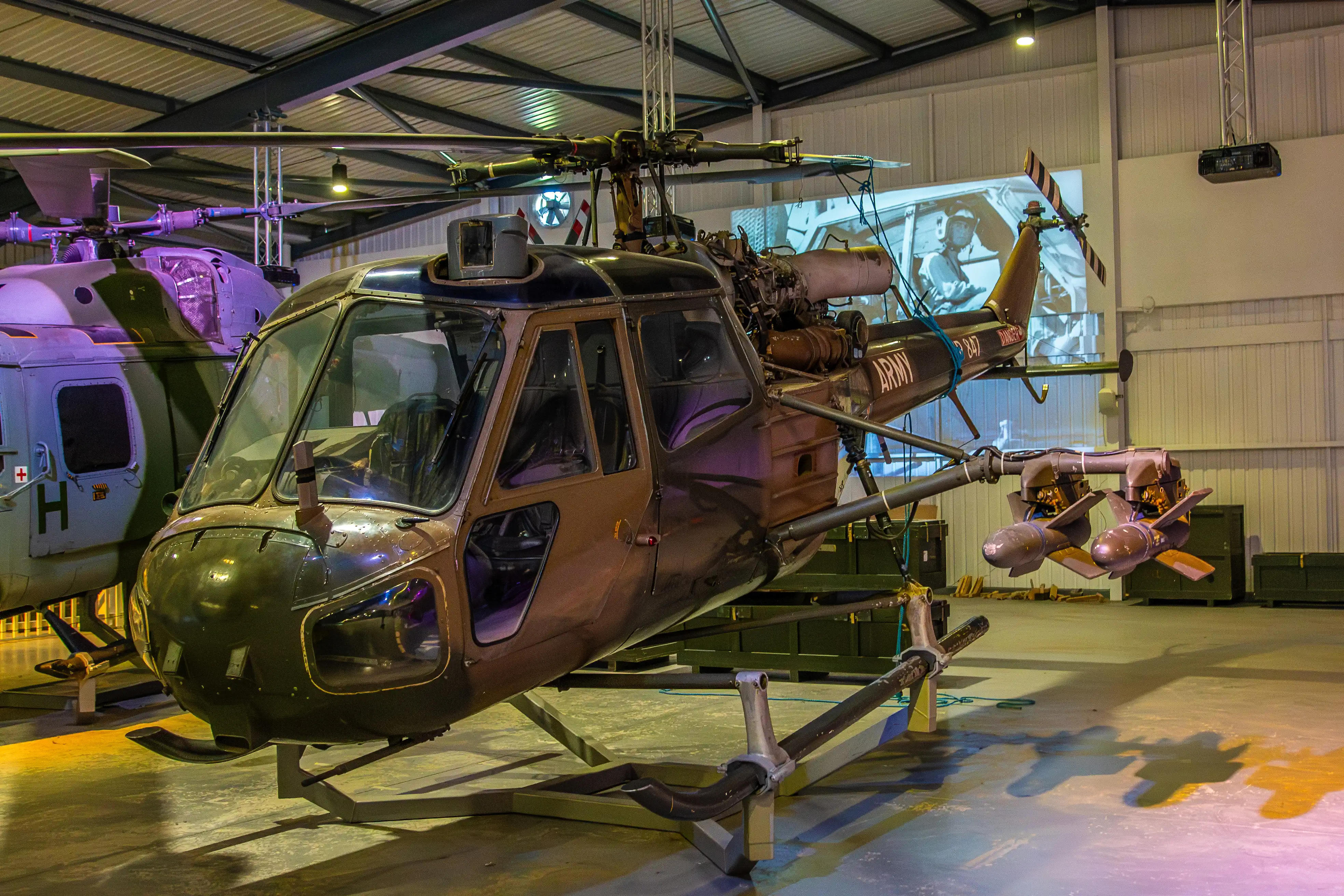
A vintage military helicopter marked with 'ARMY' displayed in a museum hangar. The helicopter has visible rotors, a cockpit, and an exposed engine. The hangar is dimly lit, with other aircraft and exhibits in the background.
Guardians of the Sky: A Vintage Military Helicopter on Display
photo by
©www.mgaylard.co.uk.
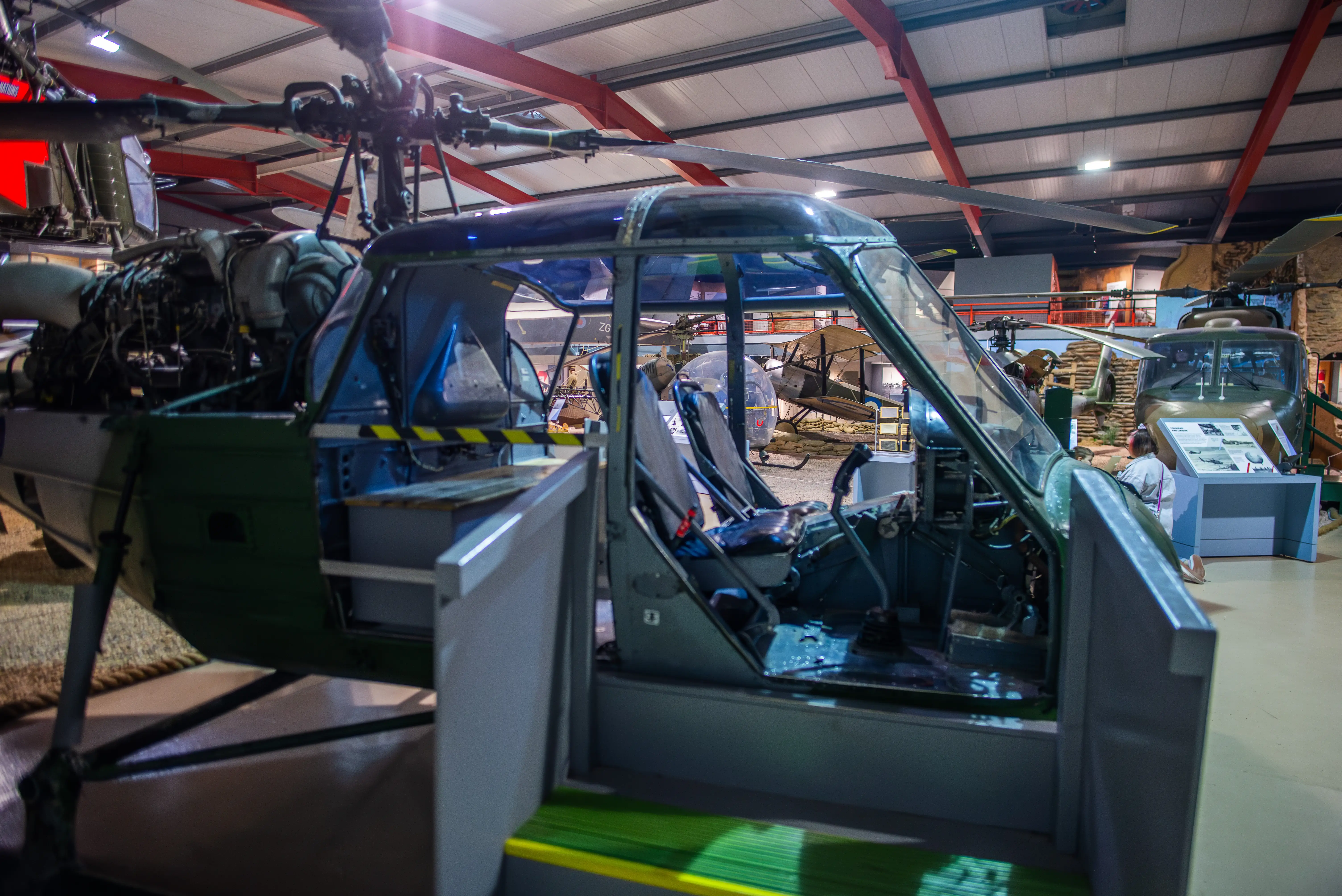
Close-up museum display of a military helicopter cockpit and engine section with surrounding aircraft exhibits.
Westland Scout
photo by
©www.mgaylard.co.uk.
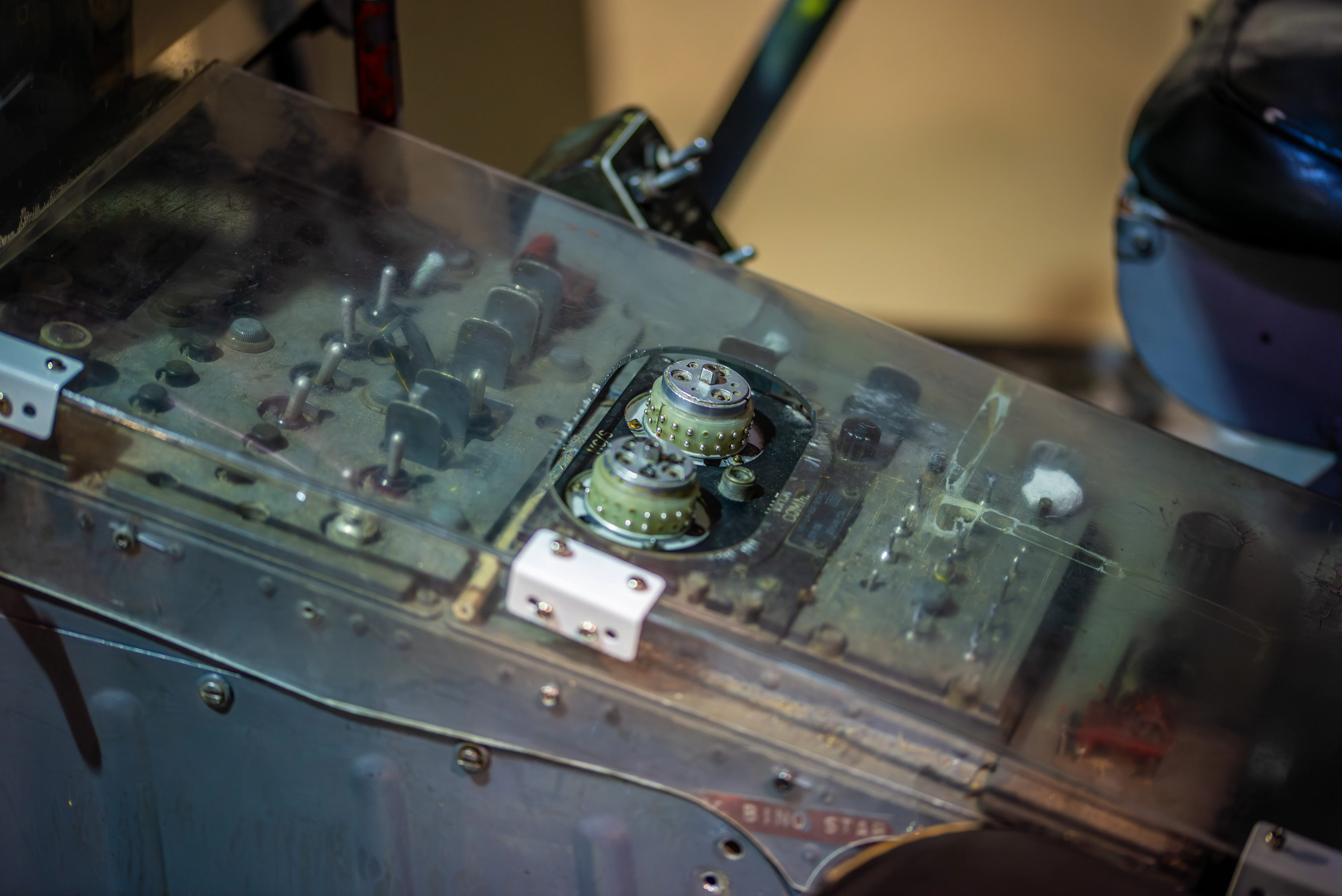
Close-up photograph of a vintage aircraft control panel with analogue switches, dials and worn metal components.
Westland Scout
photo by
©www.mgaylard.co.uk.
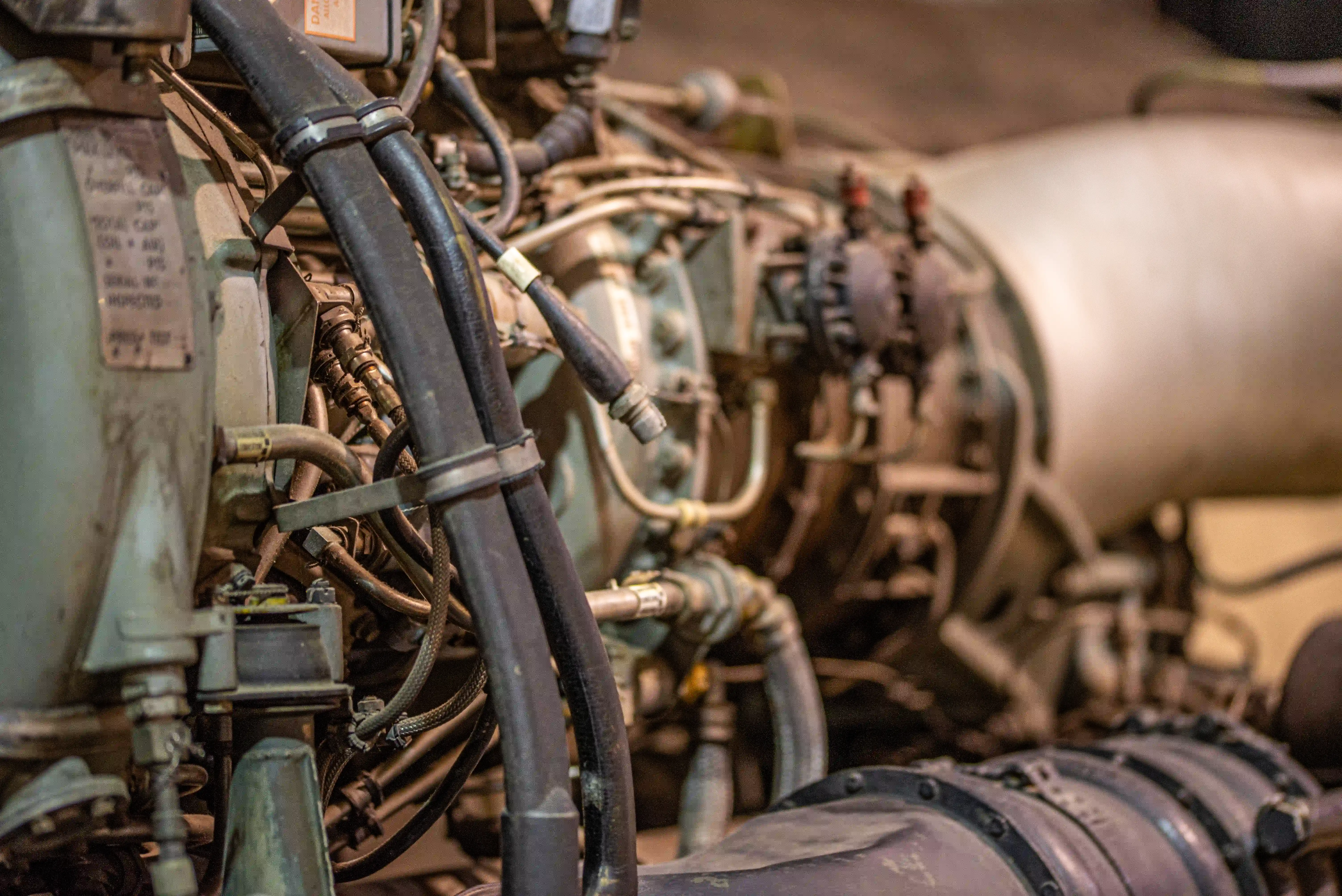
Detailed view of the intricate network of hoses, pipes, and mechanical components within a jet engine.
Close-up of Jet Engine Interior
photo by
©www.mgaylard.co.uk.
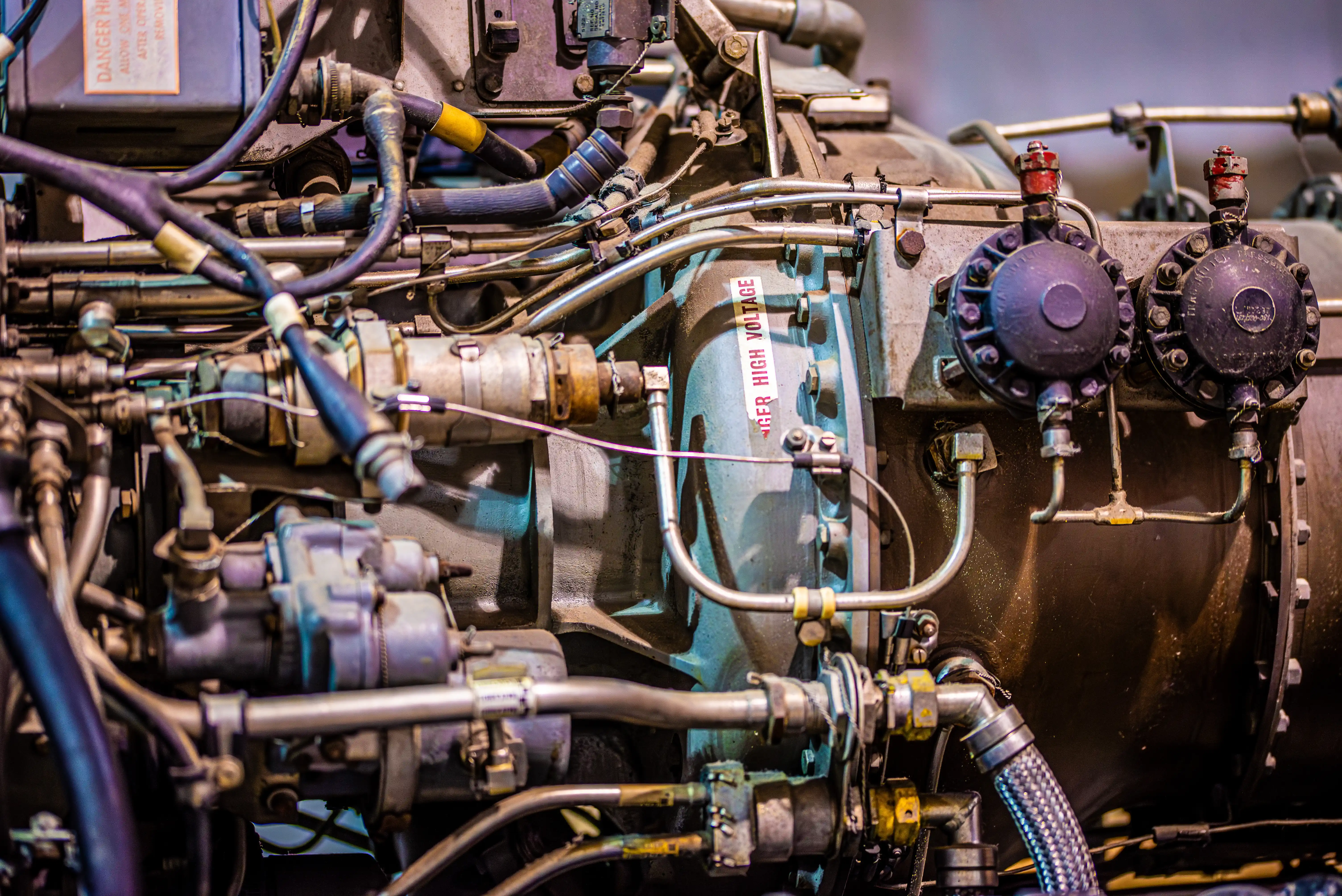
Close-up photograph of a complex engine assembly with metal pipes, valves, electrical cables and a high-voltage warning label.
Engine Assembly Detail – High-Voltage Mechanical System
photo by
©www.mgaylard.co.uk.
Open the full set flickr button this page

Army Flying Museum

The Army Flying Museum was established in 1984 to preserve and celebrate the history of British Army aviation. The museum is located at Middle Wallop, a site with a rich aviation heritage that dates back to World War I, when it was used as a training base for the Royal Flying Corps (RFC). During World War II, Middle Wallop served as a key RAF station, playing a vital role in the defense of the UK and the success of Allied operations.

The museum is housed in the historic hangars of the former RAF Middle Wallop, which were built in the 1930s and 1940s to support the growing needs of the RAF. After the closure of RAF Middle Wallop in 1958, the site was repurposed for Army aviation, becoming home to the Army Air Corps (AAC). The Army Flying Museum was created to honor the legacy of Army aviation and to educate the public about its history and achievements.

Today, the museum stands as a testament to the bravery and innovation of British Army aviators. It preserves the stories of those who served in Army aviation, from the early days of flight to the modern era, and it celebrates the role of the Army Air Corps in defending the UK and supporting its allies.

Aircraft Collection

  • Historic Aircraft – The museum features a collection of over 30 aircraft, including helicopters, fixed-wing aircraft, and unmanned aerial vehicles (UAVs). These aircraft span the history of Army aviation, from the early 20th century to the present day.
  • Notable Aircraft – Some of the notable aircraft on display include:
    • Westland Lynx – A versatile military helicopter used by the Army Air Corps for reconnaissance, transport, and attack missions.
    • Westland Gazelle – A light helicopter used for observation, liaison, and training.
    • Agusta A109 – A twin-engine helicopter used for utility and transport roles.
    • de Havilland Canada DHC-1 Chipmunk – A training aircraft used by the Army Air Corps to prepare new pilots.
    • Taylorcraft Auster – A light aircraft used for observation and liaison during World War II.
  • Experimental and Prototype Aircraft – The museum also features experimental and prototype aircraft, showcasing the innovation and technological advancements in Army aviation.

Exhibits and Displays

  • Army Aviation History – The museum’s exhibits tell the story of Army aviation, from its early days in World War I to its modern role in global operations. Visitors can learn about the evolution of Army aviation, the challenges faced by aviators, and the impact of aviation on warfare.
  • The Army Air Corps (AAC) – A dedicated exhibit on the Army Air Corps, the primary aviation arm of the British Army. The exhibit explores the history, missions, and achievements of the AAC, as well as its role in modern conflicts.
  • Personal Stories – The museum features personal stories and artifacts from Army aviators, including uniforms, medals, photographs, and letters. These exhibits bring to life the human side of Army aviation and honor the bravery of those who served.
  • Interactive Displays – The museum includes interactive displays that allow visitors to engage with the history of Army aviation in a hands-on way. These displays often feature simulators, videos, and touchscreen exhibits.

References

Text generated by a mix of the following tools: Microsoft CoPilotMistral AIxPrivoAI Image Describer
Location Map

About Army Flying Museum

The Army Flying Museum is located at Middle Wallop, close to Andover, in Hampshire. The Museum tells the story of British Army Flying from the early days of military ballooning to the modern Army Air Corps. The collection was started in 1946 at RAF Andover but later moved to Middle Wallop and first opened to the public in 1974.

In 1984, the Museum moved from a location “behind the wire” to a new, purpose-build hangar which is located on the edge of an active airfield. The Museum has since been extended twice more and now comprises two large aircraft halls (the Prince Michael of Kent Hall and the Hayward Hall) a learning centre, a 1940s house display, a play park and conference facilities.

The collection covers the five main branches of Army Aviation: Royal Engineers (1878 – 1912), The Royal Flying Corps (1912-1918), Air Observation Post Squadrons (1941 – 1957), the Glider Pilot Regiment (1942 – 1957) and the current Army Air Corps (1957- to date). Over 40 aircraft can be seen in the Museum. These range from a First World War biplane to a HueyCobra attack helicopter plus an example of every Allied glider used operationally during the Second World War.

Highlights of the collection include a Sopwith Pup – an example of a single-seat fighter introduced in 1916 -and a Lynx helicopter which broke the world speed record in 1972 by achieving an average speed of 199.92 miles per hour (321.74 km per hour) in a 100km closed circuit. It was also the first British helicopter ever to complete a barrel roll.
armyflying.com
To the top
Powered by w3.css. The images are all stored on link to www.gaylard.co.uk Photostream on Flickr   This website is hosted by link to 123Reg Web Hosting