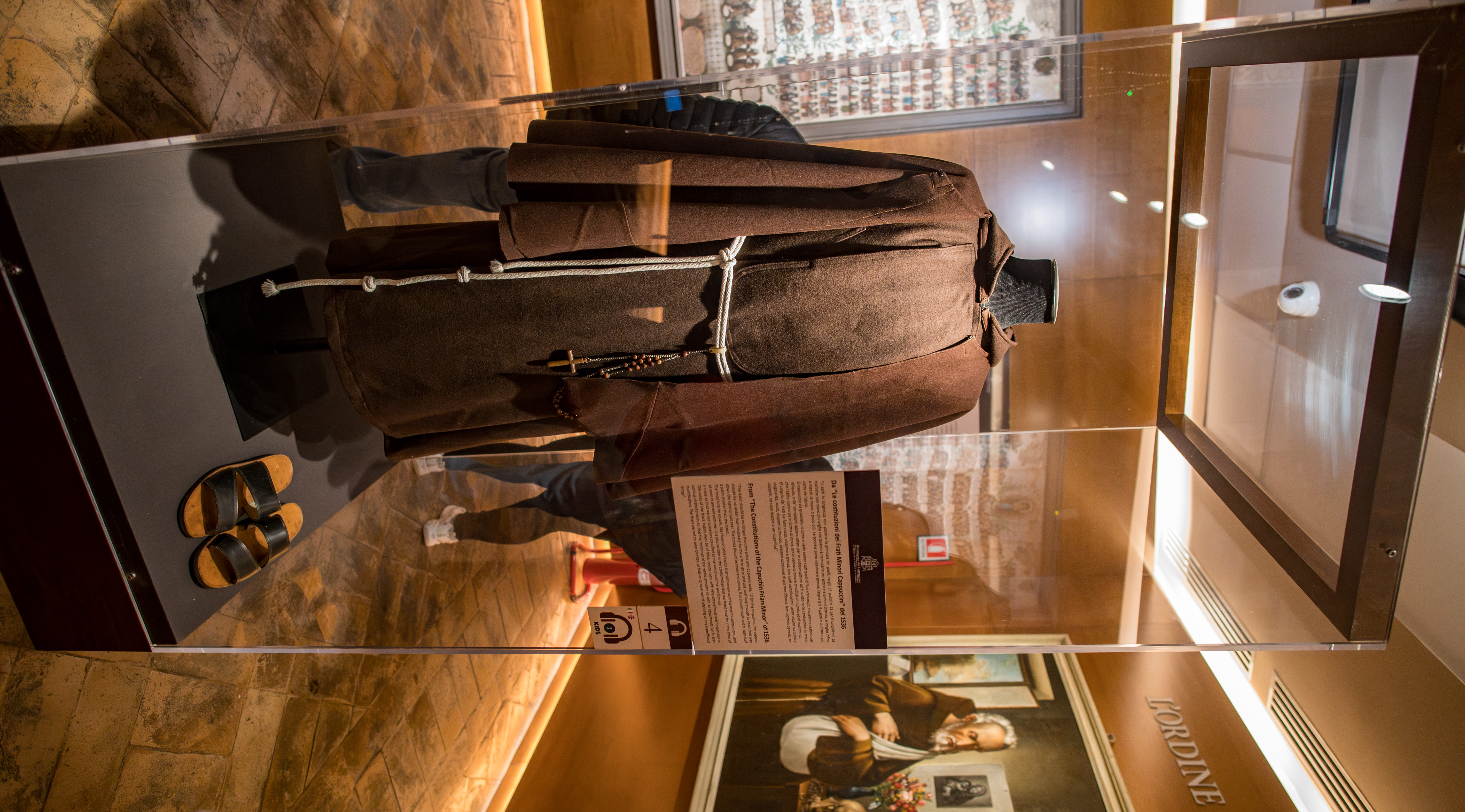
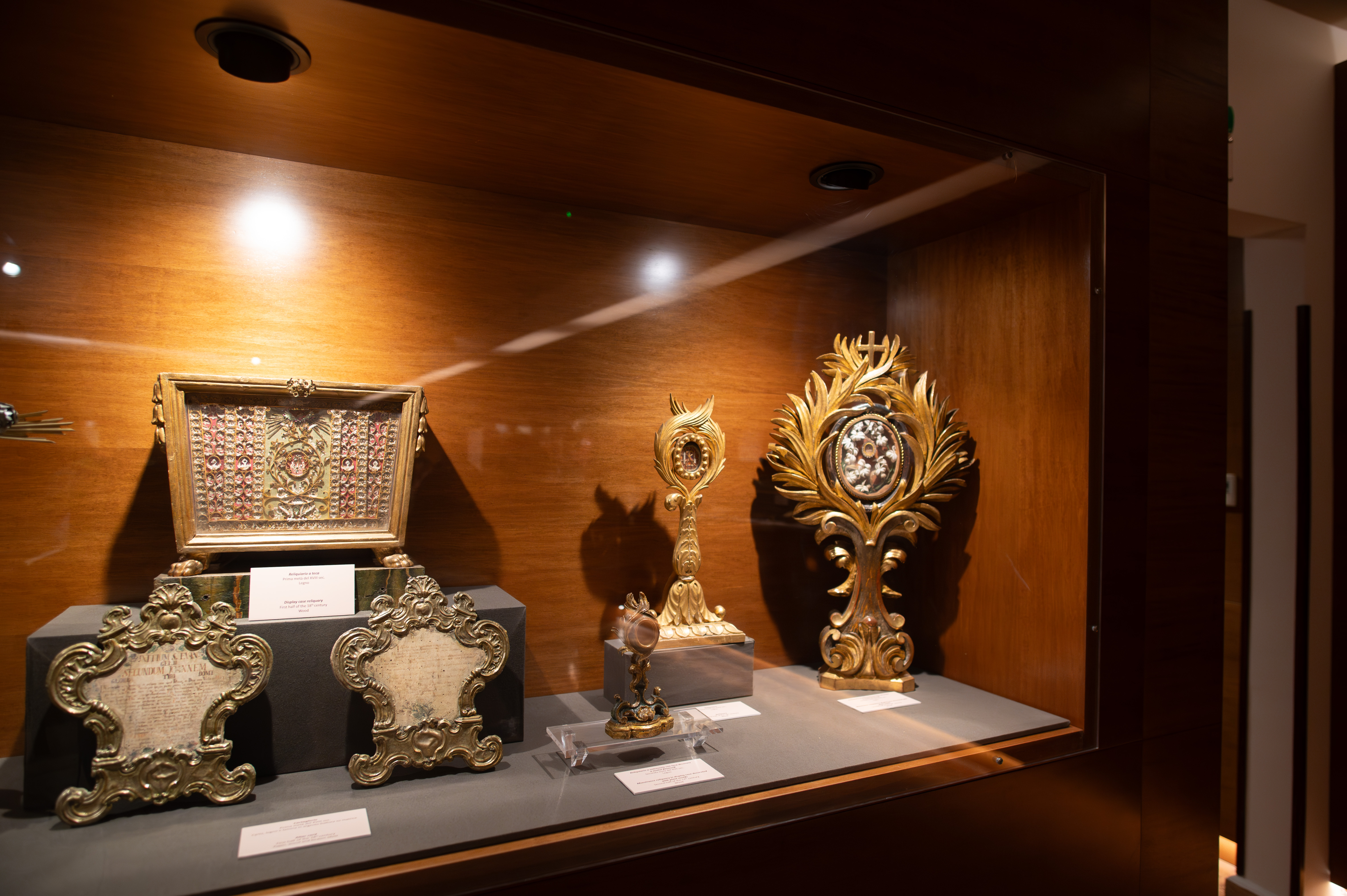
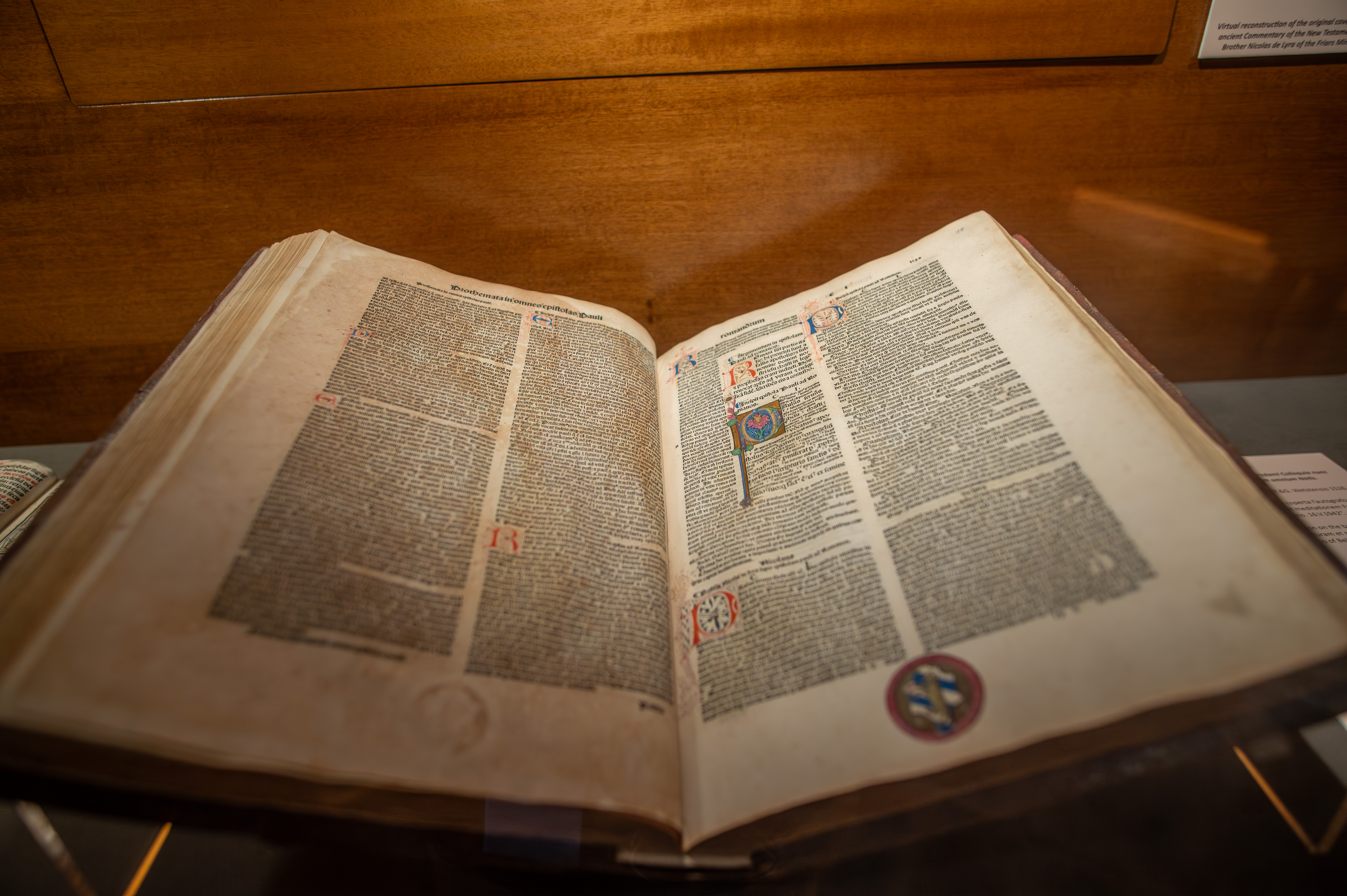
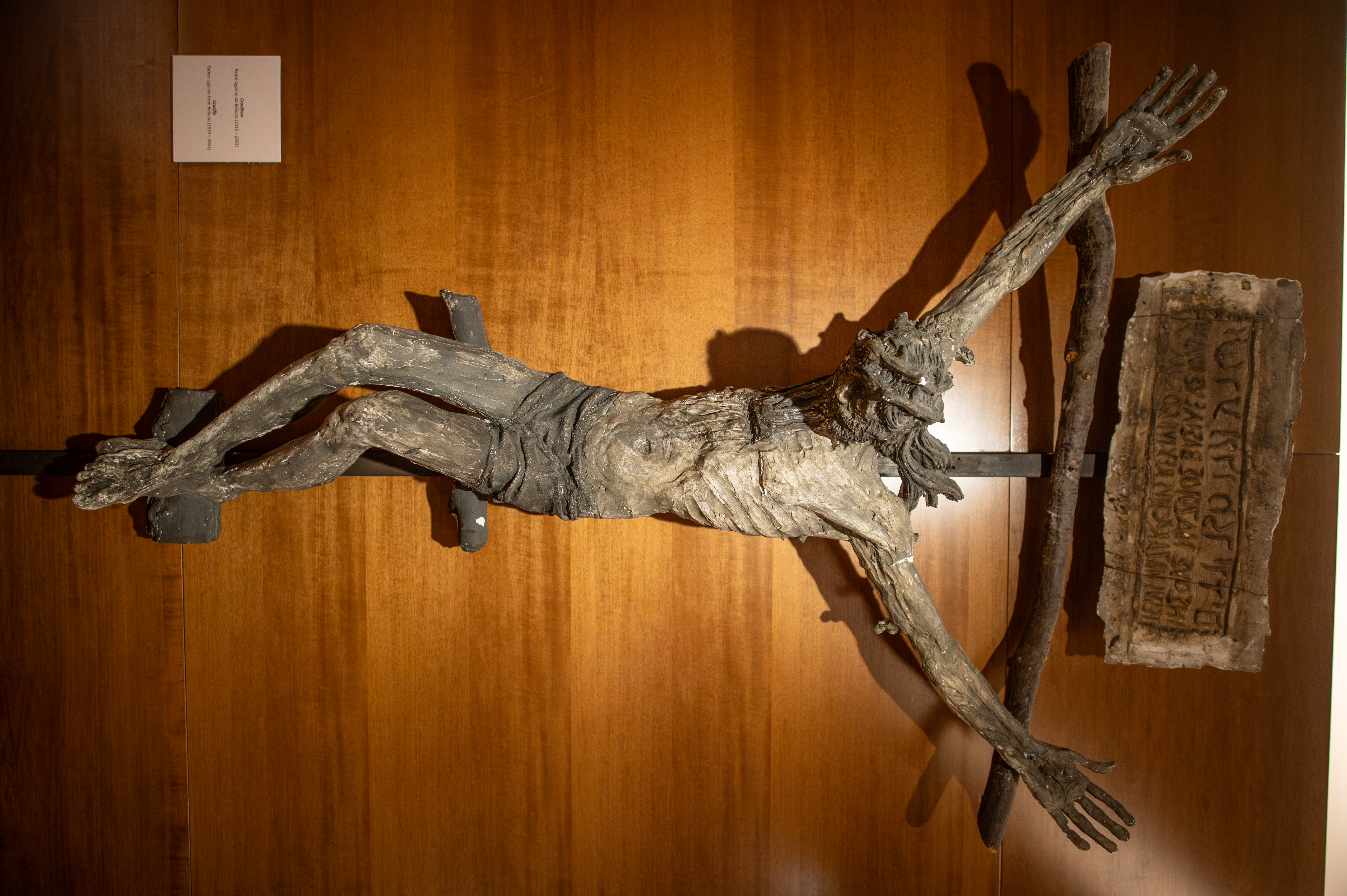
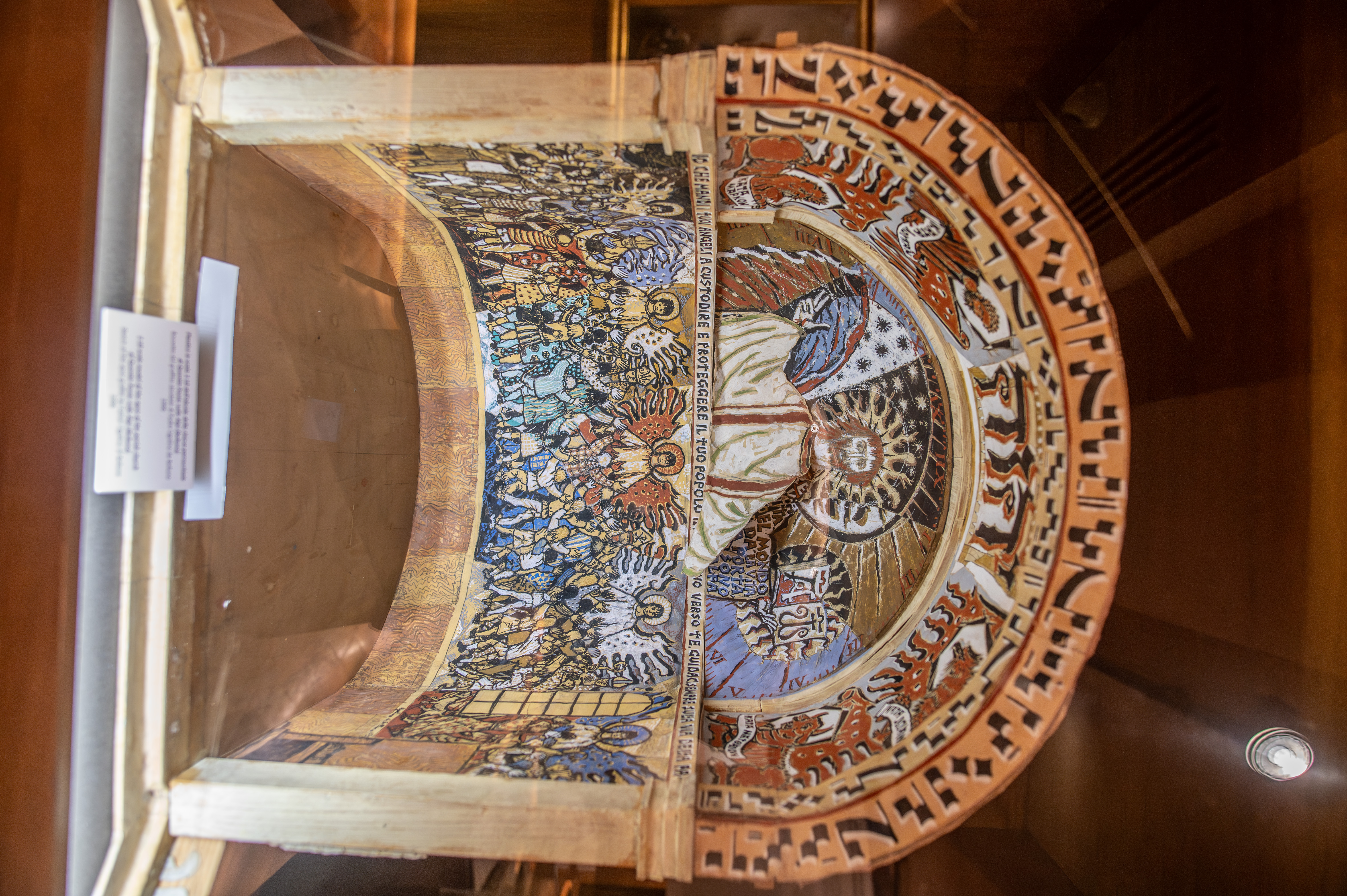
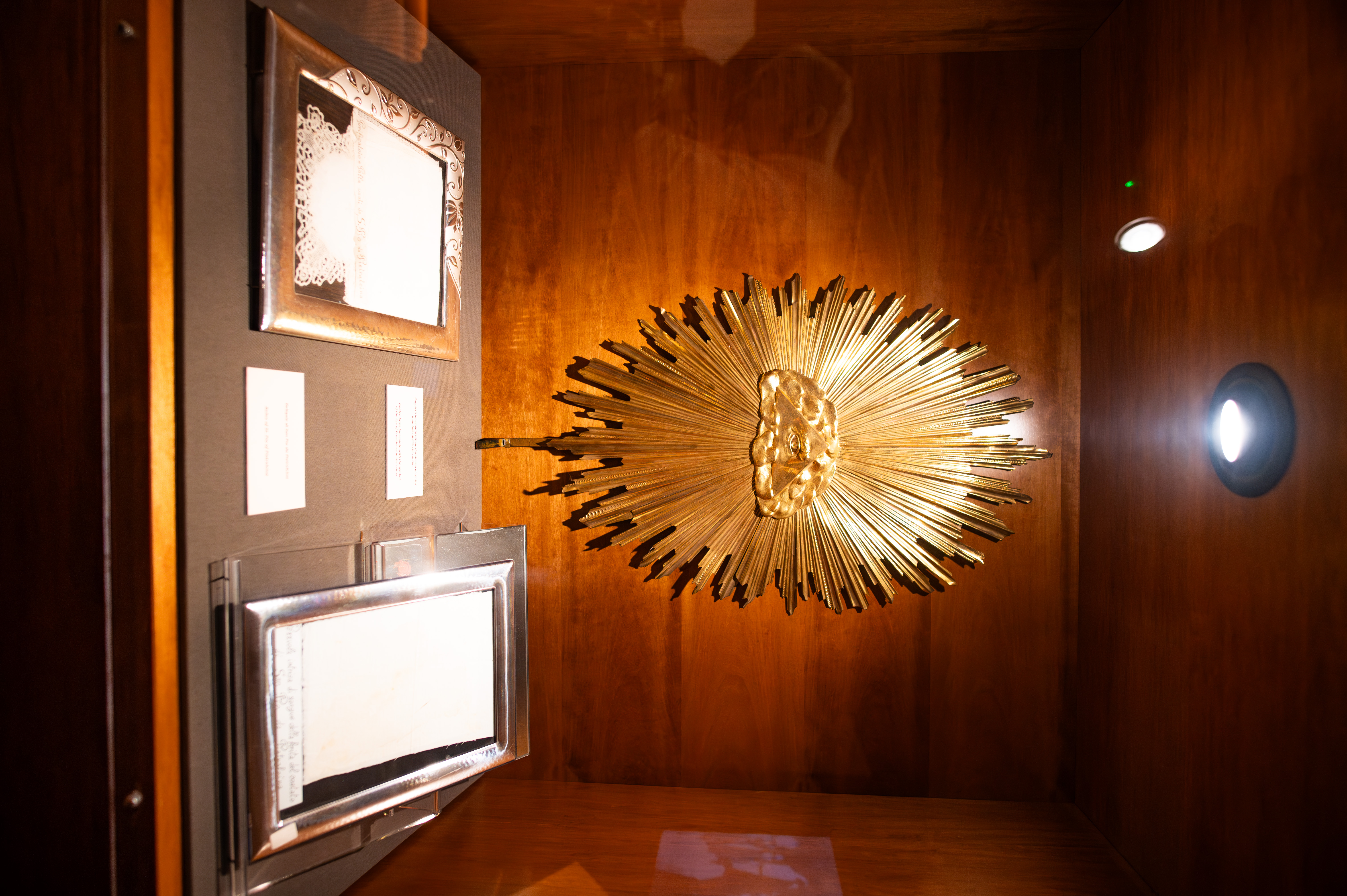
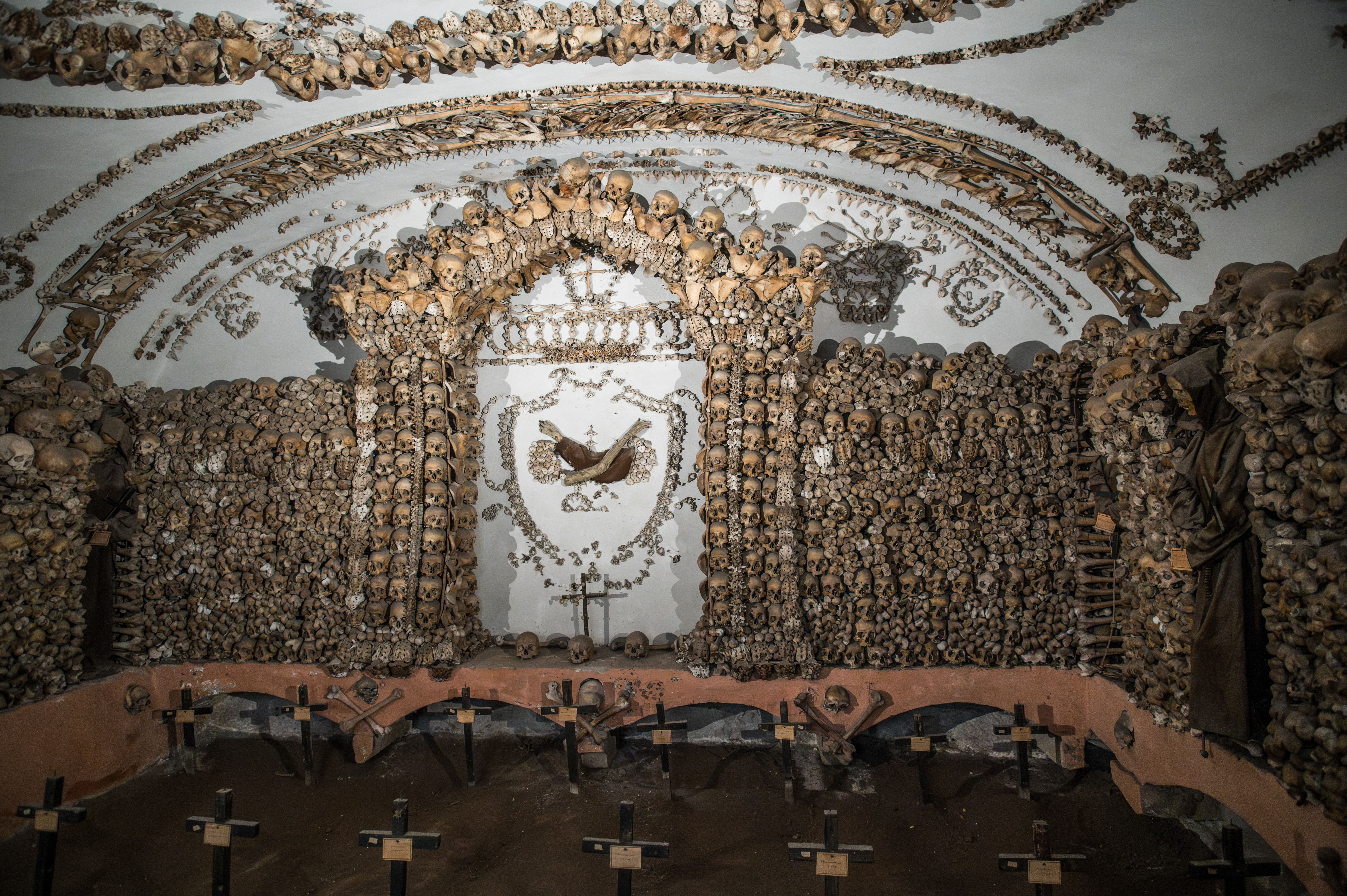
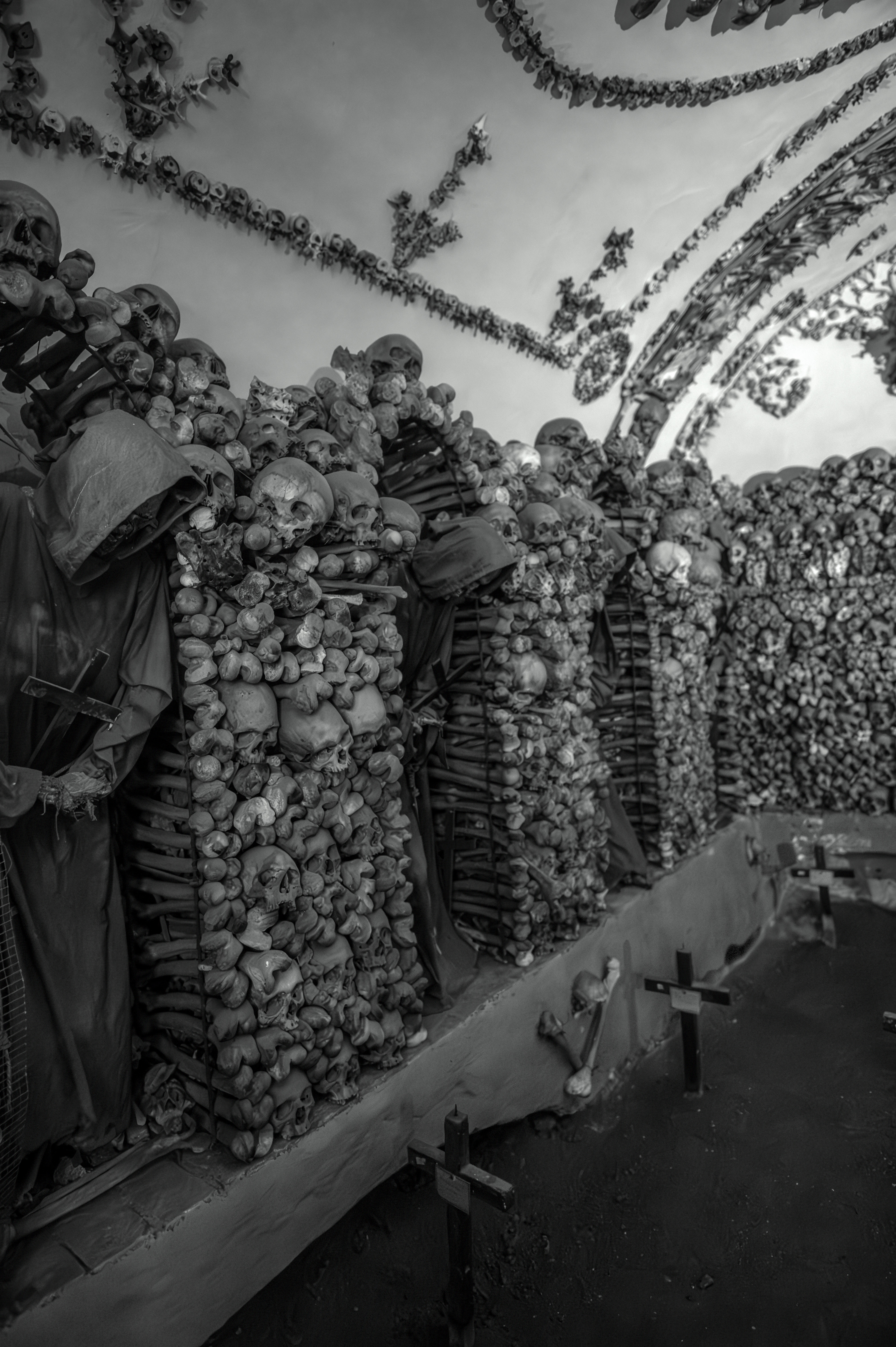
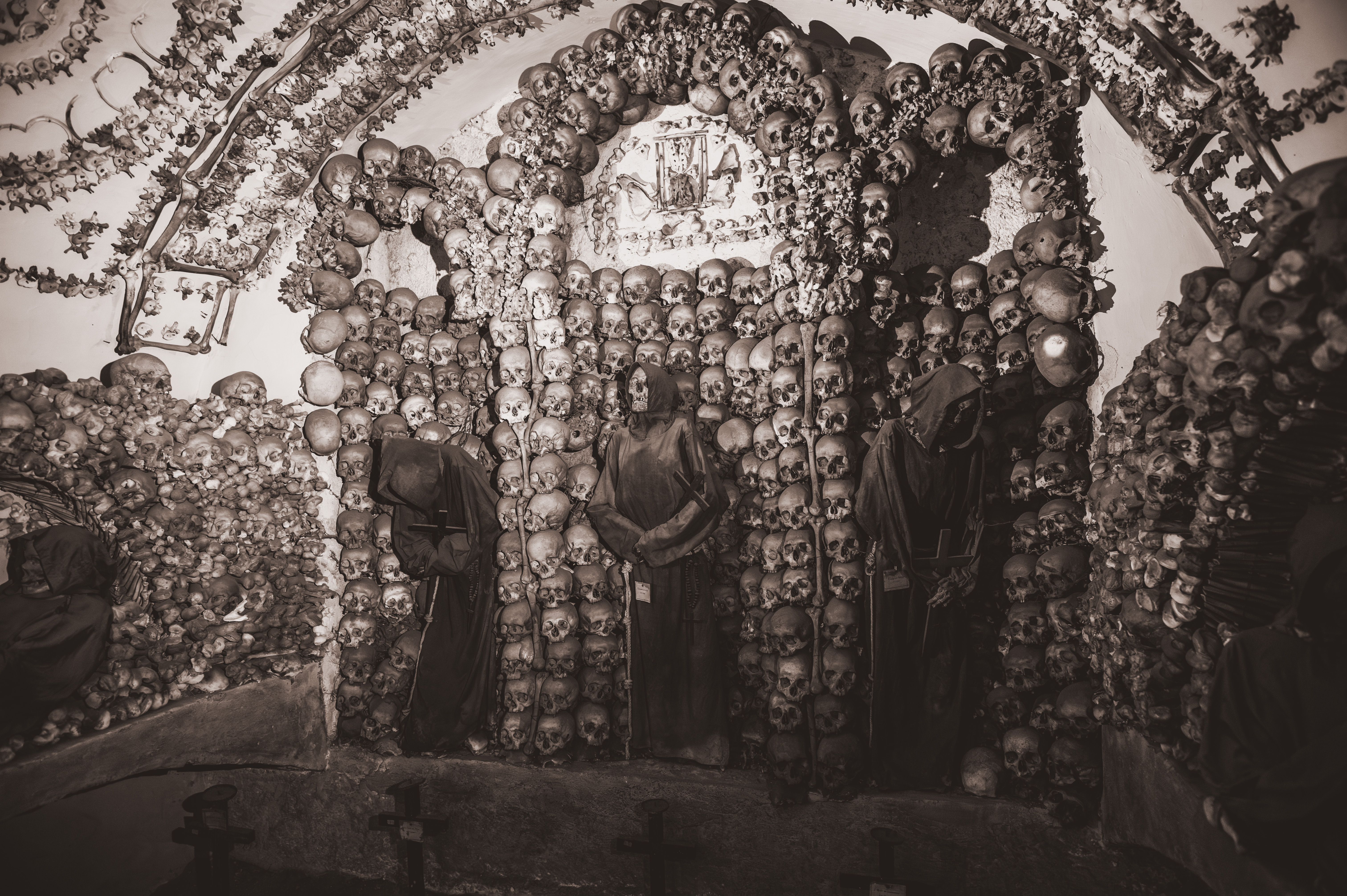
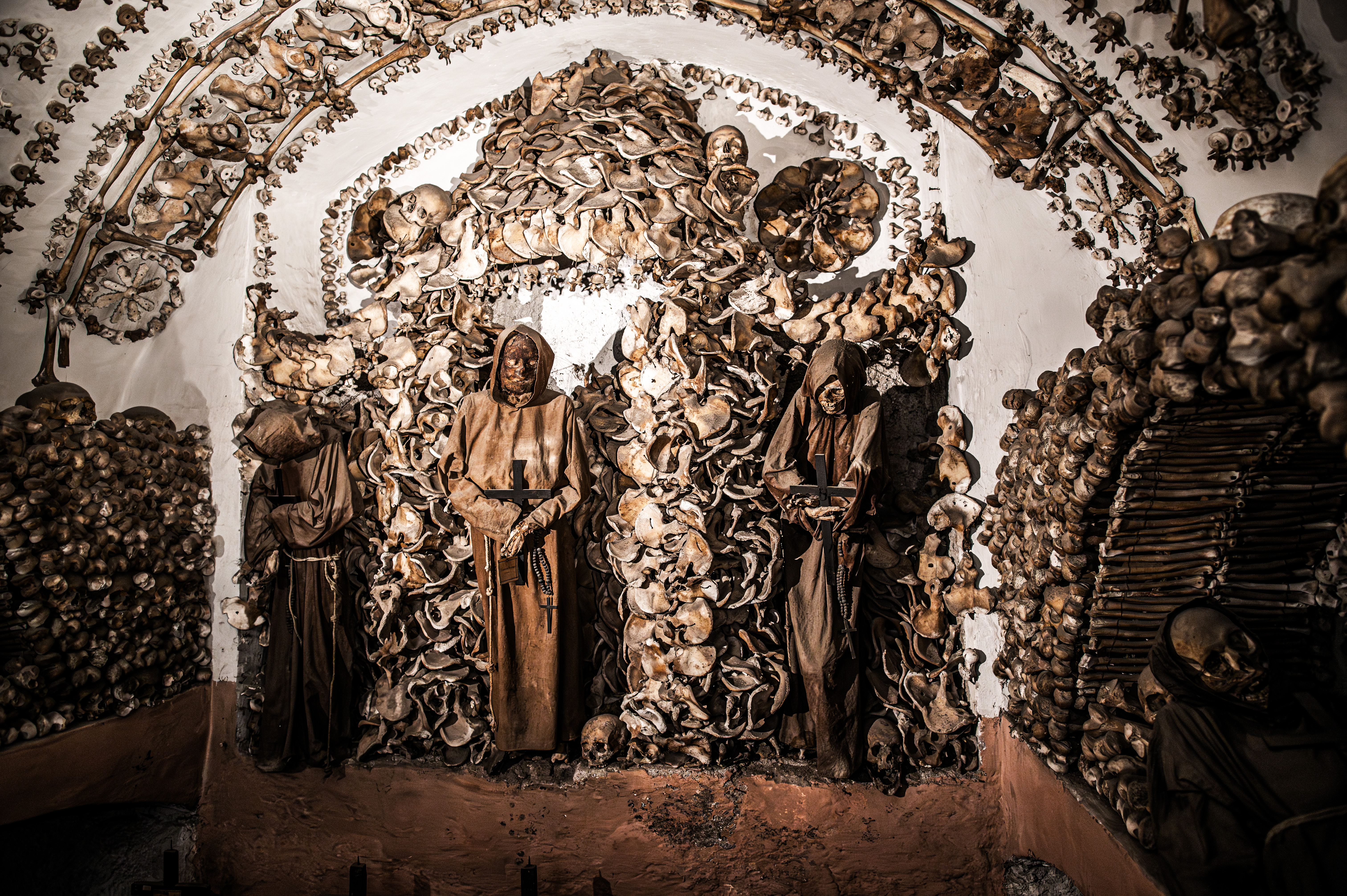
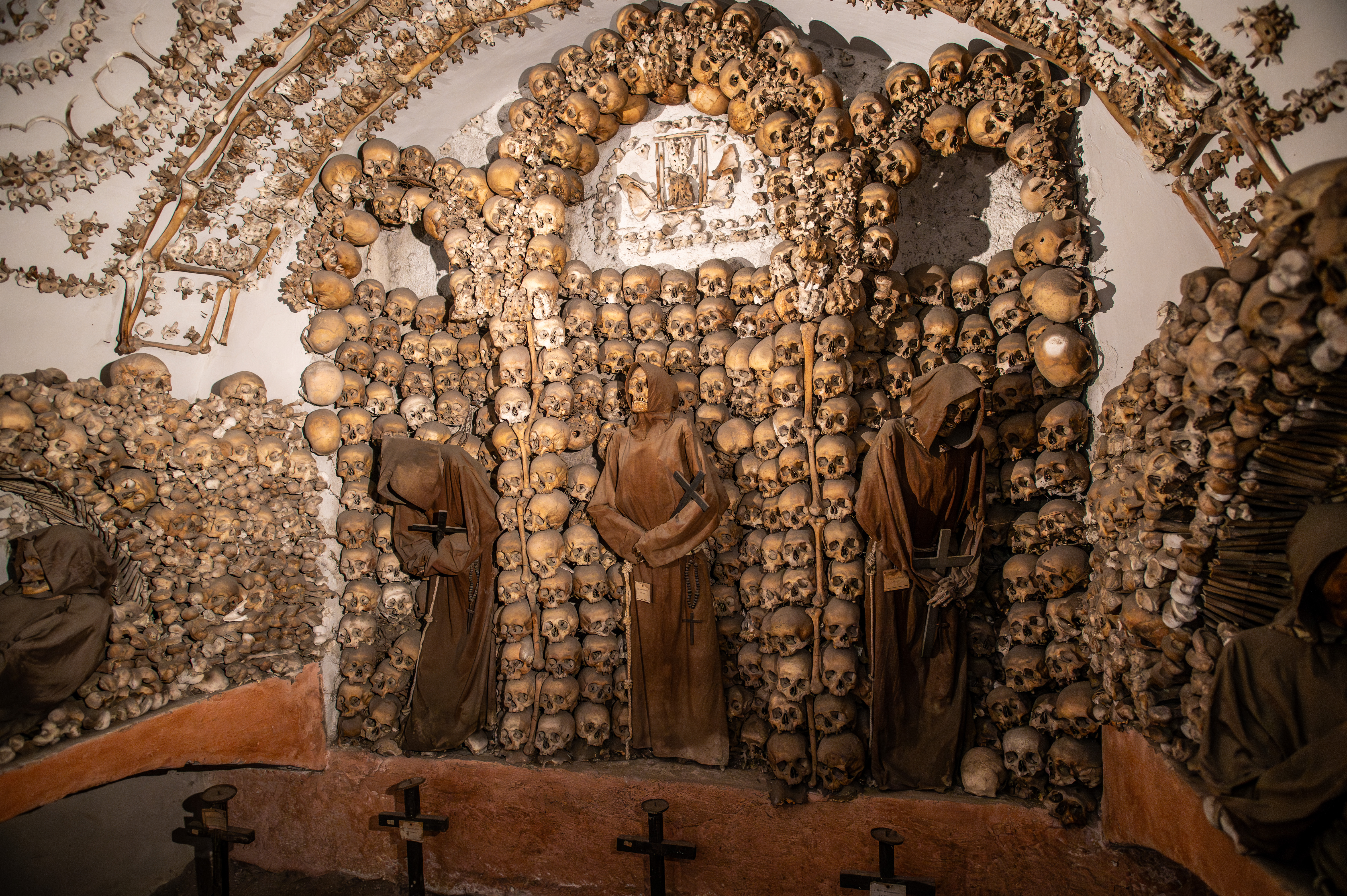
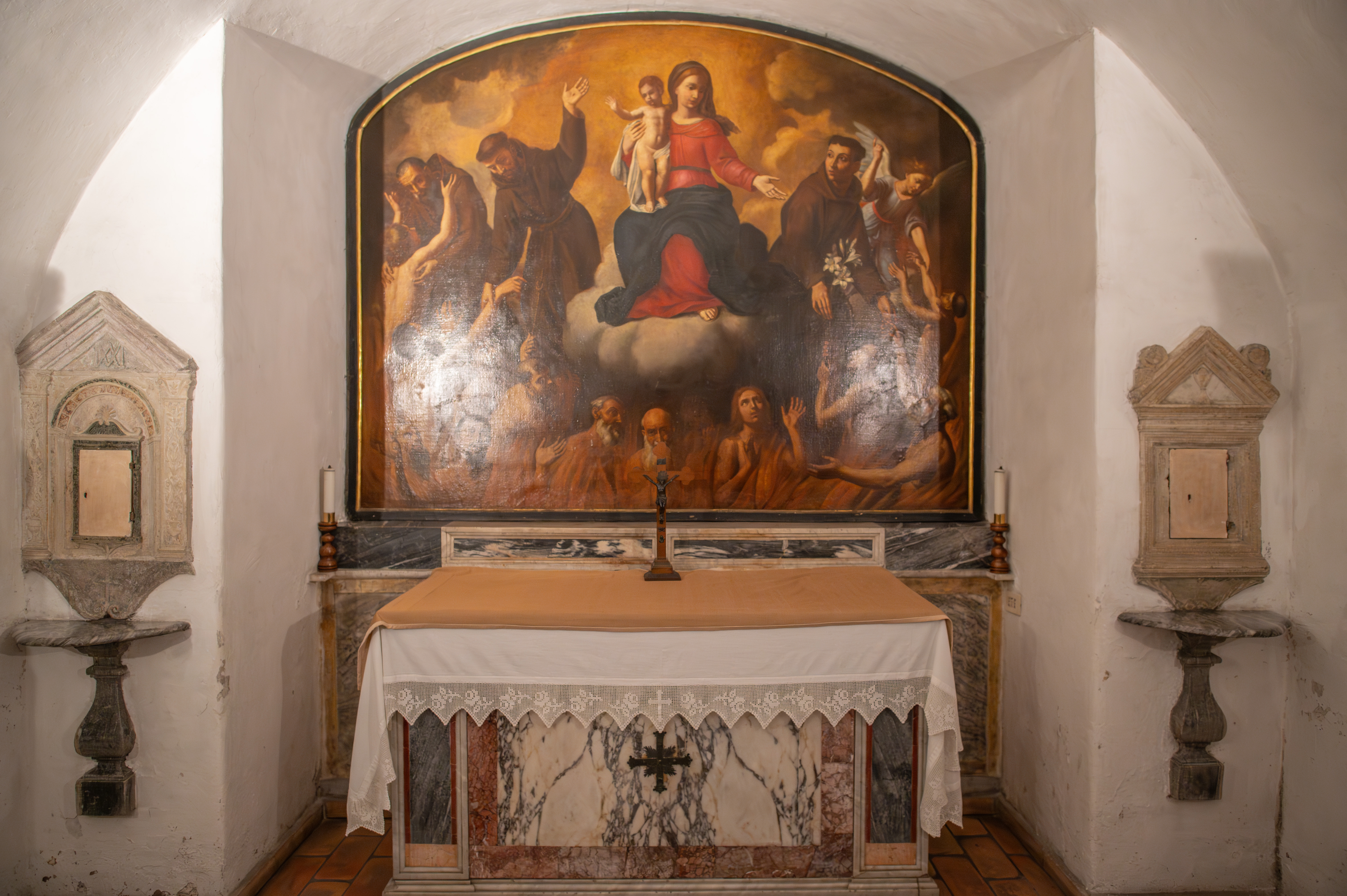
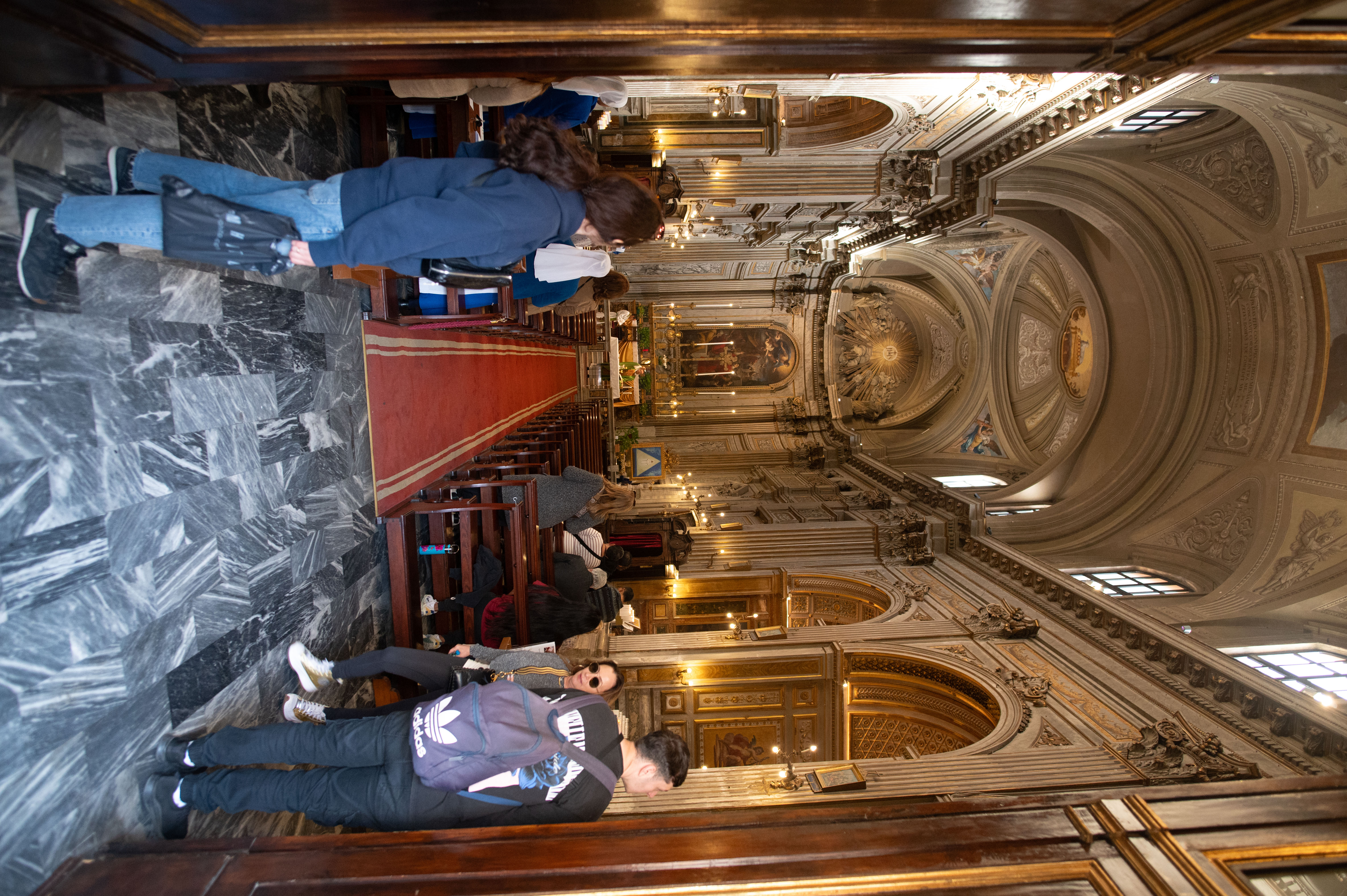
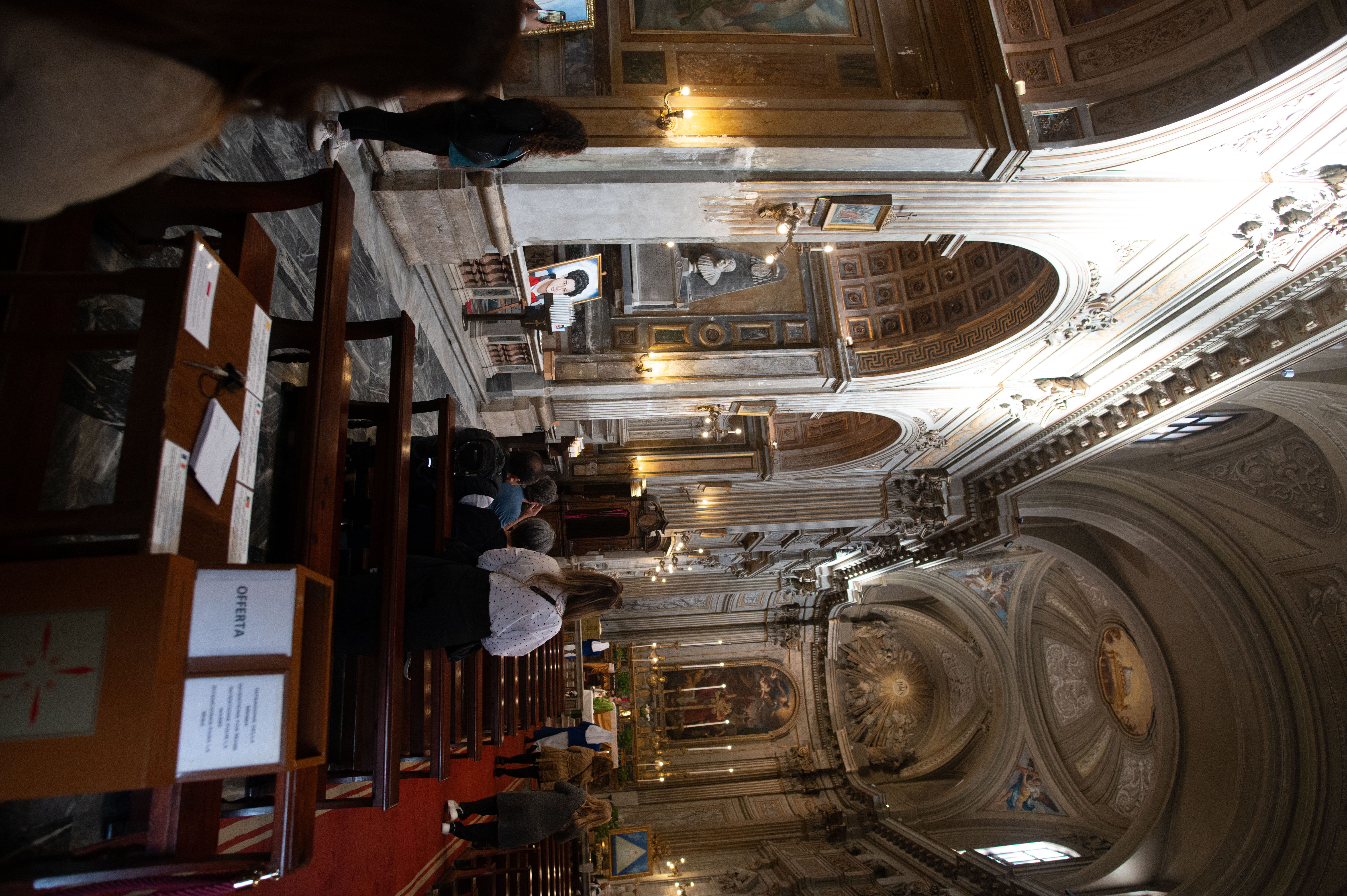
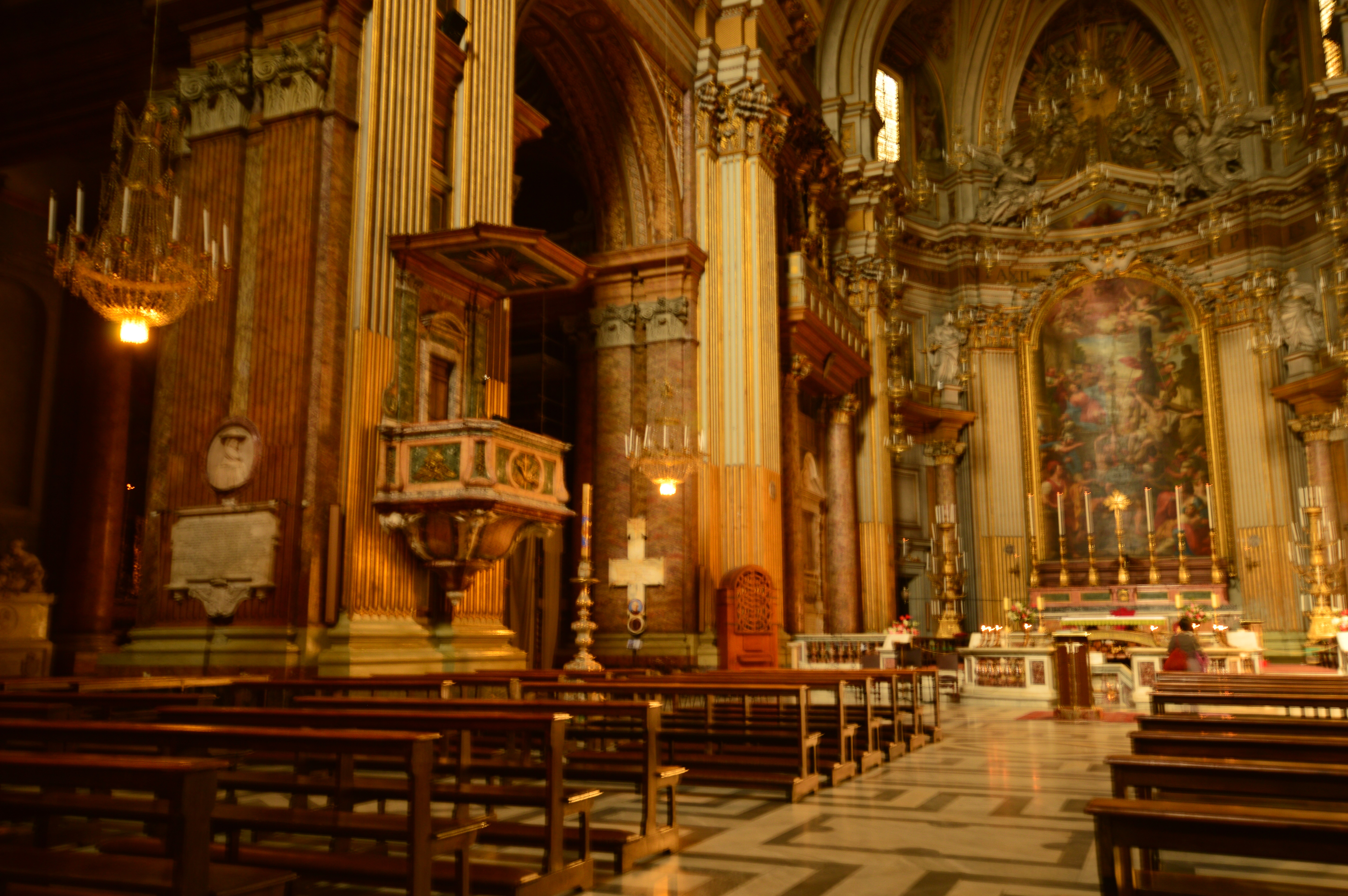
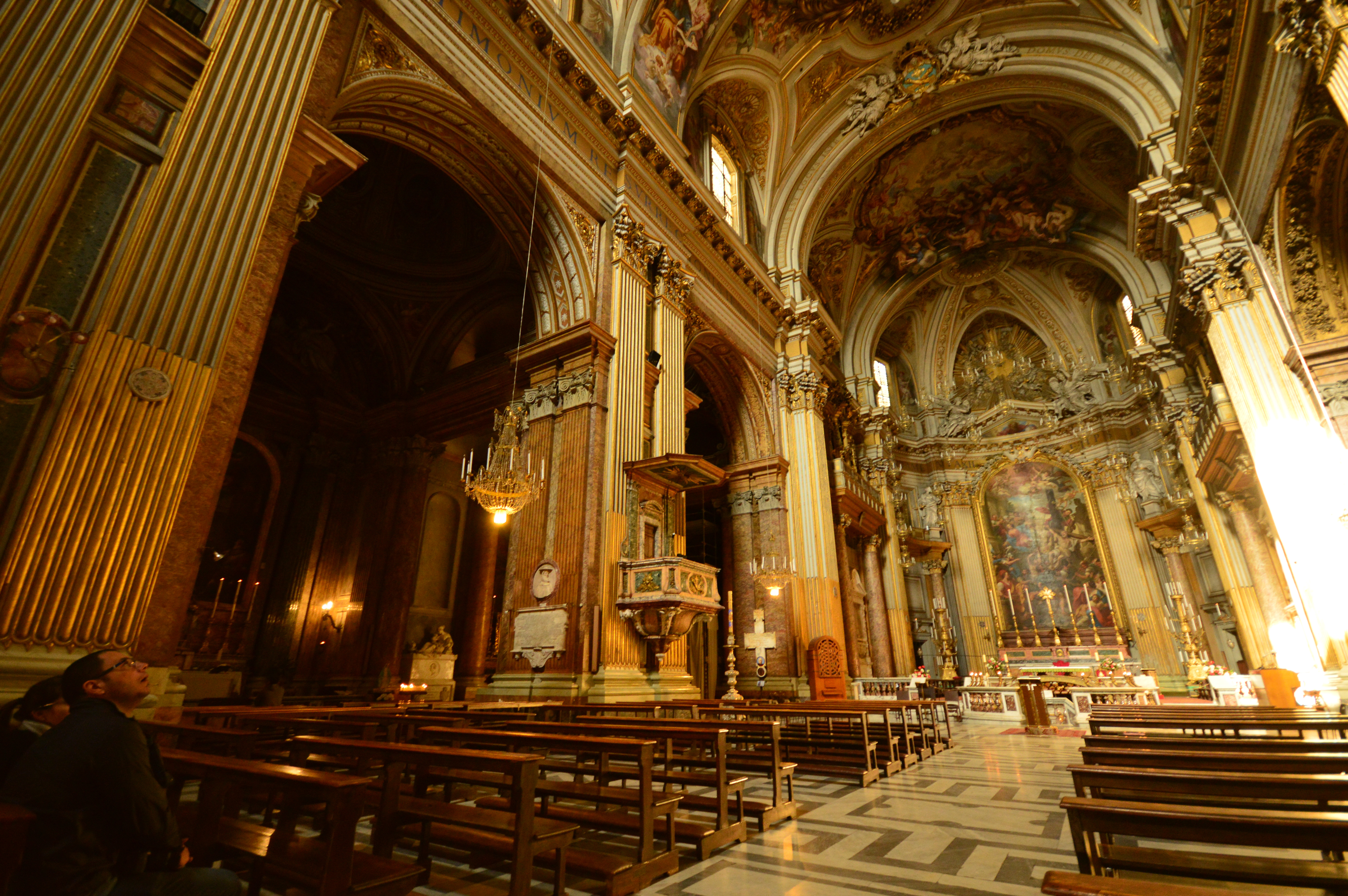
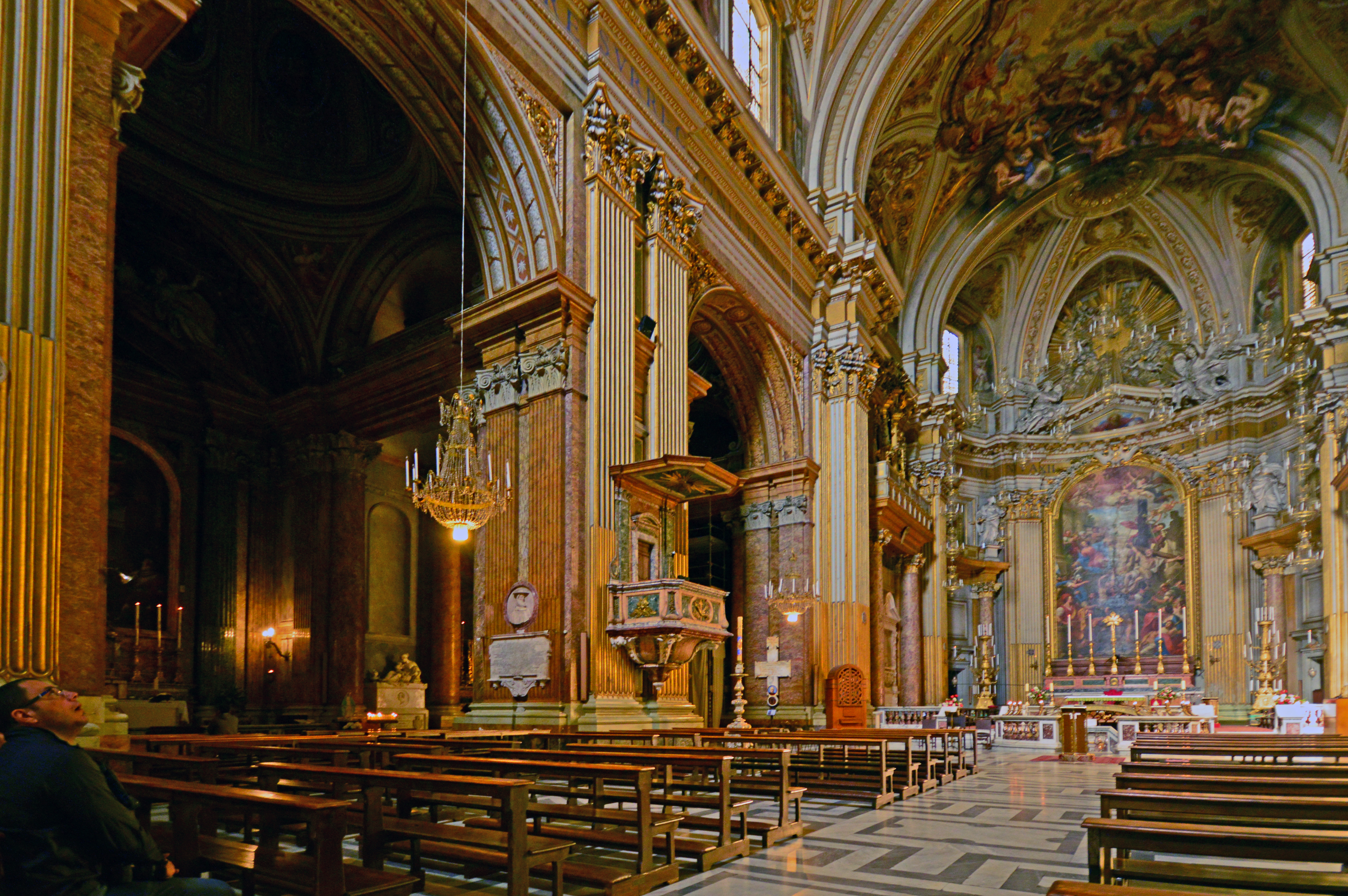
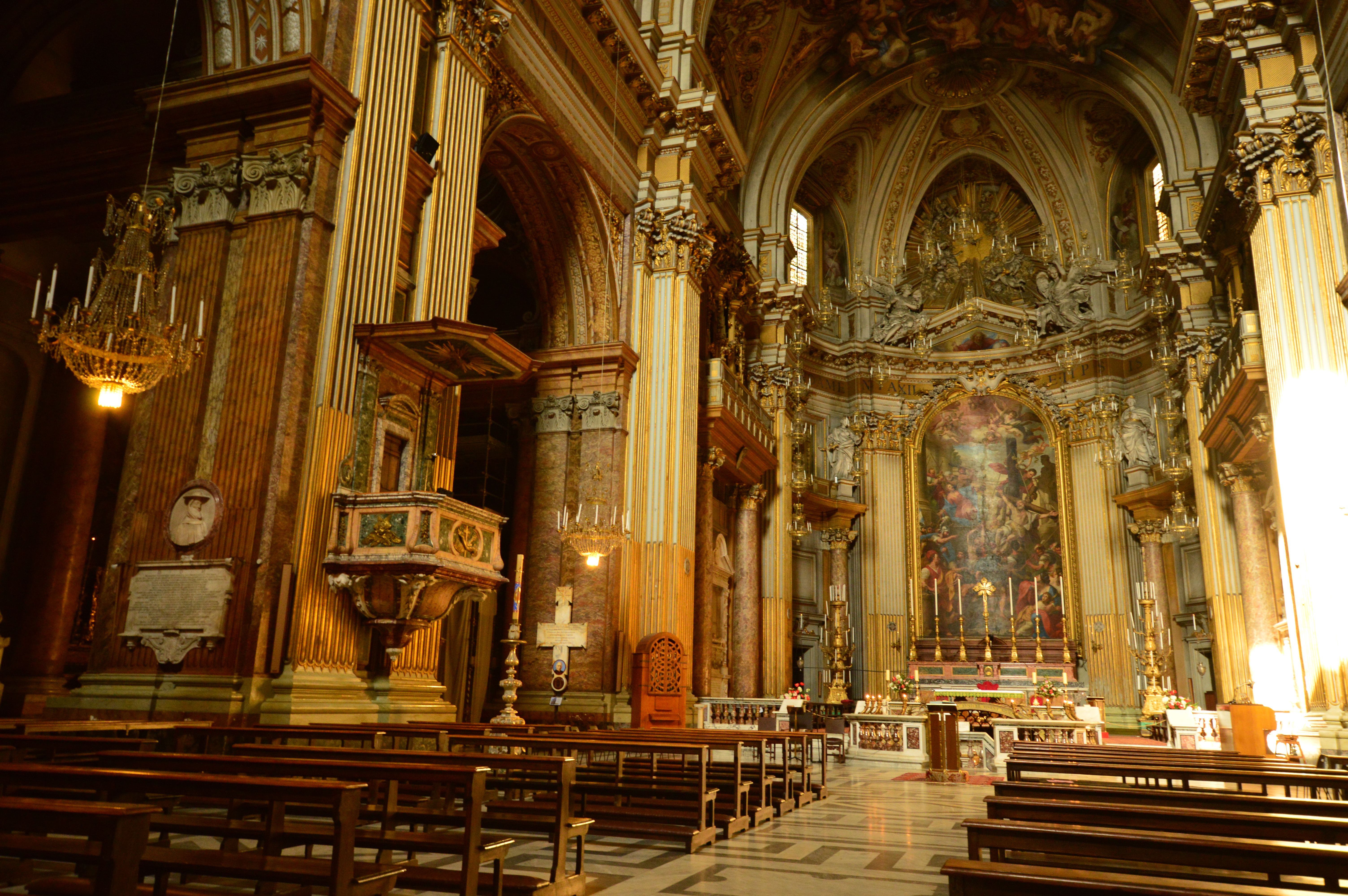
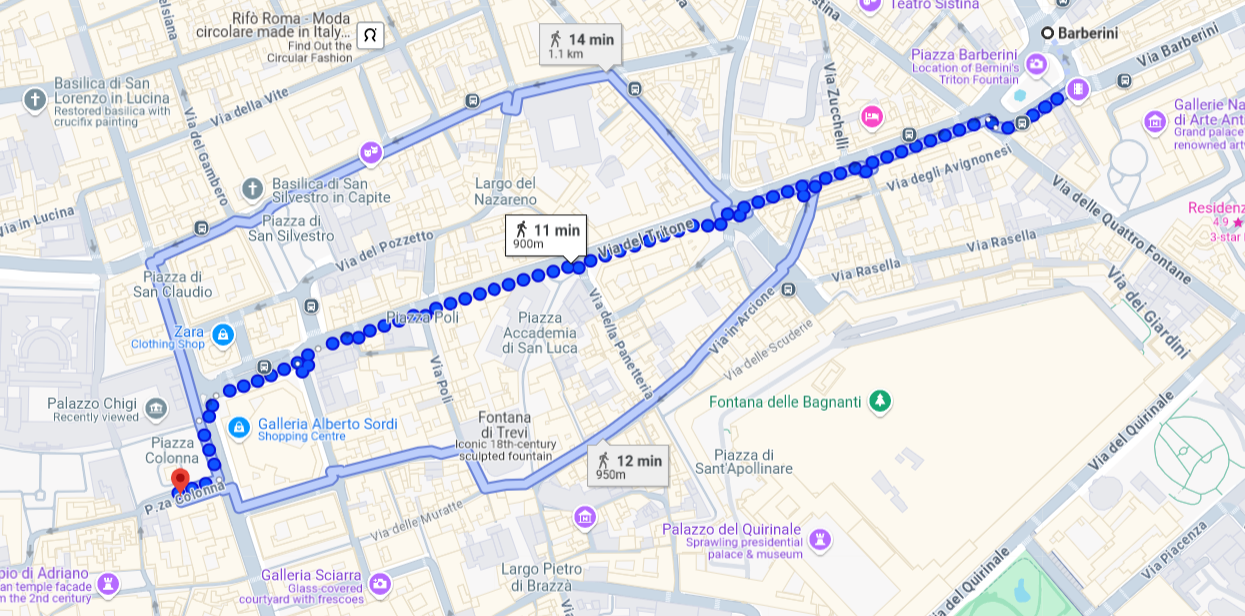
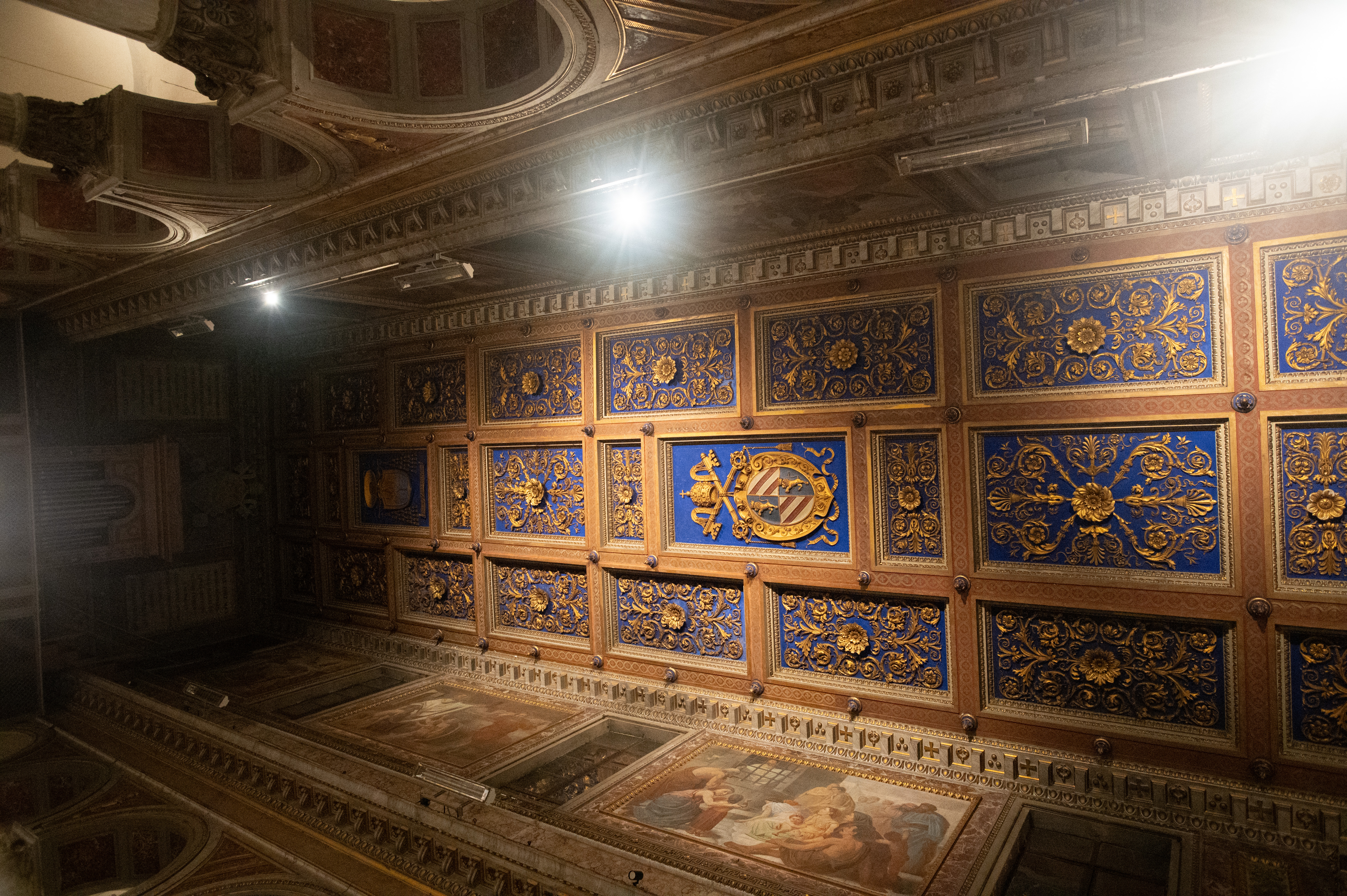
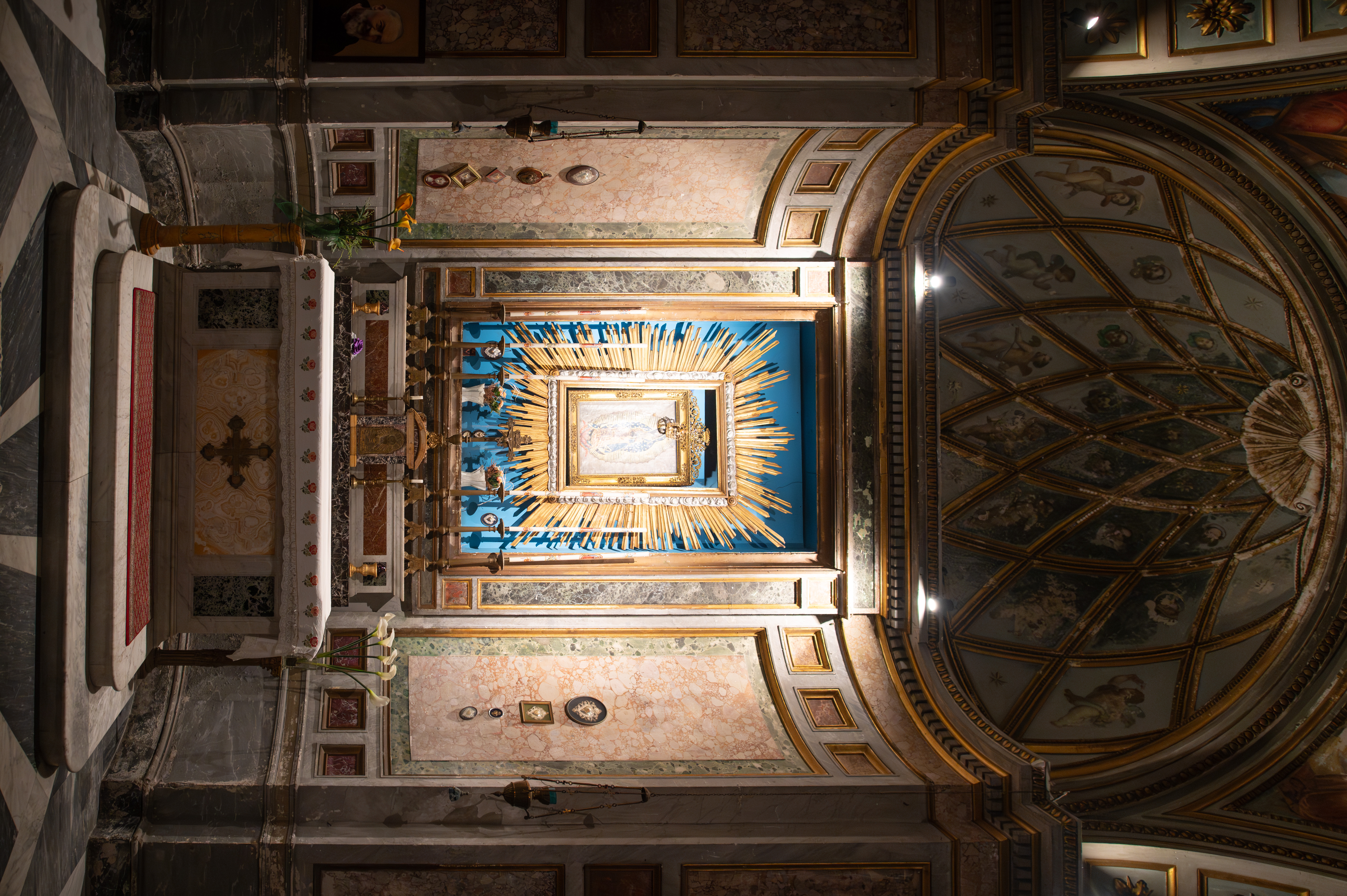
The Museo e Cripta dei Cappuccini in Rome is a hauntingly beautiful site that combines spiritual reflection, artistic heritage, and a stark meditation on mortality.
Attached Church: Santa Maria della Concezione dei Cappuccini, built 1626–1631 by order of Pope Urban VIII for his brother, Cardinal Antonio Barberini, a Capuchin friar.
The Crypt: A Baroque Memento Mori
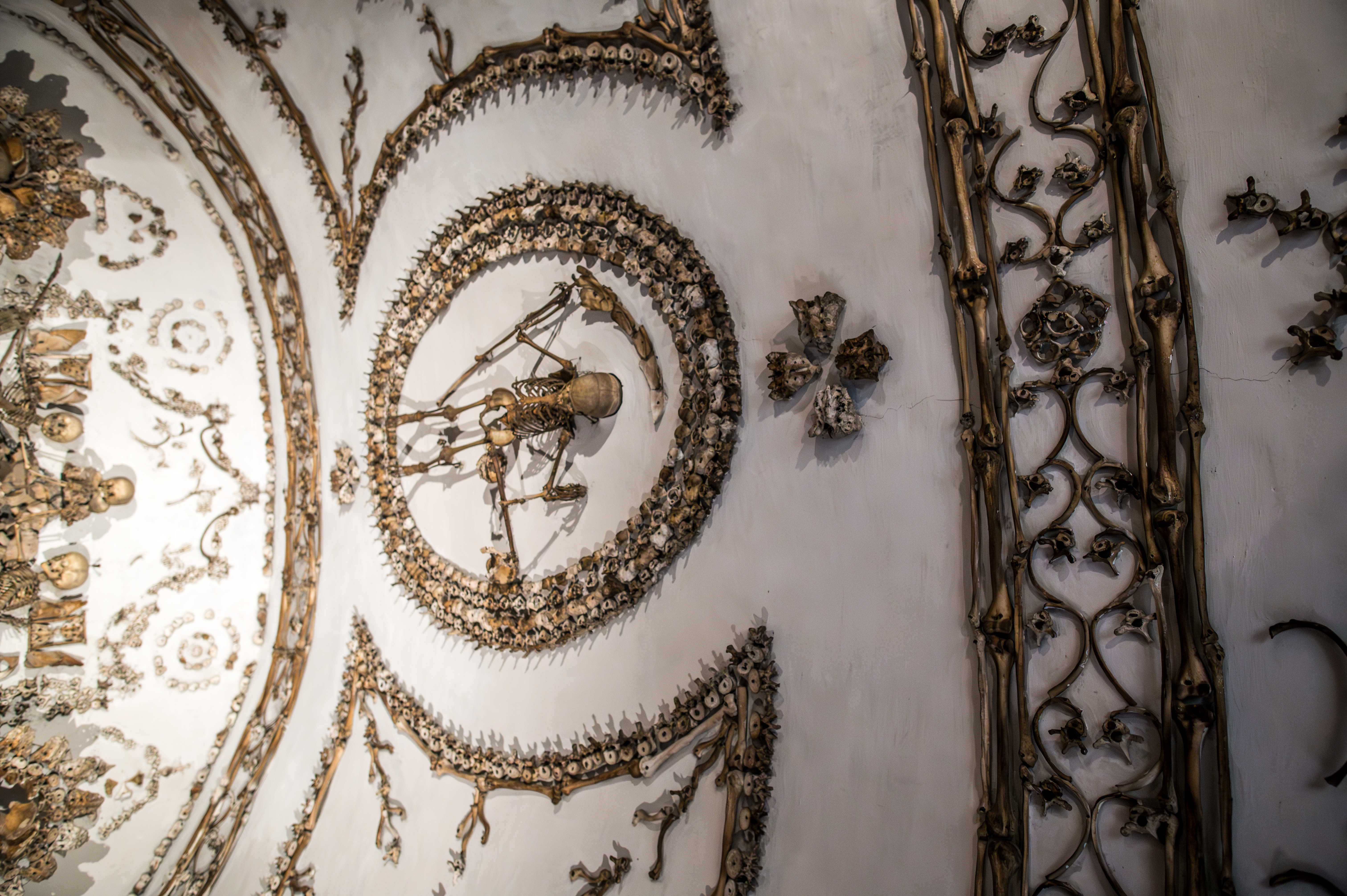
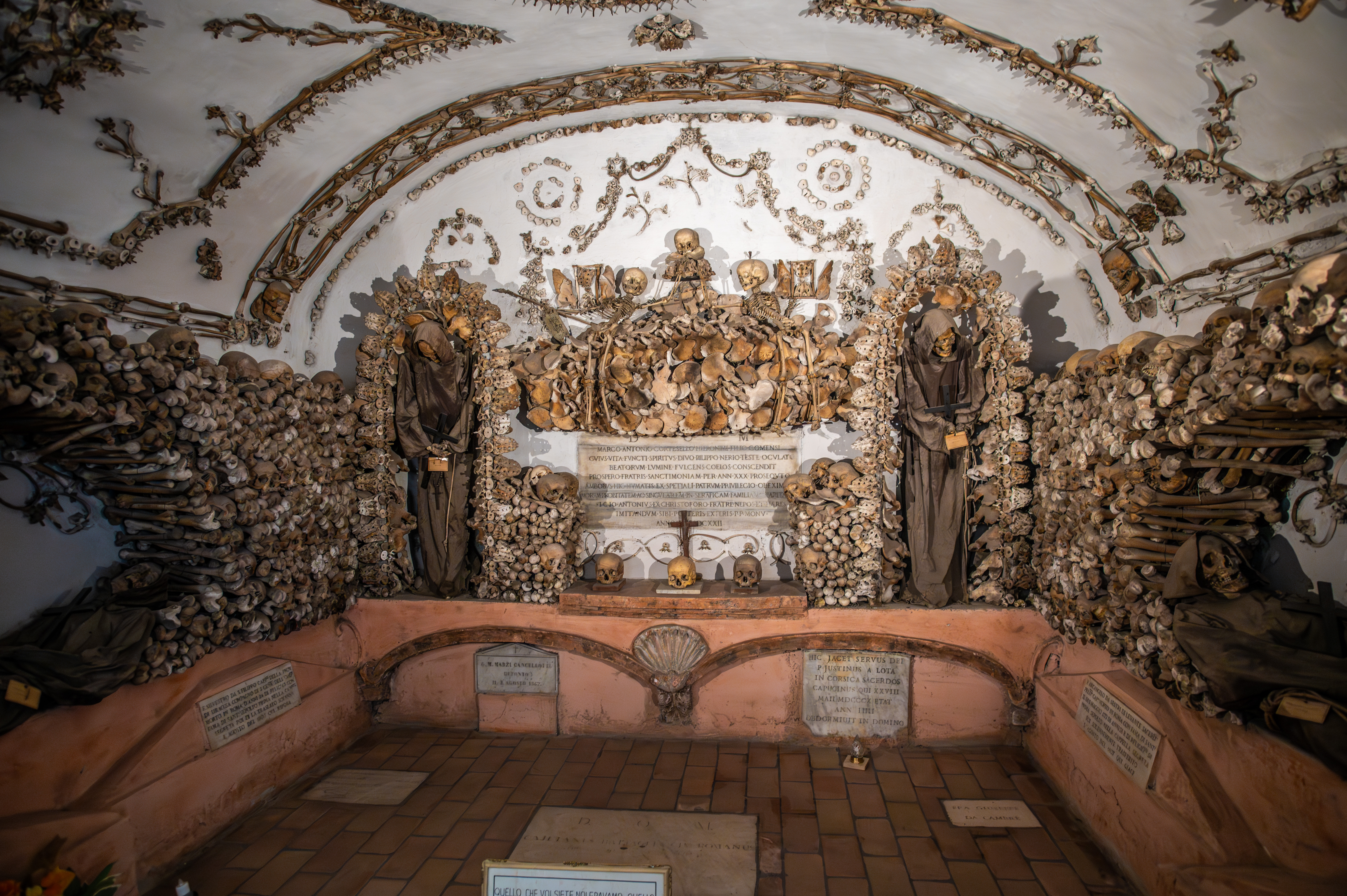
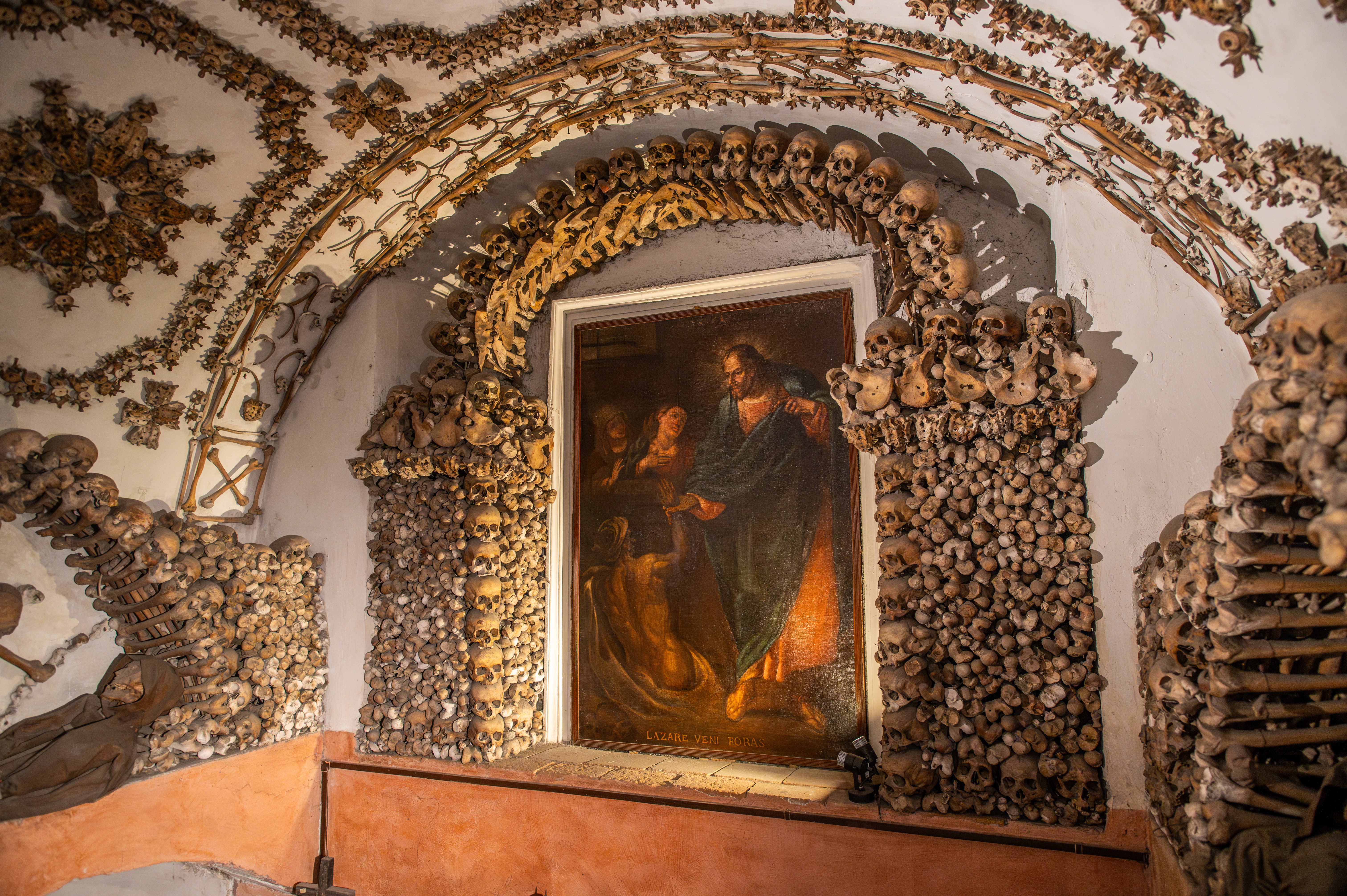
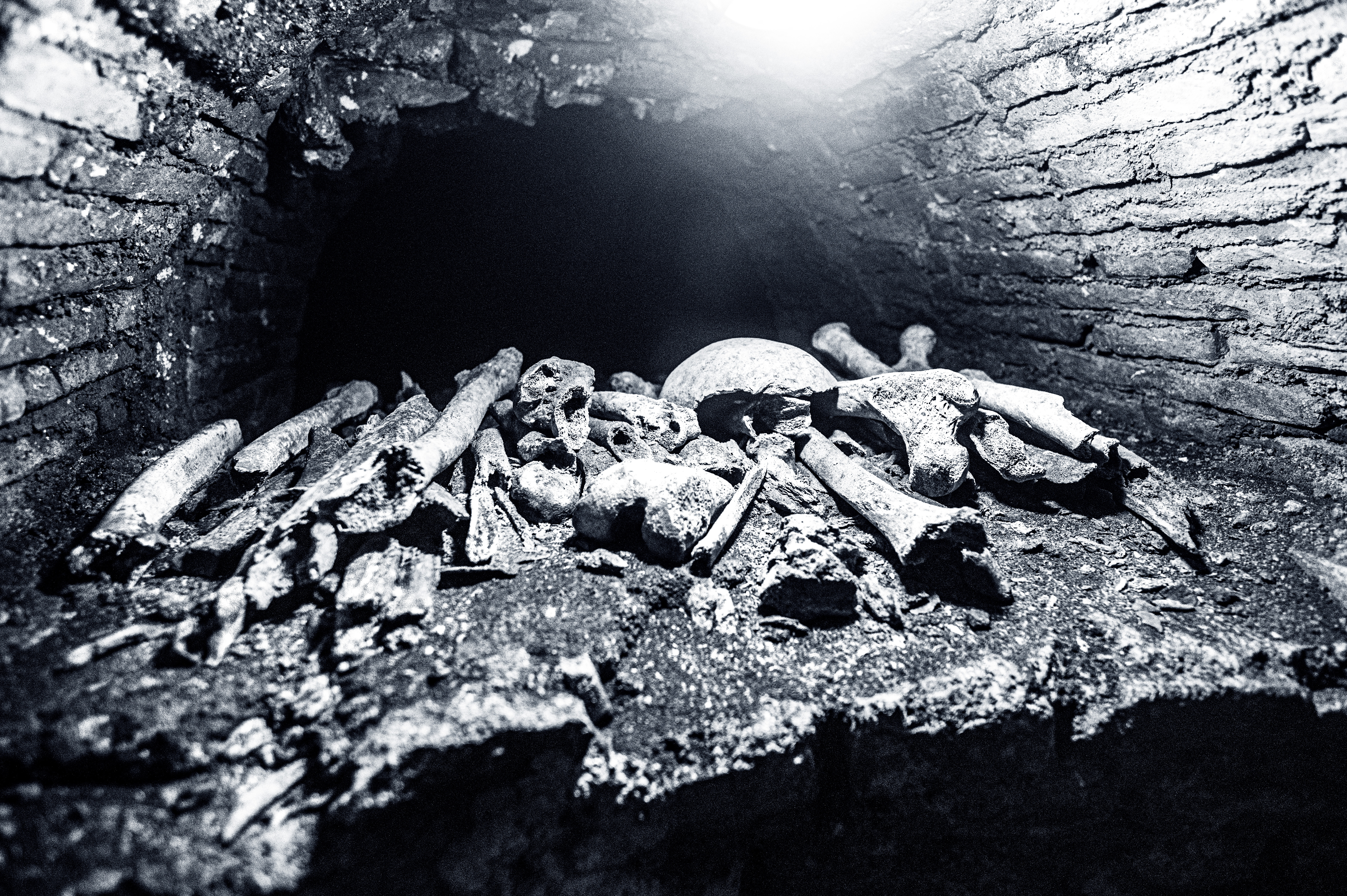
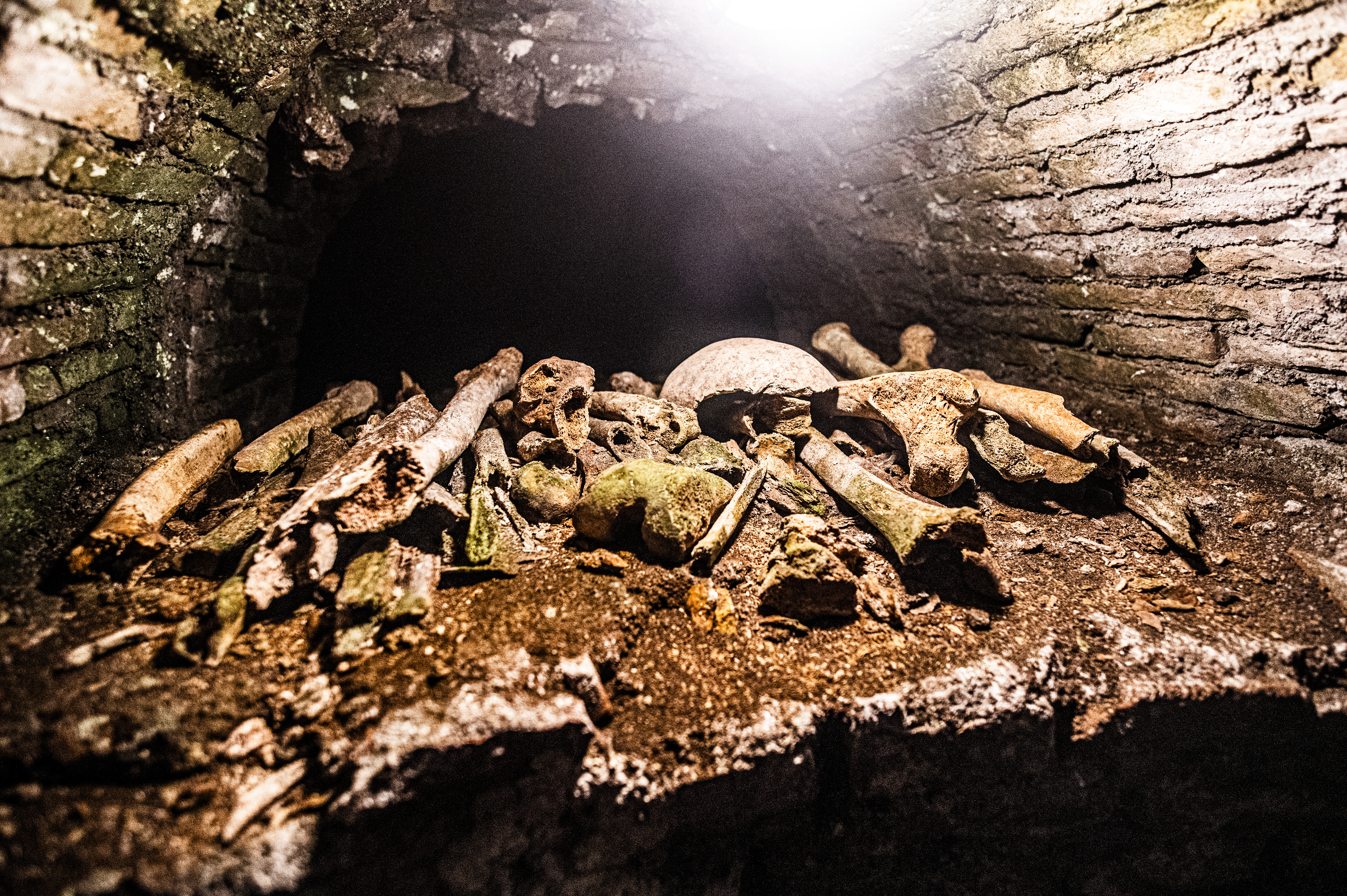
A corridor with five chapels, each decorated with the bones of nearly 4,000 Capuchin friars who died between the 16th and 19th centuries.
Bones are arranged into rosettes, chandeliers, hourglasses, and altars, forming a macabre yet reverent aesthetic.
Message: A plaque reads: “Quello che voi siete noi eravamo, quello che noi siamo voi sarete” (“What you are now, we once were; what we are now, you will be”).
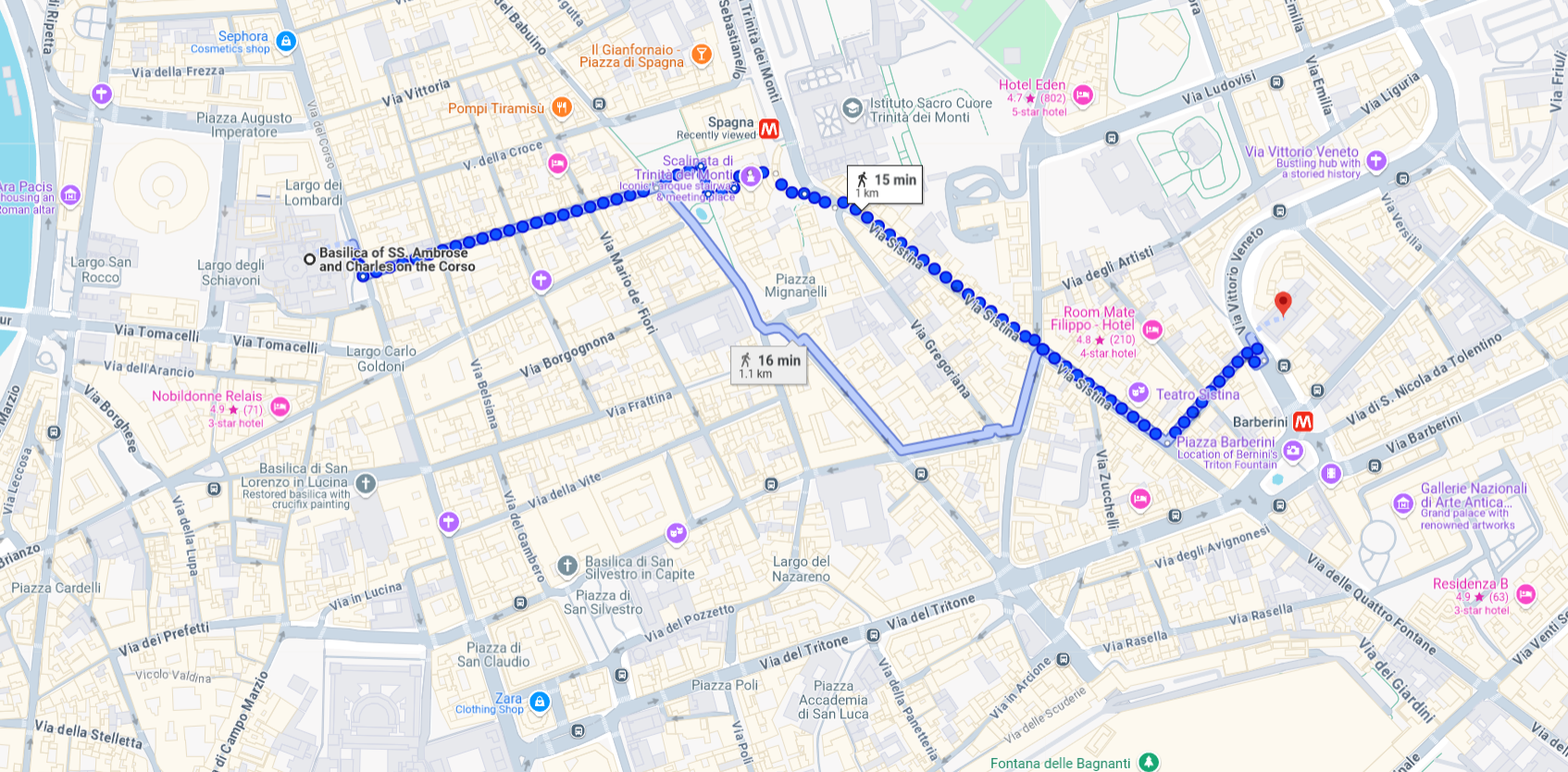
Piazza Barberini is a historic Baroque square in Rome, renowned for its Bernini fountains and its connection to the influential Barberini family
Located on the Quirinal Hill in Rome’s city center, Piazza Barberini was established in the 16th century and later transformed into a Baroque showcase under the patronage of the Barberini family. The square is named after Palazzo Barberini, a grand palace commissioned by Cardinal Francesco Barberini in 1625 and designed by Carlo Maderno, Gian Lorenzo Bernini, and Francesco Borromini. Today, the palace houses the Italyal Gallery of Ancient Art, featuring works by Raphael, Caravaggio, and Tintoretto.
Fontana del Tritone (1642–43): This travertine fountain is the centerpiece of the piazza. It features Triton, the sea god, blowing water from a conch shell, supported by four dolphins. It was commissioned by Pope Urban VIII and bears the Barberini family crest
Fontana delle Api (1644): Located at the corner of Via Veneto, this smaller fountain was designed for practical use—allowing locals to fill water jars. It features three bees, the heraldic symbol of the Barberini family.
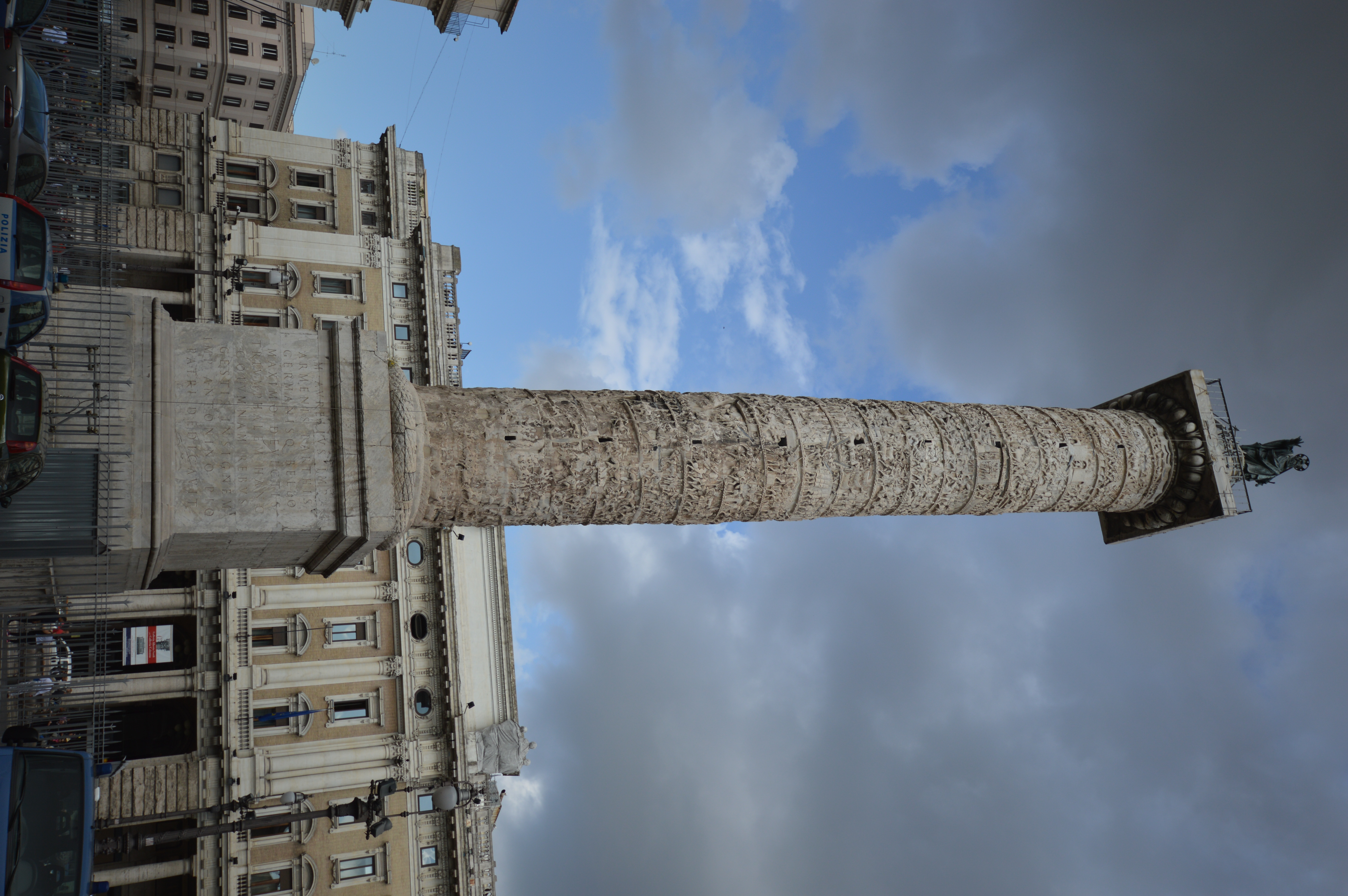
Piazza Colonna is a historic and political heart of Rome, centered around the Column of Marcus Aurelius and surrounded by monumental architecture including the seat of the Italian Prime Minister.
The Column of Marcus Aurelius (AD 193) is a 30-meter Doric column made of Carrara marble. It is decorated with a spiral relief narrating Marcus Aurelius’ military campaigns against the Marcomanni, Quadi, and Sarmatians. Originally topped with a statue of the emperor, replaced in 1589 by a bronze statue of Saint Paul by Pope Sixtus V.
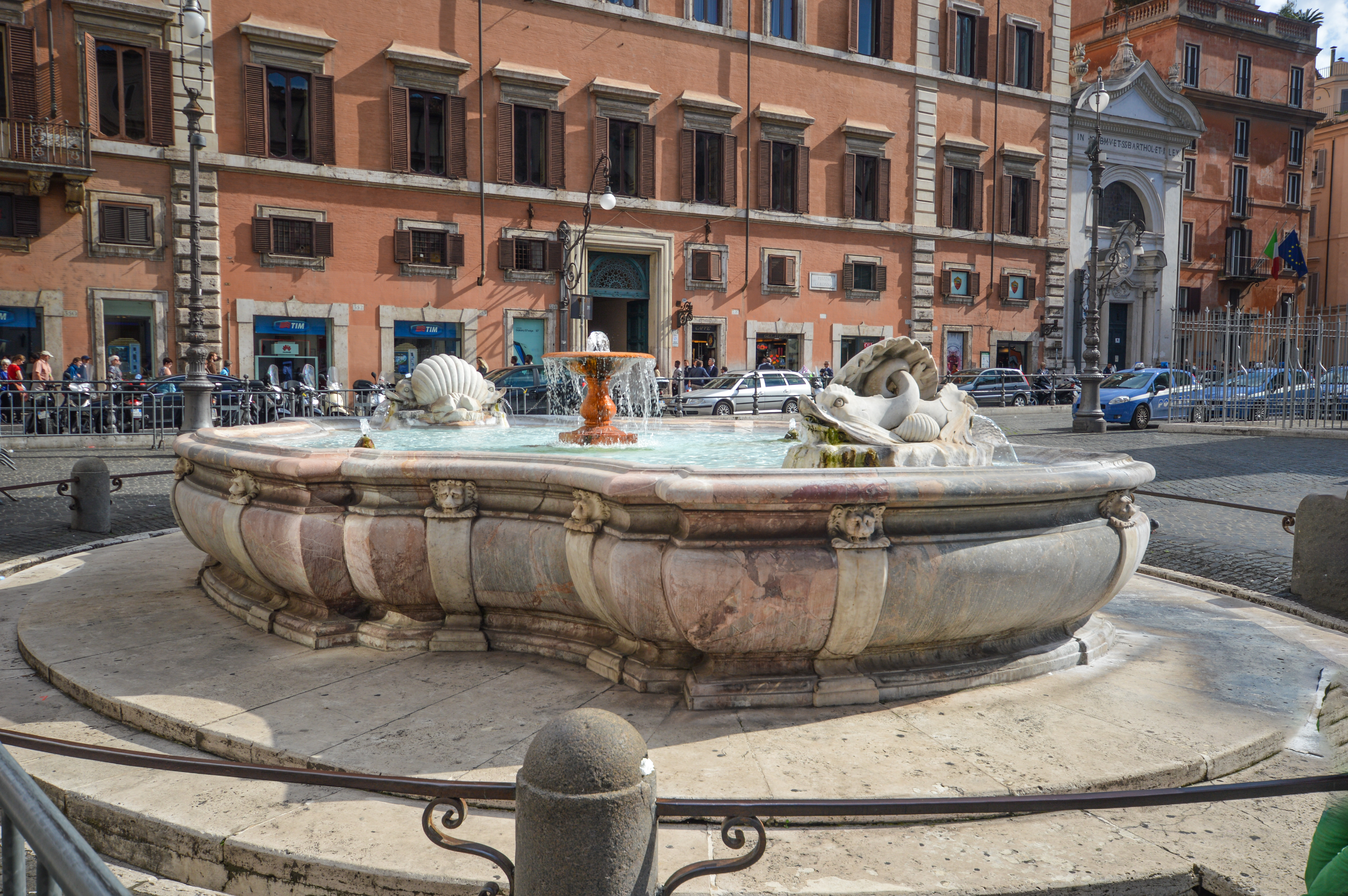
The Fountain of Piazza Colonna (1577) was designed by Giacomo della Porta and Rocco Rossi under Pope Gregory XIII. Made of pink marble from Chios, with white marble lion heads and 19th-century dolphin sculptures by Achille Stocchi.
- Palazzo Chigi (North Side) was built in 1562 by Giacomo della Porta. Formerly home to noble families; now the official residence of the Prime Minister of Italy./p>
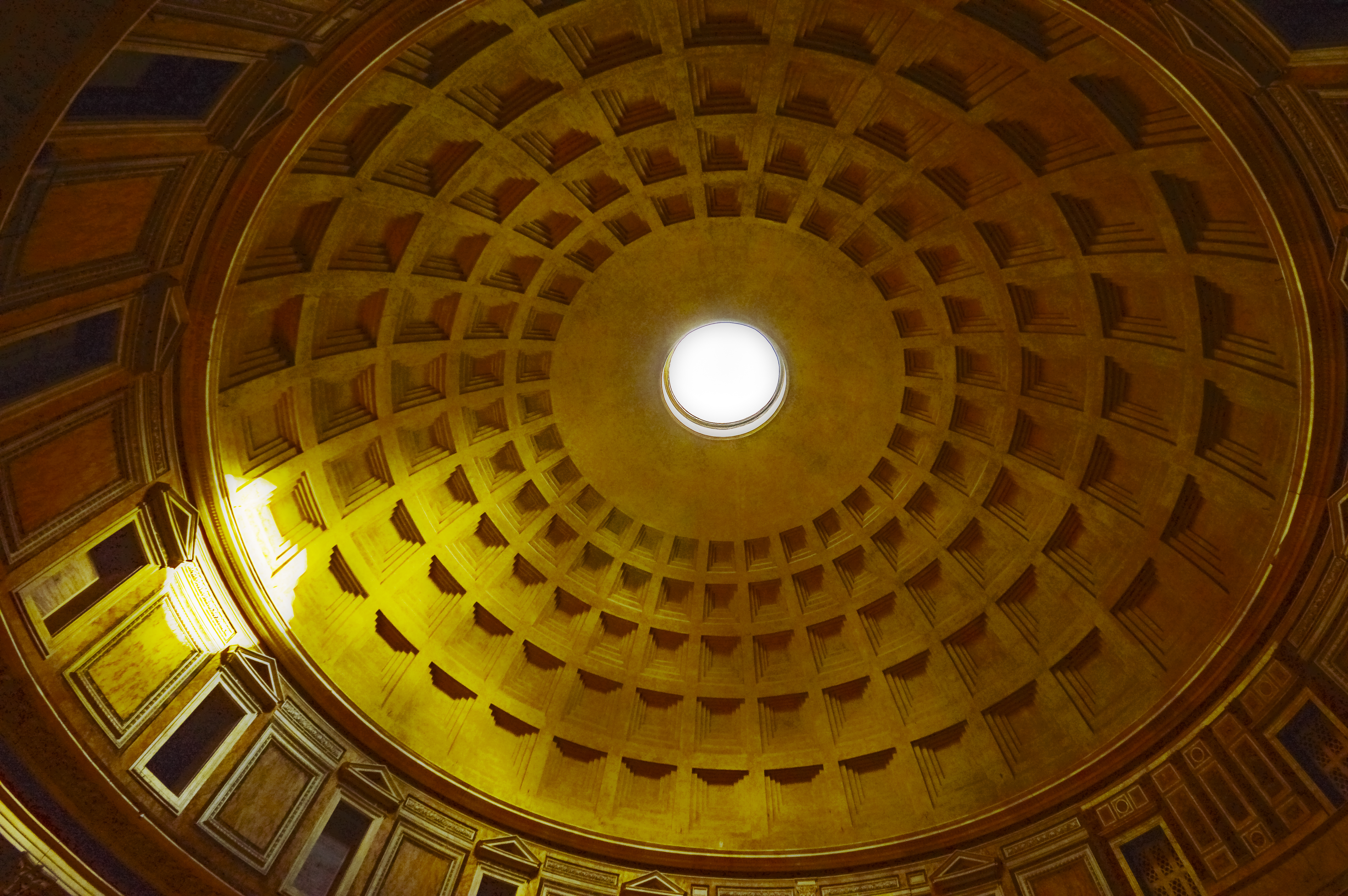
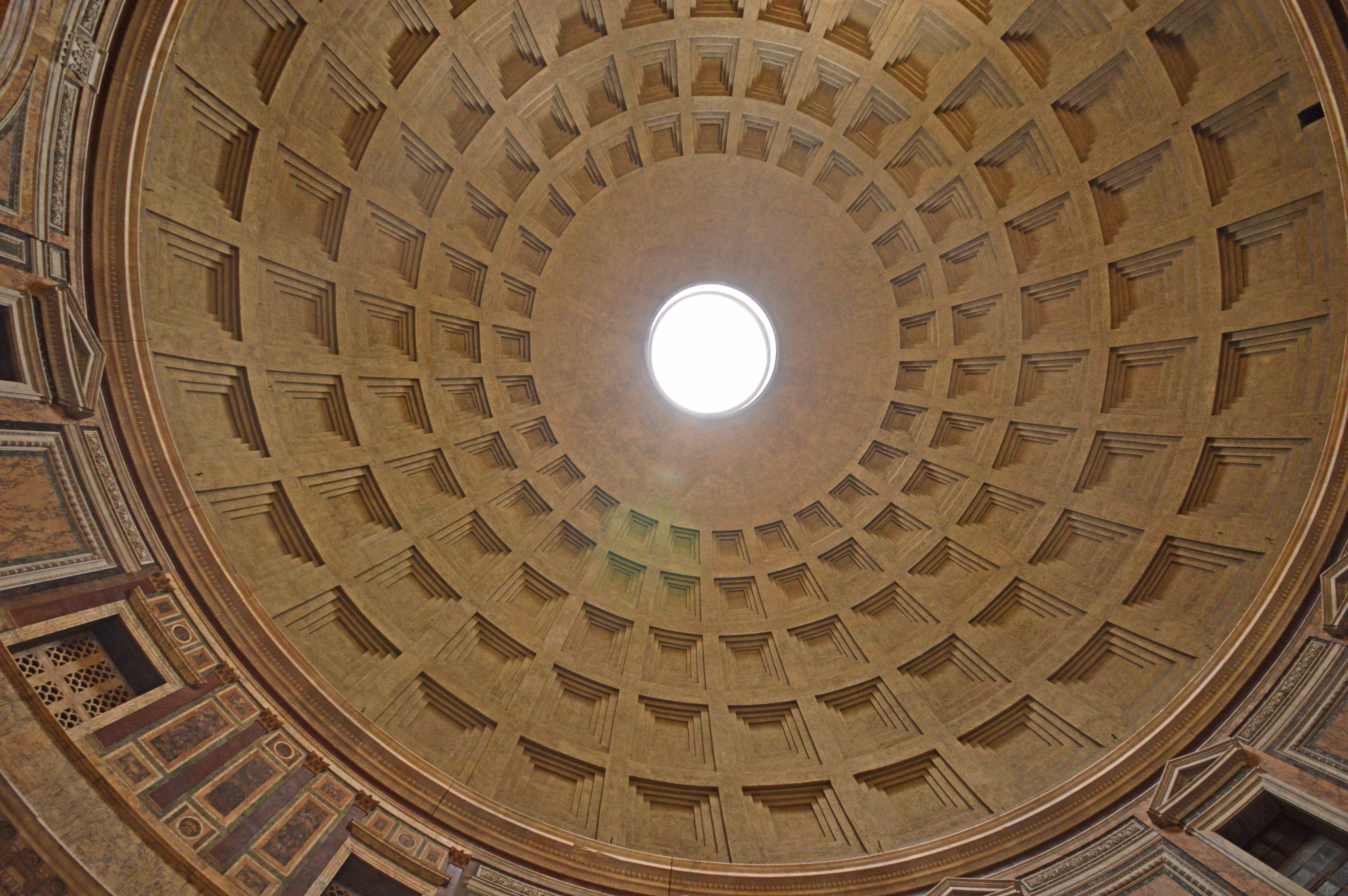
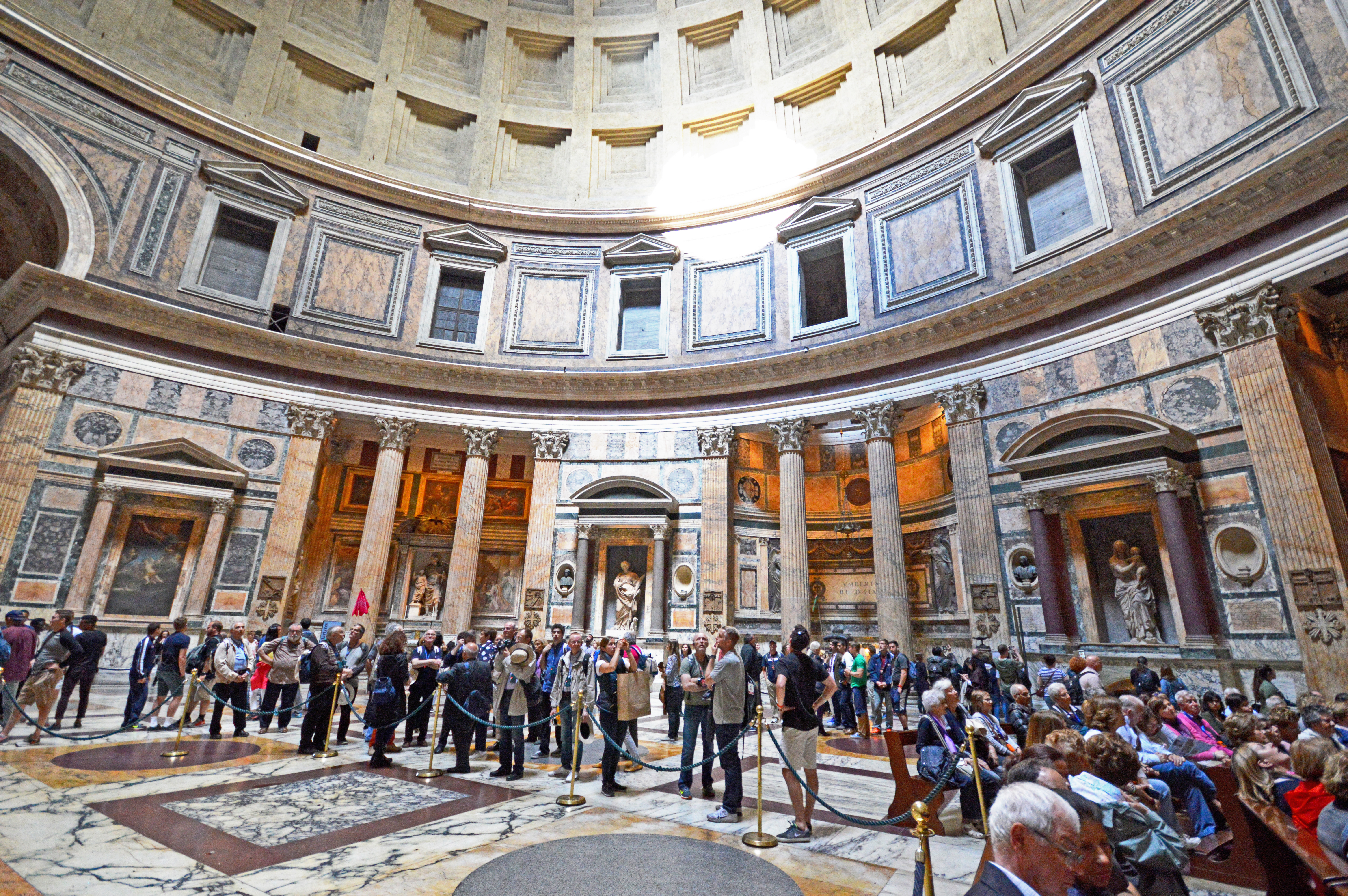
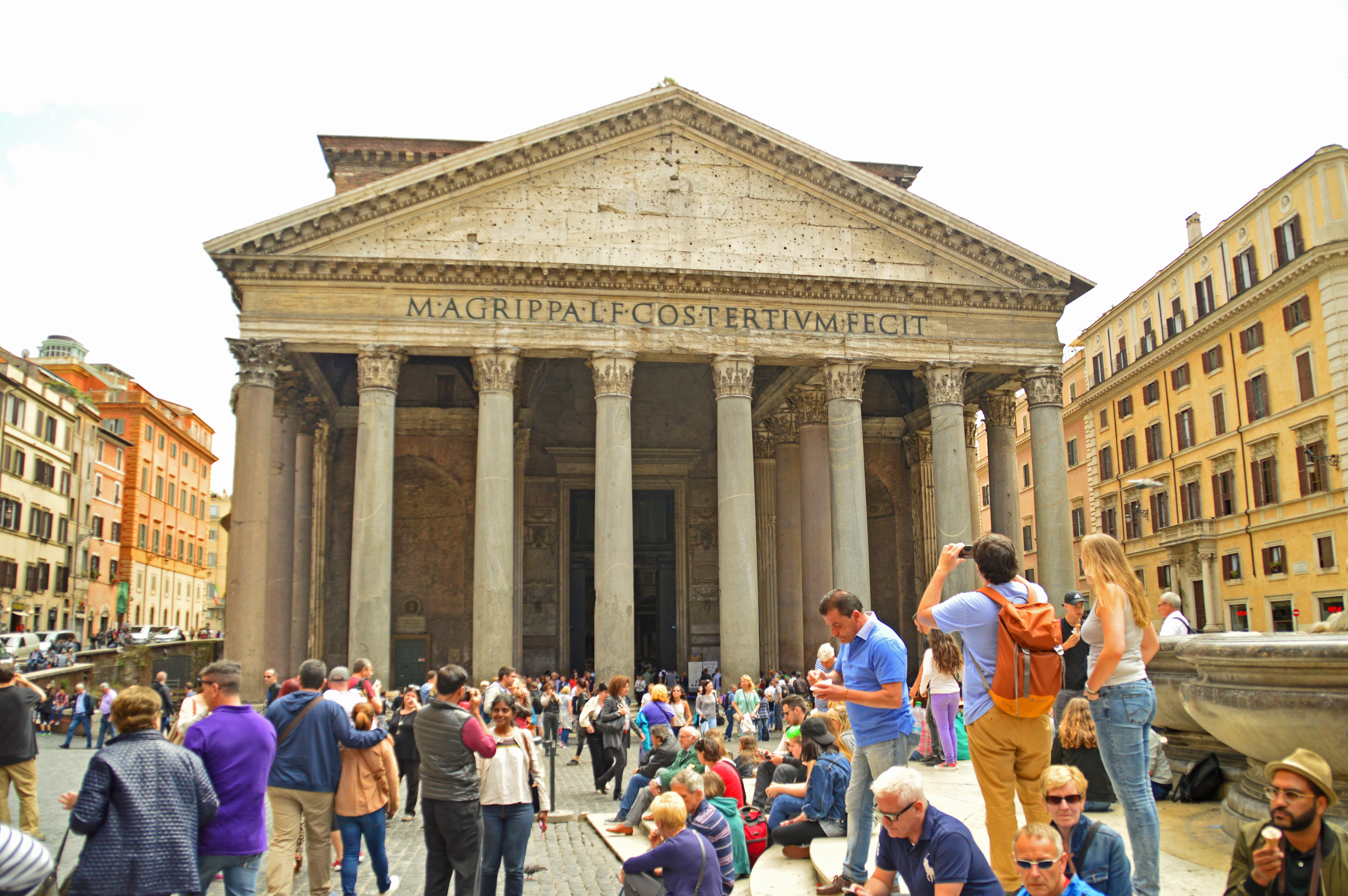
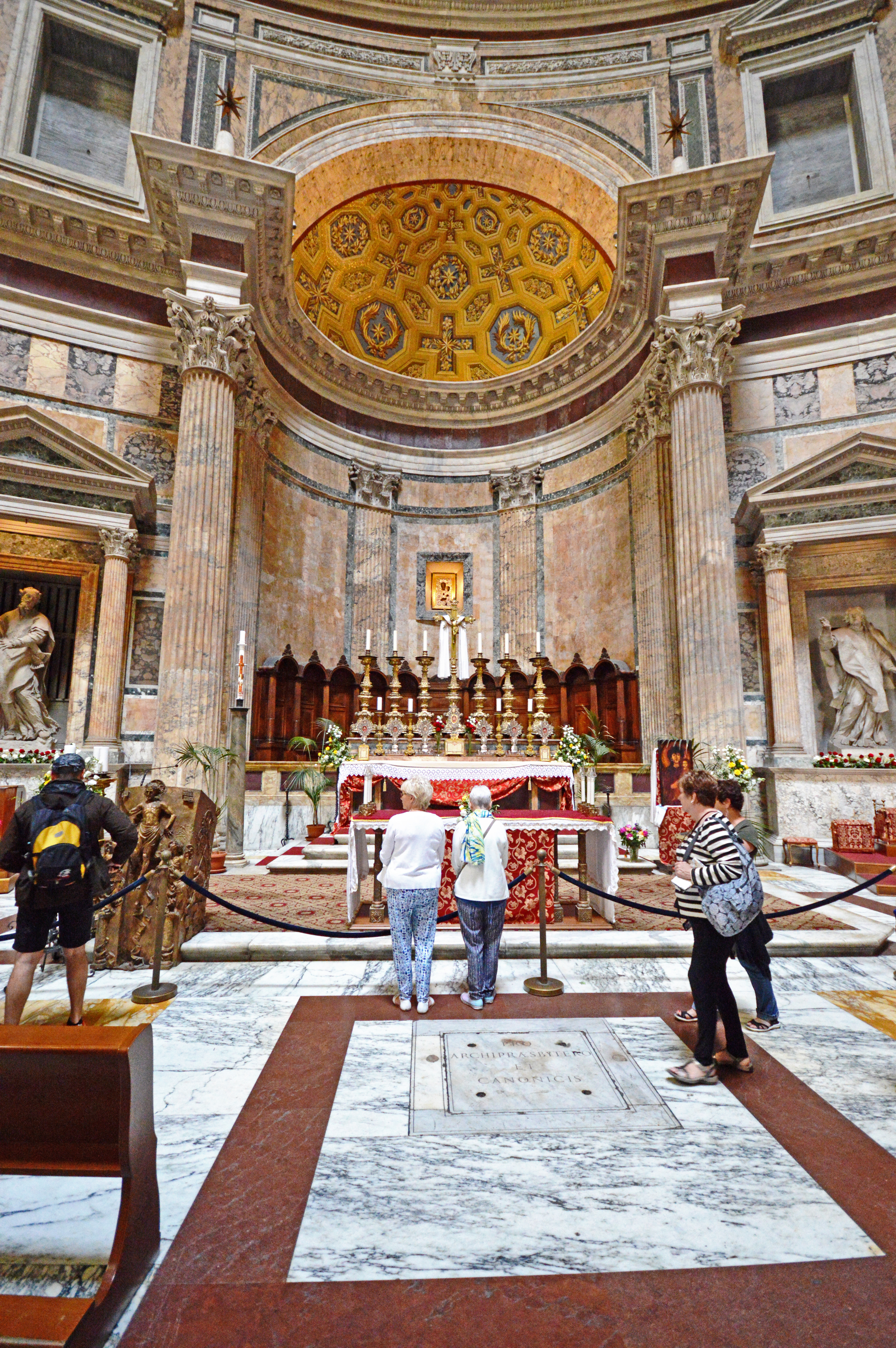
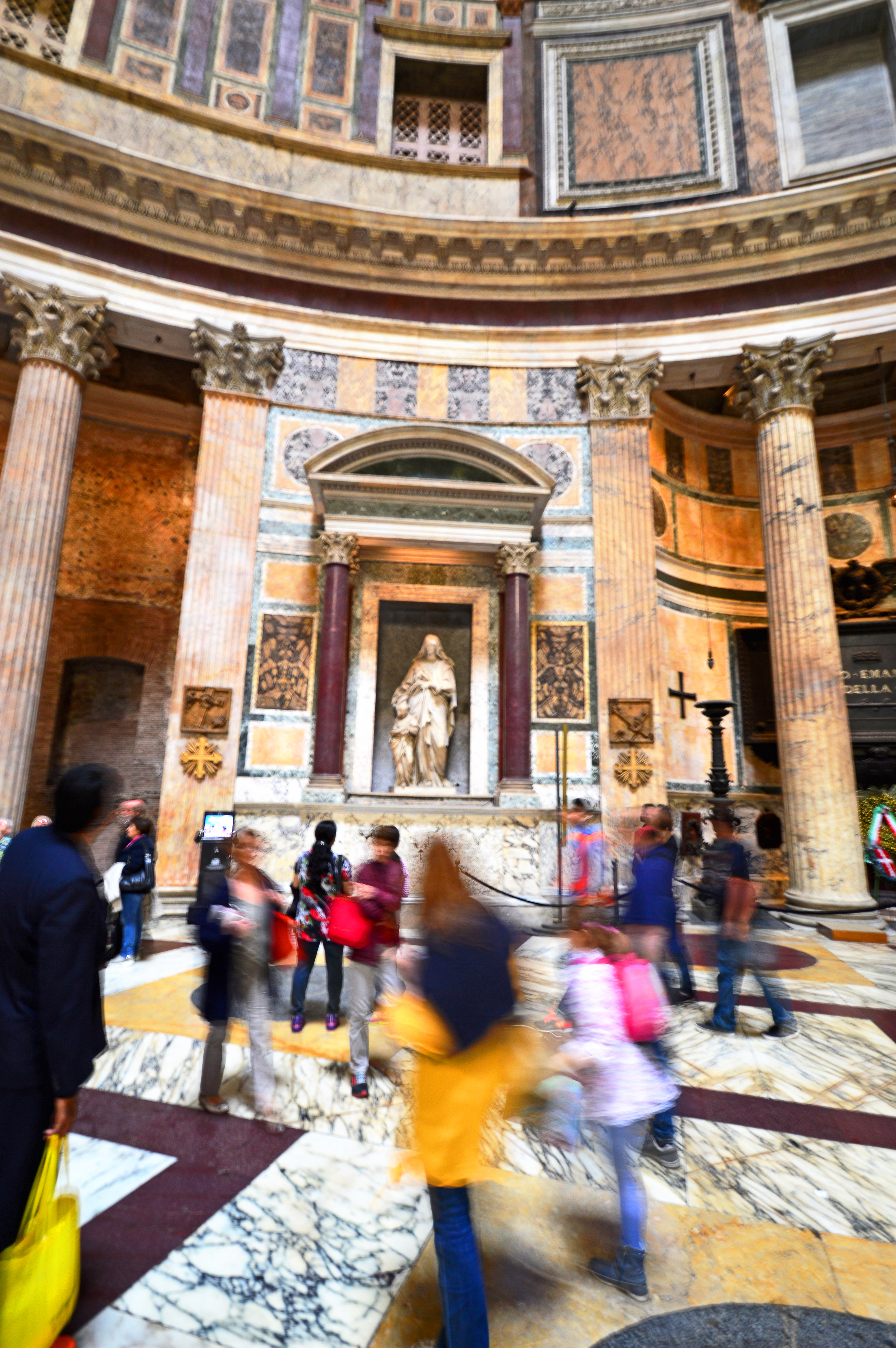
The Pantheon in Rome is one of the most iconic and best-preserved monuments of ancient Rome, renowned for its massive unreinforced concrete dome and continuous use as a place of worship for nearly two millennia.
Original Construction: Commissioned by Marcus Agrippa during the reign of Augustus (27 BC–14 AD). Current Structure: Rebuilt by Emperor Hadrian around 126 AD after the original burned down. Hadrian retained Agrippa’s inscription: “M·AGRIPPA·L·F·COS·TERTIVM·FECIT”. Conversion to Church: In 609 AD, Pope Boniface IV consecrated it as the Basilica of St. Mary and the Martyrs (Santa Maria ad Martyres), preserving it from abandonment.
Burial Site: Final resting place of Renaissance artist Raphael, architect Baldassare Peruzzi, and Italian kings Victor Emmanuel II and Umberto I.
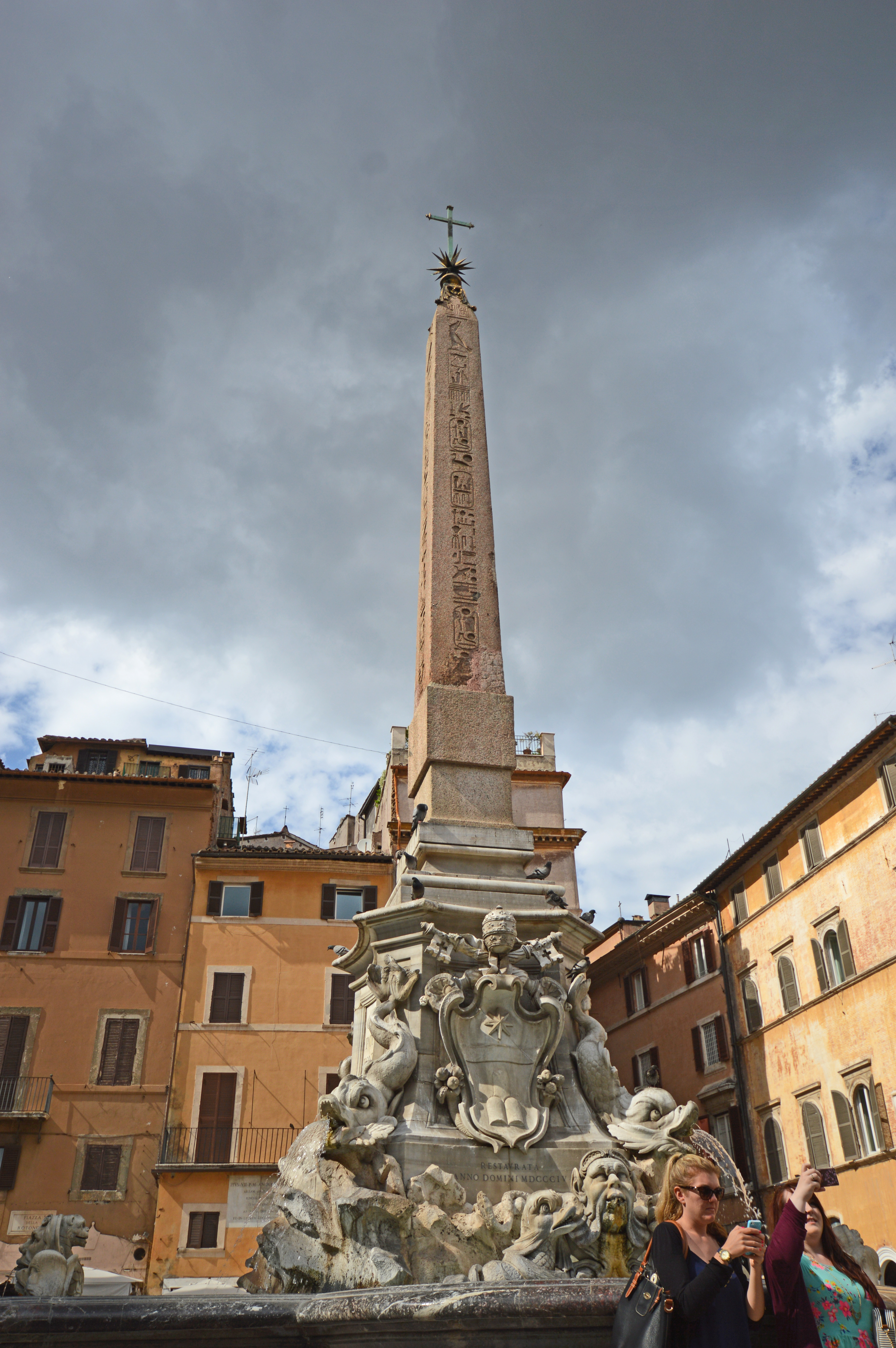
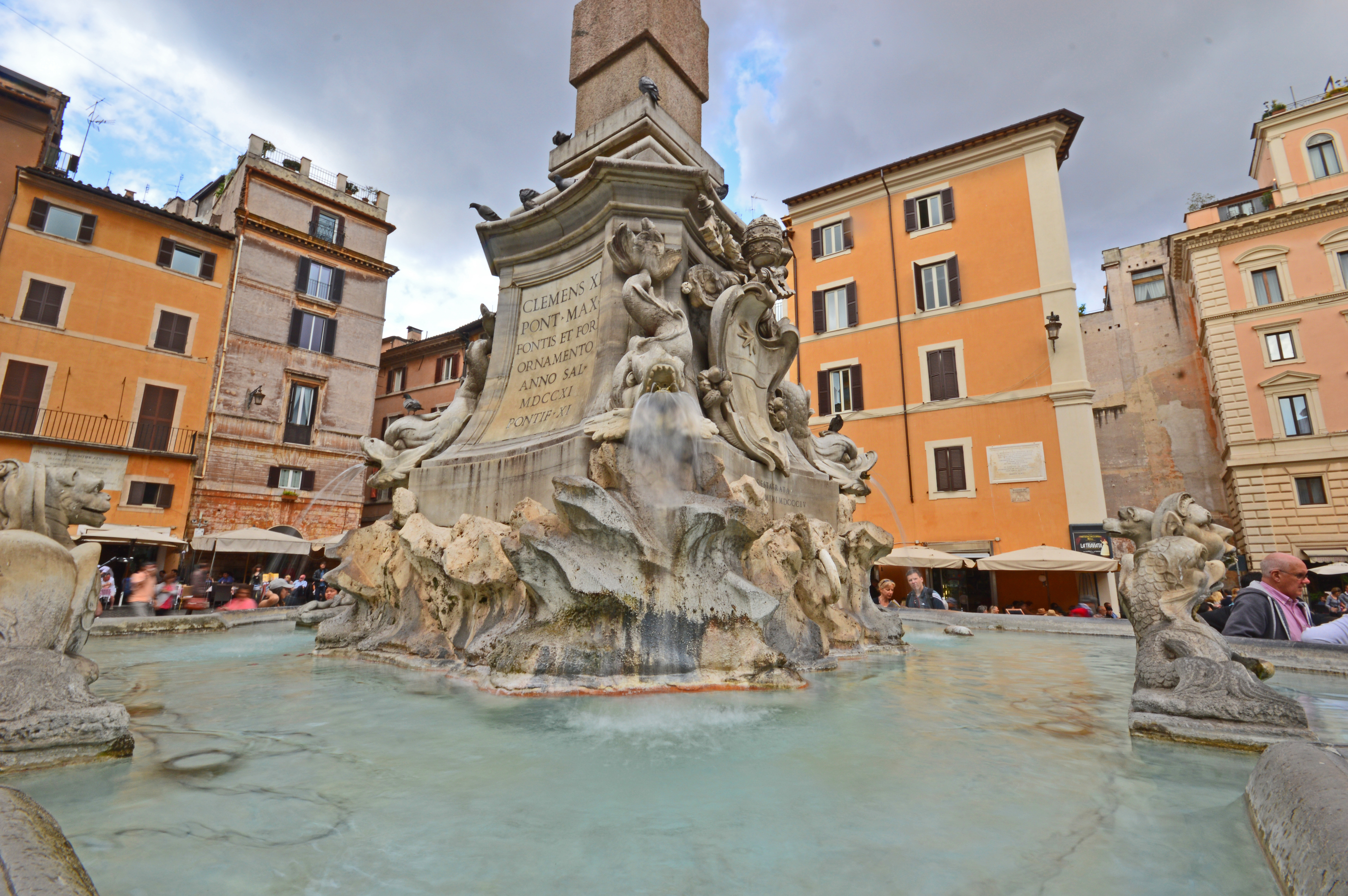
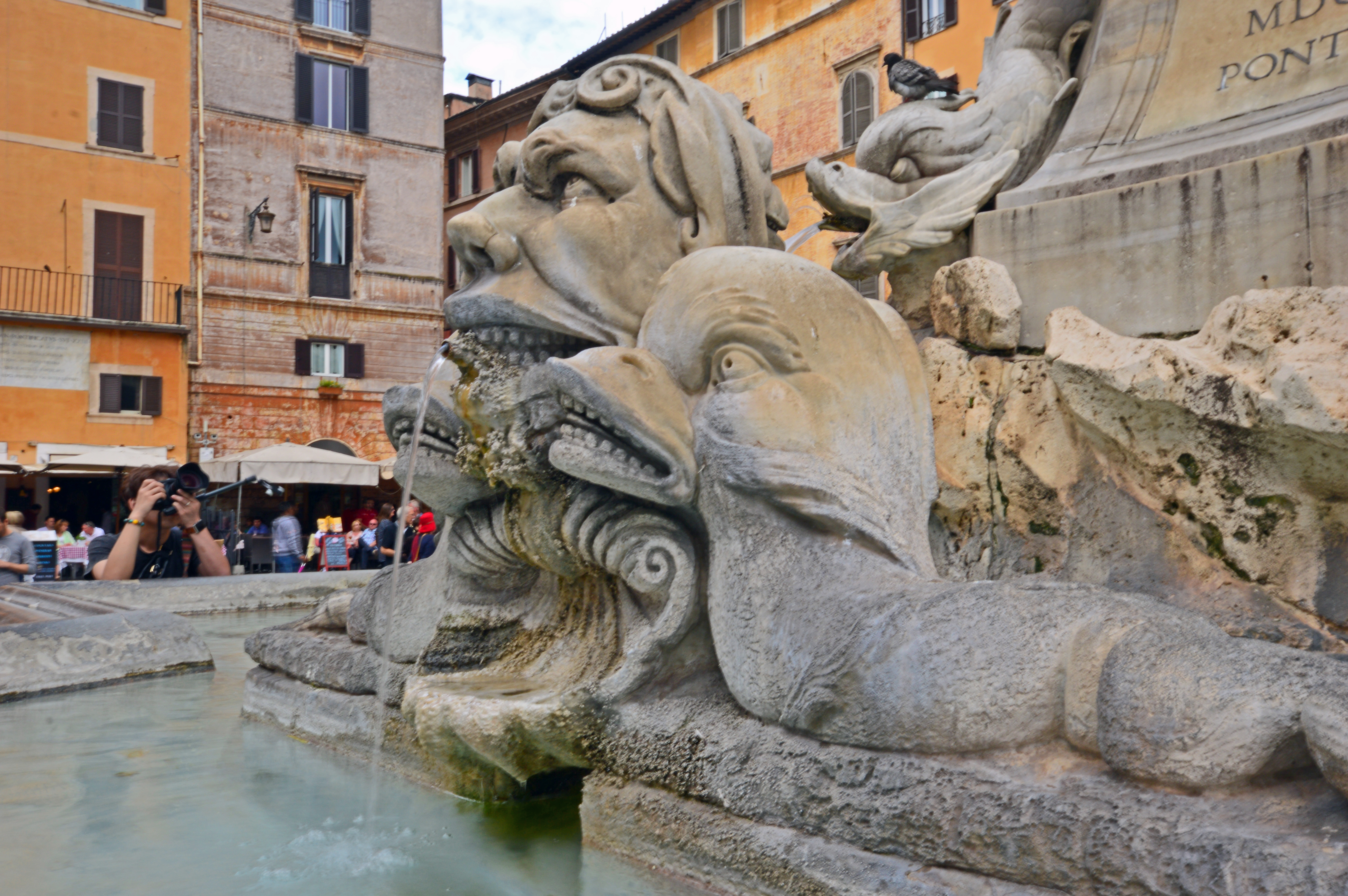
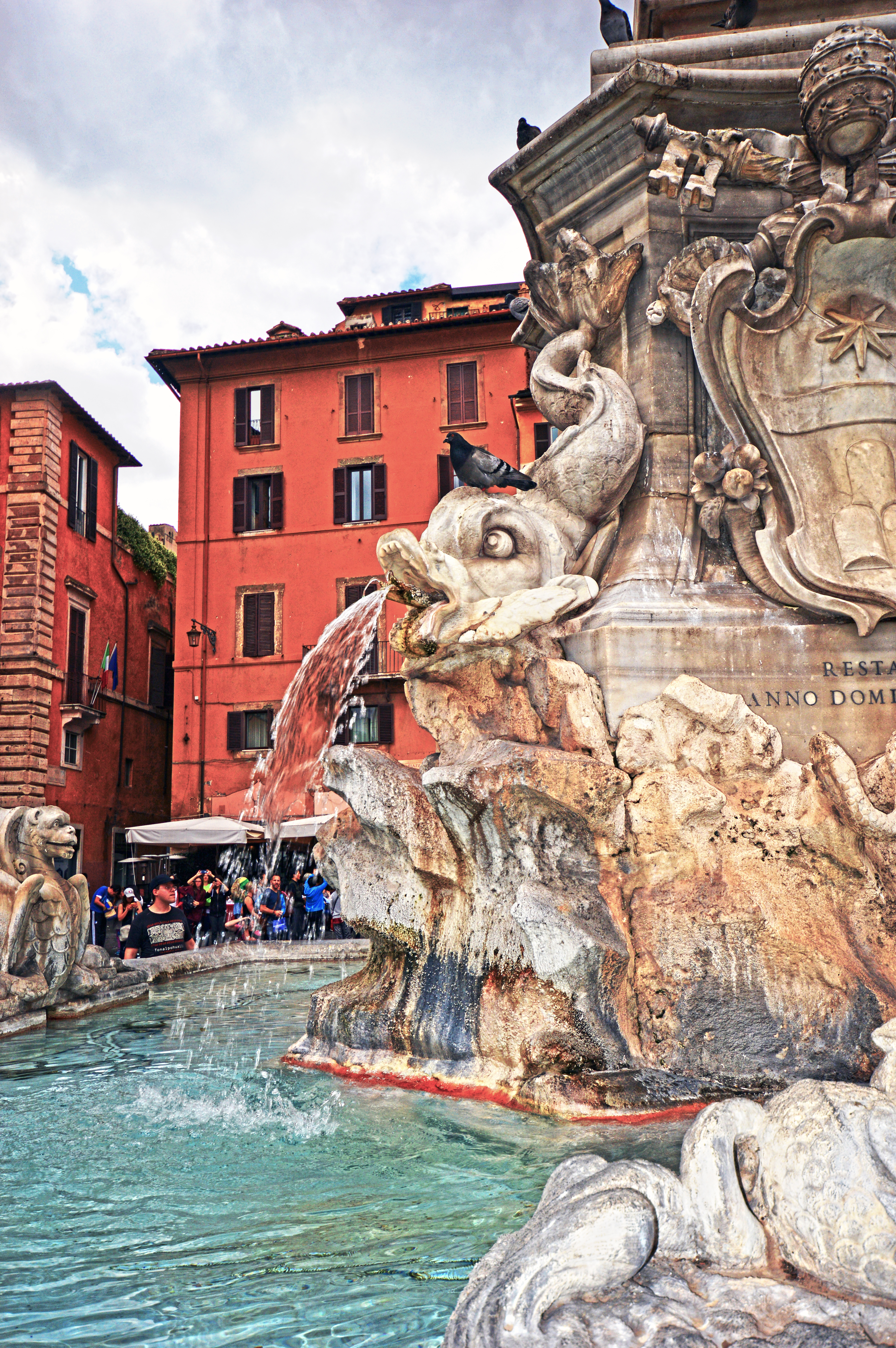
Piazza della Rotonda is the lively square in front of the Pantheon in Rome, known for its central fountain, ancient obelisk, and vibrant mix of history, architecture, and street life. The square was formalized in the 15th century when Pope Eugenius IV cleared medieval stalls and sheds that had clustered around the Pantheon’s portico. Fontana del Pantheon: Designed by Giacomo della Porta in 1575 as part of a citywide fountain initiative using water from the Aqua Vergine aqueduct.
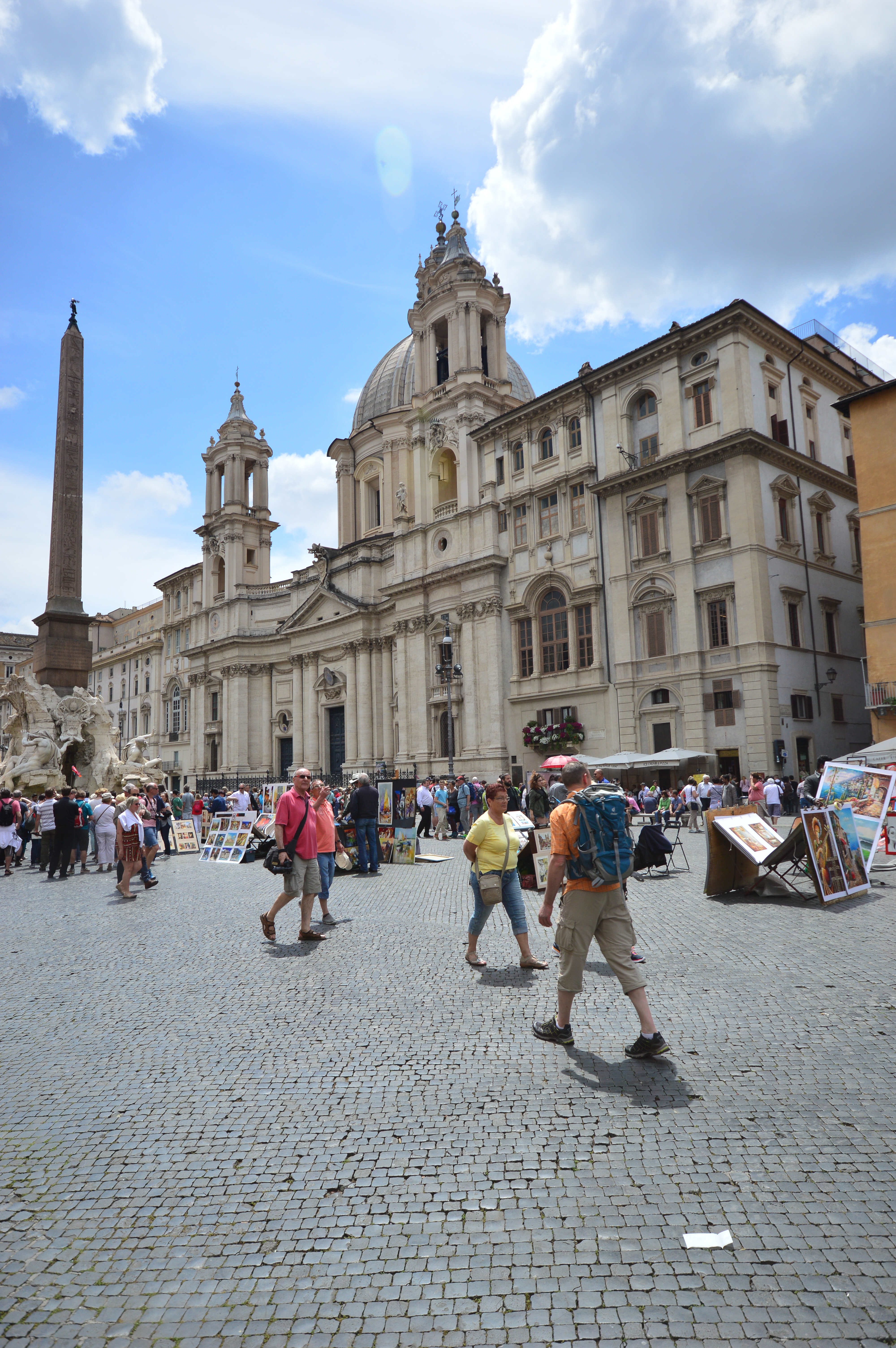
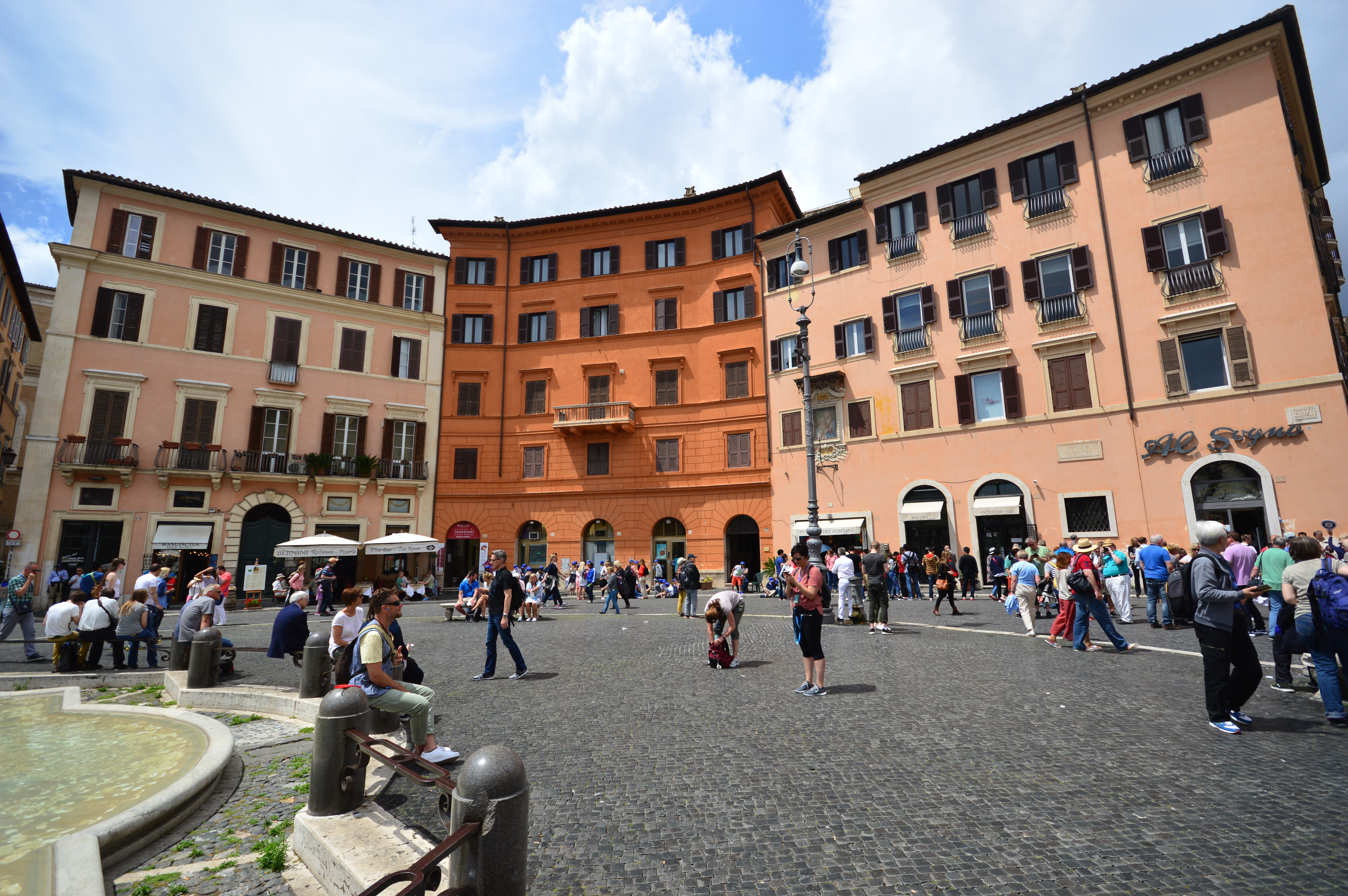
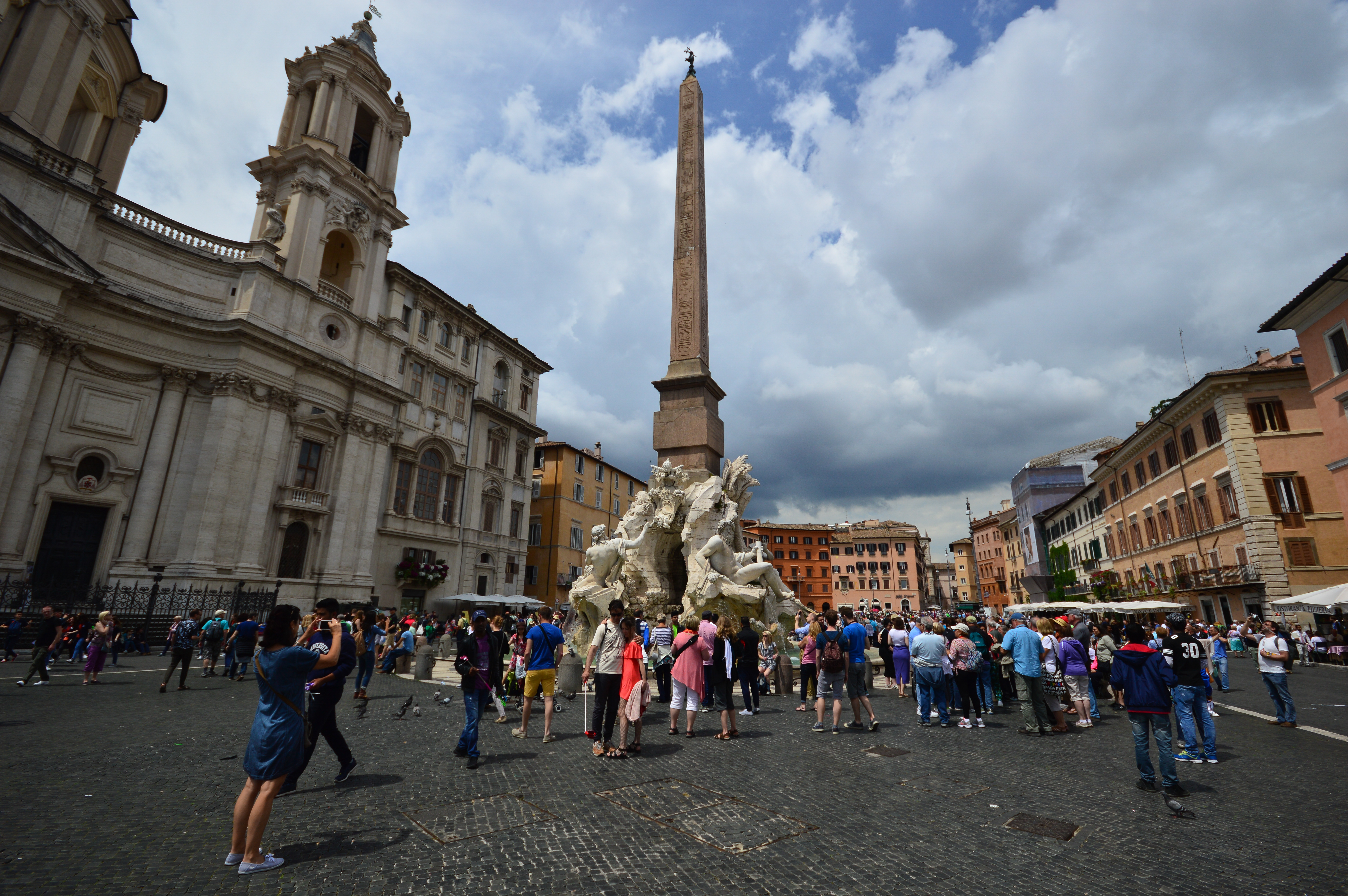
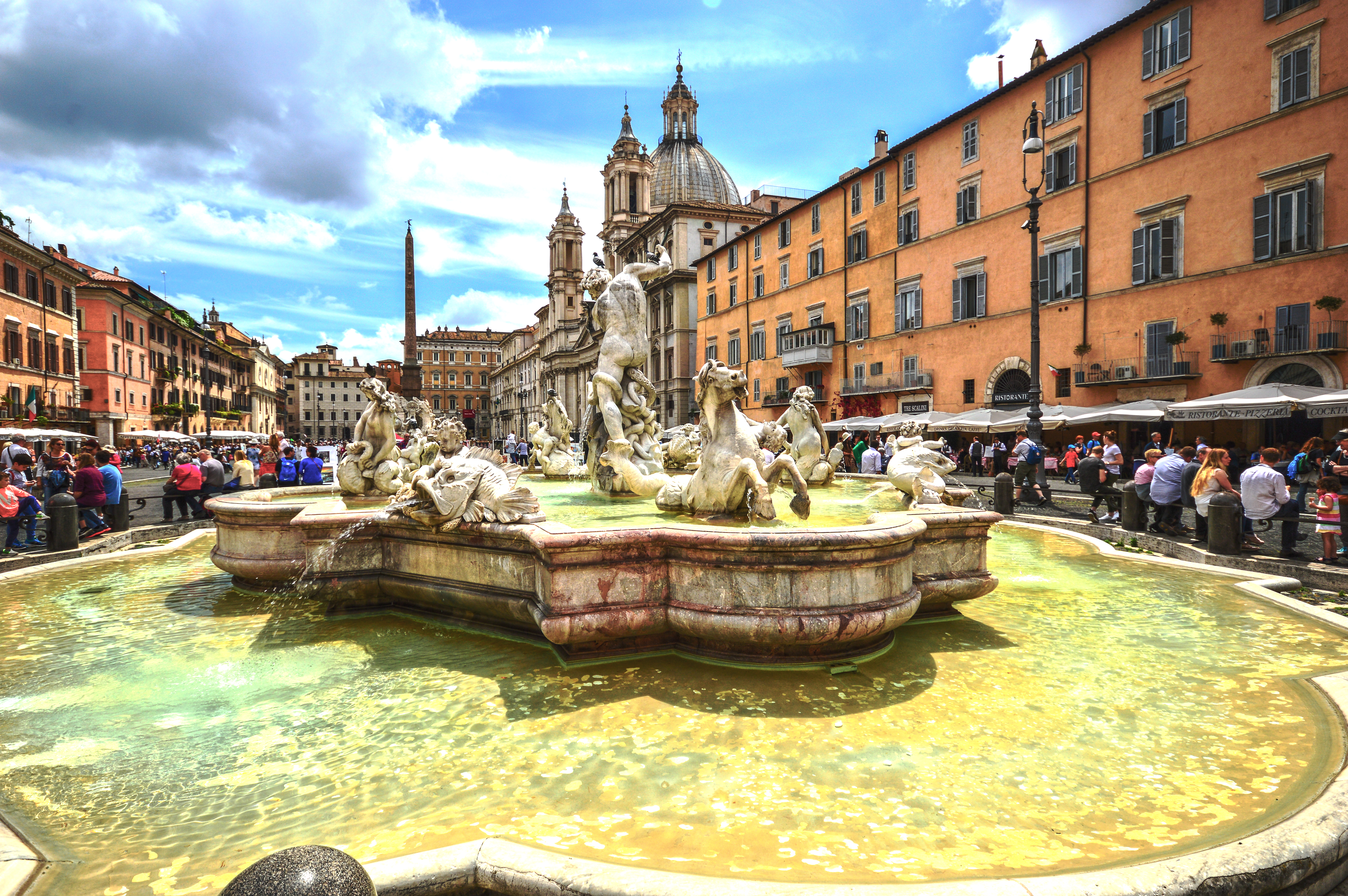
Piazza Navona is one of Rome’s most iconic Baroque squares, built atop the ancient Stadium of Domitian and celebrated for its dramatic fountains, architecture, and layered civic symbolism.
Originally the Stadium of Domitian (circa 80 AD), the piazza retains the elongated oval shape of the ancient athletic arena.It was repurposed as a public market in the 15th century and transformed into a Baroque masterpiece during the reign of Pope Innocent X (1644–1655), whose family palace, Palazzo Pamphilj, faces the square.
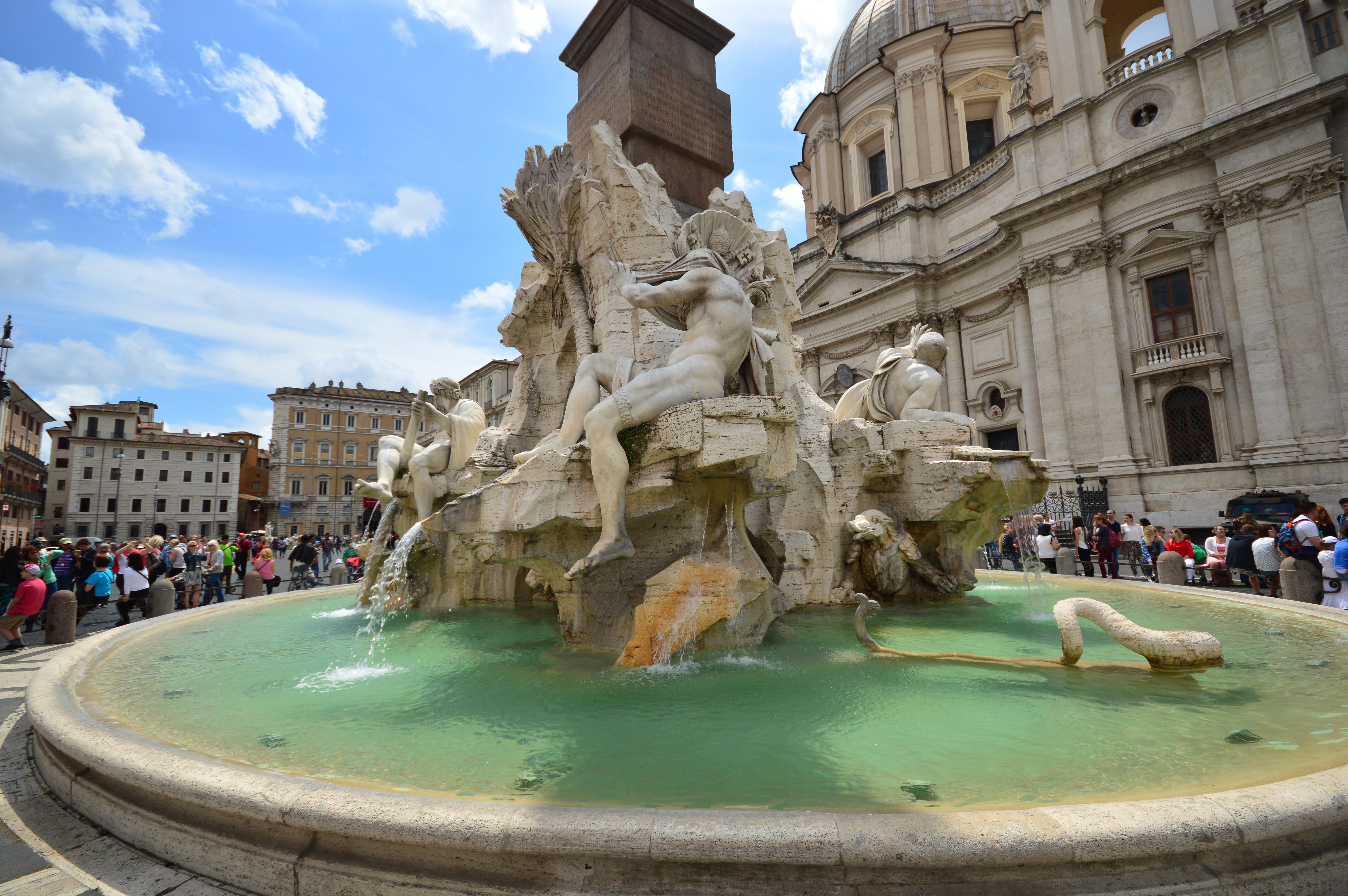
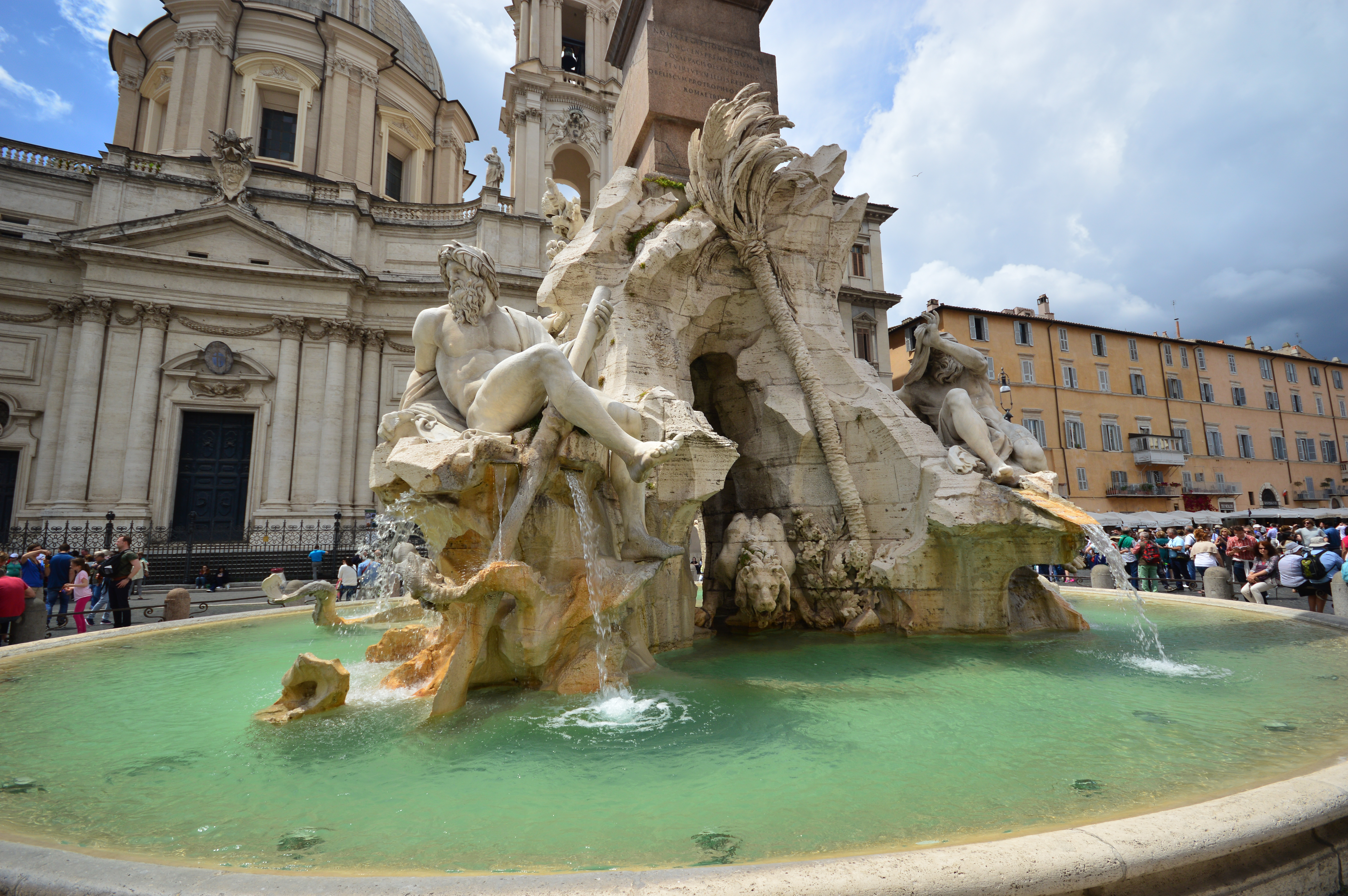
Fontana dei Quattro Fiumi (Fountain of the Four Rivers): Designed by Gian Lorenzo Bernini in 1651, this central fountain features allegorical river gods representing the Nile, Danube, Ganges, and Rio de la Plata, topped by the Obelisk of Domitian.
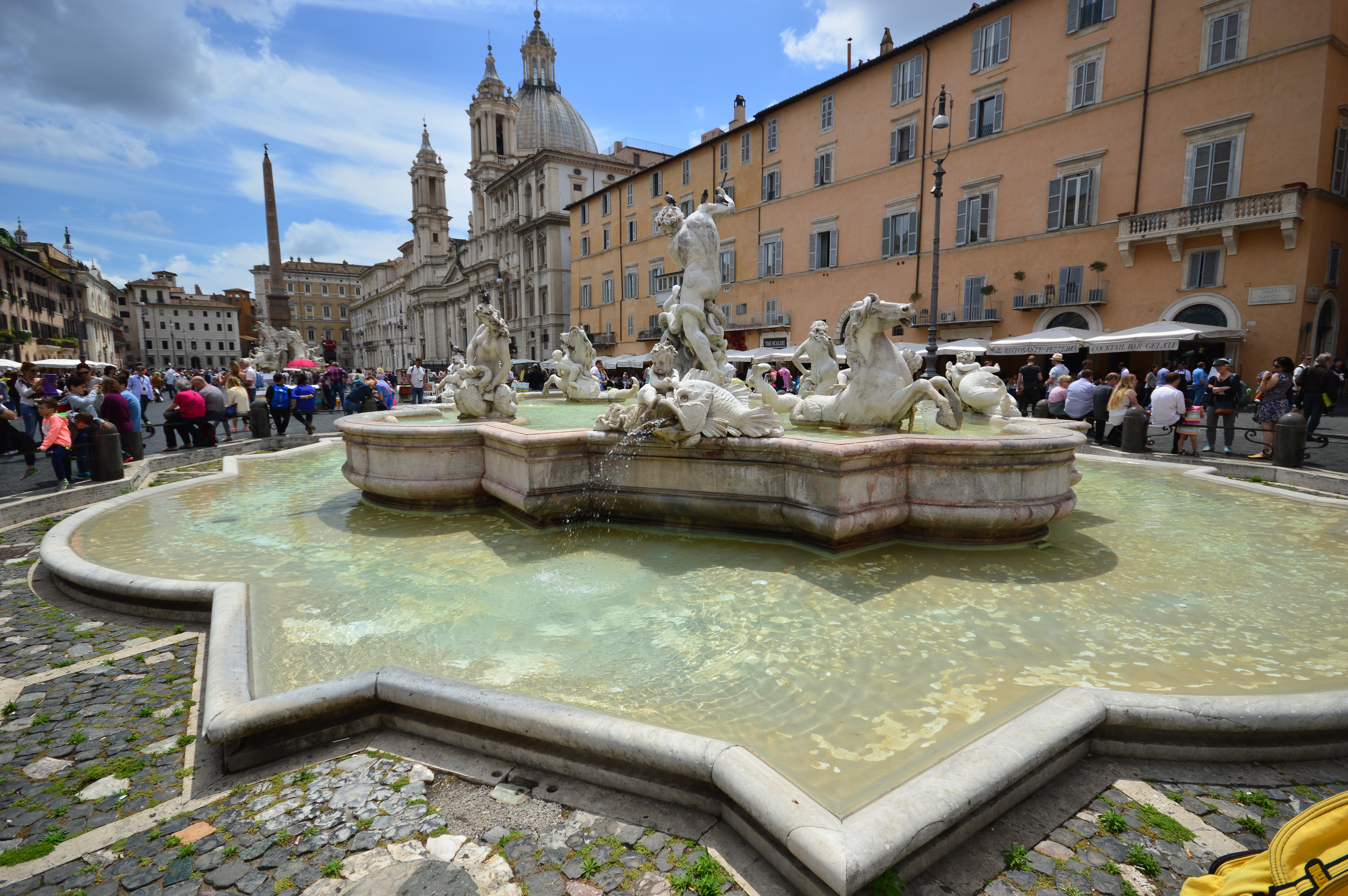
Fontana del Moro: At the southern end, this fountain shows a Moor wrestling a dolphin, with tritons and a shell basin originally sculpted by Giacomo della Porta and later modified by Bernini.
Fontana del Nettuno: Added in the 19th century to balance the square’s symmetry, it depicts Neptune battling an octopus, surrounded by sea nymphs and cupids.
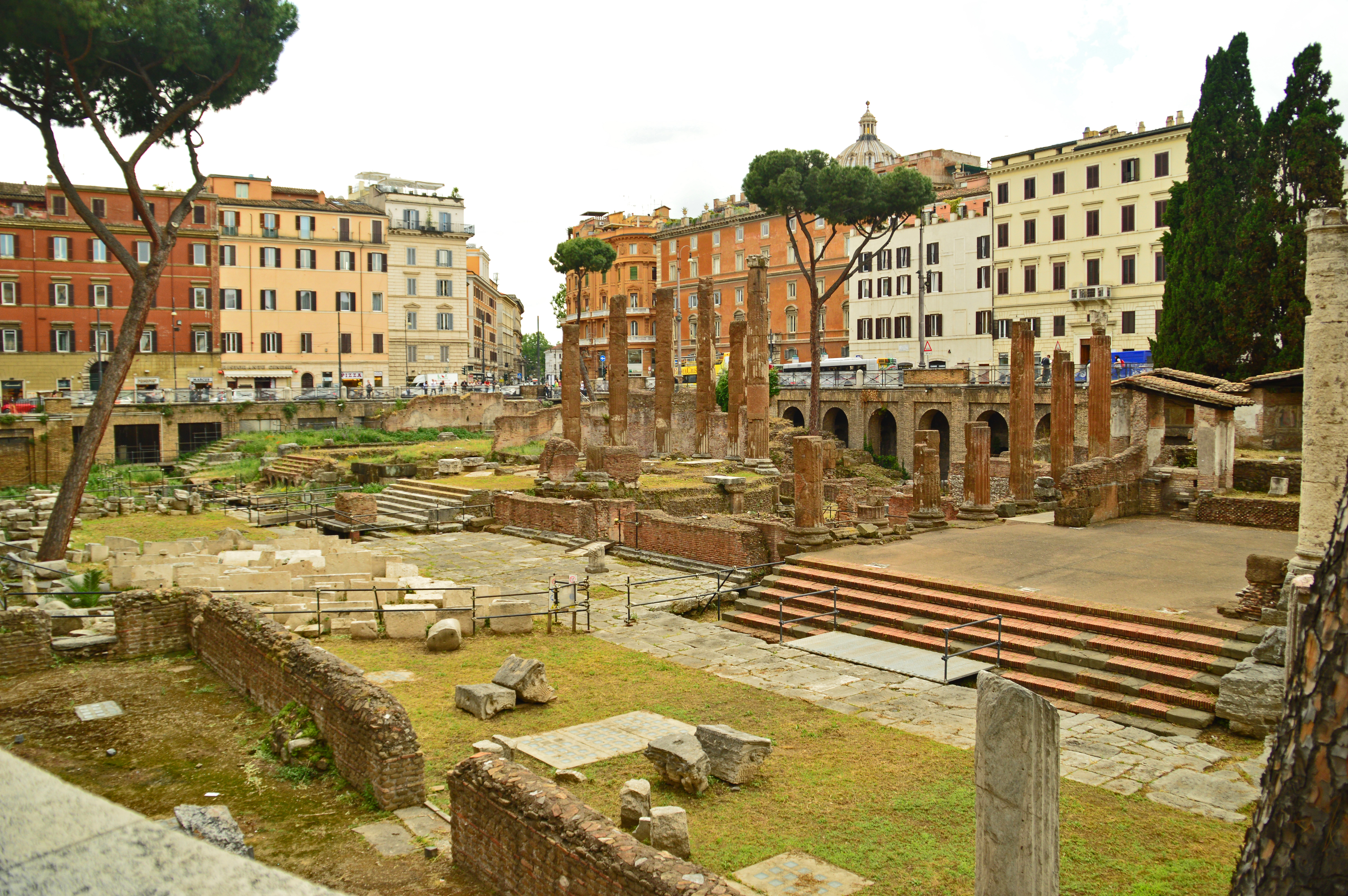
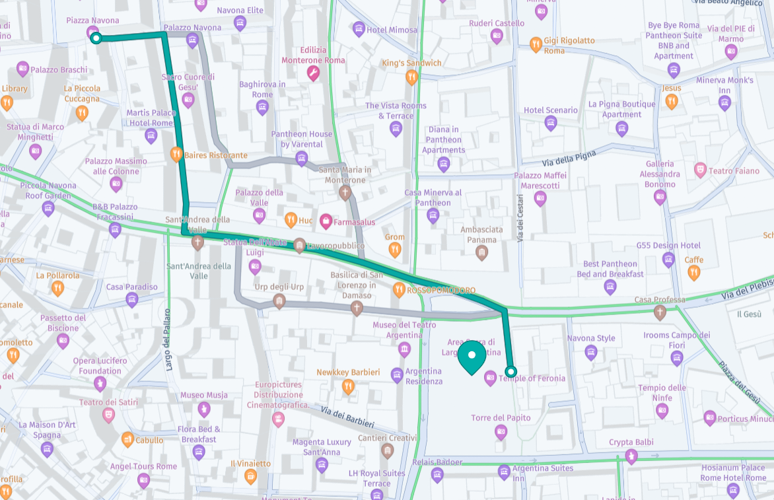
The Area Sacra di Largo Argentina is one of Rome’s most evocative archaeological sites, home to four Republican-era temples and the remains of Pompey’s Theatre—where Julius Caesar was famously assassinated.
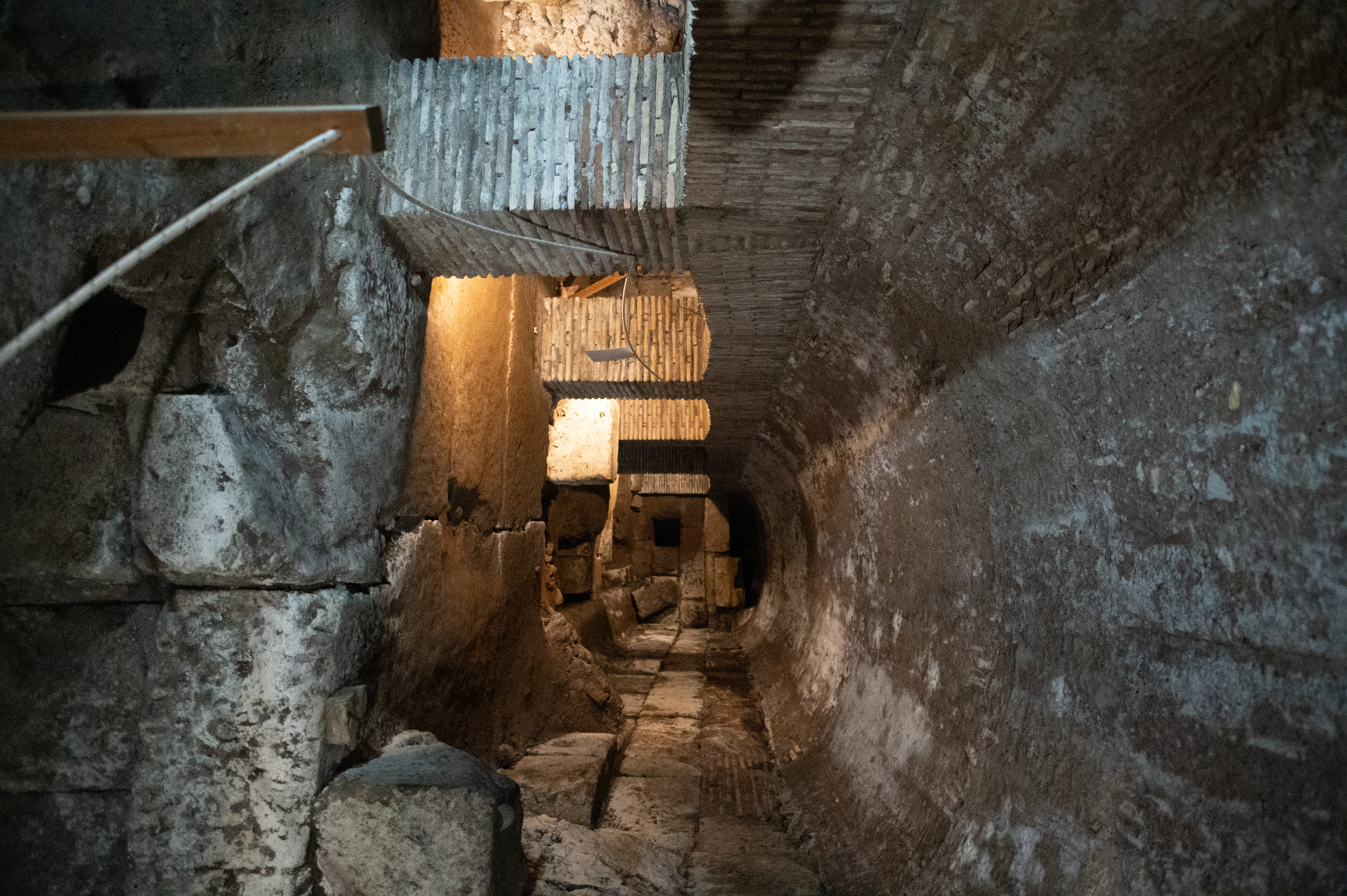
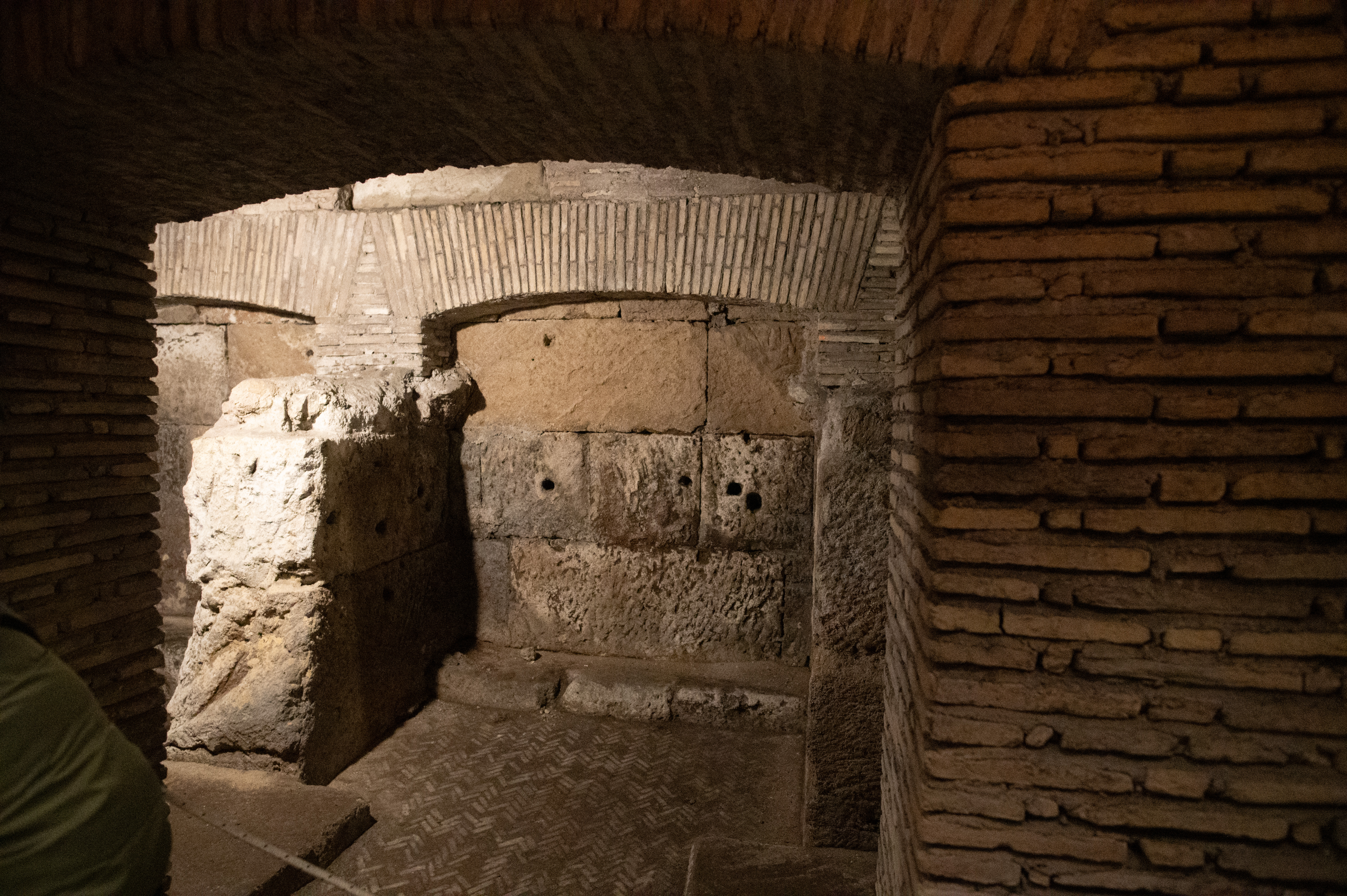
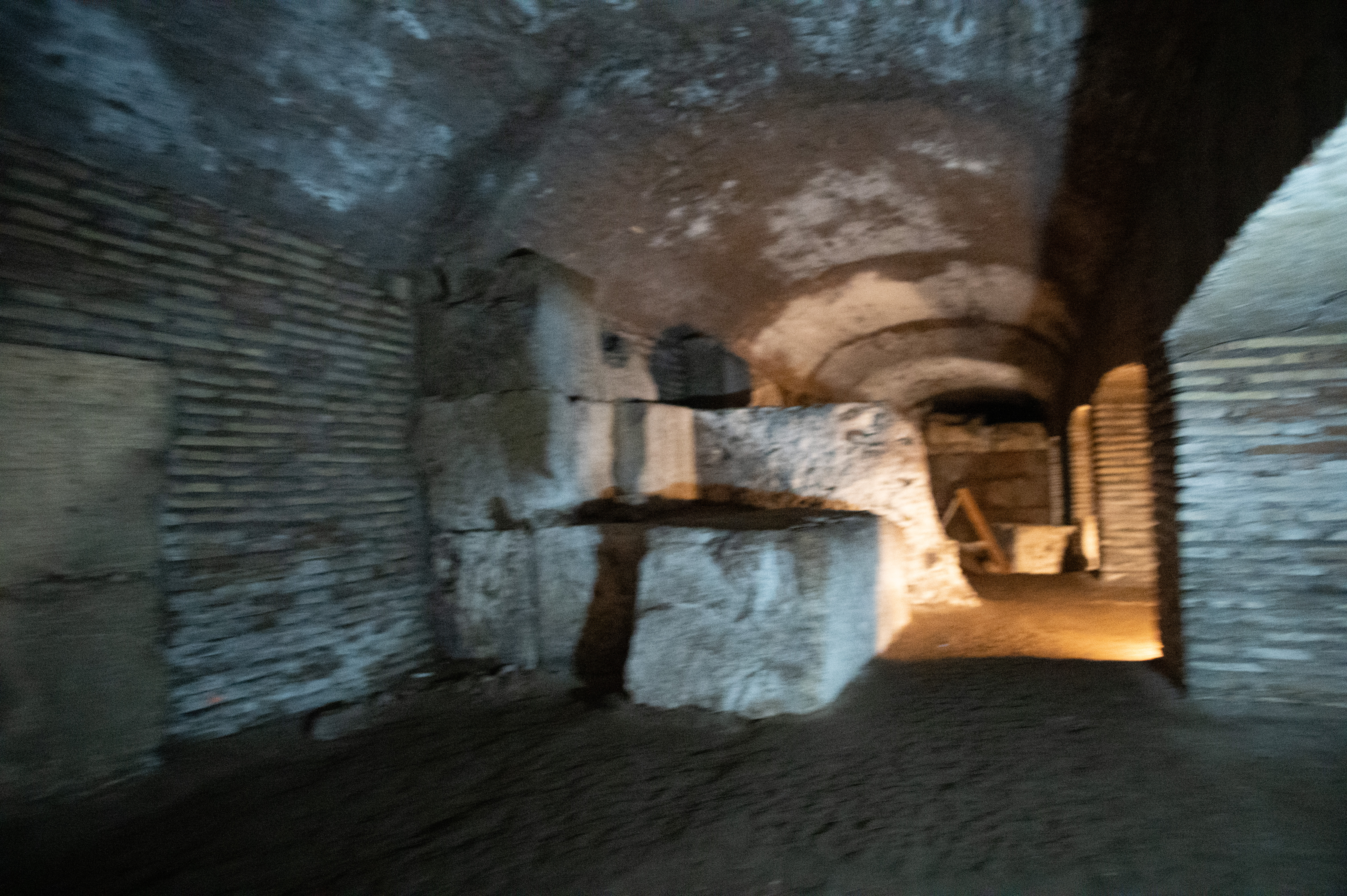
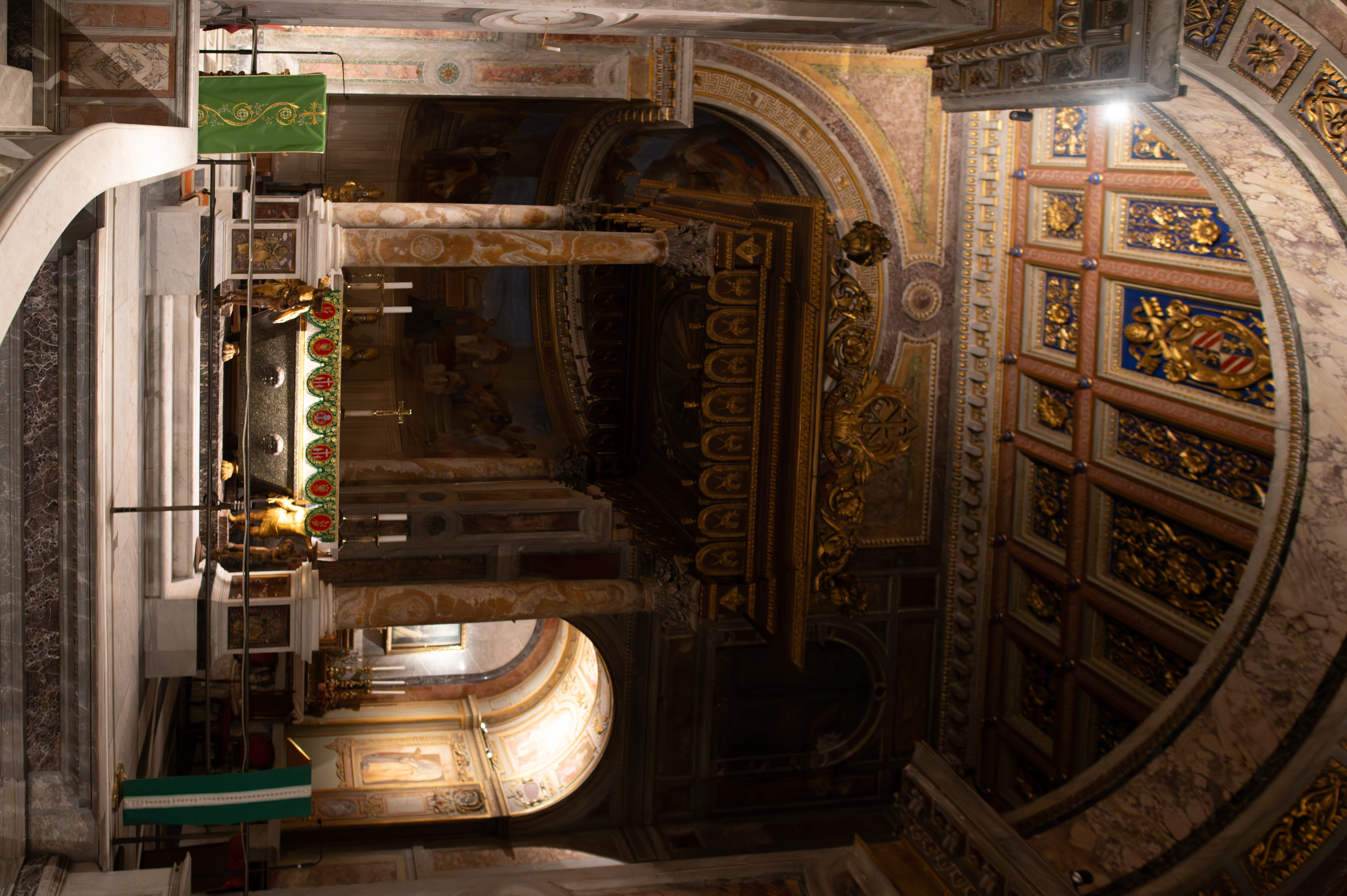
The Basilica di San Nicola in Carcere is a remarkable Roman church built into the ruins of three ancient temples from the Forum Holitorium, blending early Christian devotion with Republican-era architecture.
“San Nicola in Carcere” translates to “Saint Nicholas in Prison,” referring to a medieval tradition that a prison once stood among the temple ruins.
The basilica is uniquely constructed within the remains of three Republican-era temples from the Forum Holitorium (Rome’s vegetable market):
Temple of Janus (northern wall): Built in 260 BC by Gaius Duilius after his naval victory at Mylae.
Temple of Juno Sospita (central apse): Built in the early 2nd century BC by C. Cornelius Cethegus.
Temple of Spes (Hope) (southern wall): Dates to the First Punic War (264–241 BC), with six travertine columns still visible.
These temples were hexastyle peripteral structures, and their columns are now embedded in the church’s walls and façade, creating a vivid palimpsest of Roman and Christian architecture.