Palácio do Freixo

Palácio do Freixo

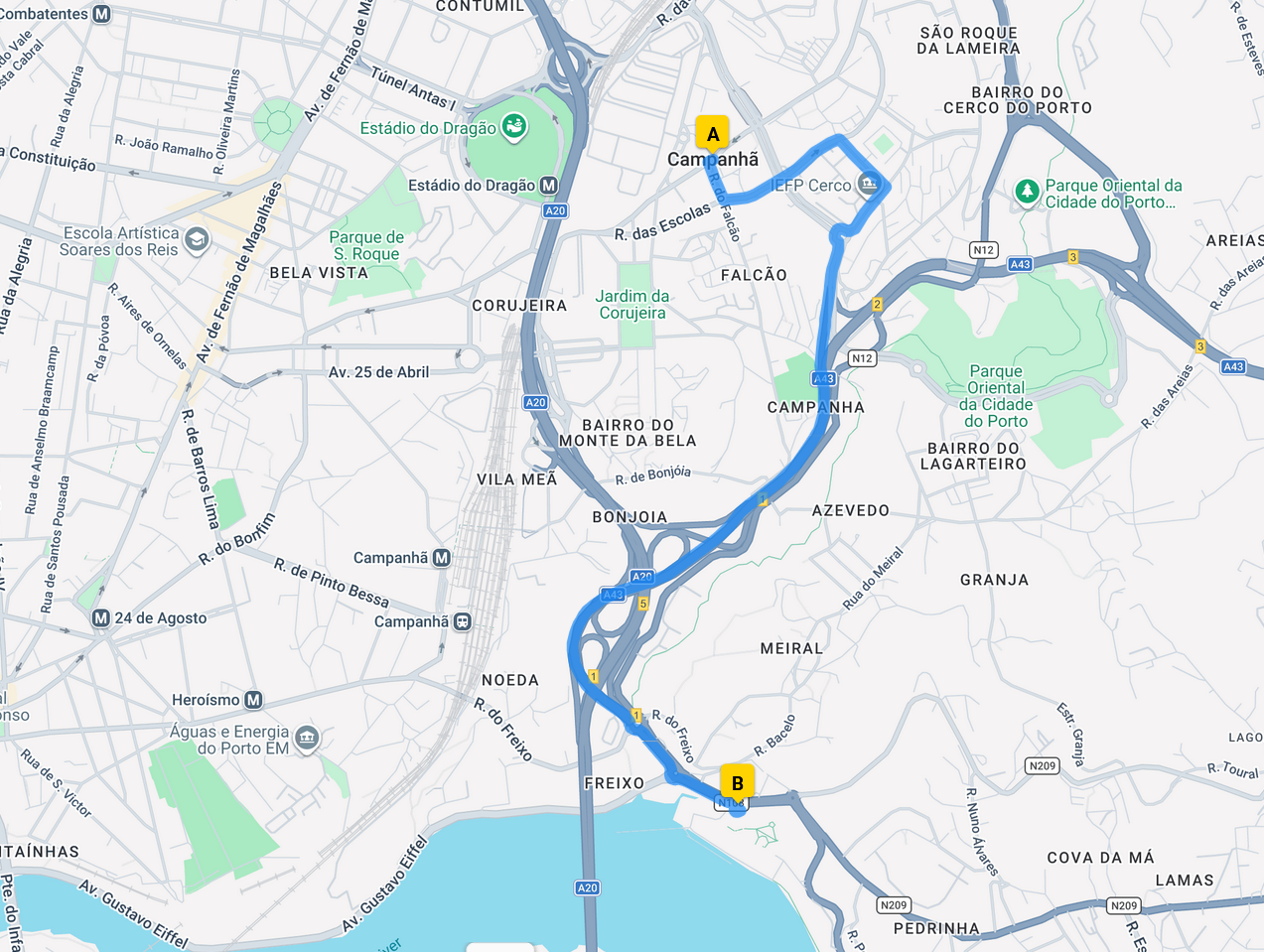
Rua do Freixo, 1645Porto4300-216,   Portugal

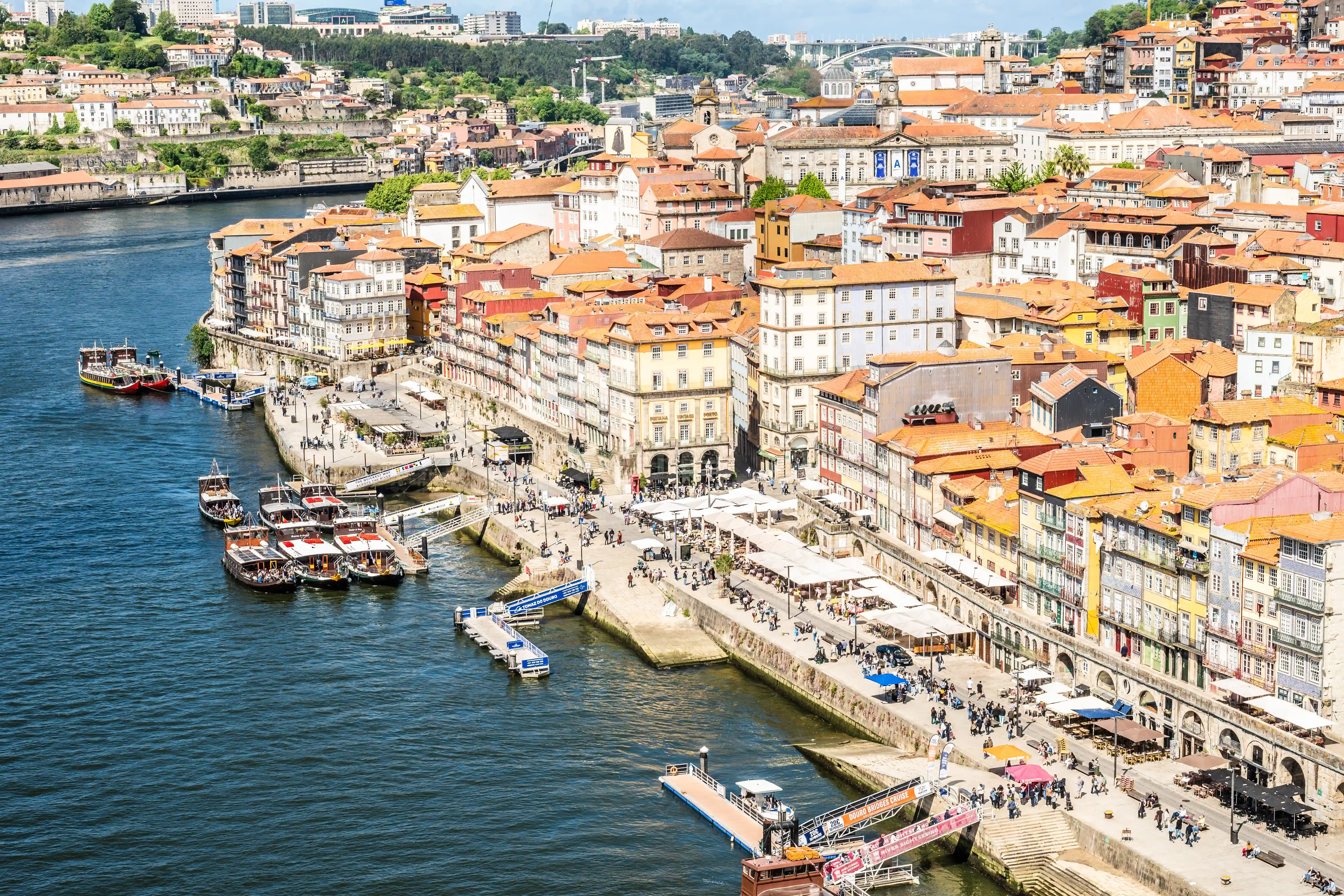
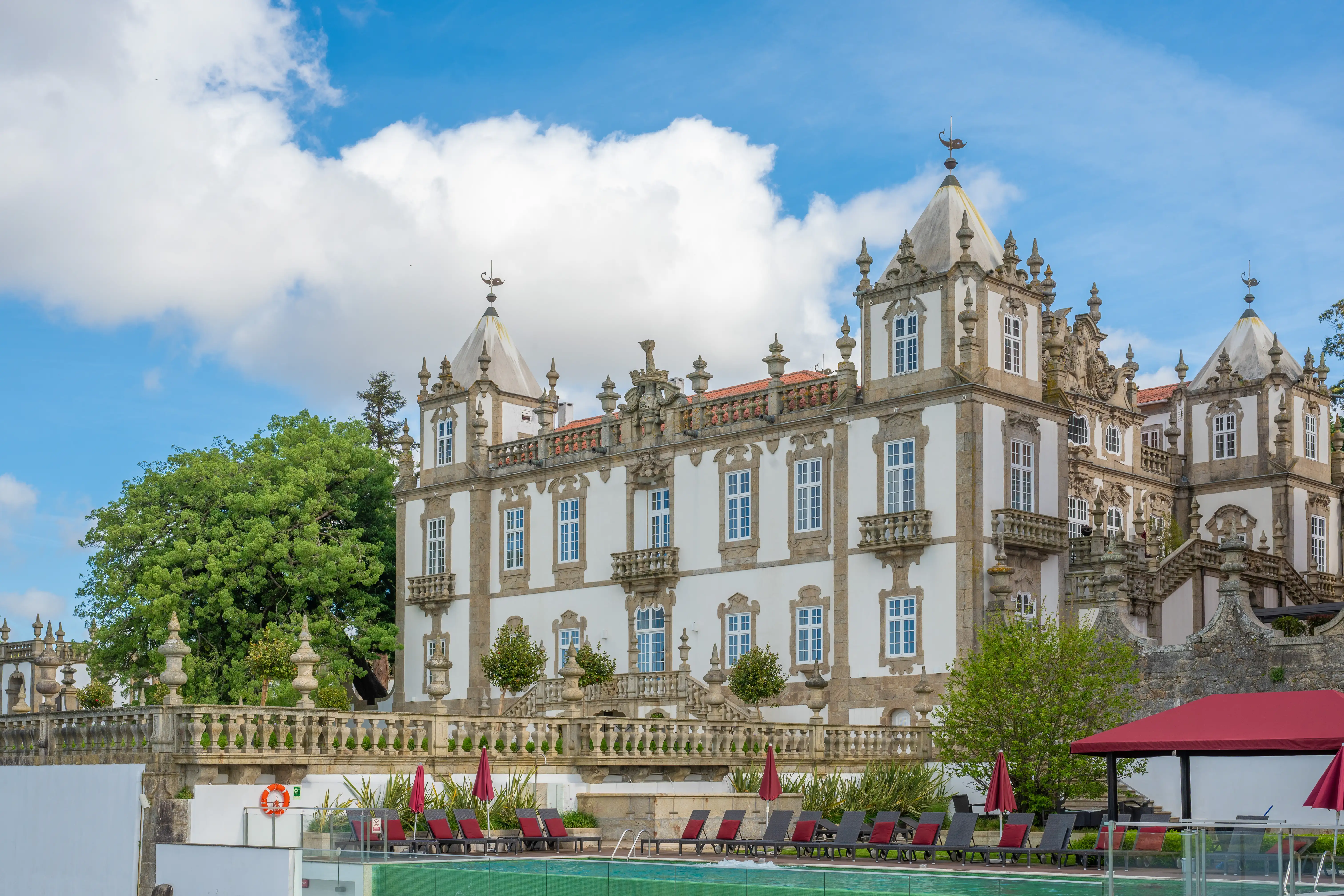
Palácio do Freixo is a magnificent Baroque palace and Portugalal monument located in Porto, Portugal. Built in the 18th century, the palace is a prime example of Portuguese Baroque architecture, with its ornate facades, grand interiors, and lush gardens. Originally constructed as a private residence for the Nicolau family, it later became a monastery and a military barracks before being restored to its former glory. Today, Palácio do Freixo serves as a luxury hotel (Pestana Palace Porto) and a cultural landmark, offering visitors a blend of historical charm and modern hospitality.
A grand white manor house with ornate white stonework and many windows, featuring decorative turrets topped with weather vanes. A stone balustrade with urns runs across the front of the building, overlooking a swimming pool with red sun loungers and umbrellas.
Palácio do Freixo ‐ photo by ,
©www.mgaylard.co.uk.
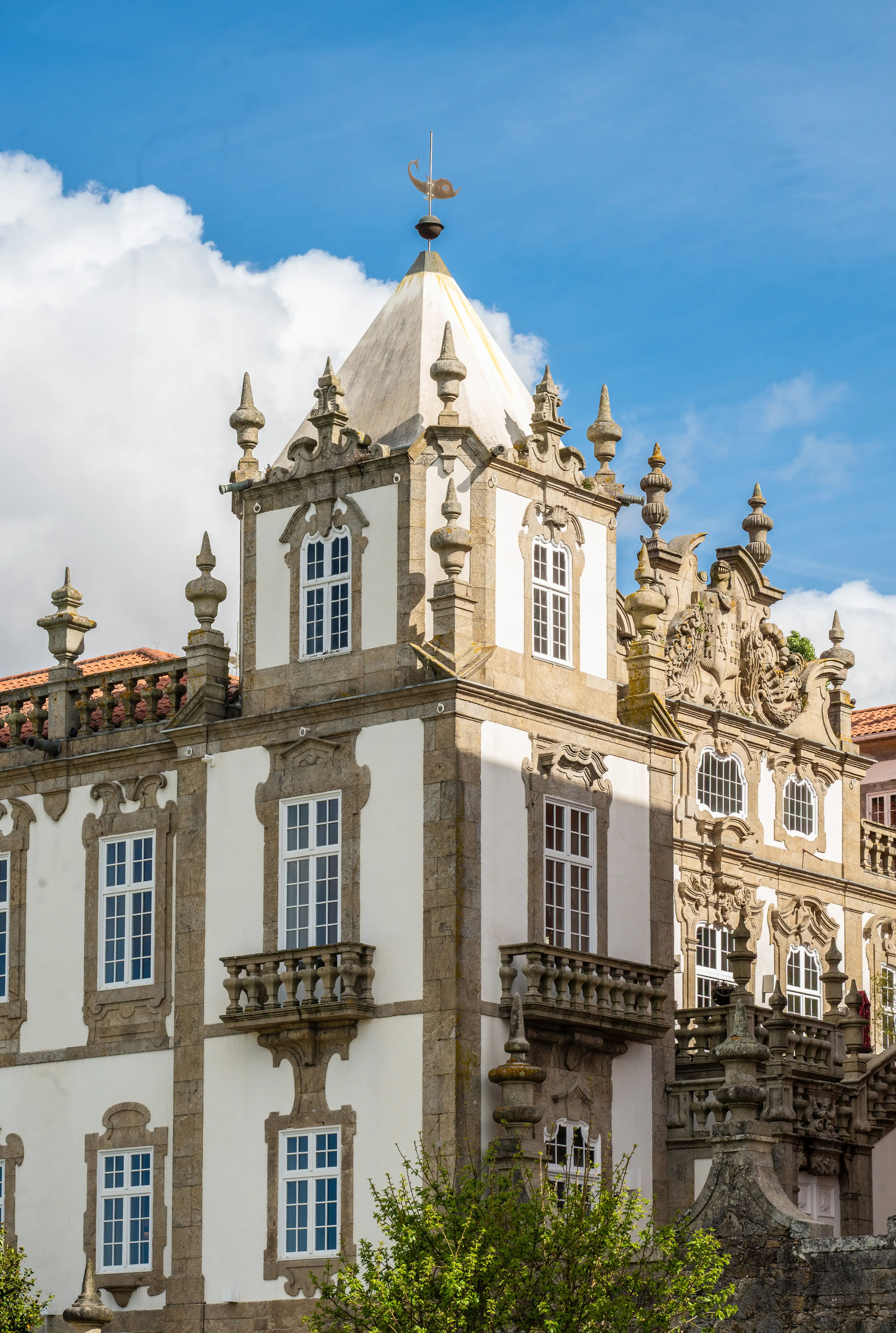
A detailed view of a white and stone building with ornate architectural features, including multiple windows, decorative balconies, pointed pinnacles, and a golden bird weather vane on a pyramidal roof, set against a blue sky with clouds.
title ‐ photo by ,
©www.mgaylard.co.uk.
A detailed view of a grand Baroque building facade with ornate stonework, decorative spires, and numerous windows, overlooking a wide river under a blue sky with white clouds. A stone staircase with elaborate balustrades leads up to the building.
Baroque Splendour by the Douro River, Porto ‐ photo by ,
©www.mgaylard.co.uk.
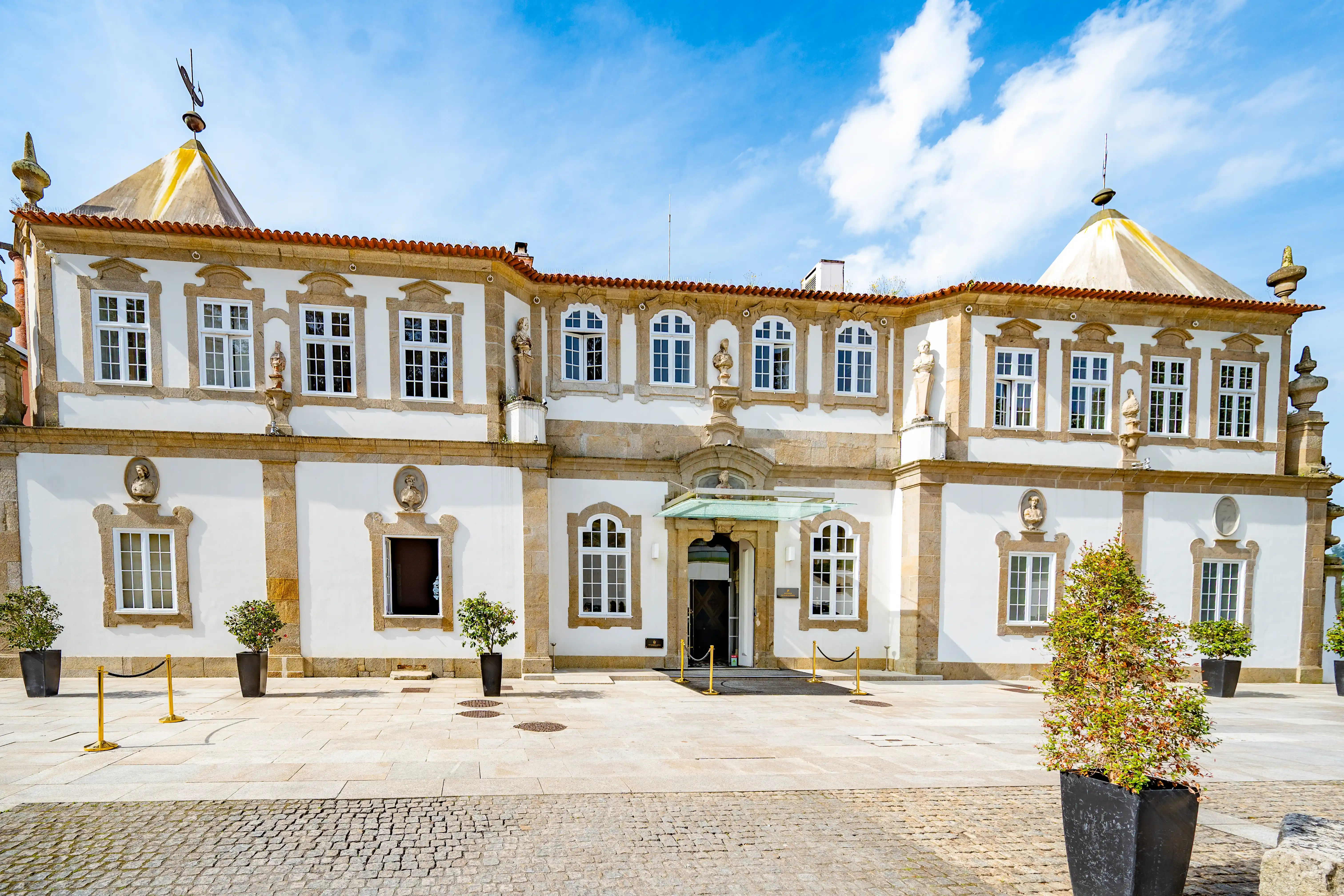
A stately white building with sandstone accents and a red-tiled roof, featuring numerous windows and decorative sculptures, stands under a blue sky with clouds. A paved courtyard with potted plants is in the foreground.
Palace of Palatial Grandeur in Daytime ‐ photo by ,
©www.mgaylard.co.uk.
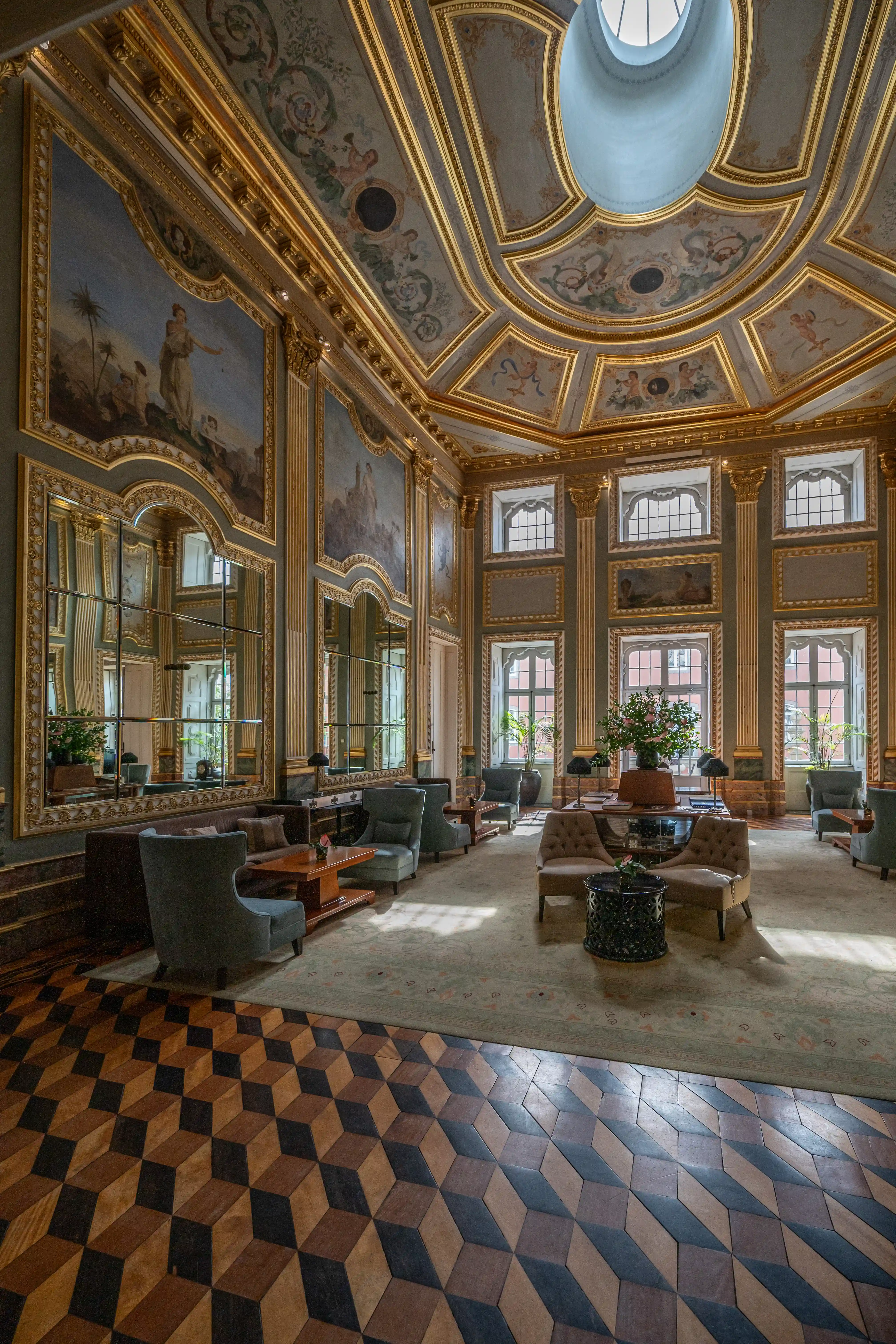
A wide shot of a luxurious drawing room with ornate gilded mouldings, ceiling frescoes, large mirrors, comfortable seating, and a distinctive geometric parquet floor.
An Exquisite Drawing Room Featuring Elaborate Frescoes, Gilded Trim, and a Striking Parquet Floor ‐ photo by ,
©www.mgaylard.co.uk.
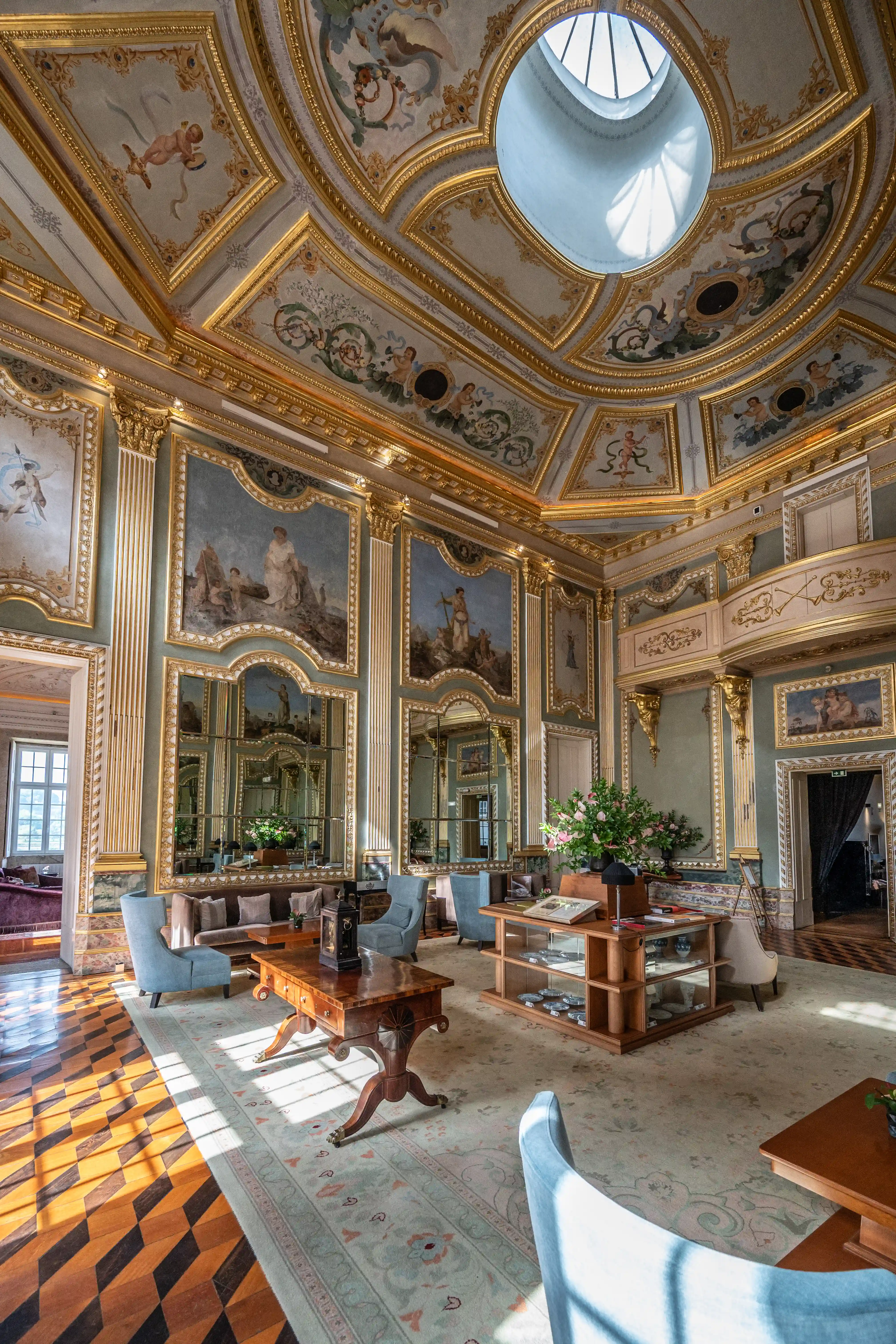
A richly decorated salon with a frescoed domed ceiling featuring gilded mouldings and mythological scenes. Ornate paintings and large mirrors adorn the pale green walls, complemented by fluted columns. Blue armchairs and a sofa surround a dark wooden coffee table. A patterned parquet floor transitions to a patterned carpet. Sunlight streams in from a large skylight and a doorway, illuminating the luxurious interior.
Ornate Salon with Frescoes, Mirrors, and Natural Light ‐ photo by ,
©www.mgaylard.co.uk.
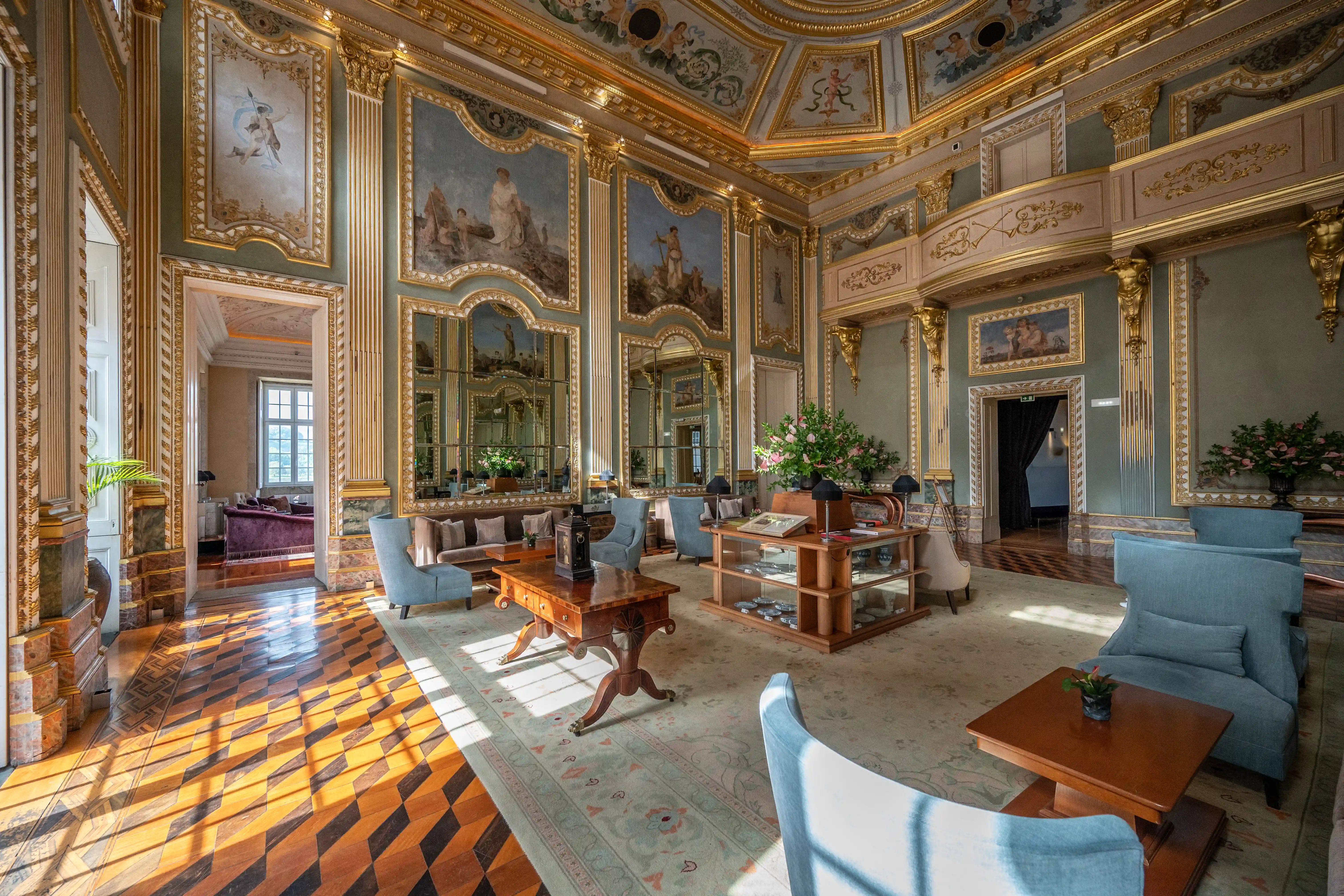
A grand, ornately decorated drawing room with pale green walls, gilded mouldings, and framed frescoes. Several light blue armchairs and a sofa are arranged around wooden tables on a patterned rug. A patterned parquet floor is visible in the foreground, with sunlight casting shadows. Mirrors and floral arrangements add to the luxurious atmosphere.
title ‐ photo by ,
©www.mgaylard.co.uk.
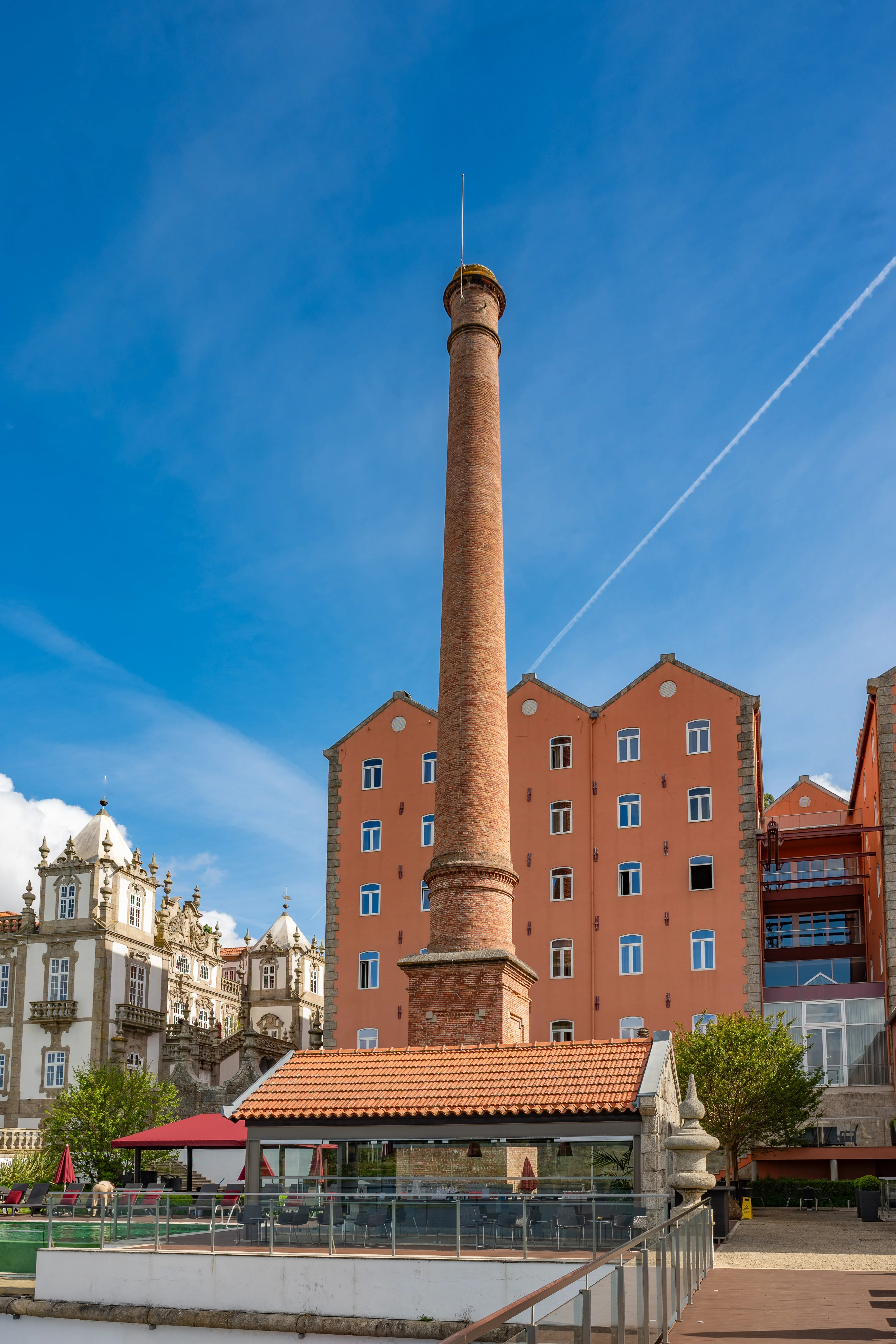
A tall red brick chimney dominates the frame, with a modern orange warehouse building to its right and a decorative white historic building to its left, under a bright blue sky. In the foreground, an outdoor cafe area with tables and chairs is visible.
Port Warehouse Chimney and Historic Architecture with Outdoor Seating ‐ photo by ,
©www.mgaylard.co.uk.
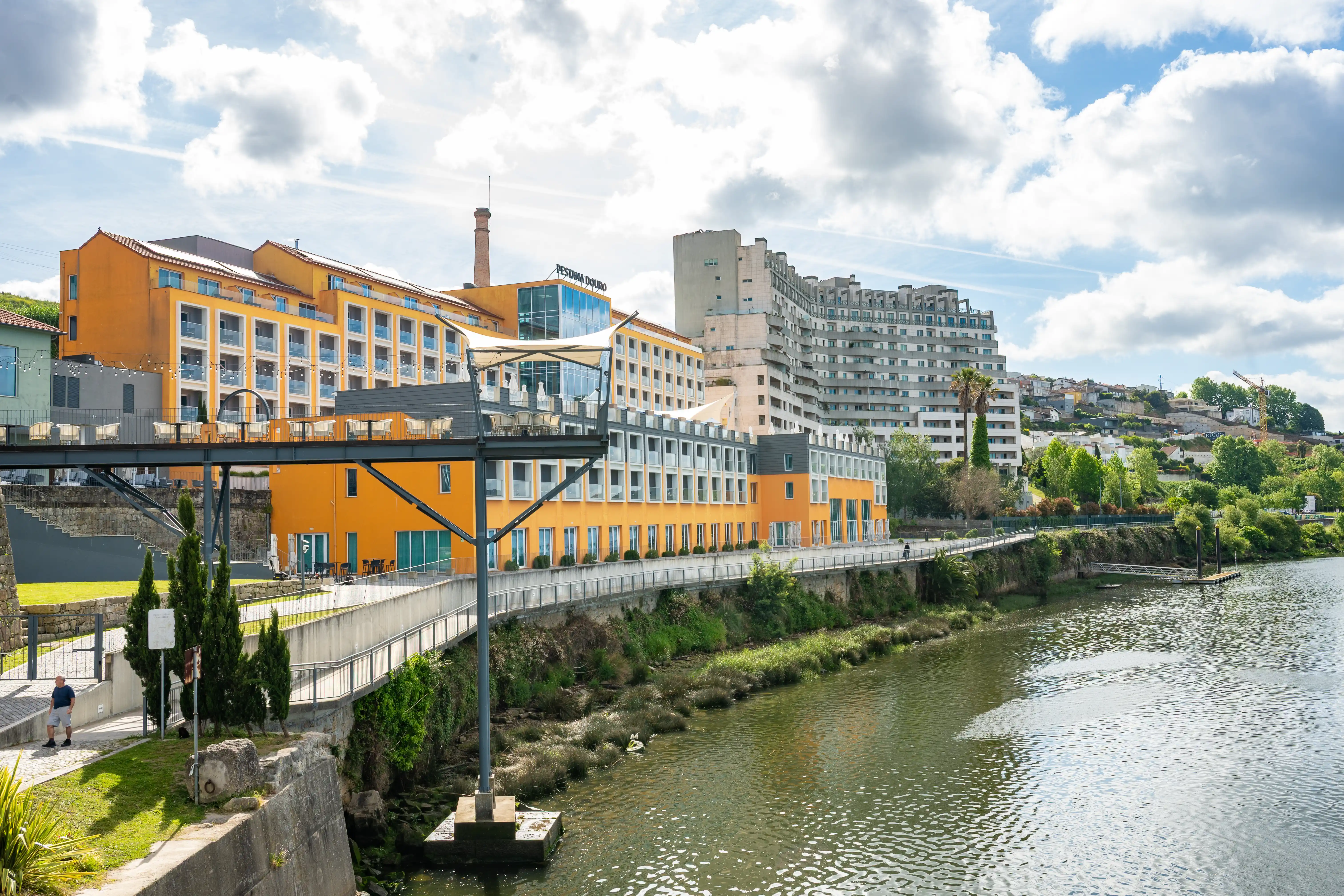
A wide shot of the Douro River in Porto, Portugal, with the vibrant orange Pestana Douro Hotel situated on the riverbank. A modern walkway extends from the hotel over the water, and further buildings and greenery rise up the hill in the background under a cloudy sky.
A Vibrant Riverside Scene in Porto Featuring the Pestana Douro Hotel ‐ photo by ,
©www.mgaylard.co.uk.
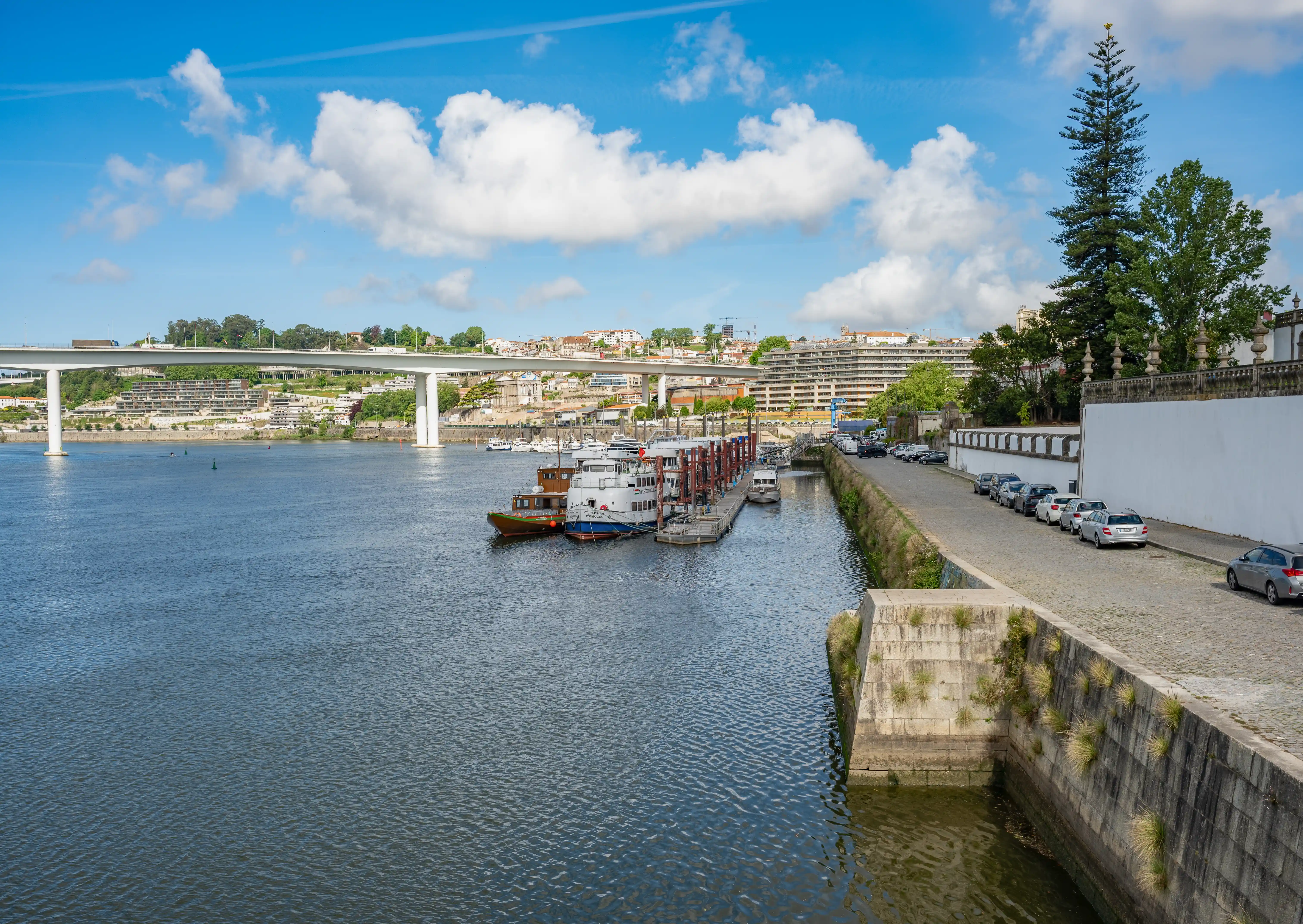
A wide shot of the Douro River in Porto, Portugal, under a blue sky with white clouds. Ponte do Freixo, spans the river in the distance. Several tourist boats are docked on the right side of the river, with a cobbled promenade and parked cars beyond them. A tall pine tree is visible on the right.A wide shot of the Douro River in Porto, Portugal, under a blue sky with white clouds. The Dom Luís I Bridge spans the river in the distance. Several tourist boats are docked on the right side of the river, with a cobbled promenade and parked cars beyond them. A tall pine tree is visible on the right.
The River Douro at Palácio do Freixo ‐ photo by ,
©www.mgaylard.co.uk.
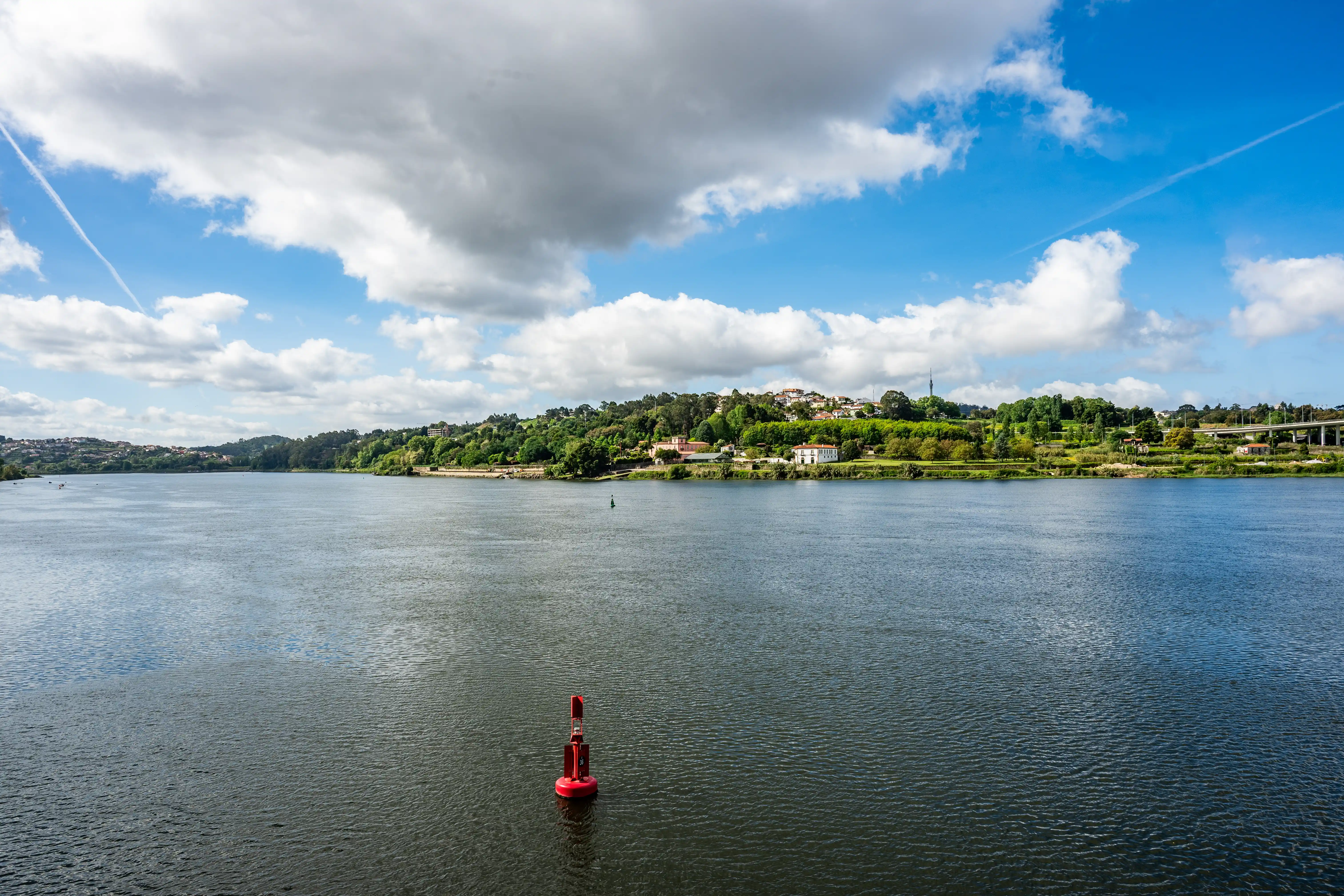
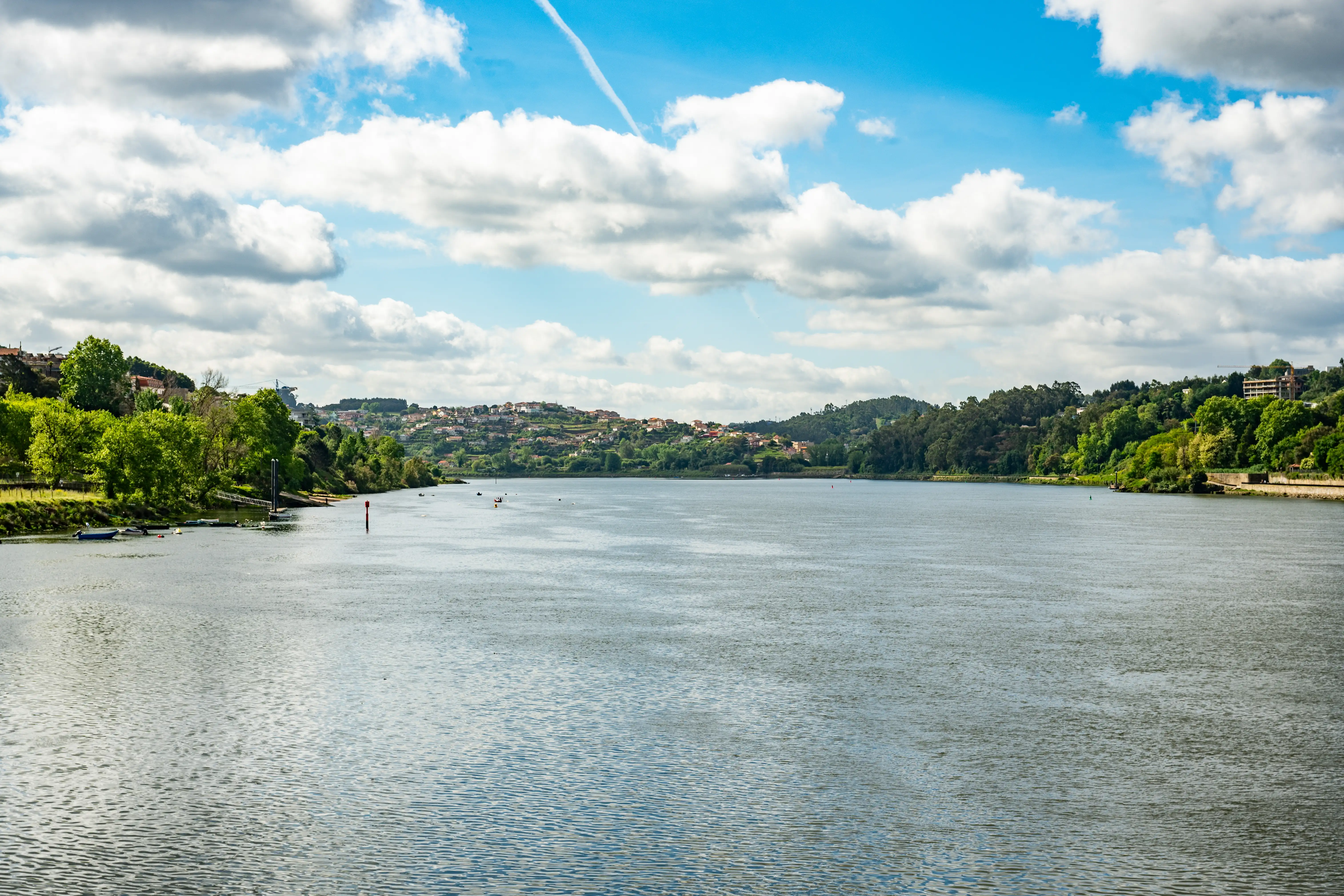
A wide river with a red navigation buoy in the foreground and a tree-lined bank with houses and a bridge in the background, under a partially cloudy blue sky.
A Wide River with a Distant Town and Buoy ‐ photo by ,
©www.mgaylard.co.uk.
A wide, calm river flows through a landscape of green hills topped with a town of red-roofed houses, under a blue sky with white, fluffy clouds.
A Wide River Views with Rolling Hills and a Townscape ‐ photo by ,
©www.mgaylard.co.uk.
Open the full set flickr button this page

Palácio do Freixo

Palácio do Freixo was built in the 18th century as a private residence for the Nicolau family, a wealthy and influential family in Porto. The palace’s Baroque architecture reflects the opulence and grandeur of the period, with its ornate facades, grand interiors, and lush gardens. In the 19th century, the palace was converted into a monastery and later served as a military barracks. Over the years, the palace fell into disrepair, but it was restored in the 20th century and designated a Portugalal monument in 1910. Today, Palácio do Freixo stands as a testament to Porto’s rich architectural and cultural heritage.

Today, Palácio do Freixo is a luxury hotel (Pestana Palace Porto) and a cultural landmark that blends its historical charm with modern hospitality. The palace’s Baroque architecture, grand interiors, and lush gardens provide a stunning backdrop for guests and visitors. The on-site restaurants, bars, and spa offer a range of services, ensuring a comfortable and memorable stay. The palace also hosts events, weddings, and conferences, making it a vibrant part of Porto’s modern cultural and social scene. Its status as a Portugalal monument underscores its importance as a symbol of Porto’s history and identity
References

Text generated by Mistral AI , Text generated by Microsoft CoPilot , generated by Google's AI Image Describer

Funicular dos Guindais

Funicular dos Guindais

Rua dos GuindaisPortoPortugal

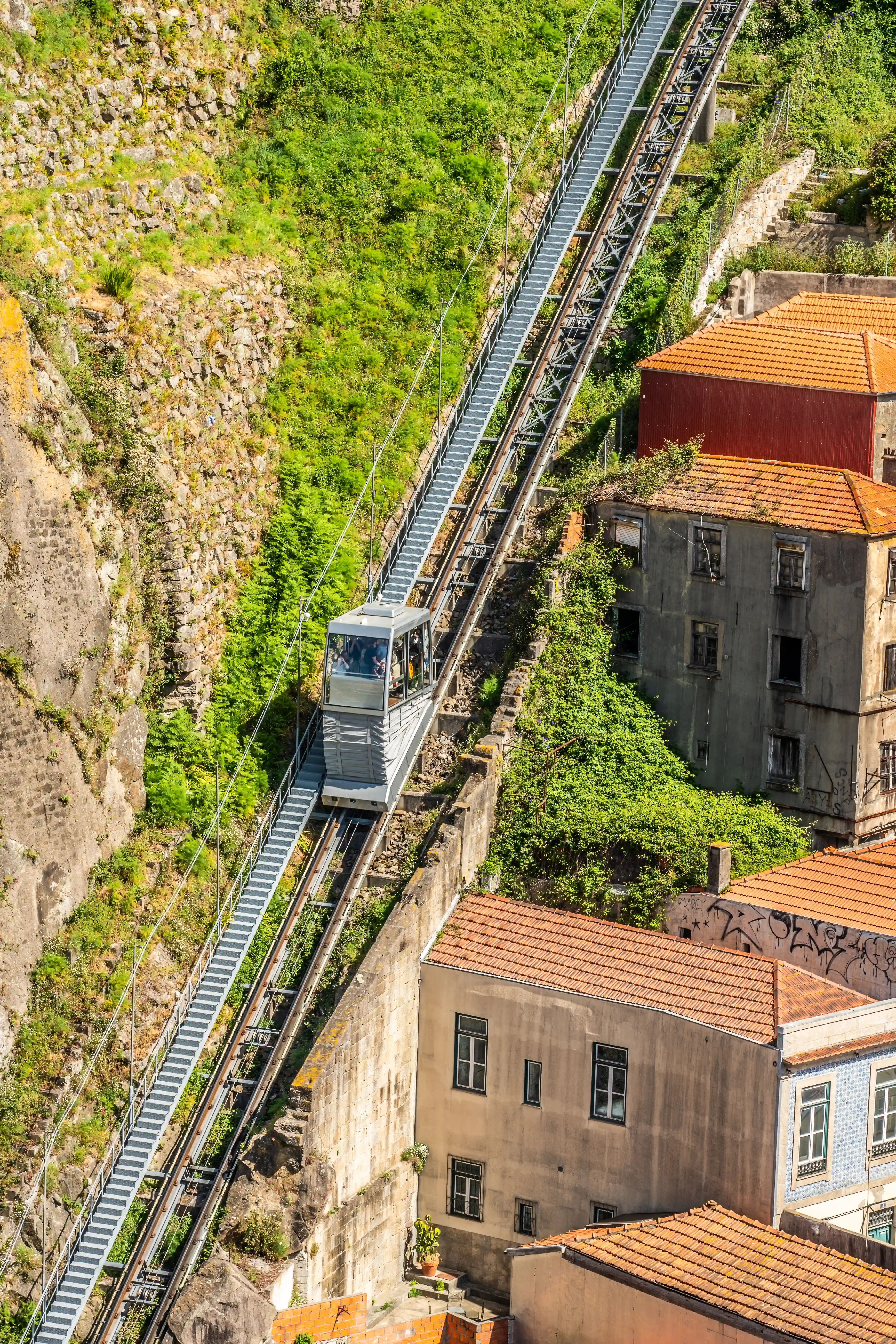
The Funicular dos Guindais is a historic funicular railway in Porto, Portugal, connecting the Ribeira District (by the Douro River) to the Batalha Square (near the city center). Opened in 1891, it is one of the oldest funiculars in the world and a beloved symbol of Porto’s charm and ingenuity. The funicular offers a scenic and efficient way to travel between the riverfront and the upper city, providing stunning views of the Douro River, the Dom Luís I Bridge, and Porto’s historic skyline. Today, it remains a popular attraction for both locals and tourists.
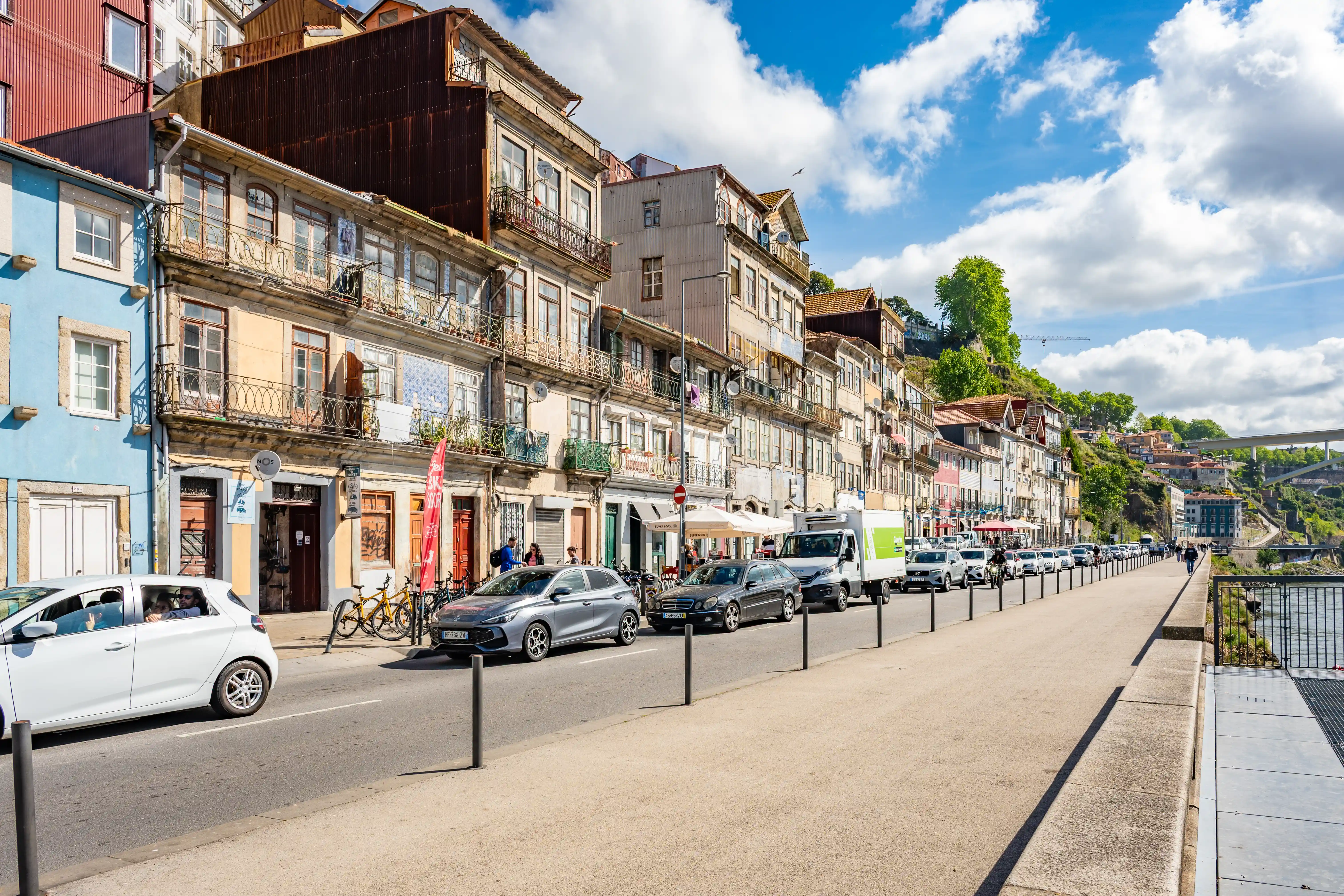
A street view of Porto, Portugal, with historic buildings, a river, a promenade, cars, and a bridge under a blue sky with white clouds.
A Sunny Day On Avenida Gustavo Eiffel Along the Douro River in Porto ‐ photo by ,
©www.mgaylard.co.uk.
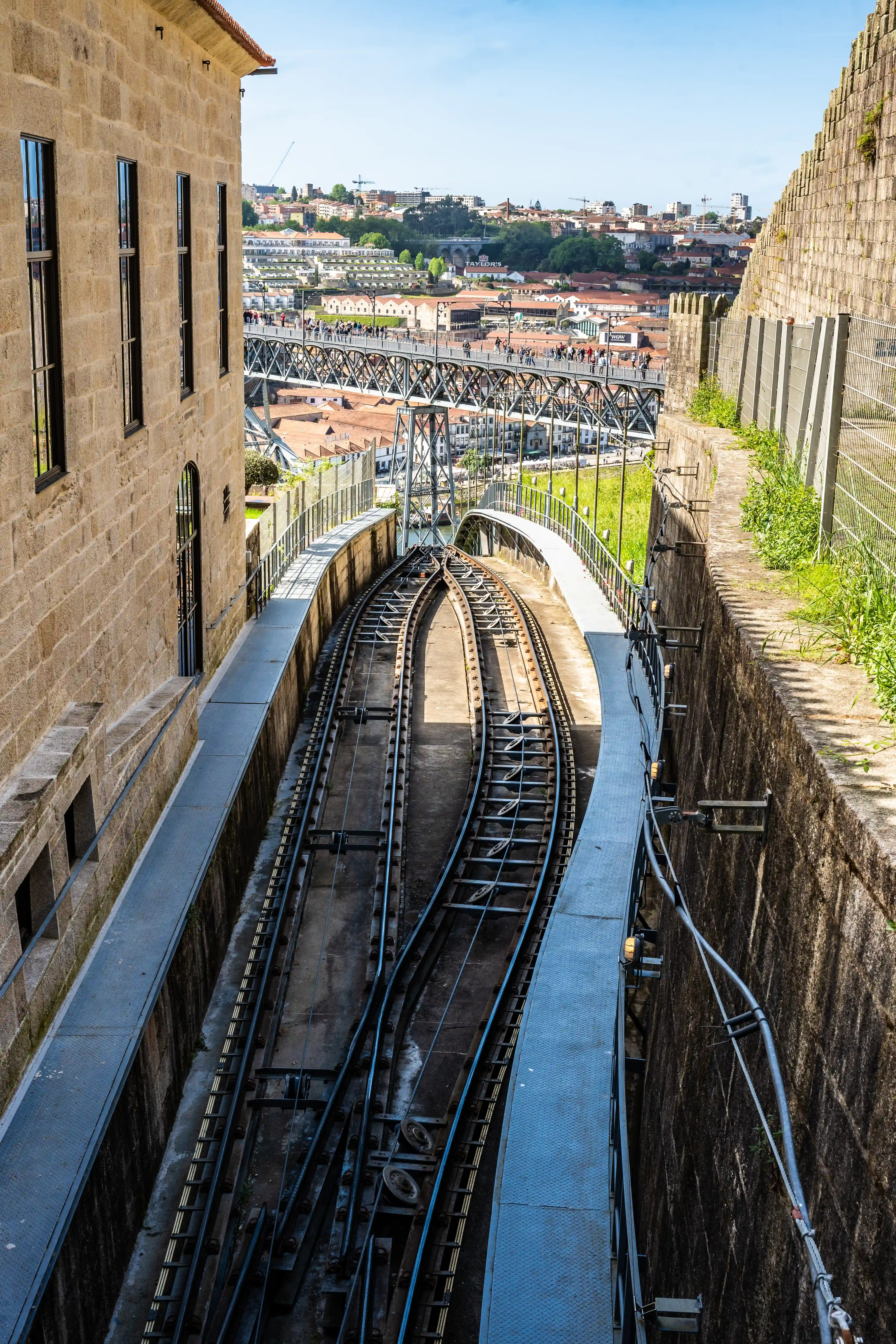
Steep funicular railway tracks descend between stone walls, with the Dom Luís I Bridge and the city of Porto visible in the background under a blue sky.
Funicular dos Guindais ‐ photo by ,
©www.mgaylard.co.uk.
A grey funicular carriage is ascending a steep metal railway track on a sunny day, with lush green vegetation and rocky terrain on one side and old buildings with orange tiled roofs on the other.
Funicular Railway Offering Scenic Views in a European City ‐ photo by ,
©www.mgaylard.co.uk.
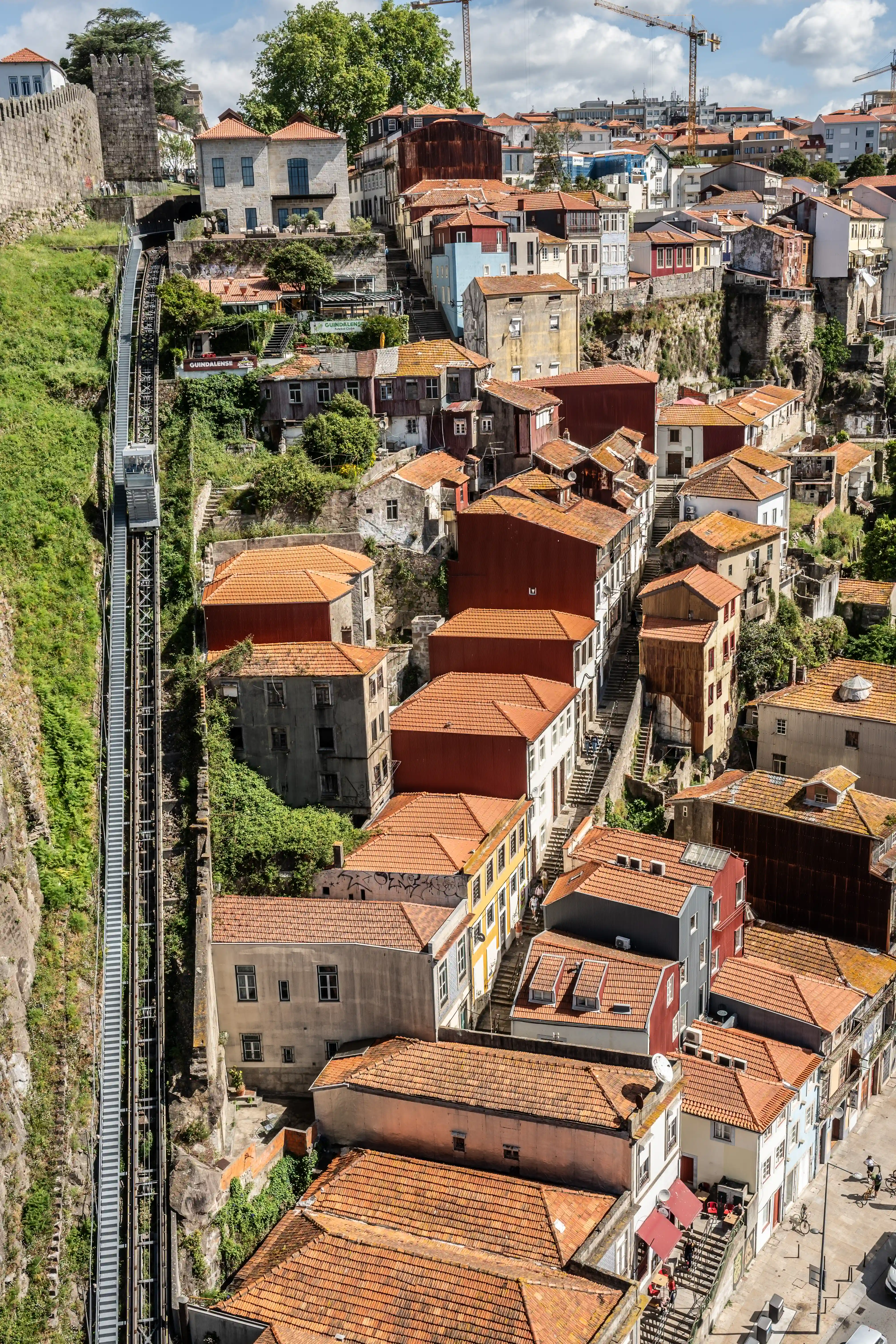
A vertical shot captures a steep hillside in Porto, Portugal, covered in traditional terracotta-tiled buildings. A metal funicular railway runs parallel to a steep, green slope and a stone fortification wall. In the distance, construction cranes are visible above the densely packed house
Porto's Terracotta Rooftops and Riverside Charm ‐ photo by ,
©www.mgaylard.co.uk.
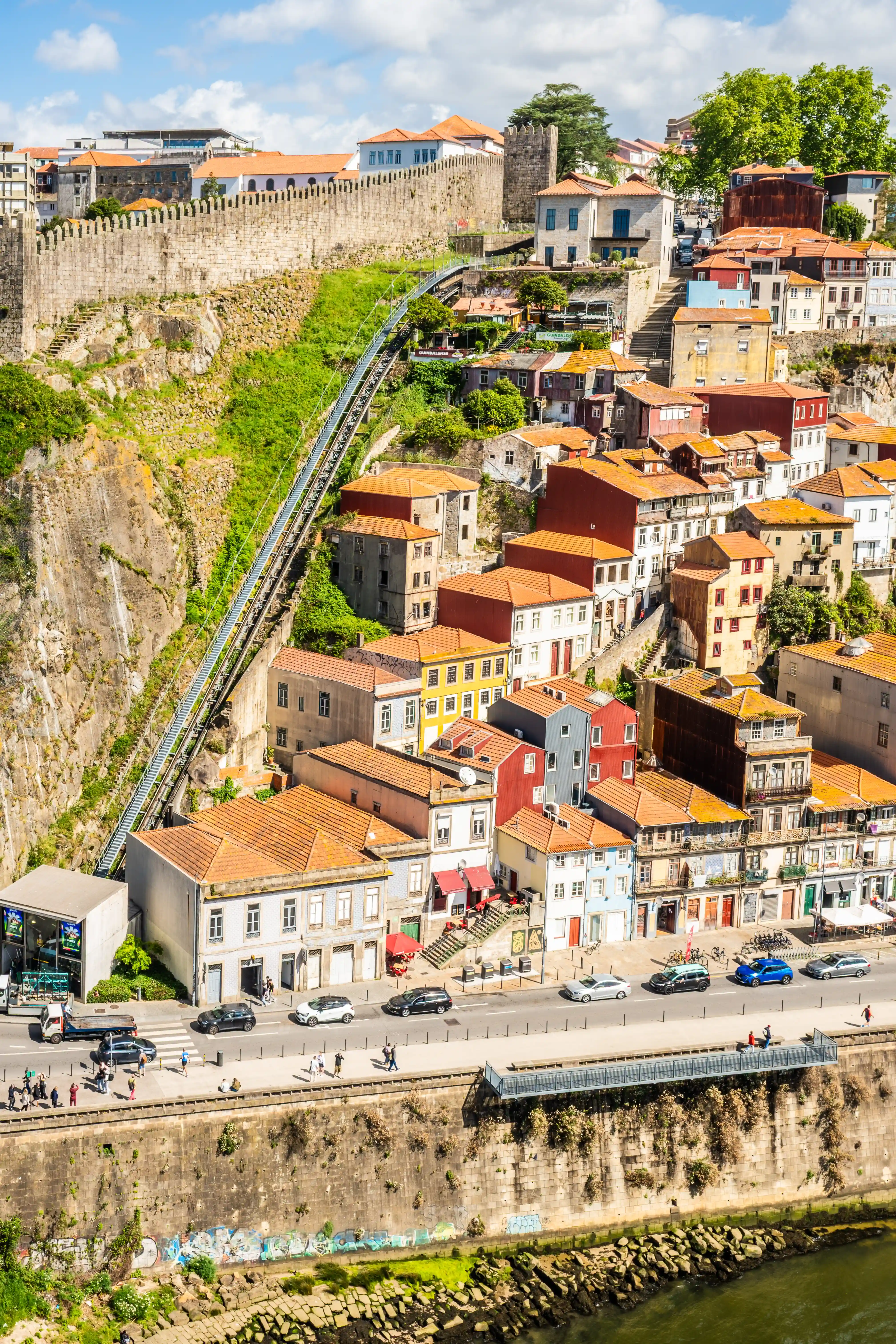
A high-angle view of the historic riverside in Porto, Portugal, featuring colourful buildings with terracotta roofs cascading down a steep, green hillside. A funicular railway track runs alongside the buildings, and ancient stone fortifications sit at the top of the hill. A street with cars and people runs along the waterfront, with the Douro River visible in the foreground.
Funicular, Fortifications, and Flats: A Panoramic View of Porto's Riverside Charm ‐ photo by ,
©www.mgaylard.co.uk.
Aerial view of a steep, narrow street in Porto, Portugal, lined with traditional houses featuring orange terracotta tiled roofs and some corrugated metal facades. Several people are walking up and down the stone steps. Greenery grows on the sides of the street and between buildings.
Porto's Riverside Slopes: A Bird's-Eye View of Historic Architecture and Steep Stairways ‐ photo by ,
©www.mgaylard.co.uk.
Aerial view of Porto's Ribeira district showing a steep, long staircase connecting buildings with traditional orange terracotta tiled roofs. Some buildings have weathered facades, while others feature modern corrugated metal, and greenery grows on the hillsides.
A Bird's-Eye View of Porto's Ribeira District with its Iconic Red-Tiled Roofs and Extensive Stairways ‐ photo by ,
©www.mgaylard.co.uk.
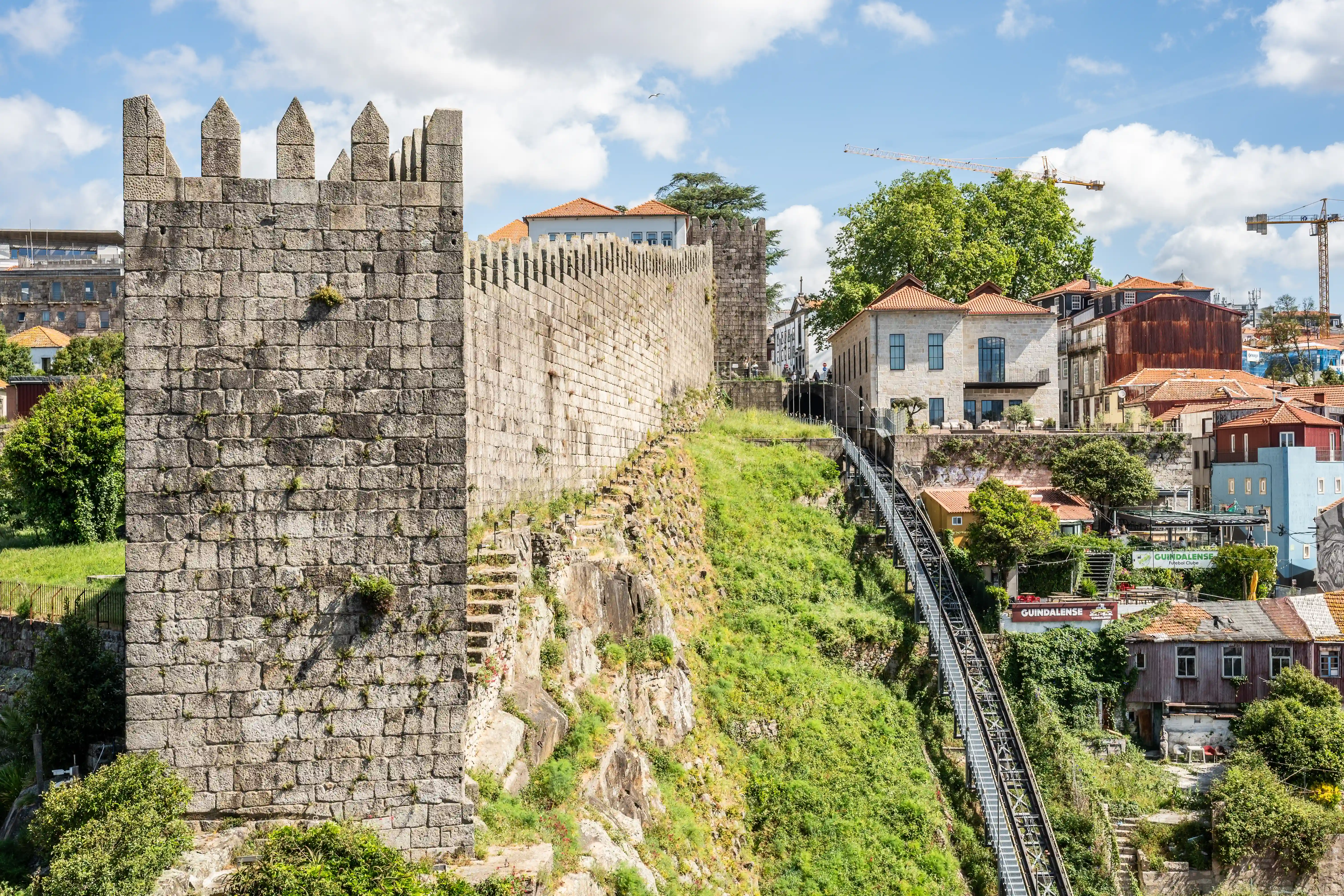
A weathered stone medieval wall with battlements dominates the left side of the frame, overlooking a steep, grassy incline. A metal funicular track zigzags up the hill on the right, bordered by traditional Portuguese buildings with red-tiled roofs. The sky is bright blue with scattered white clouds.
A sun-drenched view of the ancient ramparts of Muralhas Fernandinas do Porto, and the Funicular dos Guindais in Porto, Portugal, with vibrant city buildings cascading down the hillside under a bright blue sky. ‐ photo by ,
©www.mgaylard.co.uk.
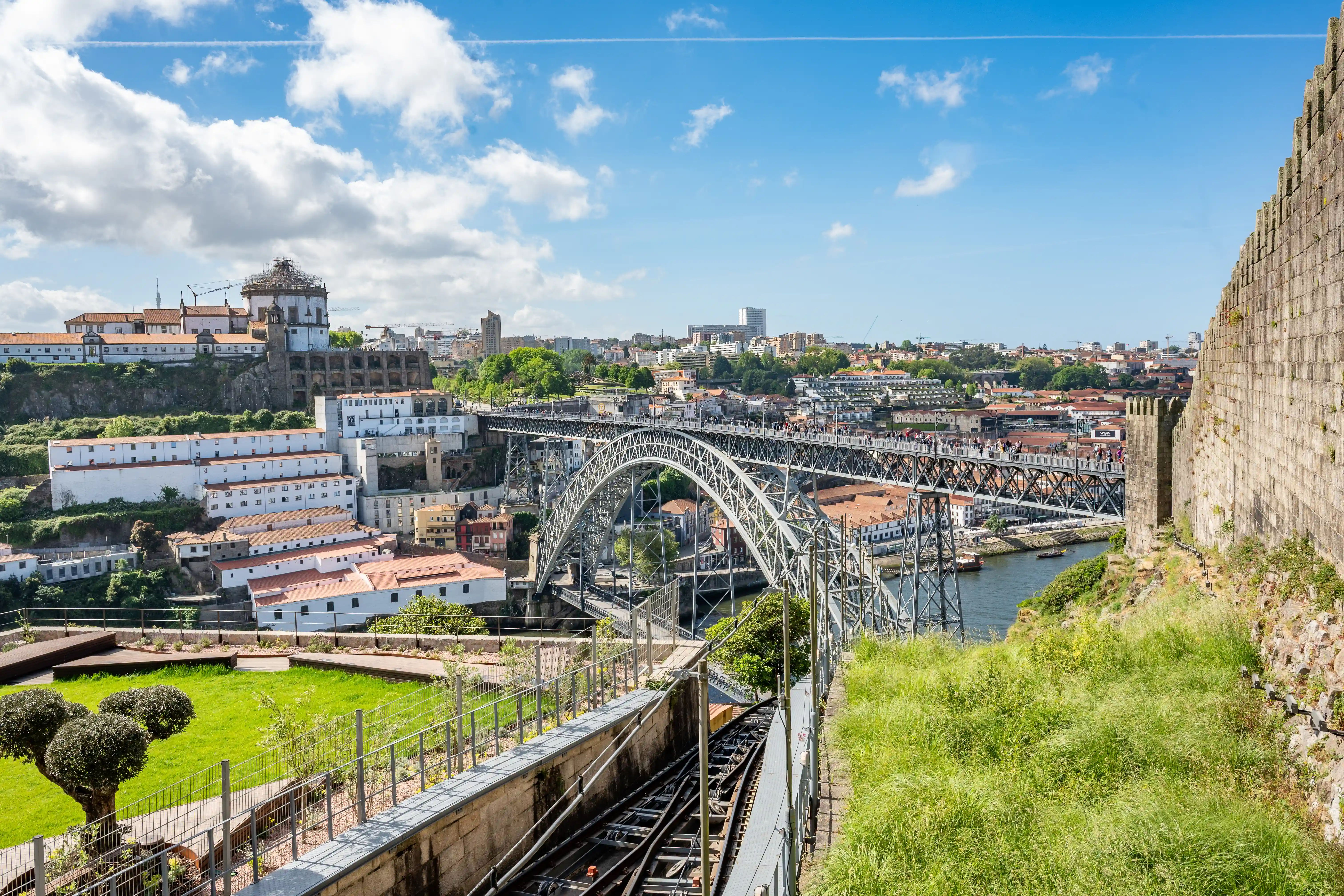
A view of the Dom Luís I Bridge in Porto, Portugal, from a viewpoint overlooking the Douro River, with the Ribeira district and a funicular railway in the foreground.
Porto's Charm: Dom Luís I Bridge and Riverside Views ‐ photo by ,
©www.mgaylard.co.uk.

The Funicular dos Guindais

The Funicular dos Guindais was inaugurated in 1891 to connect the Ribeira District to the upper city, providing a convenient and scenic way to navigate Porto’s steep terrain. Designed by engineer Raúl Mesnier du Ponsard, the funicular was part of a broader effort to modernize Porto’s infrastructure in the late 19th century. Its construction marked a significant achievement in engineering and urban planning, as it allowed residents and visitors to easily travel between the riverfront and the city center. Over the years, the funicular has become a beloved symbol of Porto’s charm and a testament to its innovative spirit.

Today, the Funicular dos Guindais remains a popular and iconic attraction in Porto. It serves as both a practical transport option and a scenic experience, offering stunning views of the Douro River, the Dom Luís I Bridge, and Porto’s historic skyline. The funicular’s original design and engineering have been preserved, making it a unique blend of history and functionality. For tourists, it provides a memorable way to explore Porto’s vertical landscape, while locals continue to use it as a convenient means of getting around the city. Its status as one of the oldest funiculars in the world adds to its appeal as a must-see destination.

References

Text generated by Mistral AI , Text generated by Microsoft CoPilot , generated by Google's AI Image Describer

Ponte Dom Luís I

Dom Luís I Bridge

Porto and Vila Nova de GaiaPortugal

The Dom Luís I Bridge (Ponte Dom Luís I) is a double-deck iron bridge spanning the Douro River in Porto, Portugal. Designed by Théophile Seyrig, a disciple of Gustave Eiffel, the bridge was opened in 1886 and named in honor of King Luís I of Portugal. It connects the cities of Porto and Vila Nova de Gaia, offering stunning panoramic views of the river, the historic Ribeira District, and the Port wine cellars of Gaia. The bridge is one of Porto’s most iconic landmarks and a symbol of the city’s architectural and engineering heritage.
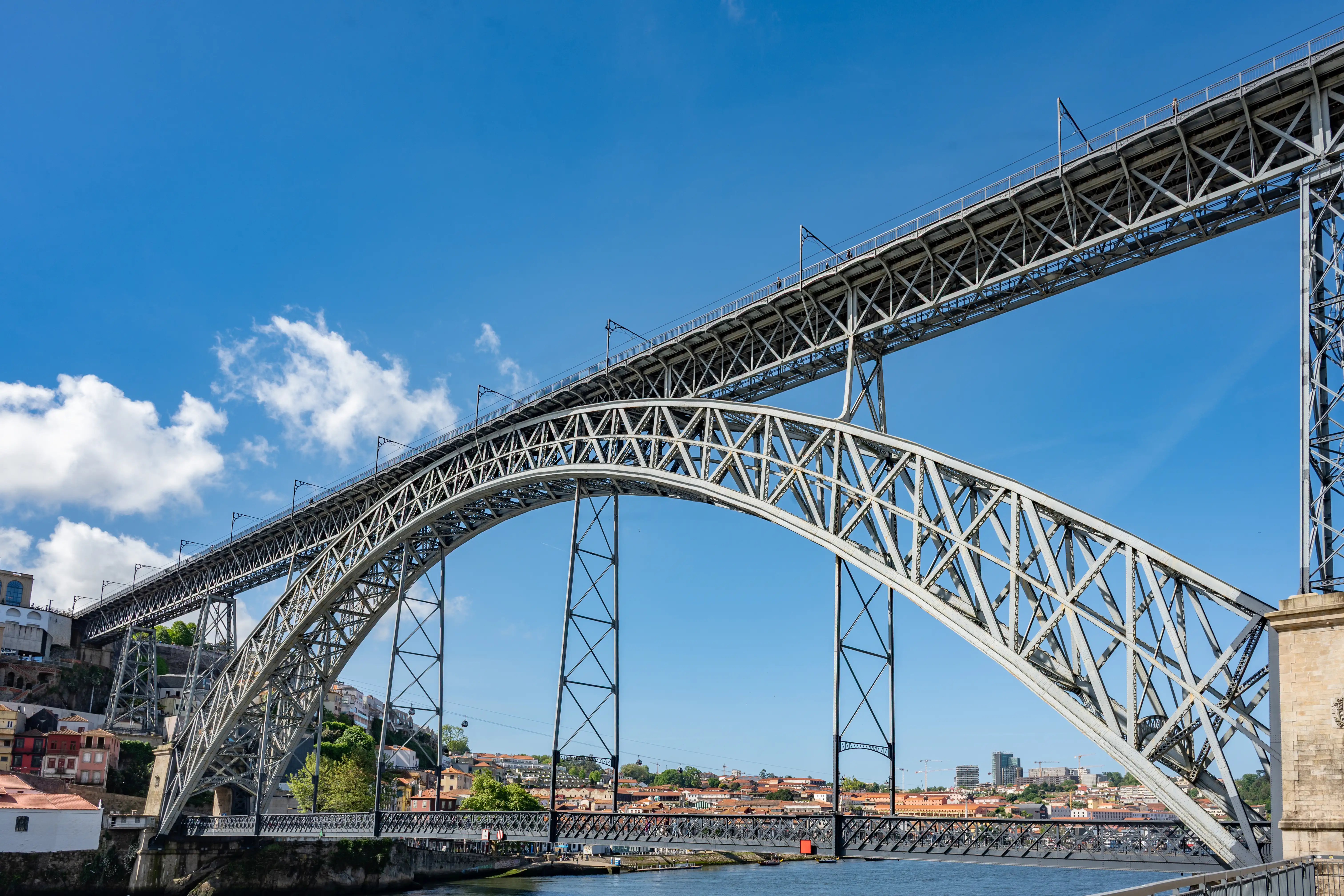
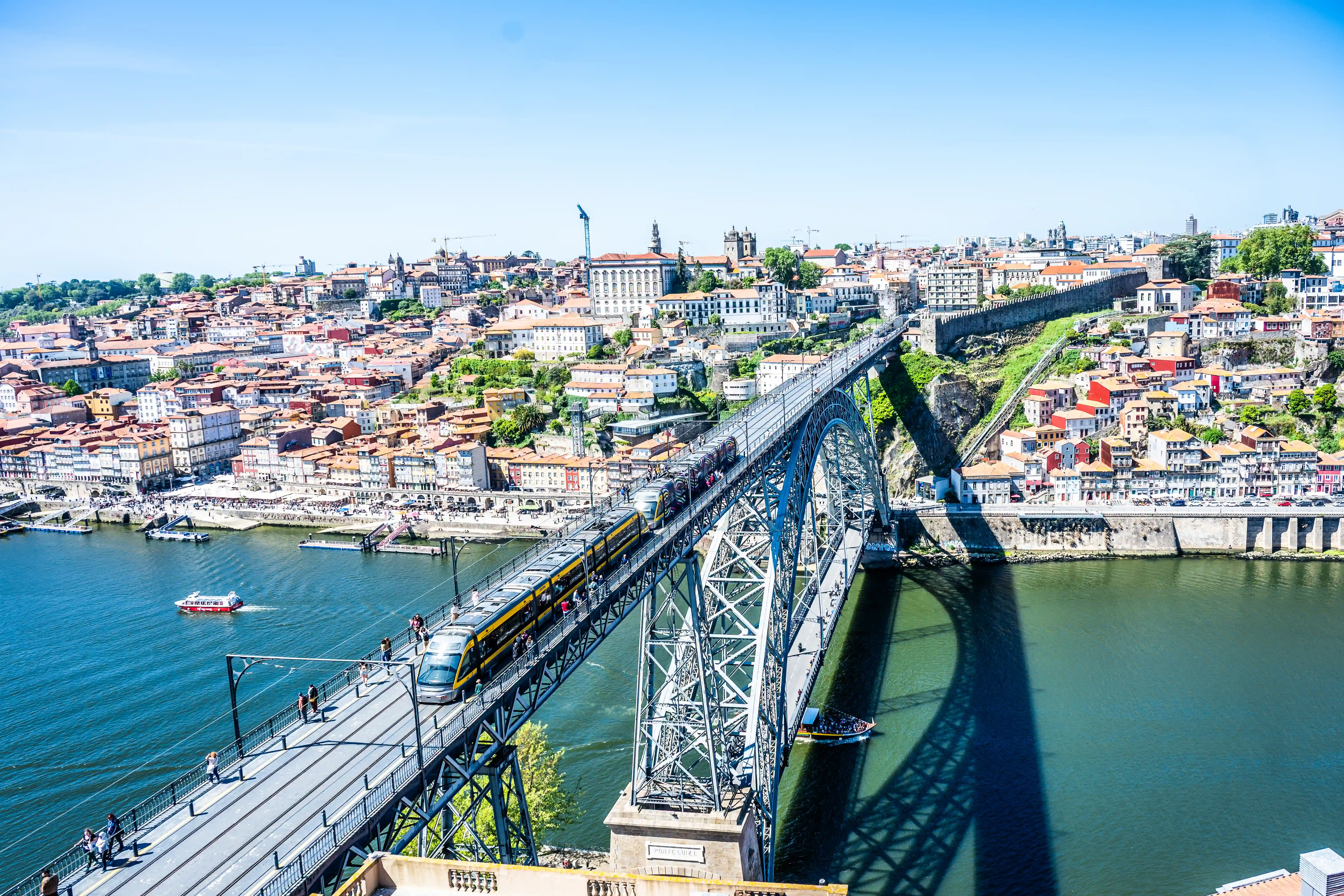
A wide shot of the Dom Luís I Bridge in Porto, Portugal, showcasing its impressive twin metal arches against a bright blue sky with scattered white clouds. The bridge carries road traffic on its upper level and pedestrians and light rail on its lower level. The historic Ribeira district with its terracotta roofs lines the riverbank on the far side.
Dom Luís I Bridge, Porto ‐ photo by ,
©www.mgaylard.co.uk.
A modern tram crosses the historic Dom Luís I Bridge in Porto, Portugal, with city buildings and cranes visible in the background.
title ‐ photo by ,
©www.mgaylard.co.uk.
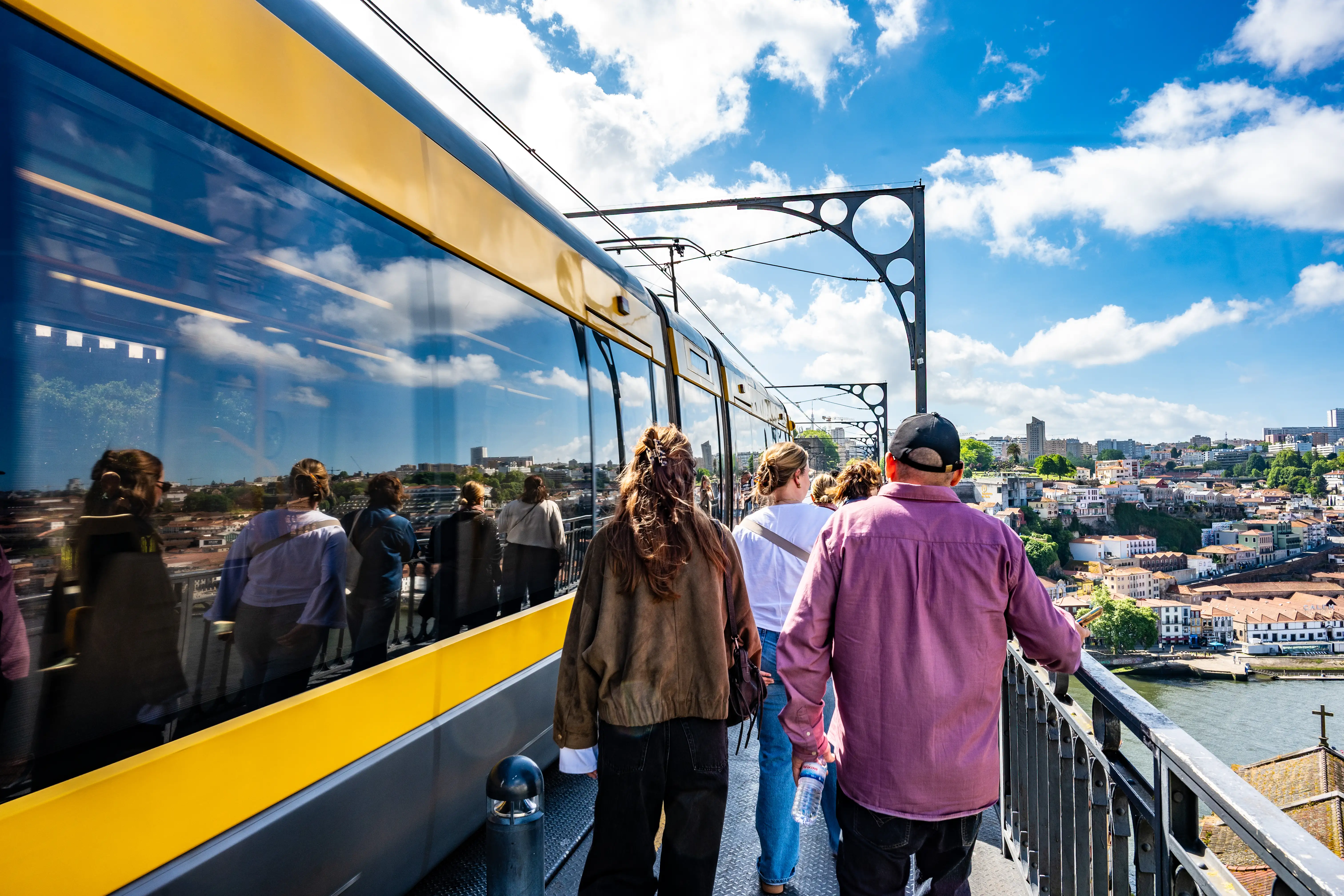
People walking on a bridge next to a yellow tram, with a view of the cityscape of Porto, Portugal, in the background under a blue sky with white clouds.
Ponte Luís I ‐ photo by ,
©www.mgaylard.co.uk.
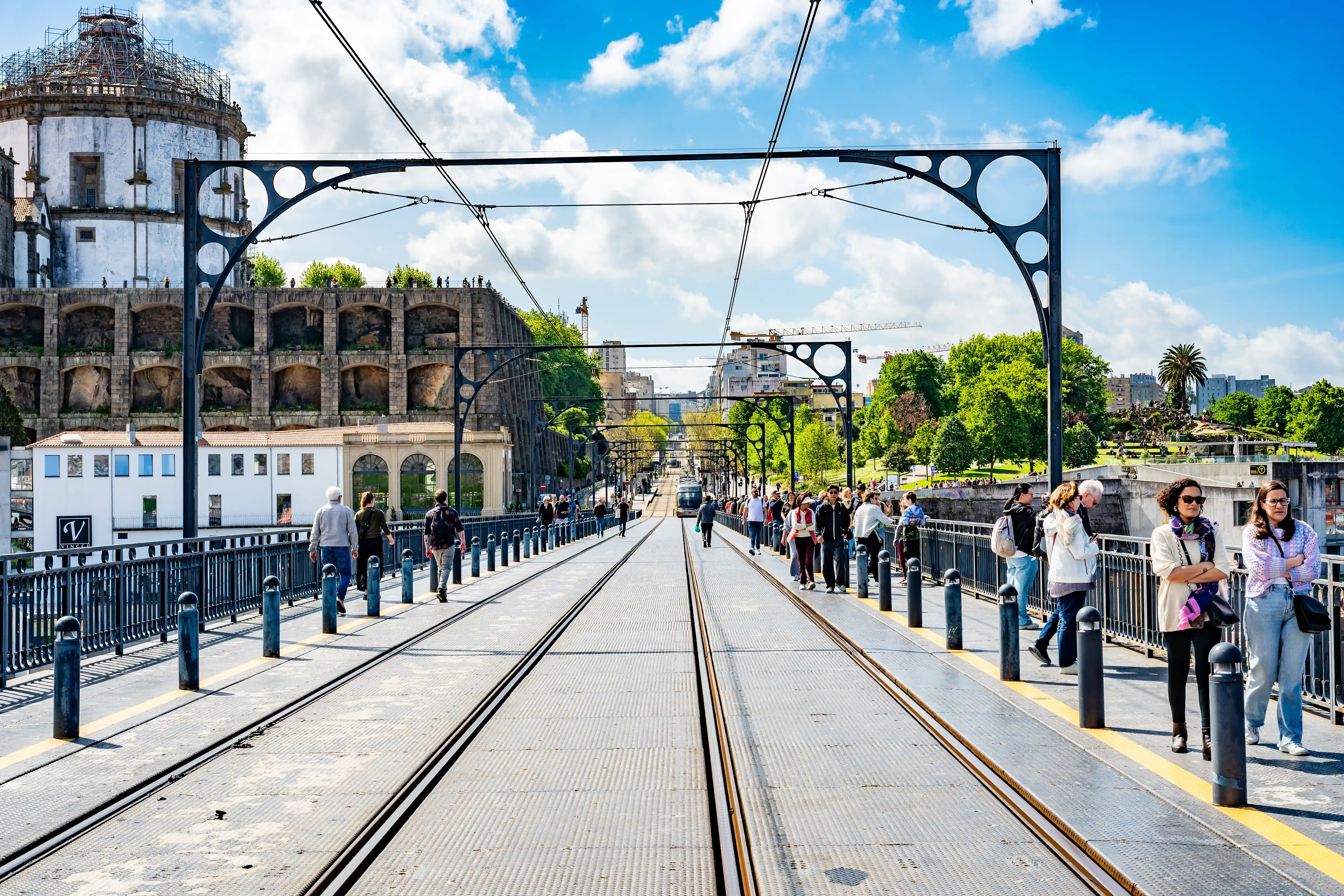
A wide shot of the Dom Luís I bridge in Porto on a sunny day, with a tram in the distance and many people walking across the upper deck. The historic buildings and lush greenery of the city are visible in the background under a blue sky with white clouds.
People Strolling Across Dom Luís I Bridge in Porto ‐ photo by ,
©www.mgaylard.co.uk.
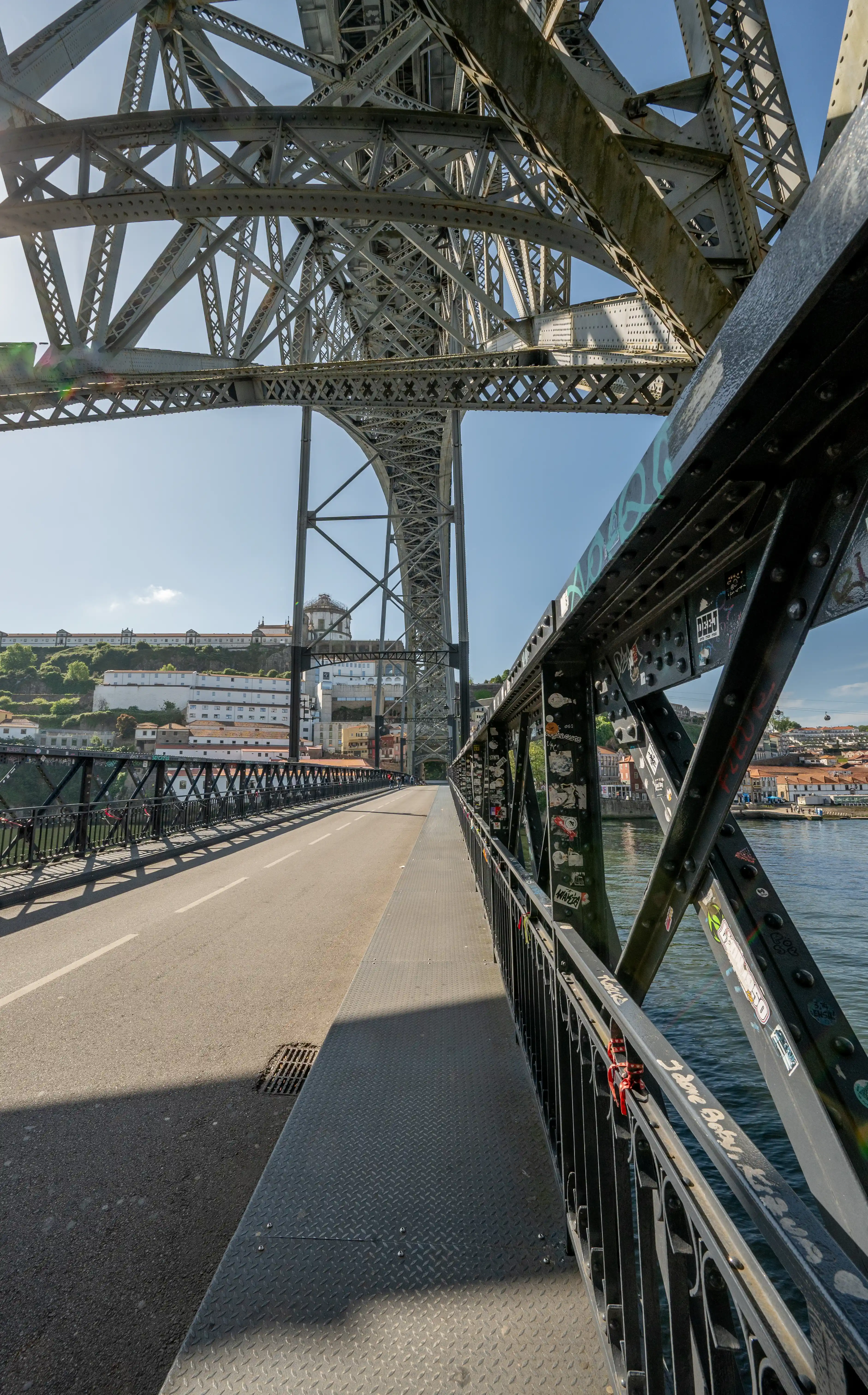
Low-angle shot looking up at the complex, grey, riveted steel framework of a large bridge tower against a bright blue sky.
Underneath the Arches: A Skyward View of a Ponte Luís I, the Grand Metal Bridge ‐ photo by ,
©www.mgaylard.co.uk.
View from the walkway of the Dom Luís I Bridge, Porto, showing the intricate metalwork, the road, the Douro River, and the cityscape of Porto.
Dom Luís I Bridge, Porto - Architectural Detail and River View ‐ photo by ,
©www.mgaylard.co.uk.
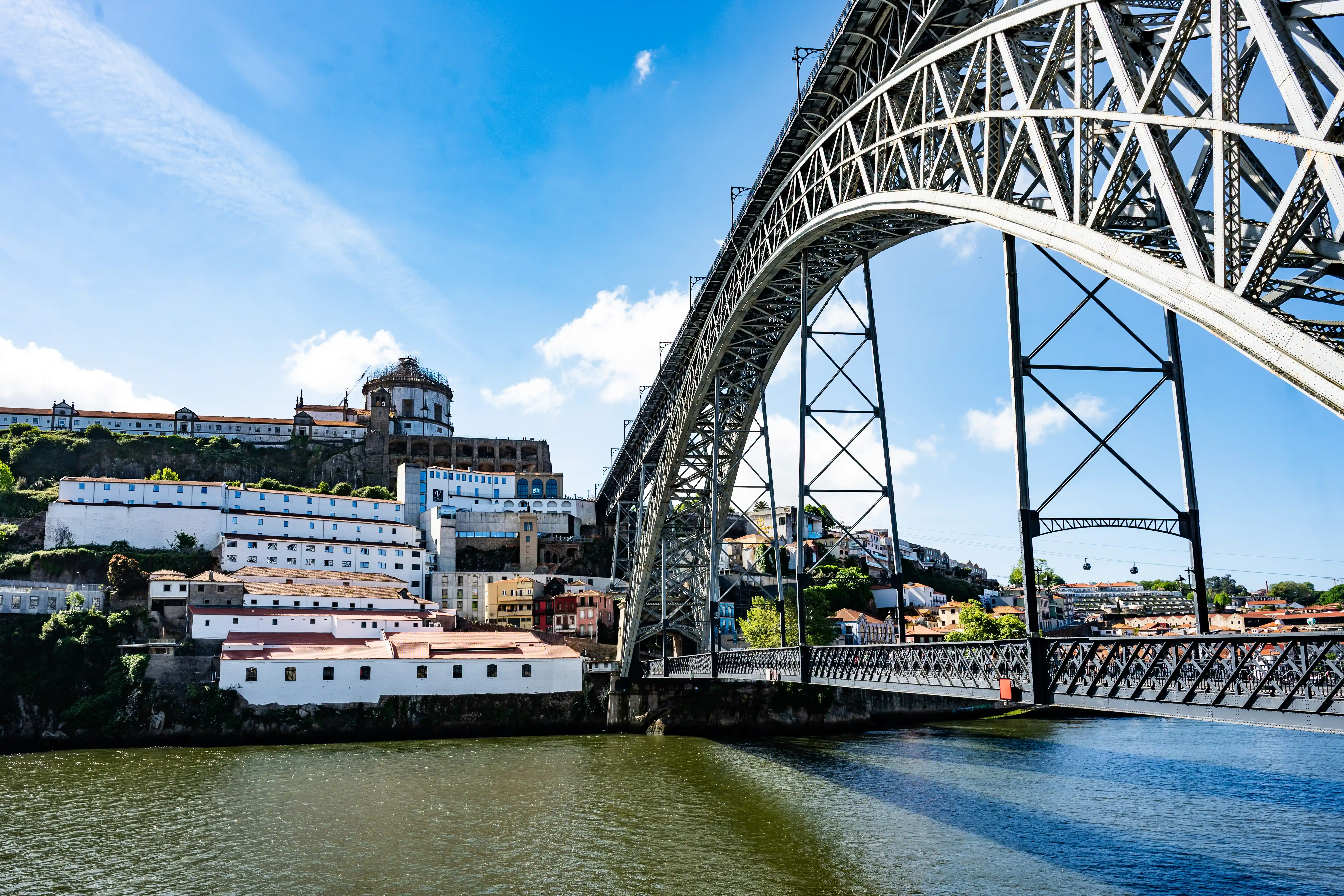
A wide shot of the Dom Luís I Bridge in Porto, Portugal, with its impressive metal arches stretching across the Douro River. The historic buildings of Porto, including the Monastery of Serra do Pilar, are visible on the hillside to the left, bathed in sunlight.
Dom Luís I Bridge and Porto Waterfront ‐ photo by ,
©www.mgaylard.co.uk.
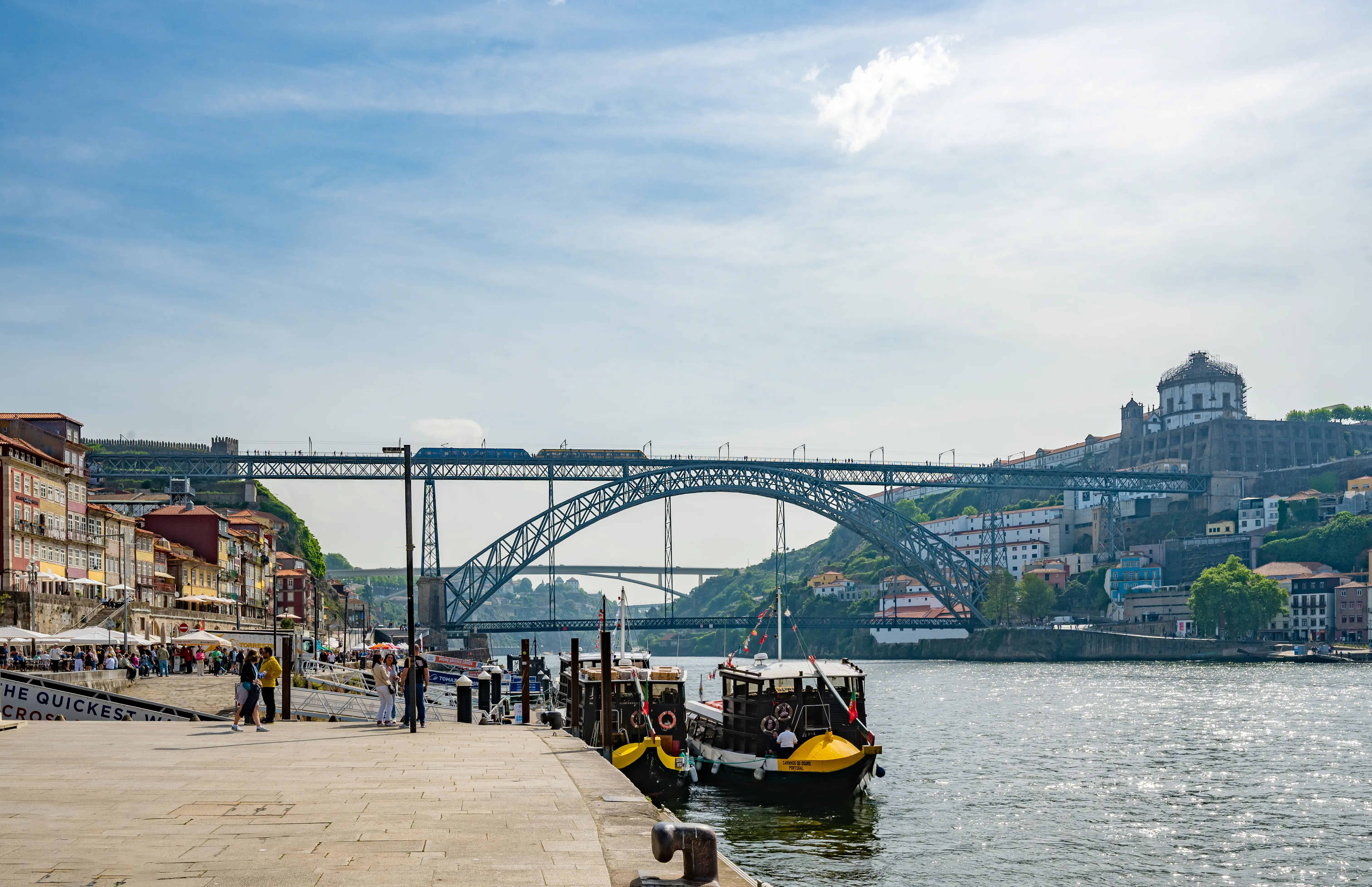
A wide shot of the Dom Luís I Bridge in Porto, Portugal, with a train crossing the upper deck. Colourful buildings line the Douro River waterfront on the left, and two traditional Rabelo boats are moored at the quay. The Serra do Pilar Monastery is visible on the hill in the background under a blue sky with clouds.
A Sunny Day on the Douro River, Porto, Portugal ‐ photo by ,
©www.mgaylard.co.uk.

Dom Luís I Bridge

The Dom Luís I Bridge was designed by Théophile Seyrig, a disciple of Gustave Eiffel, and was opened in 1886. It was named in honor of King Luís I of Portugal, who reigned from 1861 to 1889. The bridge was built to replace an older, unstable bridge and to improve transportation and communication between Porto and Vila Nova de Gaia. Its double-deck design was innovative for the time, allowing for both road and rail traffic, as well as pedestrian access. The bridge’s iron architecture reflects the engineering advancements of the 19th century and has become a symbol of Porto’s connection to the Douro River and its historic skyline.

Today, the Dom Luís I Bridge is one of Porto’s most iconic landmarks and a vital part of the city’s infrastructure. It serves as a key transport link between Porto and Vila Nova de Gaia, carrying both metro and road traffic, as well as pedestrians. The bridge’s panoramic views of the Douro River, Ribeira District, and Port wine cellars make it a popular destination for tourists and locals alike. Its double-deck design and iron architecture continue to impress visitors, and it remains a symbol of Porto’s rich history and engineering heritage.

References

Text generated by Mistral AI , Text generated by Microsoft CoPilot , generated by Google's AI Image Describer

Miradouro da Serra do Pilar

Miradouro da Serra do Pilar

Escada do PilarVila Nova de GaiaPortugal

Miradouro da Serra do Pilar is one of the most spectacular viewpoints in Porto, Portugal, offering panoramic views of the city, the Douro River, and the Dom Luís I Bridge. Located on the Gaia side of the river, this viewpoint provides a unique perspective of Porto’s historic Ribeira District, the Port wine cellars, and the colorful buildings that line the riverfront. It is a popular spot for photography, especially at sunset, when the golden light bathes the city in a warm glow. The viewpoint is easily accessible and a must-visit for anyone exploring Porto.
A European church complex featuring a weathered stone bell tower with arched openings revealing bells and a domed roof topped with a cross, adjacent to a whitewashed chapel with a pitched roof and stone trim, all under a clear blue sky.
A Stone Bell Tower and White Chapel Adorn a Church Exterior ‐ photo by ,
©www.mgaylard.co.uk.
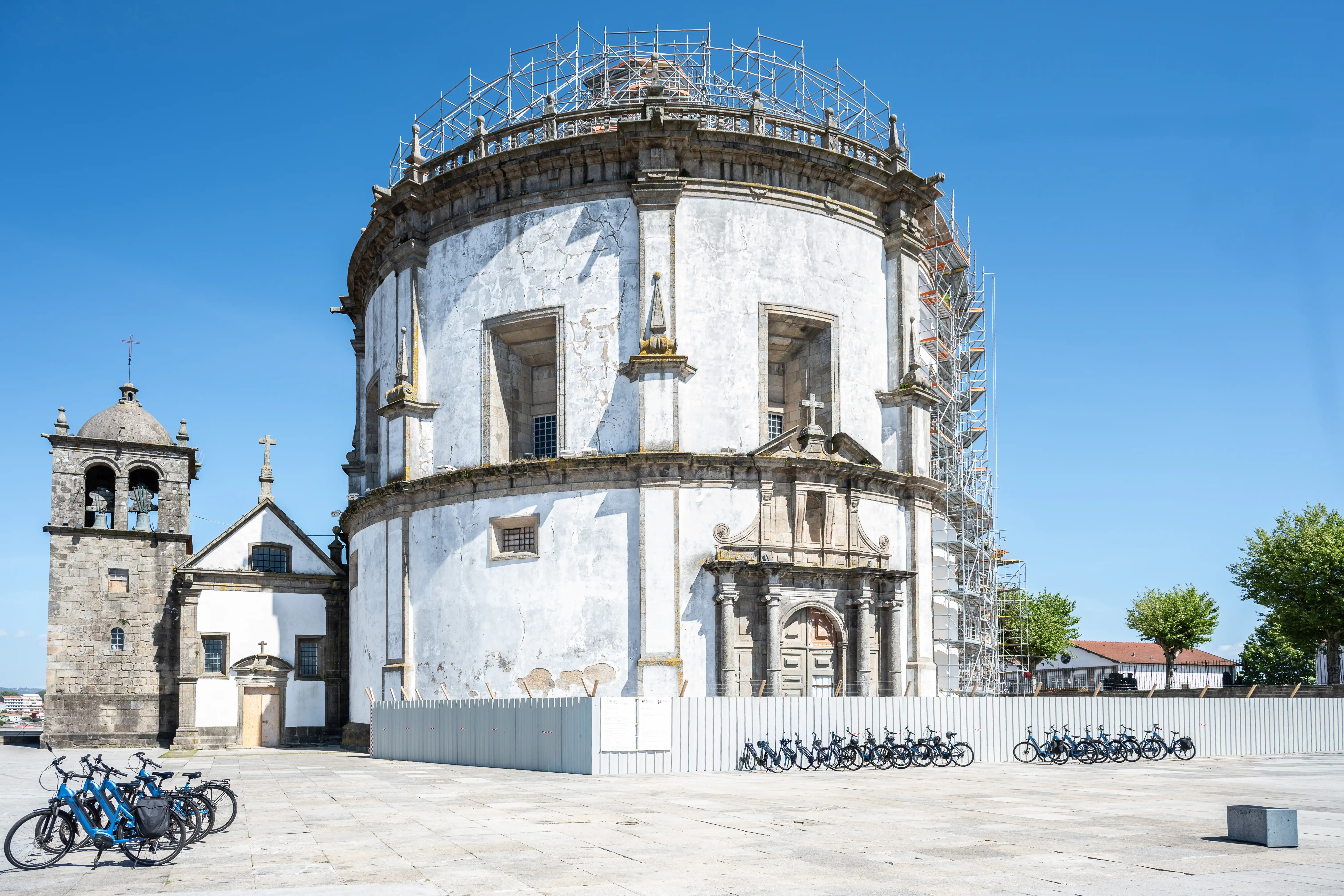
A wide shot of a large, white, circular church under scaffolding, with a stone bell tower to its left, under a bright blue sky. A row of blue rental bicycles is parked in the foreground.
Restoring a Historic Church: Scaffolding, a Bell Tower, and a Bicycle Rental Point ‐ photo by ,
©www.mgaylard.co.uk.
Views_from_Miradouro_da_Serra_do_Pilar_20260422_Z63_4889.webp
A panoramic view of the Dom Luís I Bridge spanning the Douro River in Porto, Portugal, with a yellow tram crossing and the historic city skyline in the background. ‐ photo by ,
©www.mgaylard.co.uk.

The Mosteiro de Santo Agostinho da Serra do Pilar (Monastery of Saint Augustine of Serra do Pilar) is a 16th-century monastery located in Vila Nova de Gaia, across the Douro River from Porto, Portugal. It is best known for its stunning Baroque church and cloisters, as well as its panoramic terrace, which offers one of the most breathtaking views of Porto’s skyline, the Douro River, and the Dom Luís I Bridge. The monastery is a peaceful retreat with a rich history tied to the Augustinian order and is a must-visit for its architecture and vistas.

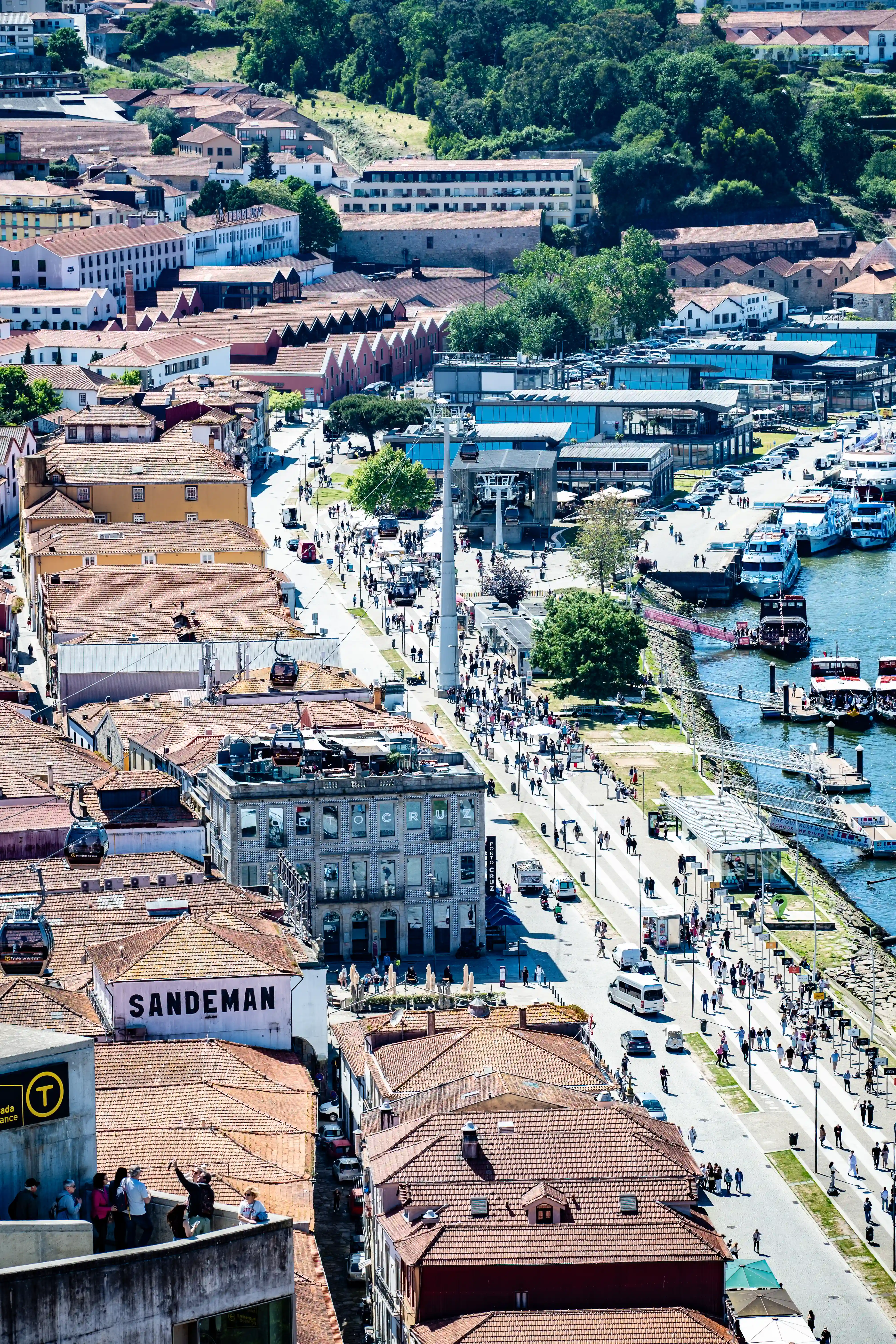
Aerial view of Porto, Portugal, showing a lively riverside promenade with many people walking, a cable car system suspended above, boats docked on the Douro River, and a dense collection of traditional buildings with terracotta roofs.
Aerial View of Porto's Ribeira District and Douro Riverfront ‐ photo by ,
©www.mgaylard.co.uk.
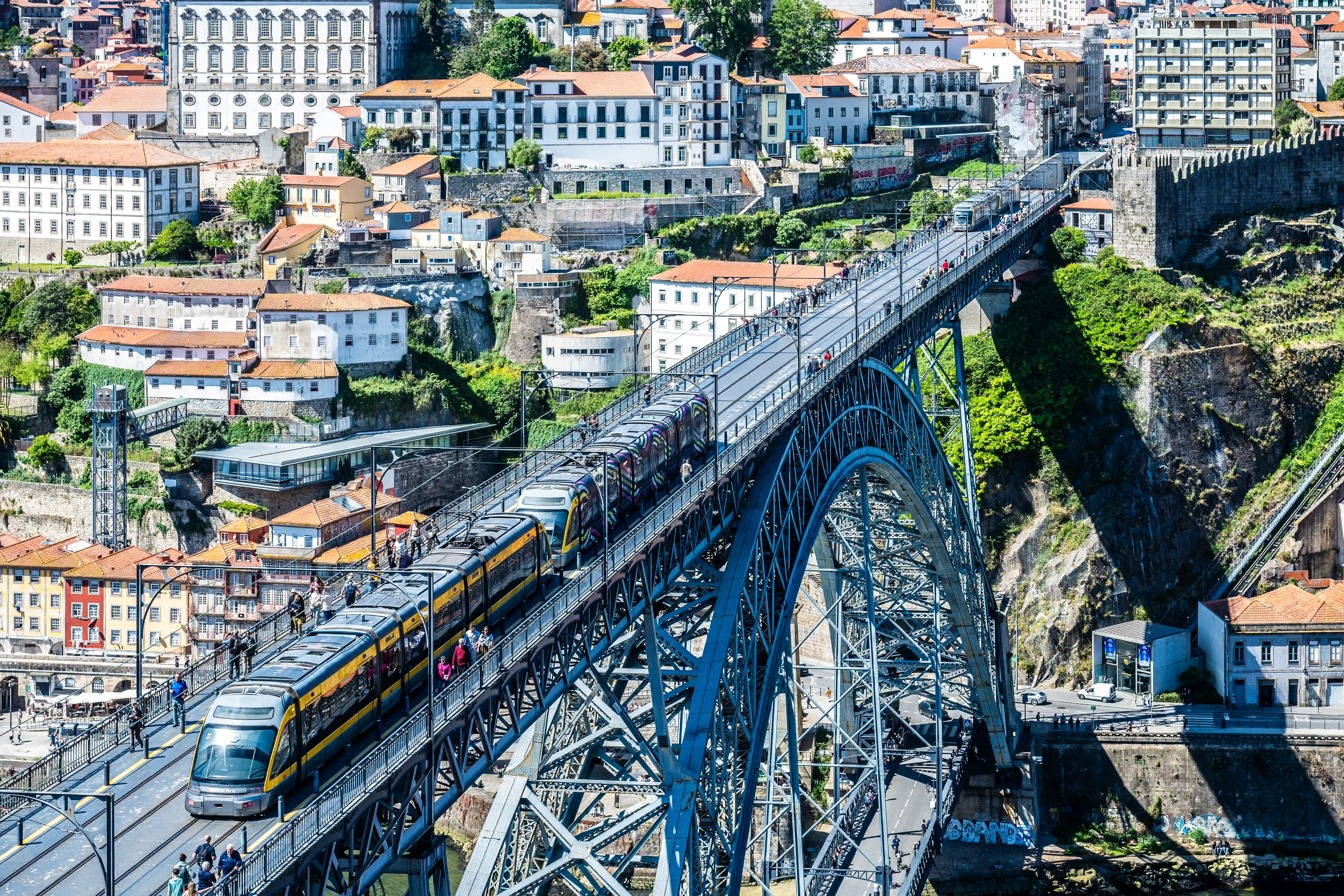
 A panoramic view of the Dom Luís I Bridge in Porto, Portugal. A modern tram with yellow and grey stripes, and a graffiti-decorated carriage, moves along the upper level of the metal bridge, alongside numerous pedestrians. The bridge spans a wide river gorge, with a densely built cityscape featuring traditional Portuguese architecture and terracotta rooftops climbing the steep hillsides on both banks. Sunlight creates strong shadows, accentuating the intricate latticework of the bridge and the rugged terrain.
Dom Luís I Bridge, Porto ‐ photo by ,
©www.mgaylard.co.uk.
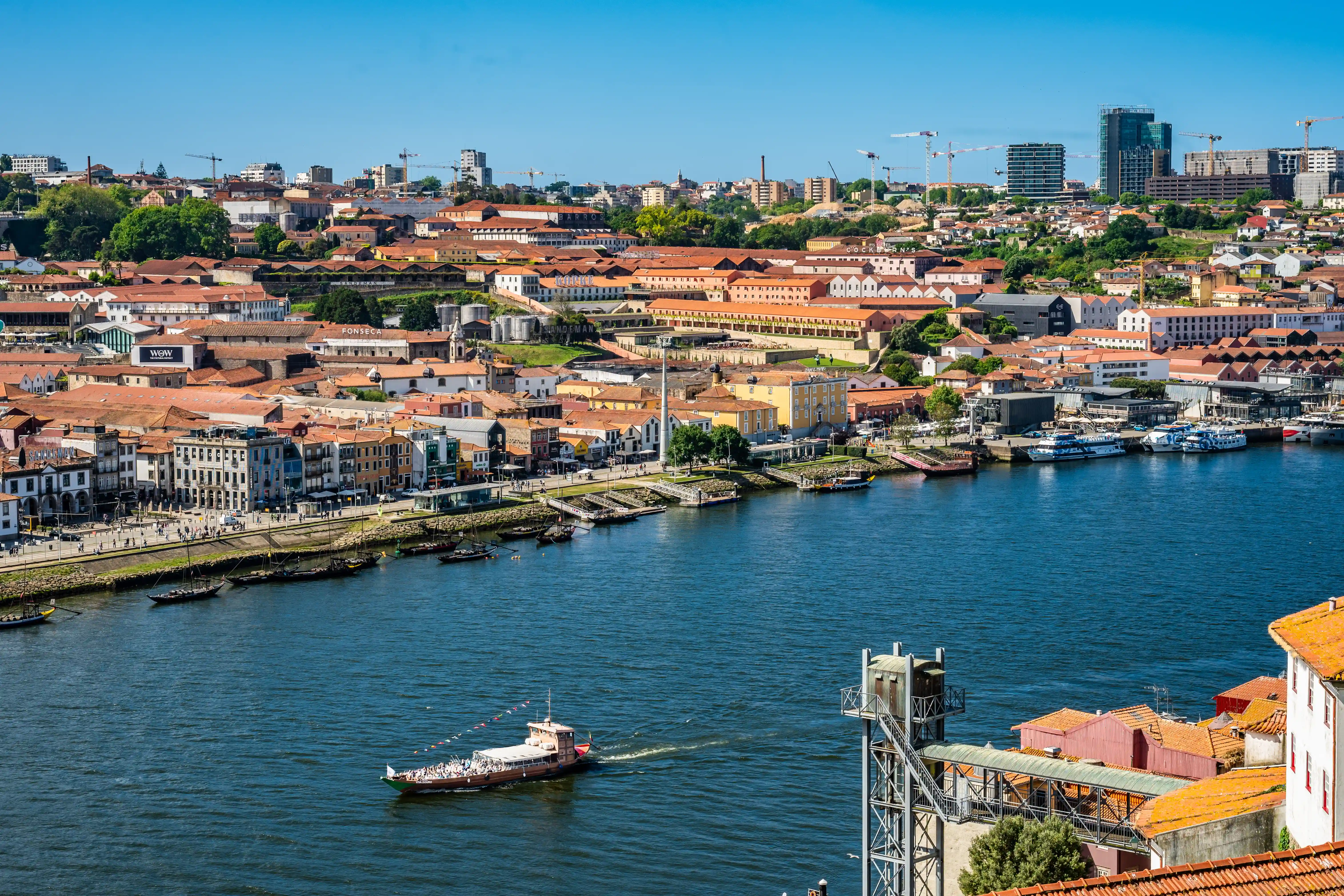
 A wide shot of the Douro River in Porto, Portugal, under a bright blue sky. The north bank is lined with buildings featuring red-tiled roofs and colourful facades, with signs for port wine cellars visible. A traditional wooden boat carrying people crosses the river. Several modern boats are docked along the waterfront. In the distance, cranes and newer buildings suggest urban development, contrasting with the historic architecture.
Porto's Douro Riverfront: A Tapestry of Tradition and Modernity ‐ photo by ,
©www.mgaylard.co.uk.
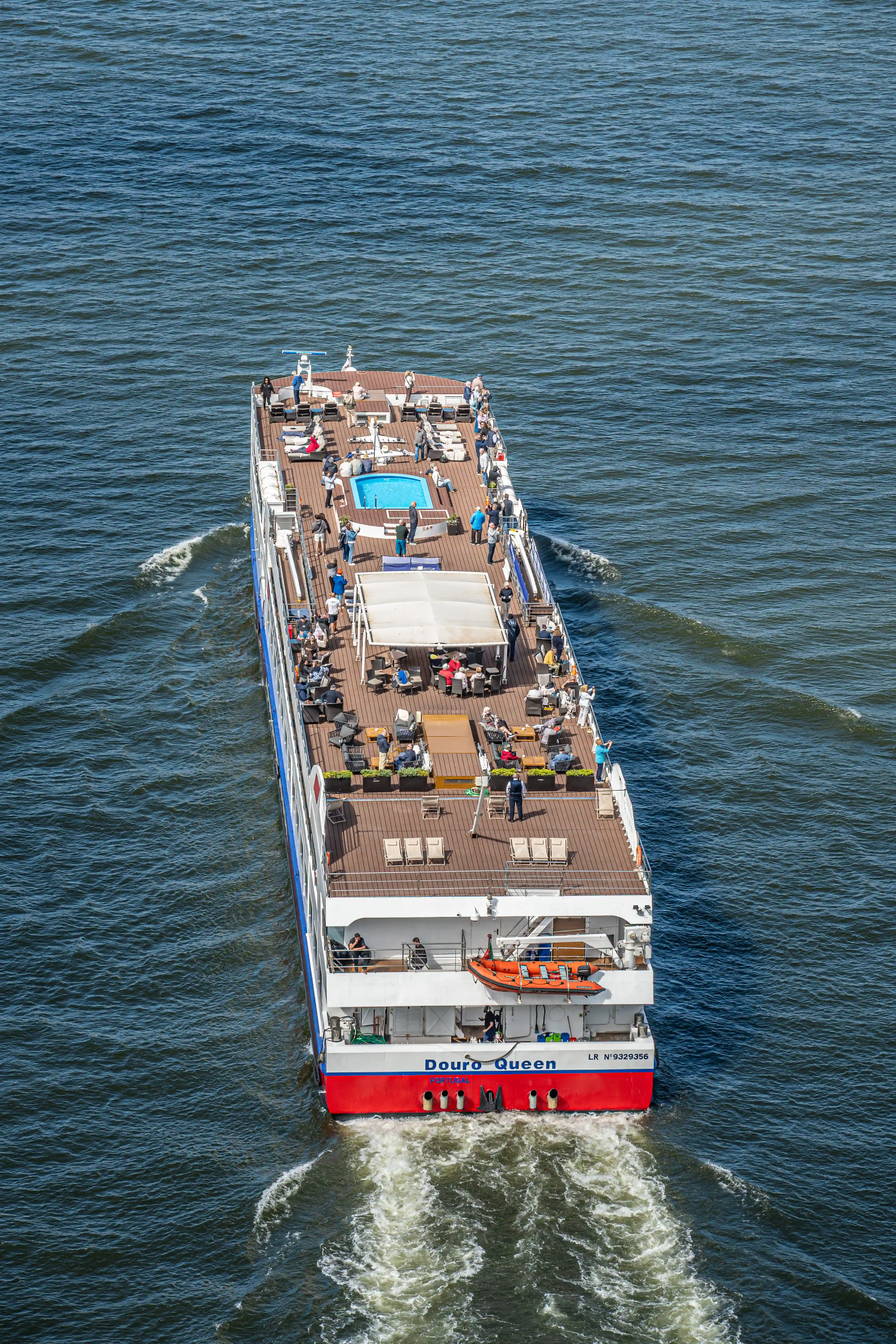
Aerial view of the Douro Queen river cruise ship sailing on the water, showing passengers relaxing on the sundeck near a small swimming pool, with an orange lifeboat visible on the stern.
A High-Angle View of the Douro Queen River Cruise Ship Underway ‐ photo by ,
©www.mgaylard.co.uk.
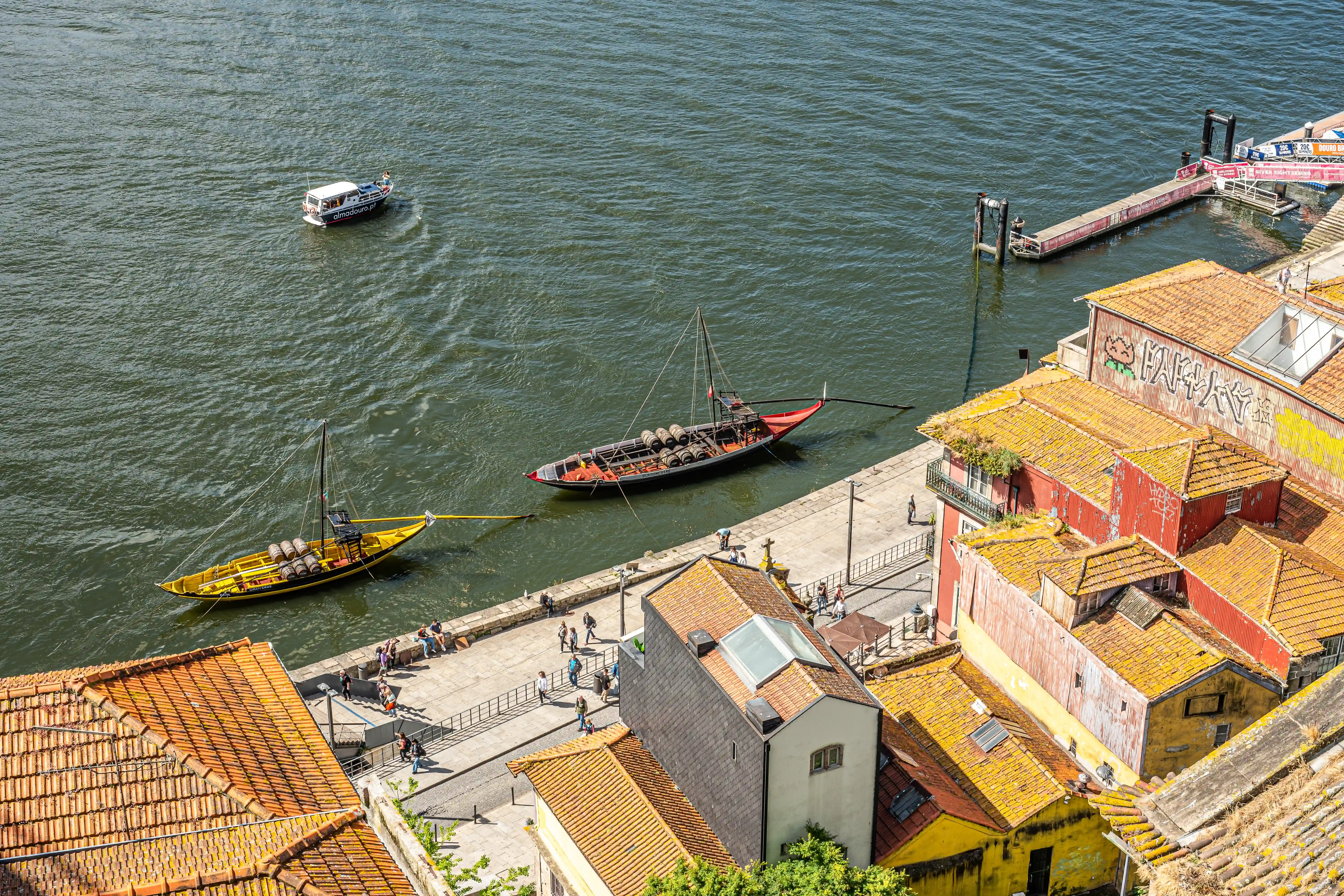
Aerial view of the Douro River in Porto, Portugal, with two traditional Rabelo boats laden with barrels, a white tourist boat, a modern pier, and colourful, historic buildings with tiled roofs lining the riverside promenade where people are walking.
A High-Angle View of the Douro Riverfront in Porto, Portugal, Featuring Traditional Rabelo Boats, a Tourist Boat, and Historic Buildings ‐ photo by ,
©www.mgaylard.co.uk.
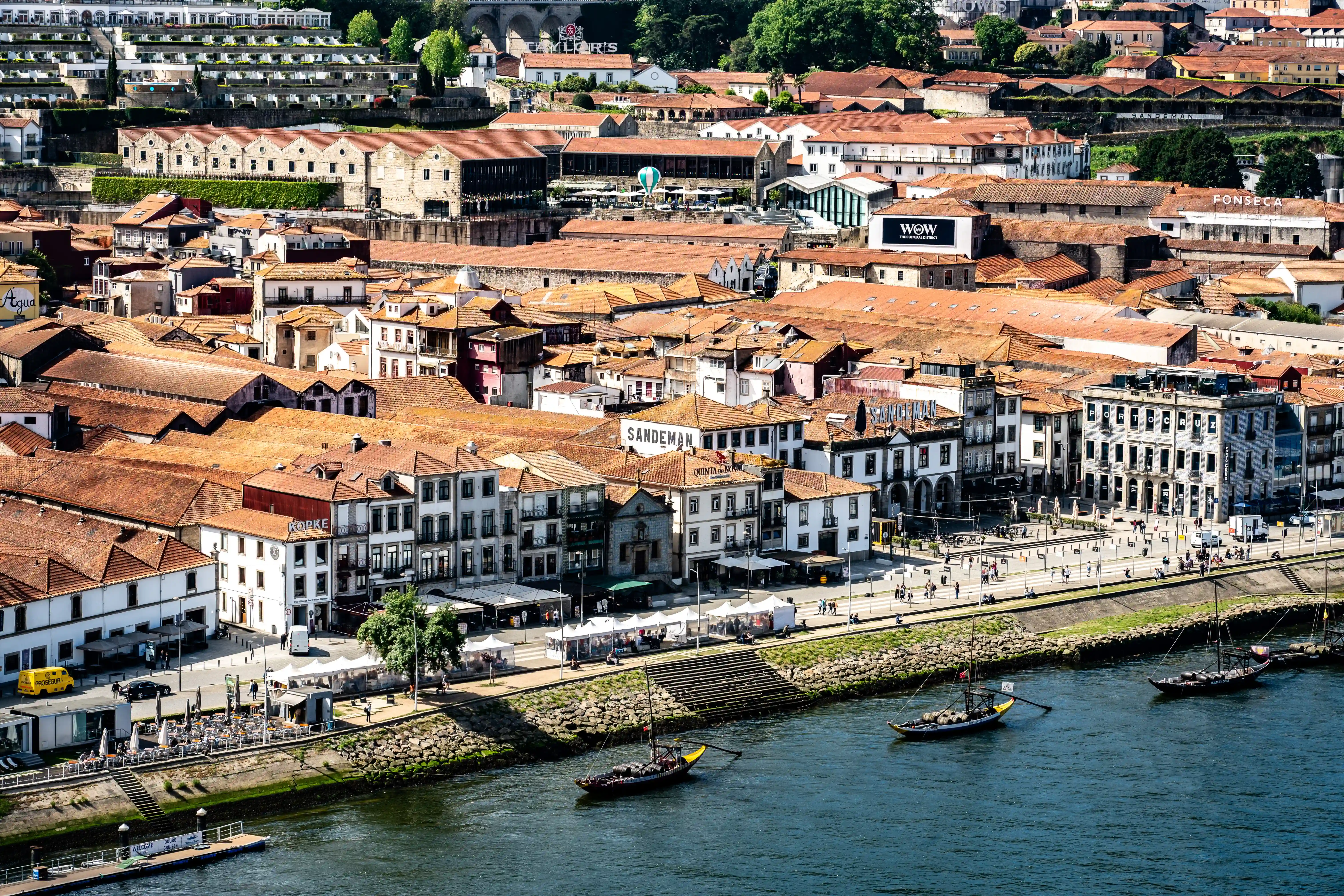
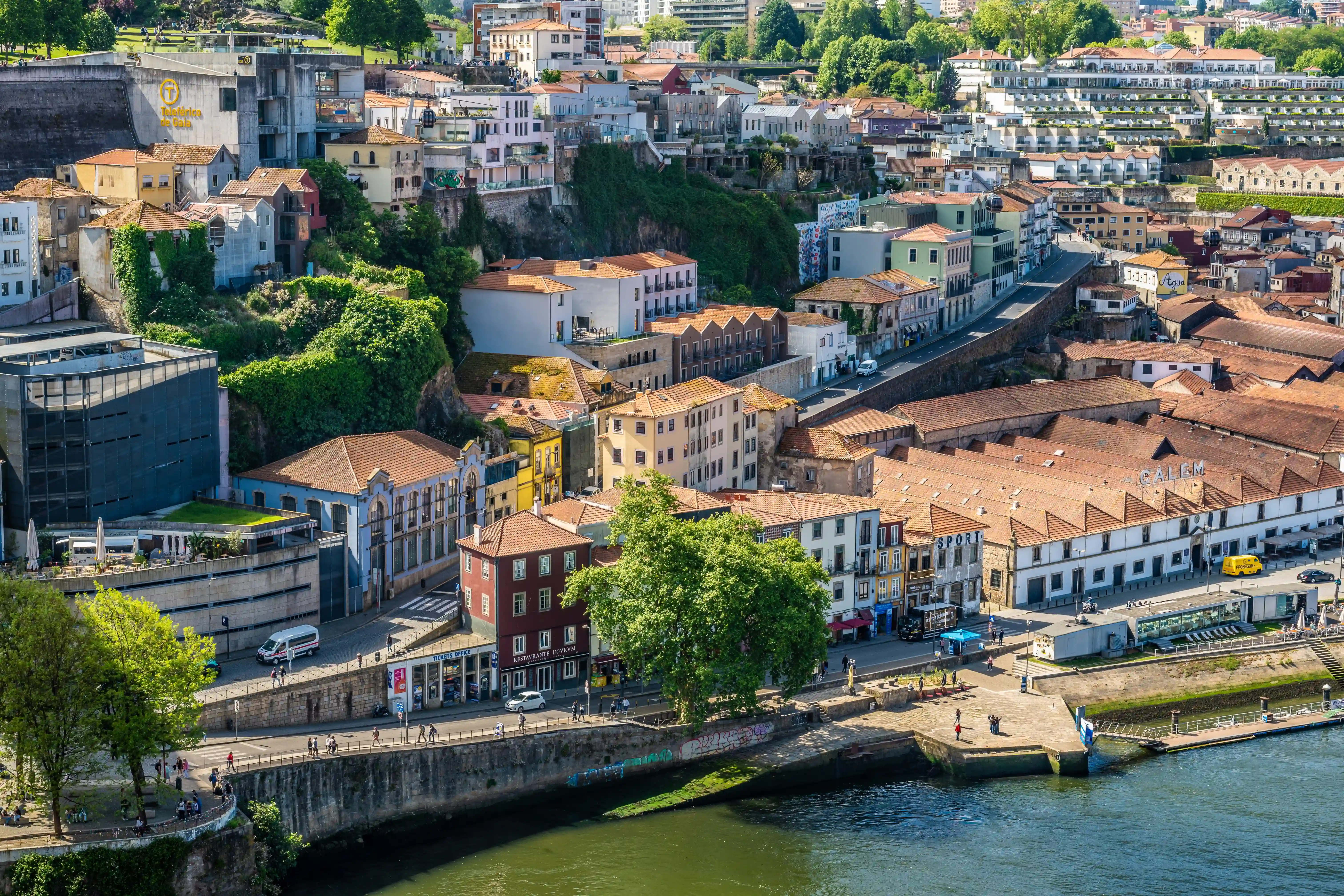
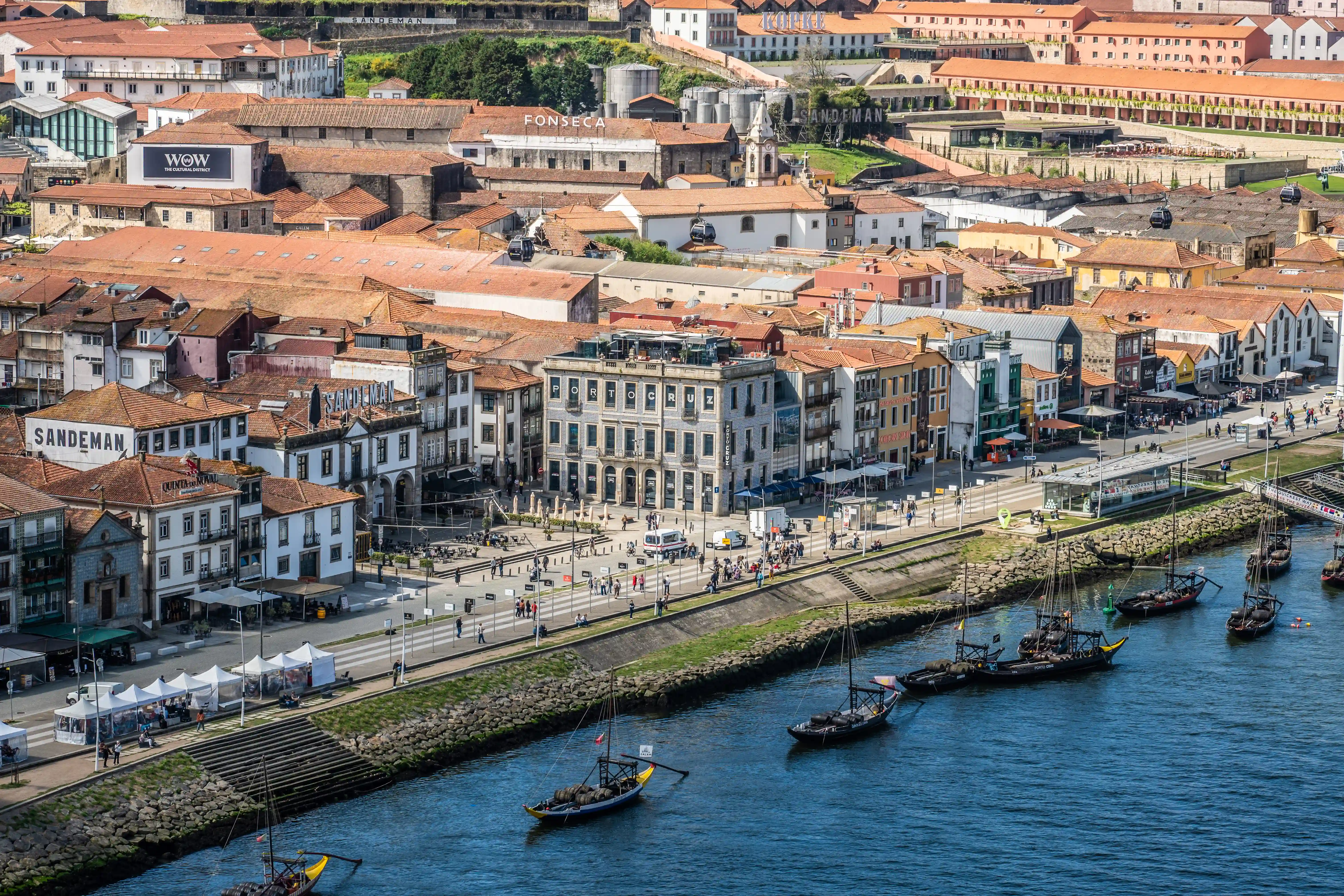
An elevated view of the Gaia district in Porto, Portugal, showing numerous terracotta-roofed buildings, including prominent port wine cellars like Sandeman and Fonseca, lining the Douro River. Traditional Rabelo boats are moored on the river, and a bustling promenade with cafes and people is visible along the waterfront. The background reveals more of the city's architecture and green hills.
Aerial View of Porto's Gaia District and Douro River ‐ photo by ,
©www.mgaylard.co.uk.
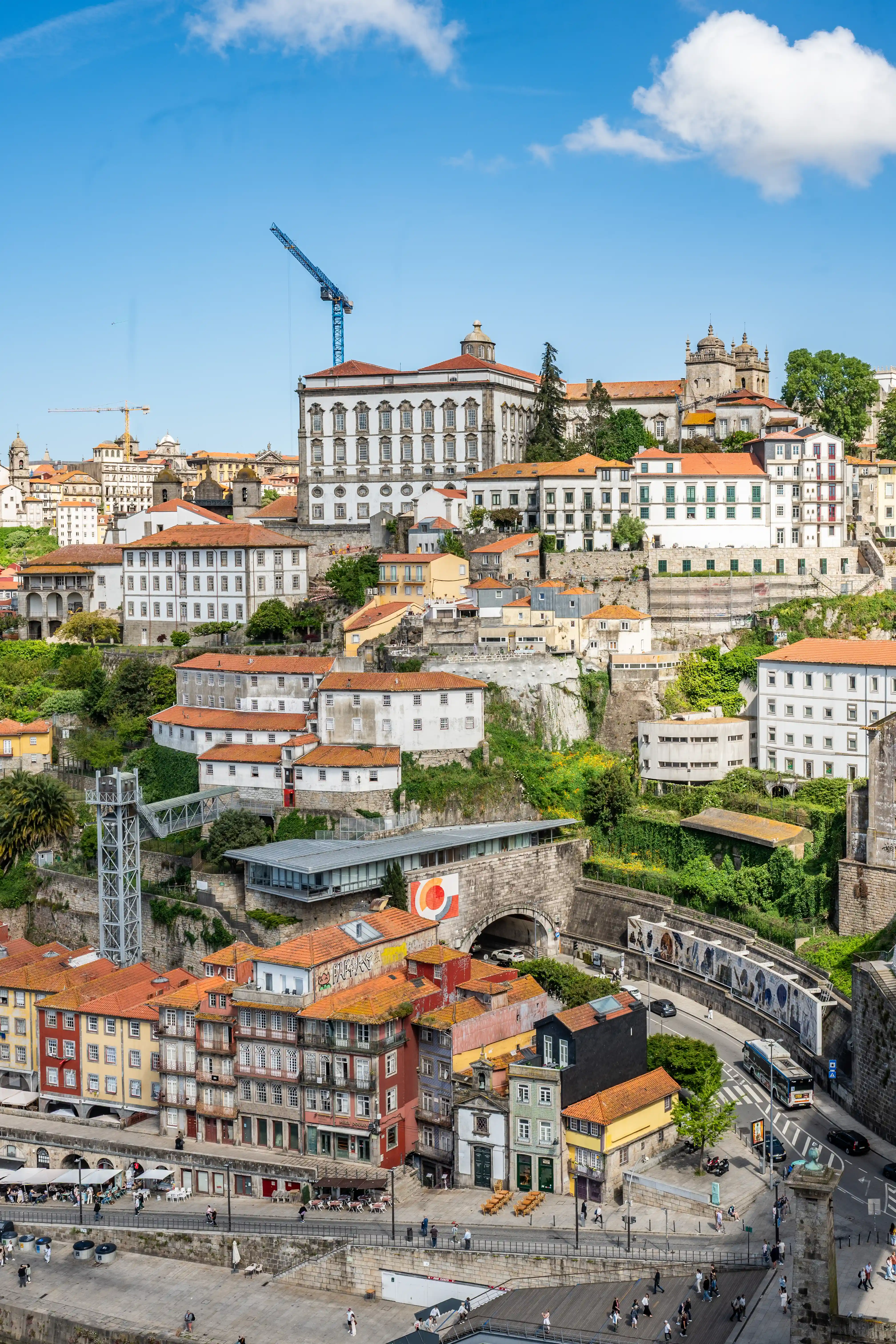
A vibrant cityscape of Porto, Portugal, unfolds under a clear blue sky dotted with fluffy white clouds. The image captures the city's distinctive riverside architecture, a charming mix of colourful, terracotta-roofed buildings cascading down hillsides. Prominent construction cranes, one a striking blue, suggest ongoing development amidst the historic setting. The Douro River is visible at the bottom, with a promenade lined with people and outdoor seating areas. Cobblestone streets and a bridge with a tunnel add depth and character to the scene.
Ponte de Dom Luís I ‐ photo by ,
©www.mgaylard.co.uk.
Elevated, wide-angle shot of the colourful, densely packed buildings of Porto's Ribeira district, with terracotta roofs and green hillsides, overlooking the Douro River.
Panoramic View of Porto's Ribeira District ‐ photo by ,
©www.mgaylard.co.uk.
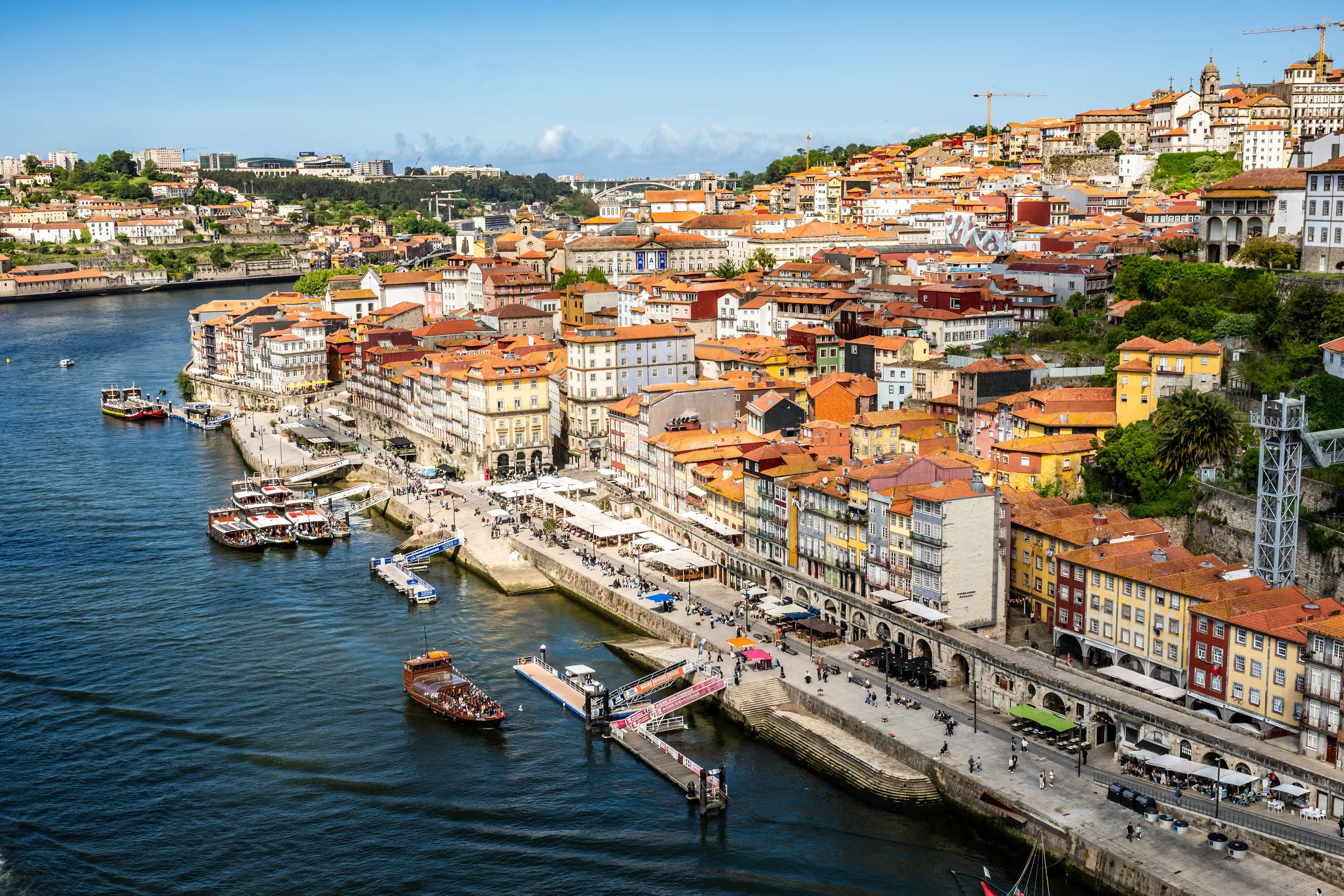
A wide shot of the historic Ribeira district in Porto, Portugal, overlooking the Douro River. Traditional buildings with red tile roofs crowd the waterfront, where a promenade is busy with people. Several Rabelo boats, some carrying barrels, are on the blue water, with cable cars visible in the background.
A Panoramic View of Porto's Ribeira District ‐ photo by ,
©www.mgaylard.co.uk.
Aerial view of the colourful buildings and terracotta rooftops lining the Douro River in Porto, Portugal, with boats and people visible along the waterfront promenade under a clear blue sky.
An Aerial View of Porto's Riverside Promenade and River Douro ‐ photo by ,
©www.mgaylard.co.uk.
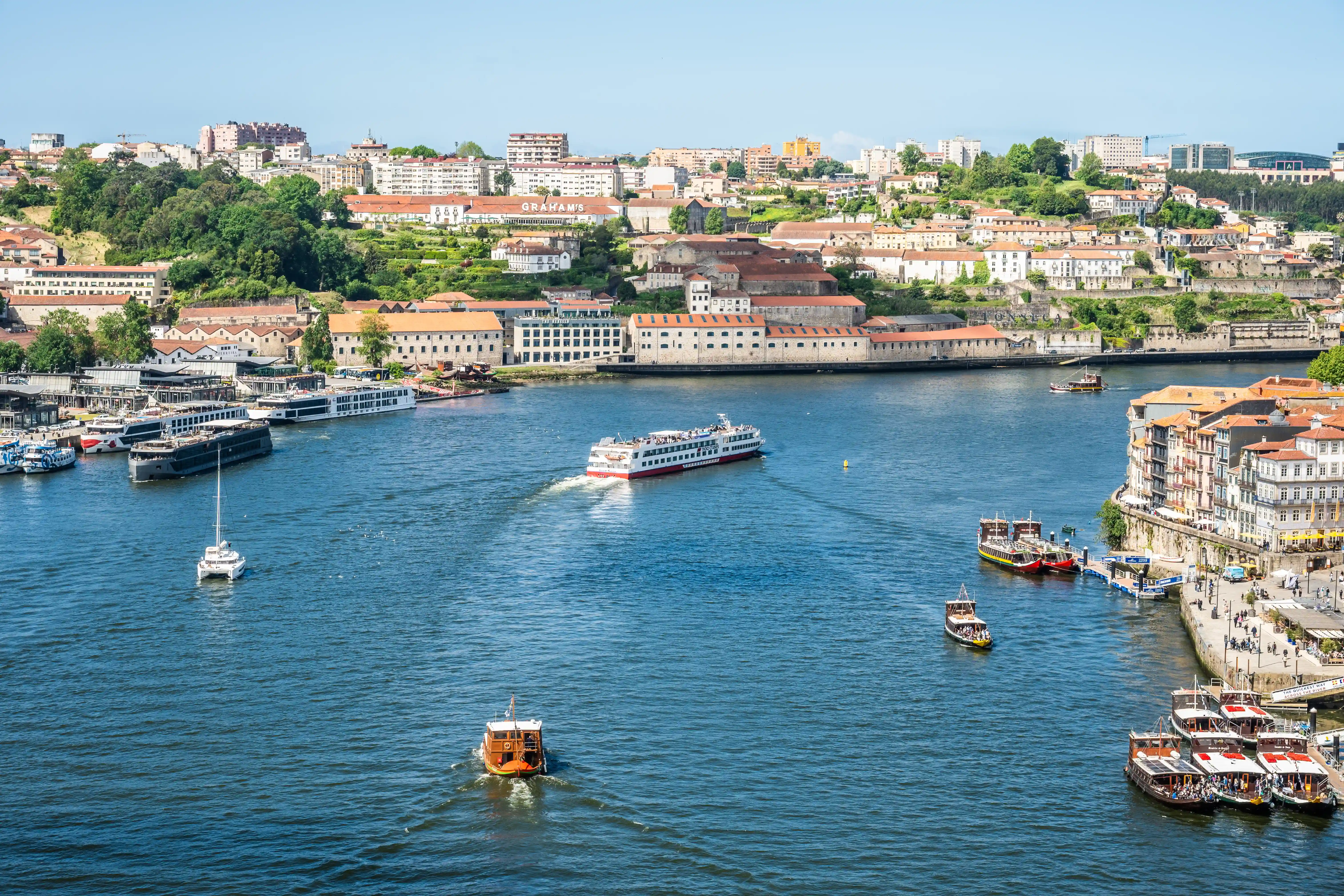
A wide shot overlooking the Douro River in Porto, Portugal, on a sunny day. Several boats, including large passenger ferries and smaller tour boats, are visible on the water. The city's distinctive buildings with red-tiled roofs and white facades rise up from the riverbank, set against a backdrop of green hills.
A scenic view of Porto, Portugal, showcasing the Douro River with various boats and the cityscape. ‐ photo by ,
©www.mgaylard.co.uk.
A high-angle view of the colourful, densely packed buildings along the Douro River in Porto, Portugal, with tour boats docked and people strolling along the waterfront promenade under a bright blue sky.
title ‐ photo by ,
©www.mgaylard.co.uk.
Wide shot of the Douro River flowing through Porto, Portugal, with buildings nestled on steep, green hillsides on either side. Several bridges are visible in the background, and a road with cars runs along the riverside in the foreground.
Panoramic View of Porto's Douro River and Historic Riverside ‐ photo by ,
©www.mgaylard.co.uk.

Miradouro da Serra do Pilar

The Miradouro da Serra do Pilar is named after the nearby Mosteiro da Serra do Pilar, a historic monastery that dates back to the 16th century. The viewpoint’s location on the Gaia side of the Douro River provides a unique vantage point for admiring Porto’s historic skyline and the river that has been central to the city’s development. The monastery and viewpoint have long been a part of the region’s cultural and religious heritage, offering a place for reflection and appreciation of Porto’s beauty.

Today, the Miradouro da Serra do Pilar is one of the most popular viewpoints in Porto, attracting visitors from around the world. It offers a breathtaking perspective of the city, the Douro River, and the Dom Luís I Bridge, making it a must-visit for photographers, nature lovers, and anyone seeking a moment of tranquility. The viewpoint’s accessibility and stunning views ensure it remains a highlight of any visit to Porto.

References

Text generated by Microsoft CoPilot , Text generated by Mistral AI , generated by Google's Gemini AI
To the top
Powered by w3.css. The images are all stored on link to www.gaylard.co.uk Photostream on Flickr   This website is hosted by link to 123Reg Web Hosting