Southdown Bus Garage at Amberley Museum

Southdown Bus Garage

New Barn RoadAmberleyWest Sussex,   BN18 9LT,   United Kingdom

The Southdown Bus Garage at Amberley Open Air Museum is a nostalgic and immersive exhibit that recreates the atmosphere of a mid-20th-century bus depot operated by Southdown Motor Services, one of the most iconic and beloved bus companies in the South East of England. This exhibit showcases the history of public transportation, bus travel, and the role of bus garages in connecting communities, supporting local economies, and shaping the social fabric of rural and urban areas. Visitors can explore vintage buses, historic tools, original garage fittings, and memorabilia, offering a glimpse into the craftsmanship, innovation, and daily life of bus drivers, mechanics, and passengers during the golden age of bus travel.
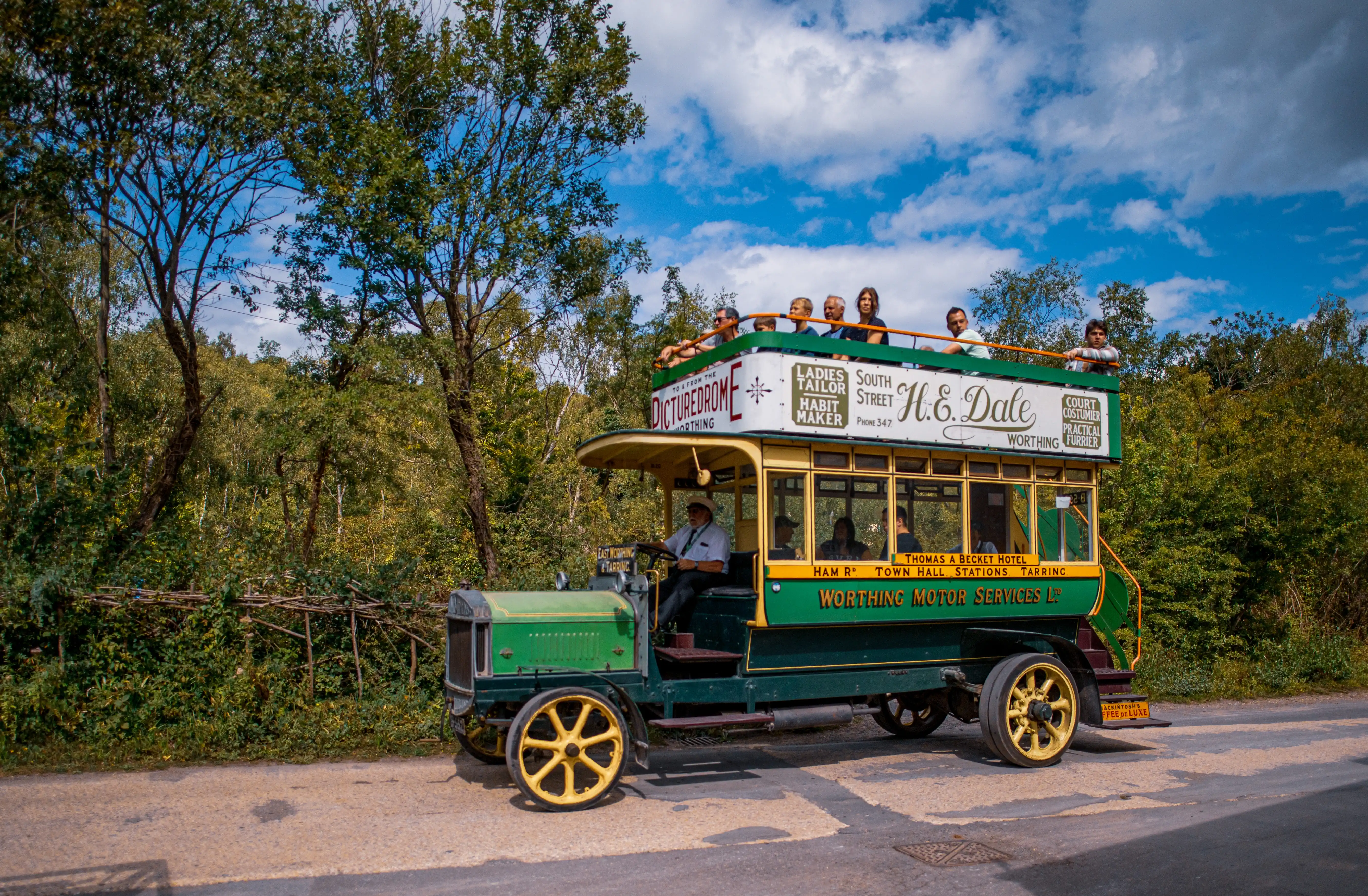
A vintage green and yellow double-decker bus with an open-top upper deck carrying passengers drives along a road bordered by trees under a blue sky.
Vintage Double-Decker Bus on a Country Road
photo by
©www.mgaylard.co.uk.
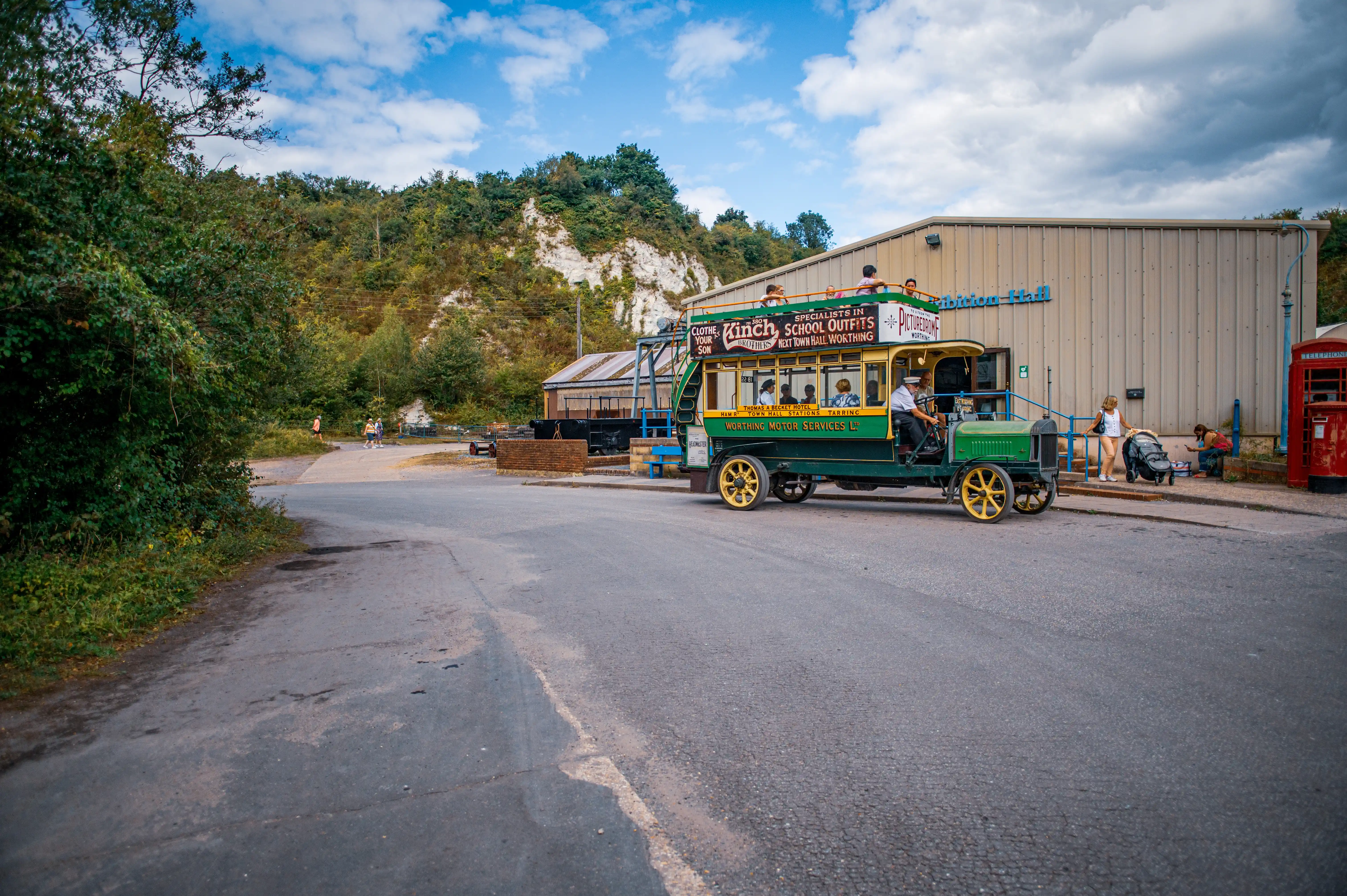
A vintage green and yellow double-decker bus with an open-top upper deck is parked on an asphalt road. The bus has advertisements for 'Kinch School Outfits' and 'Picturedome'. Passengers are visible on the upper deck, and a driver in uniform is at the wheel. Beside the bus is a modern building with ribbed metal siding, labelled 'Exhibition Hall'. A red telephone box stands to the right. In the background, there are trees, a chalky cliff face, and a blue sky with white clouds.
Nostalgic Journey: Vintage Bus at Exhibition Hall
photo by
©www.mgaylard.co.uk.
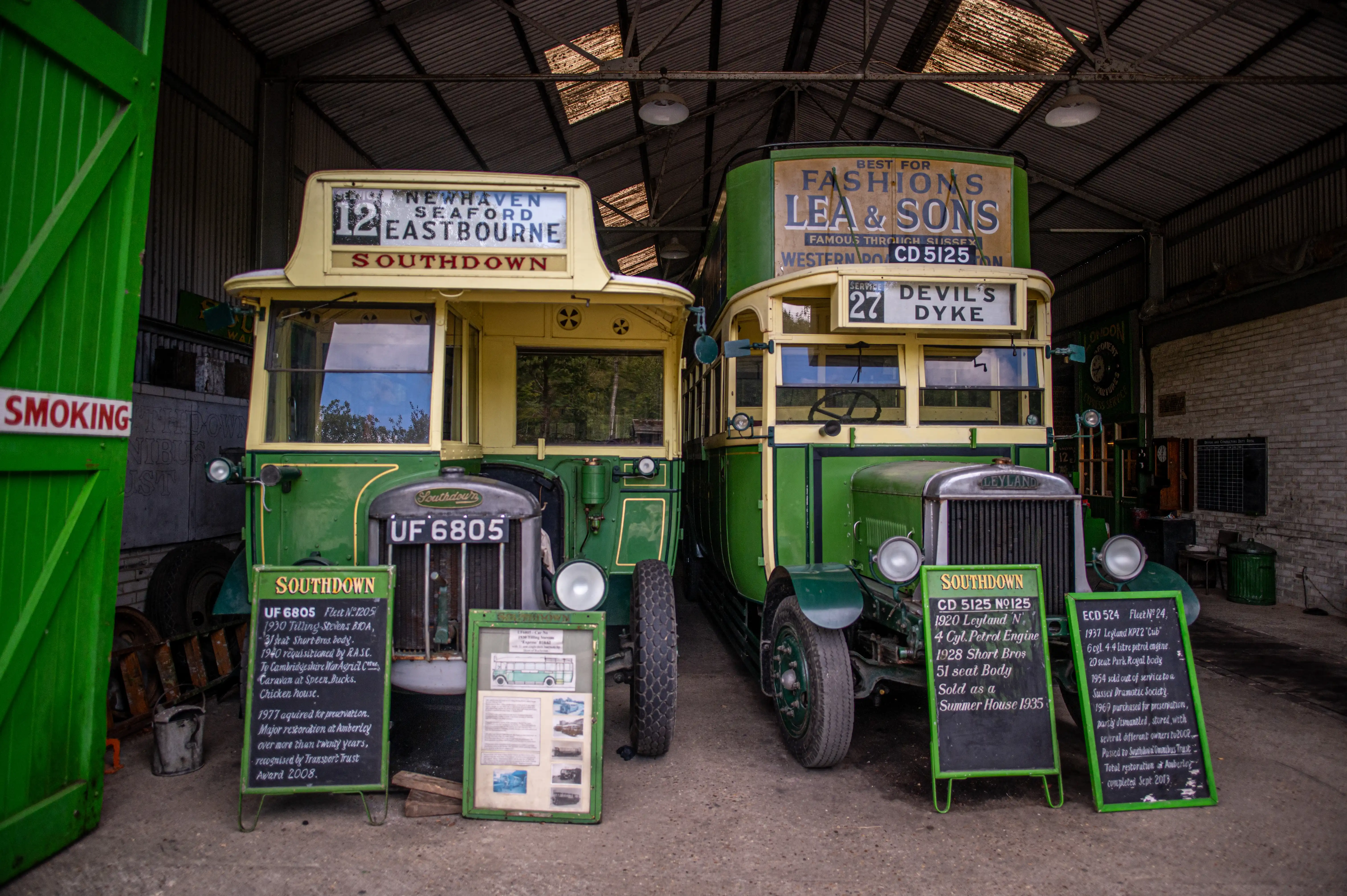
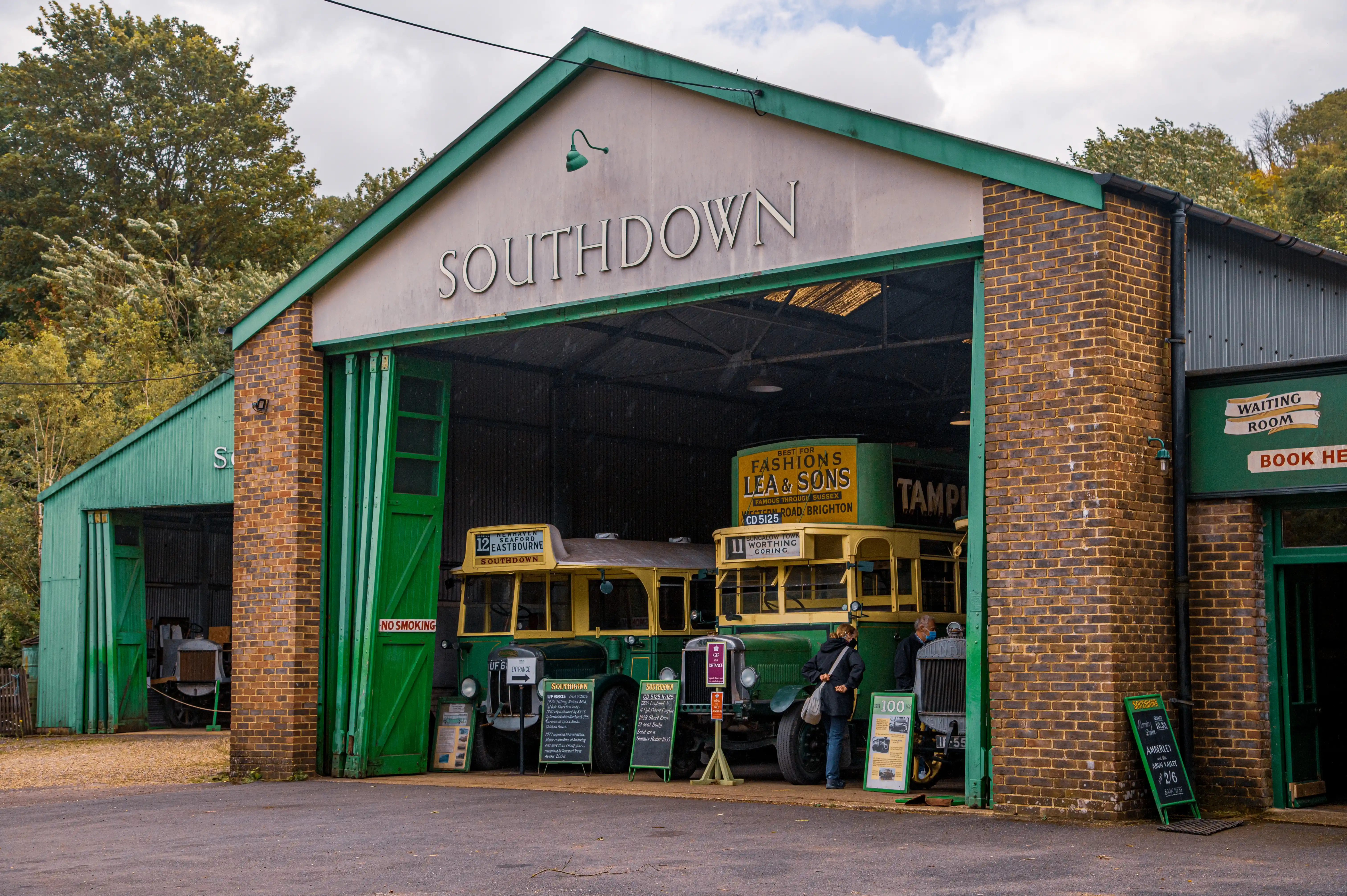
Two vintage green and cream Southdown buses are parked indoors in a Garage. Information boards are in front of each bus, detailing their histories. A 'No Smoking' sign is visible on the left.
Vintage Southdown Buses in Garage
photo by
©www.mgaylard.co.uk.
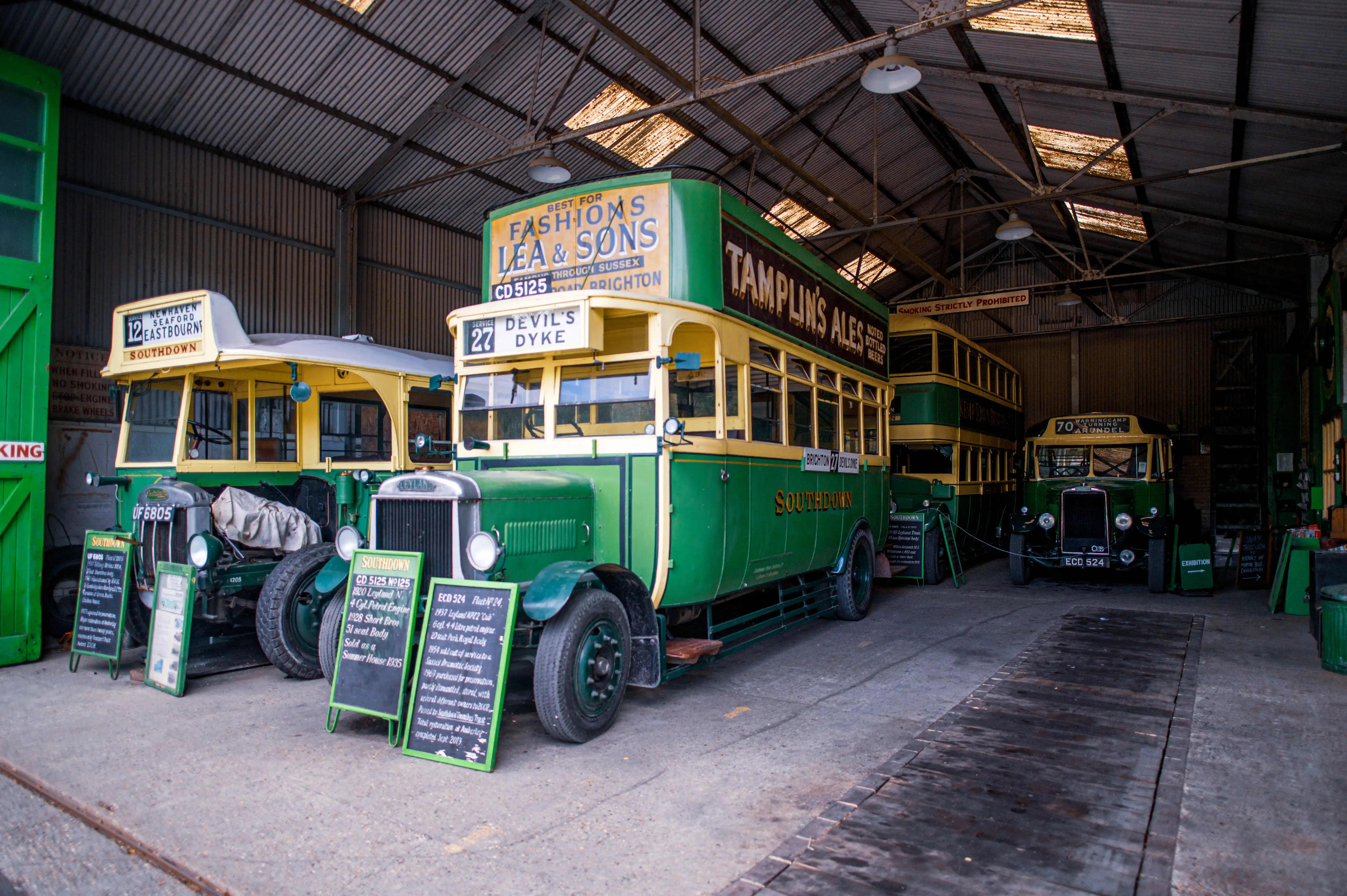
Several vintage green and yellow Southdown buses are parked side-by-side in a metal garage. Information boards are placed in front of the buses.
Vintage Southdown Buses in Garage Exhibition
photo by
©www.mgaylard.co.uk.
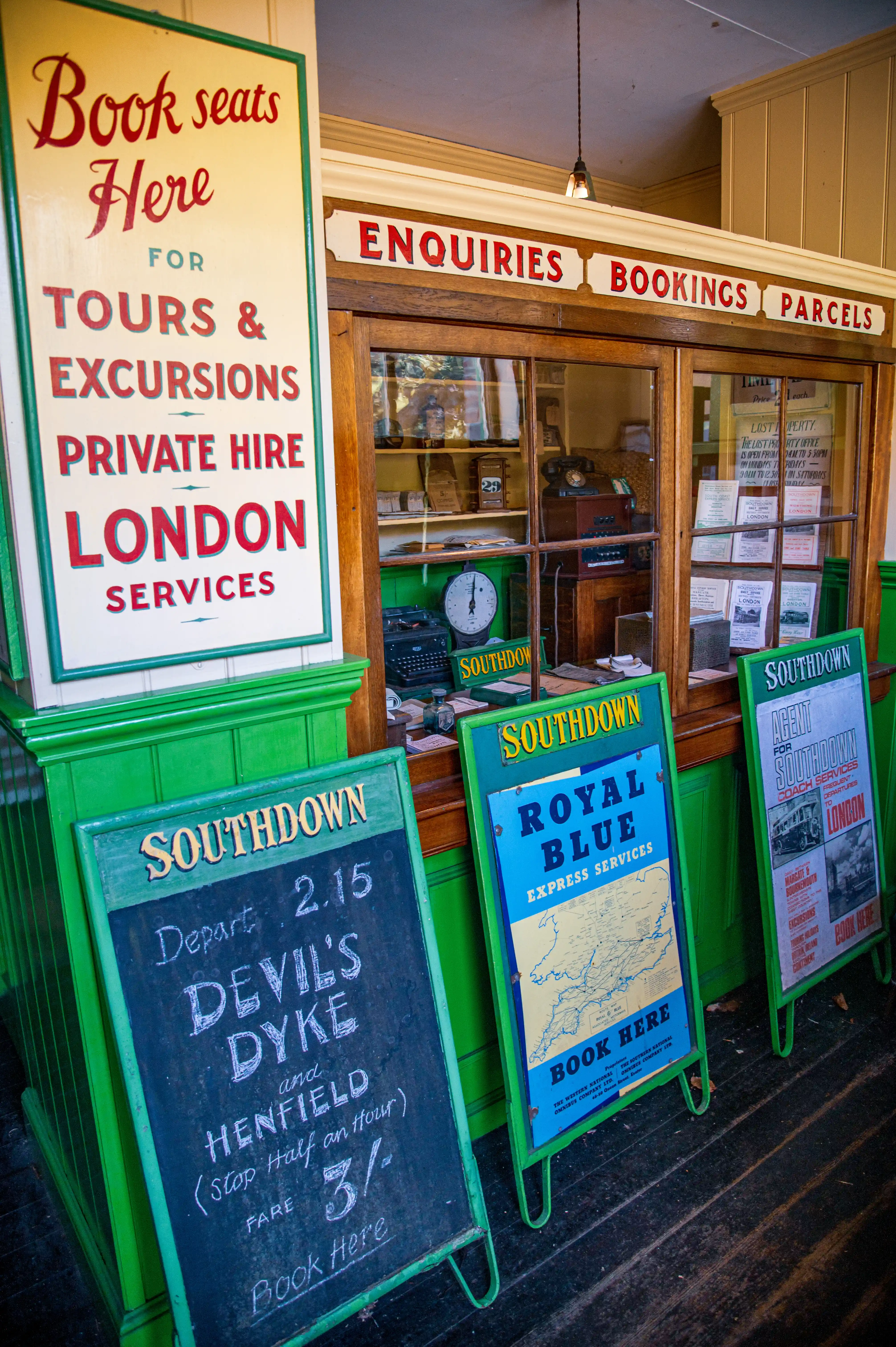
A vintage Southdown bus ticket office with a sign reading 'Book seats Here' and three A-frame boards advertising bus routes and fares, including 'Devil's Dyke & Henfield' and 'Royal Blue Express Services.'
Southdown Bus Station Ticket Office - A Glimpse into the Past
photo by
©www.mgaylard.co.uk.
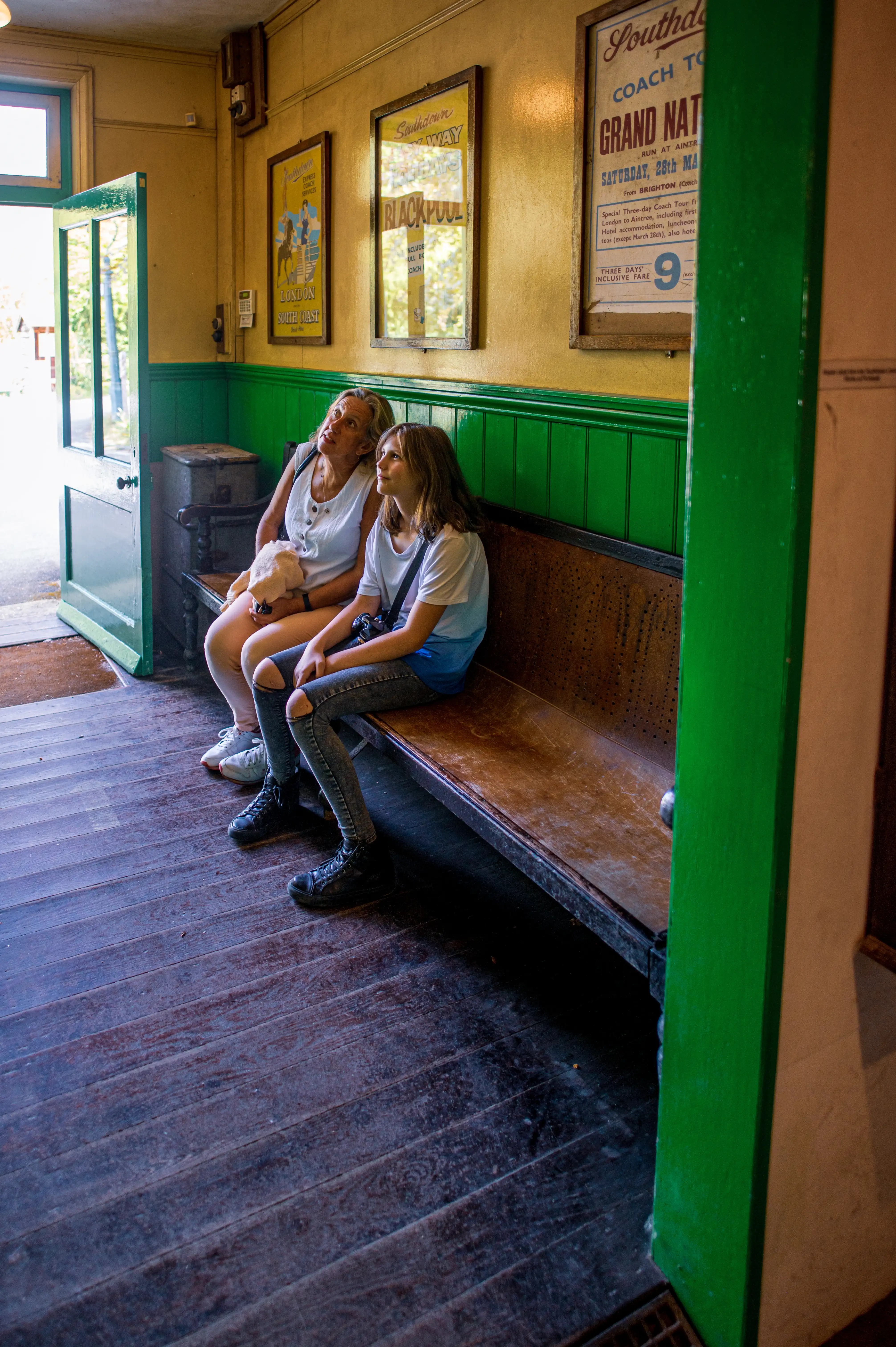
A woman and a teenage girl sit on a wooden bench in a vintage train station waiting room, looking upwards.
A Moment of Waiting in a Retro Bus Station
photo by
©www.mgaylard.co.uk.
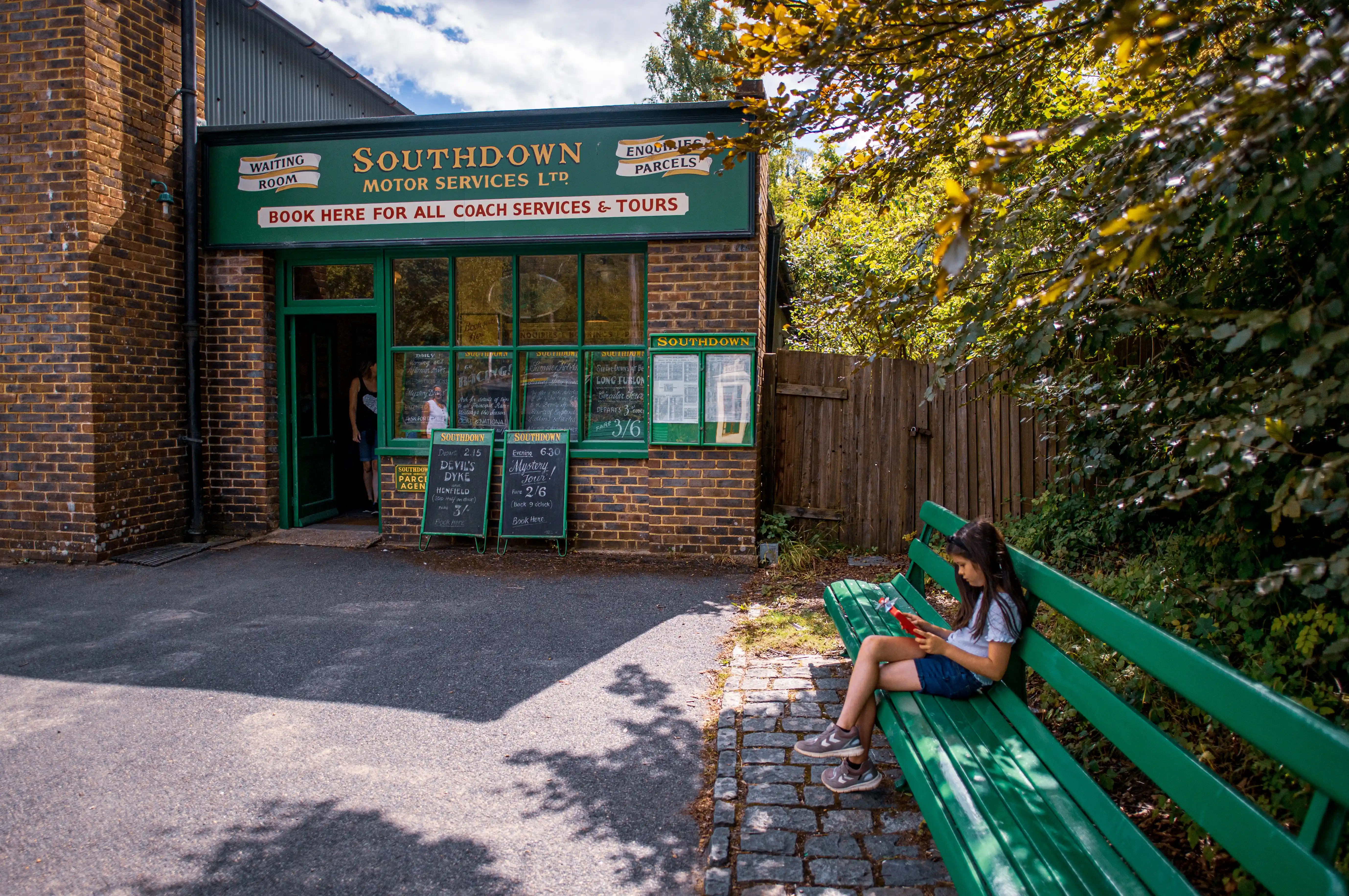
Small brick Southdown Motor Services booking office with green trim, chalkboard notices and a child on a bench.
Southdown Motor Services booking office, Amberley Museum
photo by
©www.mgaylard.co.uk.
>
Small brick booking office painted green with Southdown Motor Services signage, chalkboard notices and a child seated on a bench.
Southdown Bus Garage
photo by
©www.mgaylard.co.uk.
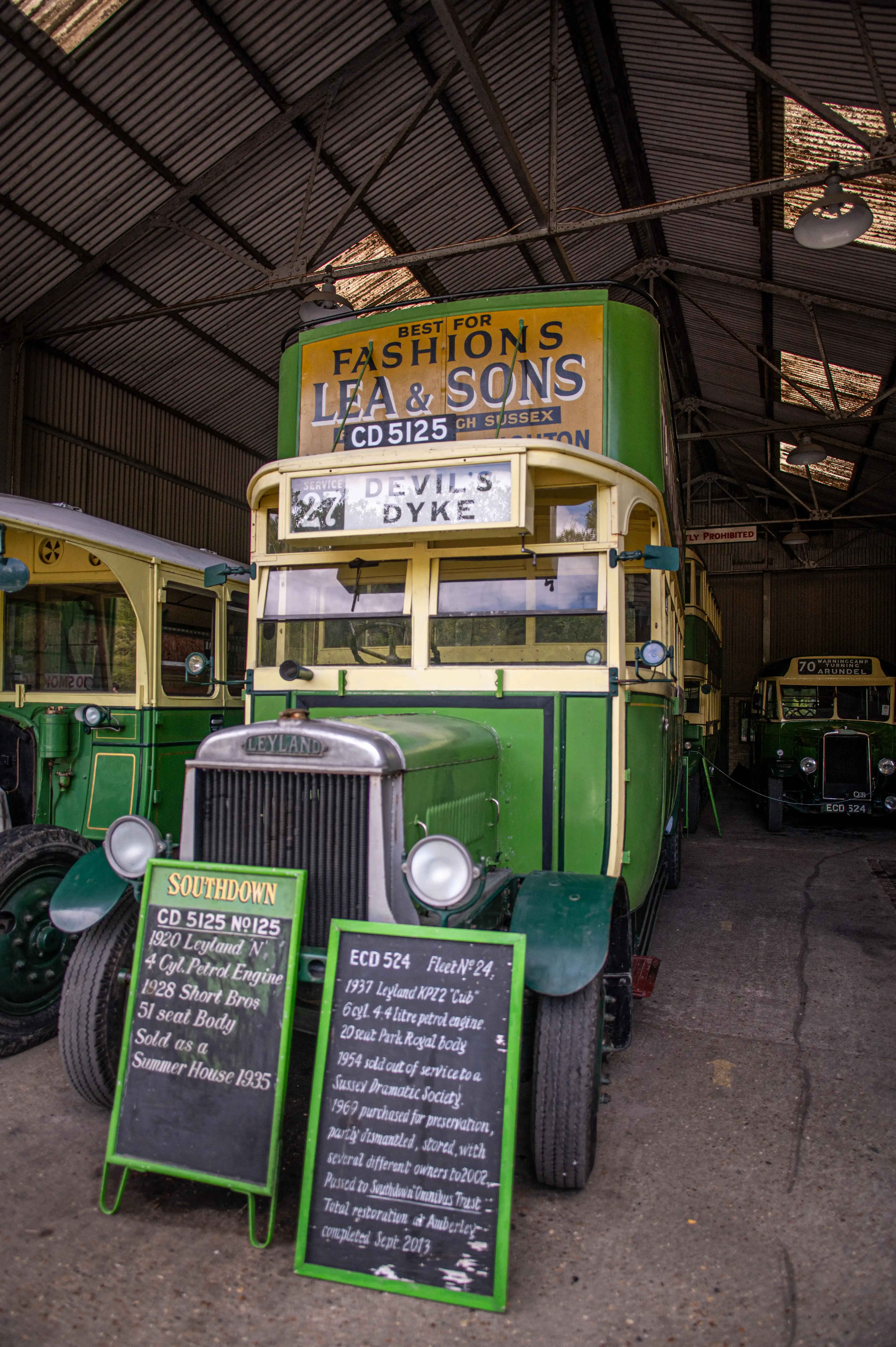
A green and cream double-decker Leyland bus from the Southdown company is parked indoors, with two information boards in front of it detailing its specifications and history. A similar bus is parked behind it, and another one further in the background.
Vintage Southdown Buses in Barn Storage
photo by
©www.mgaylard.co.uk.
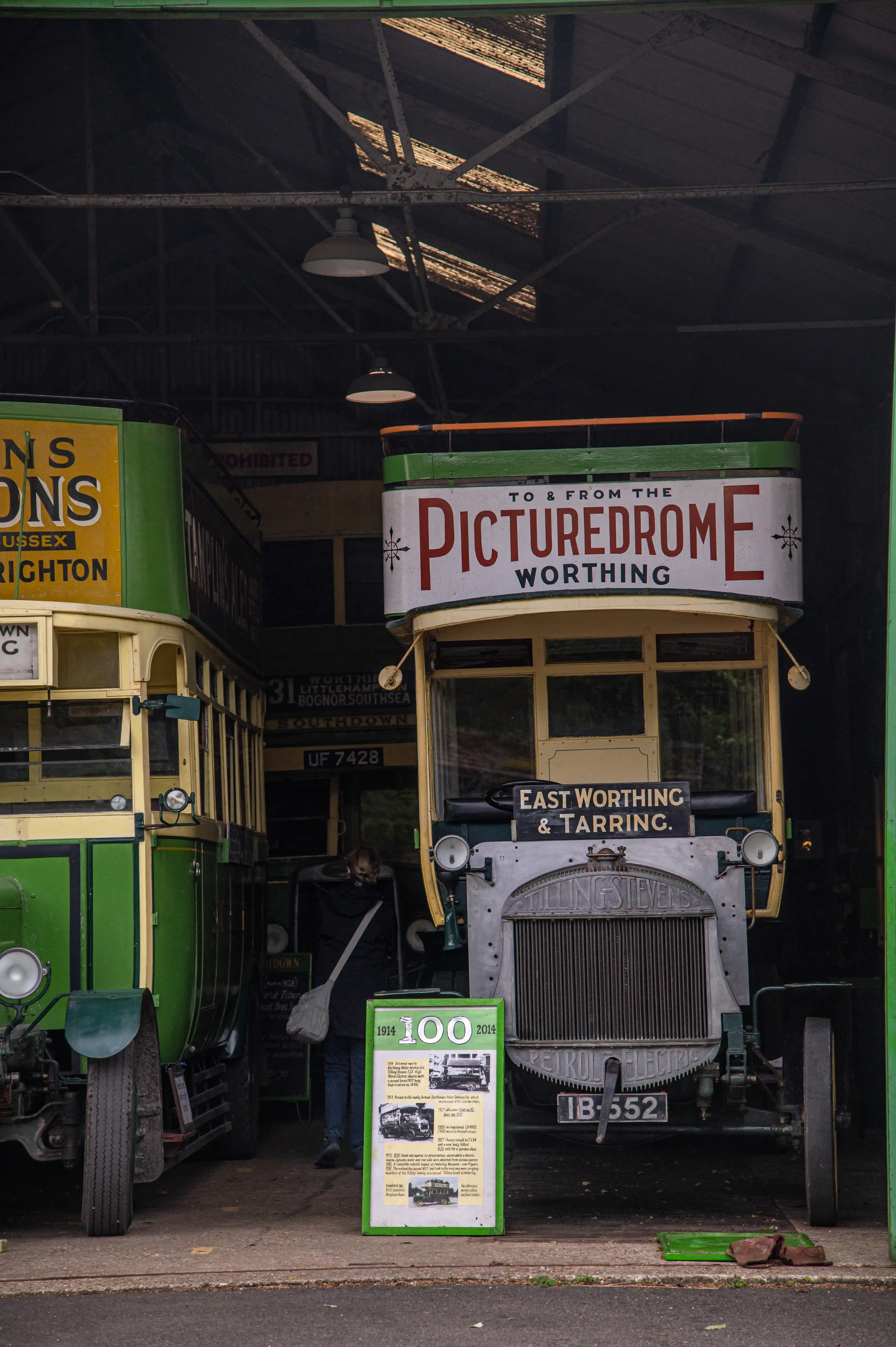
A view inside a shed showing the front of two vintage buses. The bus on the right has a sign that reads 'PICTUREDROME WORTHING' and 'EAST WORTHING & TARRING.' A green display board with historical information and images is in front of the bus.
Vintage Southdown Buses Heritage Display
photo by
©www.mgaylard.co.uk.
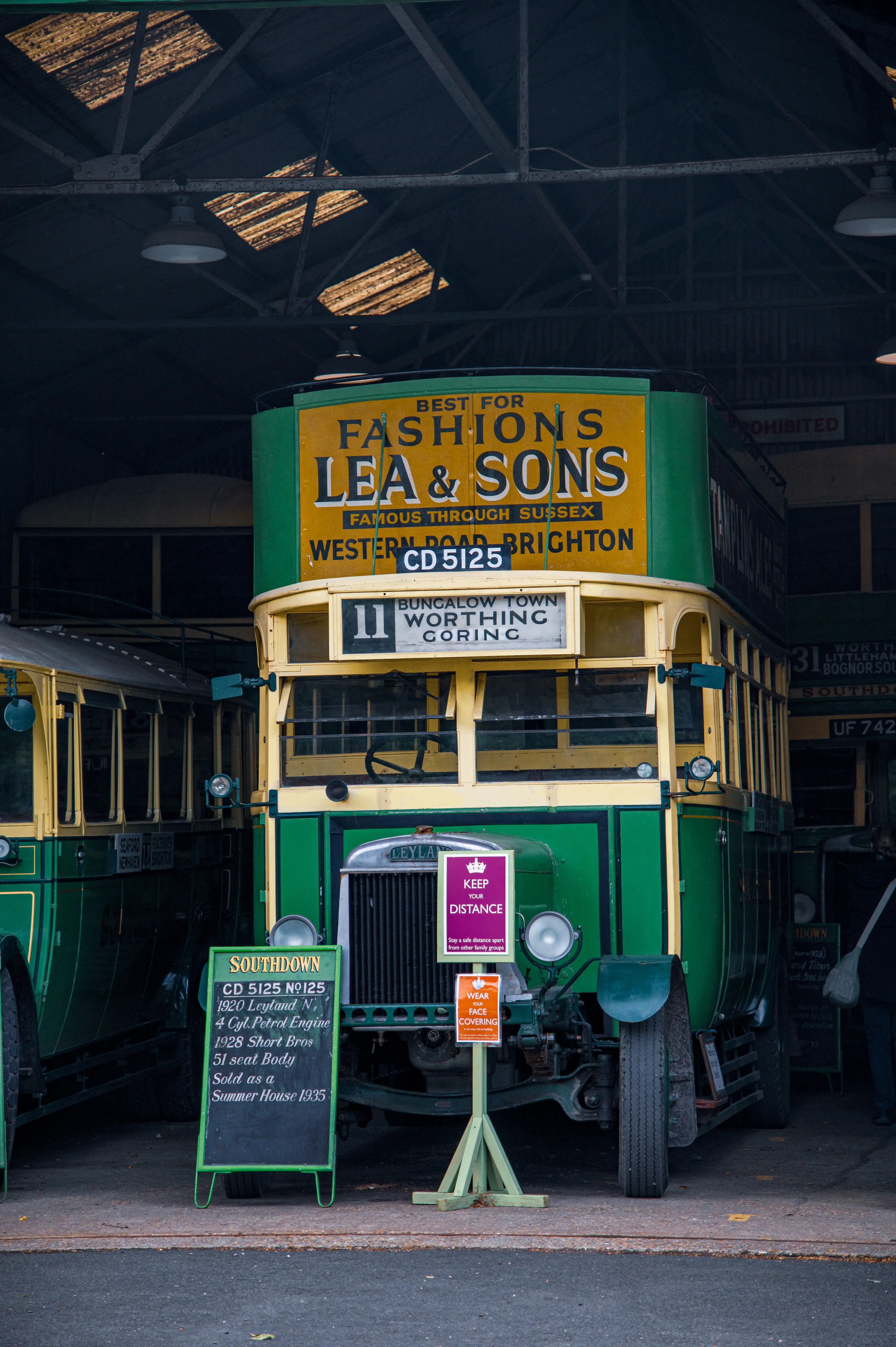
A vintage green and yellow Southdown double-decker bus with the registration CD 5125 is parked in a shed. A blackboard in front of the bus provides its specifications, and route destination signs are visible on the bus.
Southdown Bus CD 5125 Heritage Display
photo by
©www.mgaylard.co.uk.
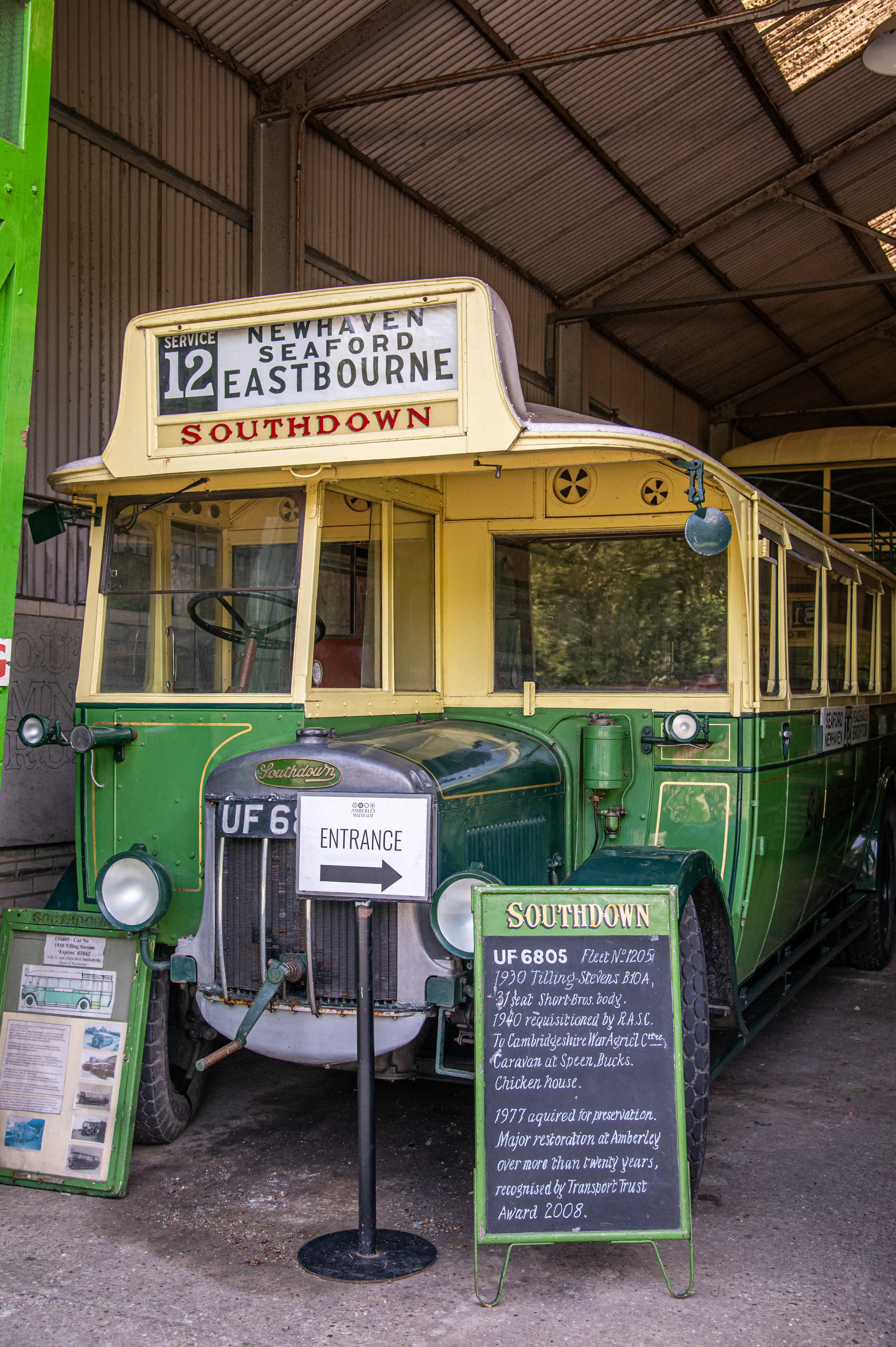
A vintage green and cream Southdown double-decker bus, registration UF 6805, with 'Southdown' lettering and route signs for Newhaven, Seaford, and Eastbourne, is parked indoors. Information boards and an entrance sign are visible in front of the bus.
Historic Southdown Bus UF 6805
photo by
©www.mgaylard.co.uk.
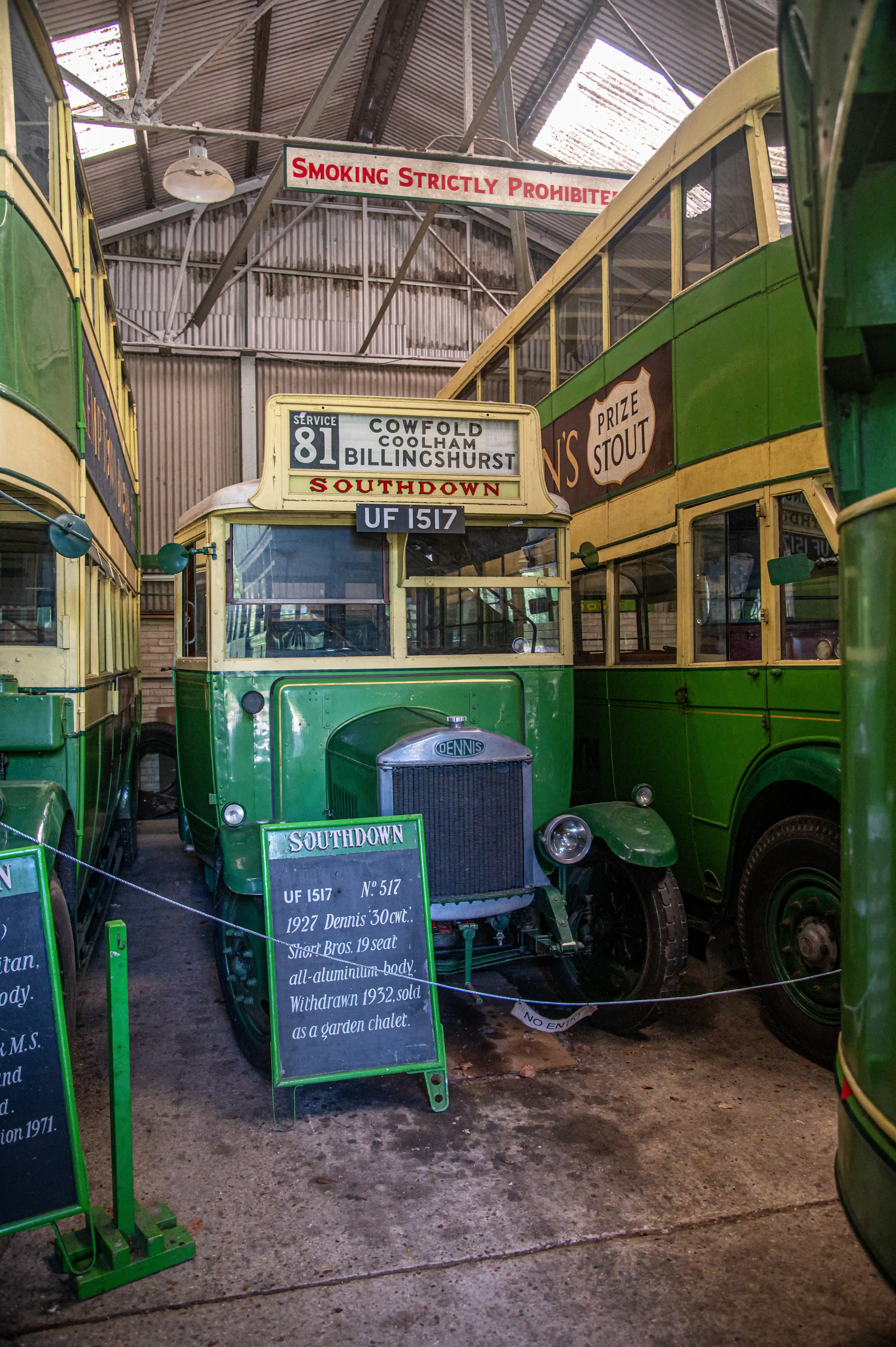
Interior view of a shed housing several vintage green and cream Southdown buses. The foreground bus, a 1927 Dennis with registration UF 1517, is central, with a route board indicating Service 81 to Cowfold, Coolham, and Billingshurst. A smaller blackboard beside it provides details about the bus, noting it was withdrawn in 1932 and later sold as a garden chalet. The metallic grille of the bus is branded 'DENNIS'. A 'Prize Stout' advertisement is visible on the side of a bus to the right. A red sign overhead warns 'SMOKING STRICTLY PROHIBITED'.
Vintage Southdown Buses in Shed
photo by
©www.mgaylard.co.uk.
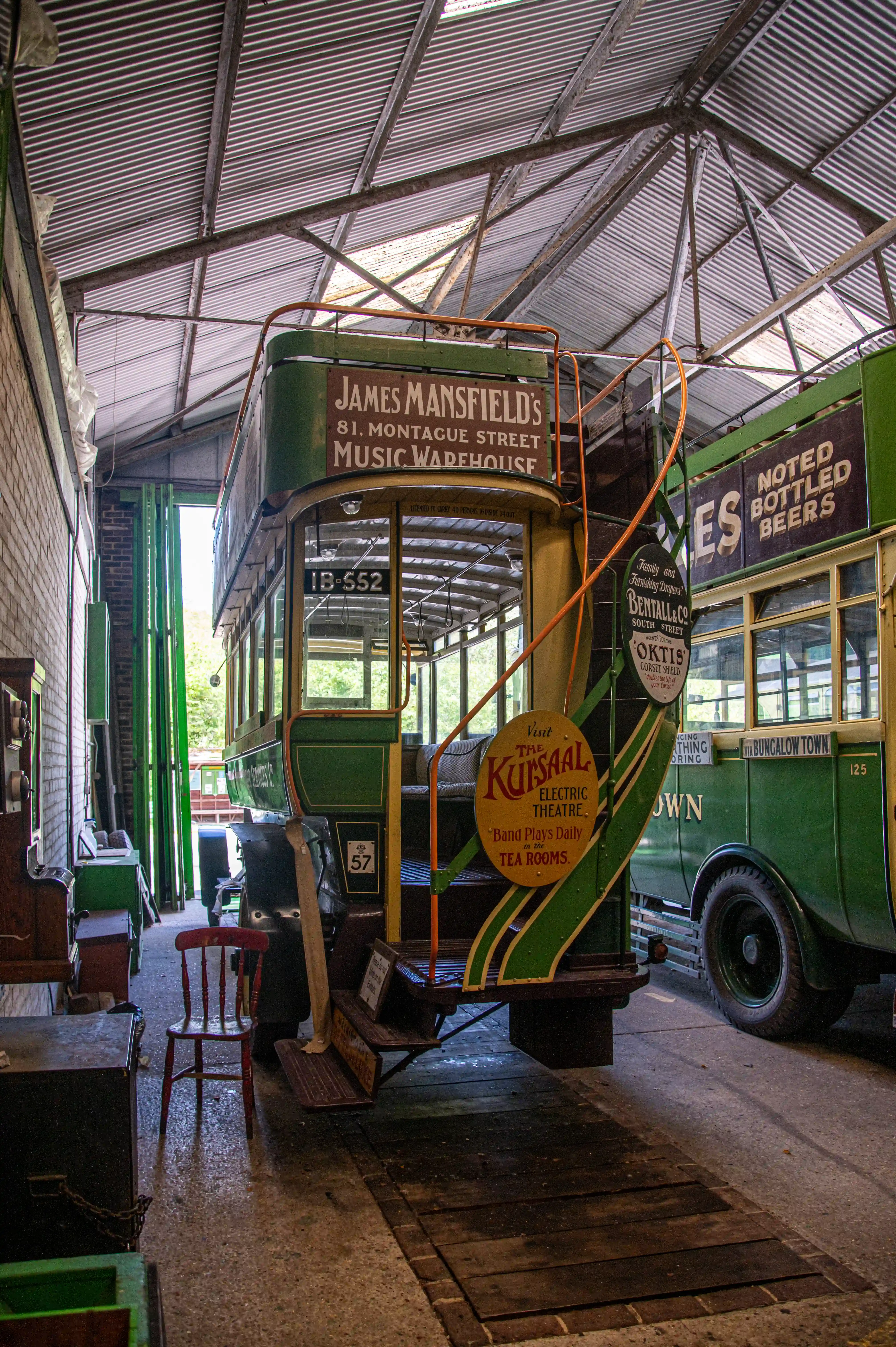
A photograph showing two vintage green and cream trams inside a barn with a corrugated iron roof. The tram on the left has signage advertising a music warehouse and a theatre, while the tram on the right has advertisements for bottled beers and a place called Bungalow Town.
Vintage Trams in Storage
photo by
©www.mgaylard.co.uk.
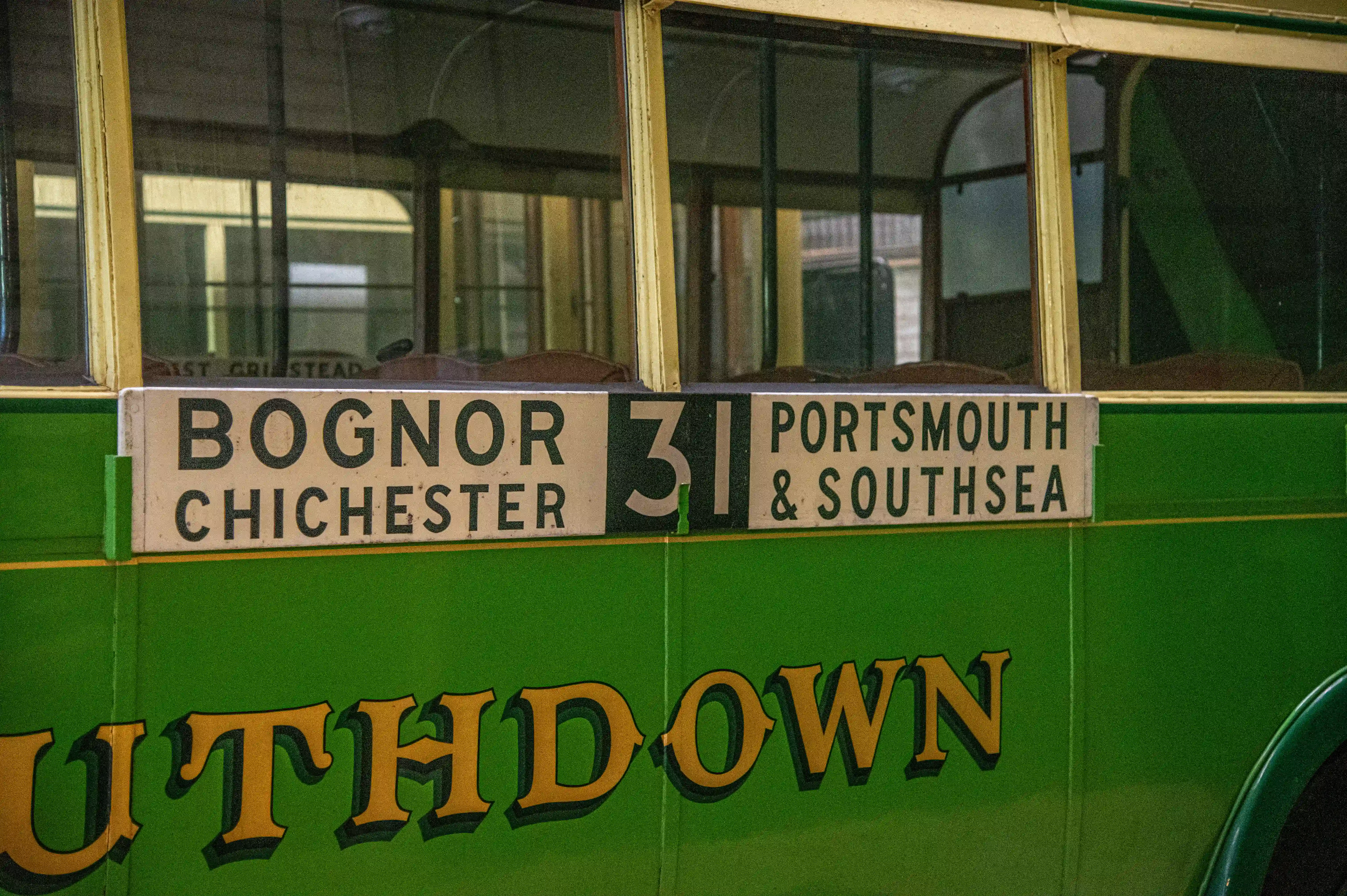
Close-up of a vintage green bus showing a destination sign with 'BOGNOR CHICHESTER' and 'PORTSMOUTH & SOUTHSEA' and route number '31'. The company name 'SOUTHDOWN' is also visible.
Vintage Southdown Bus Route 31 Signage
photo by
©www.mgaylard.co.uk.
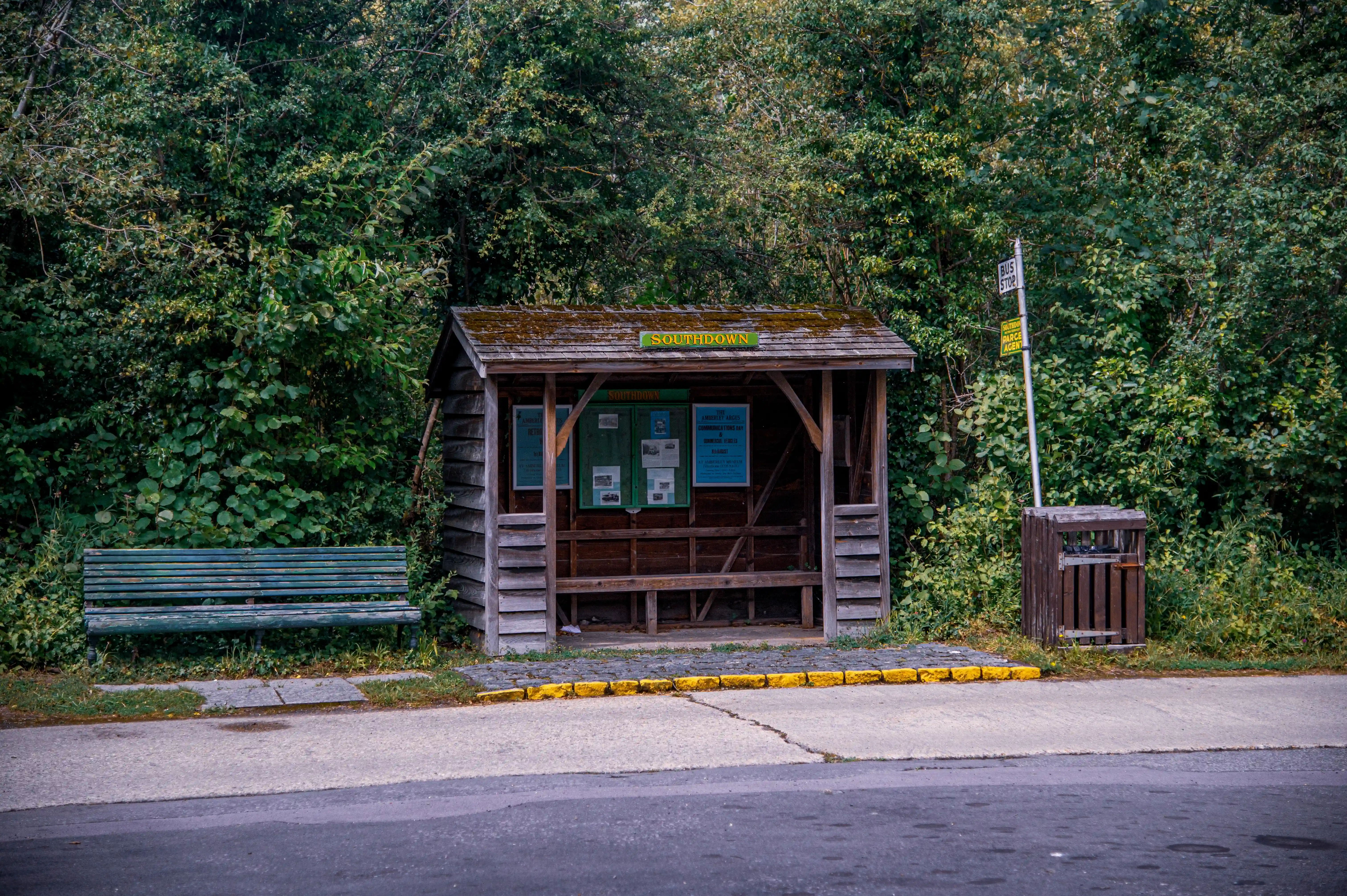
A rustic wooden bus stop shelter with a green sign reading 'SOUTHDOWN' is situated next to a green bench and a wooden bin, with a dense green forest in the background. A bus stop sign is also visible.
Southdown Bus Stop
photo by
©www.mgaylard.co.uk.
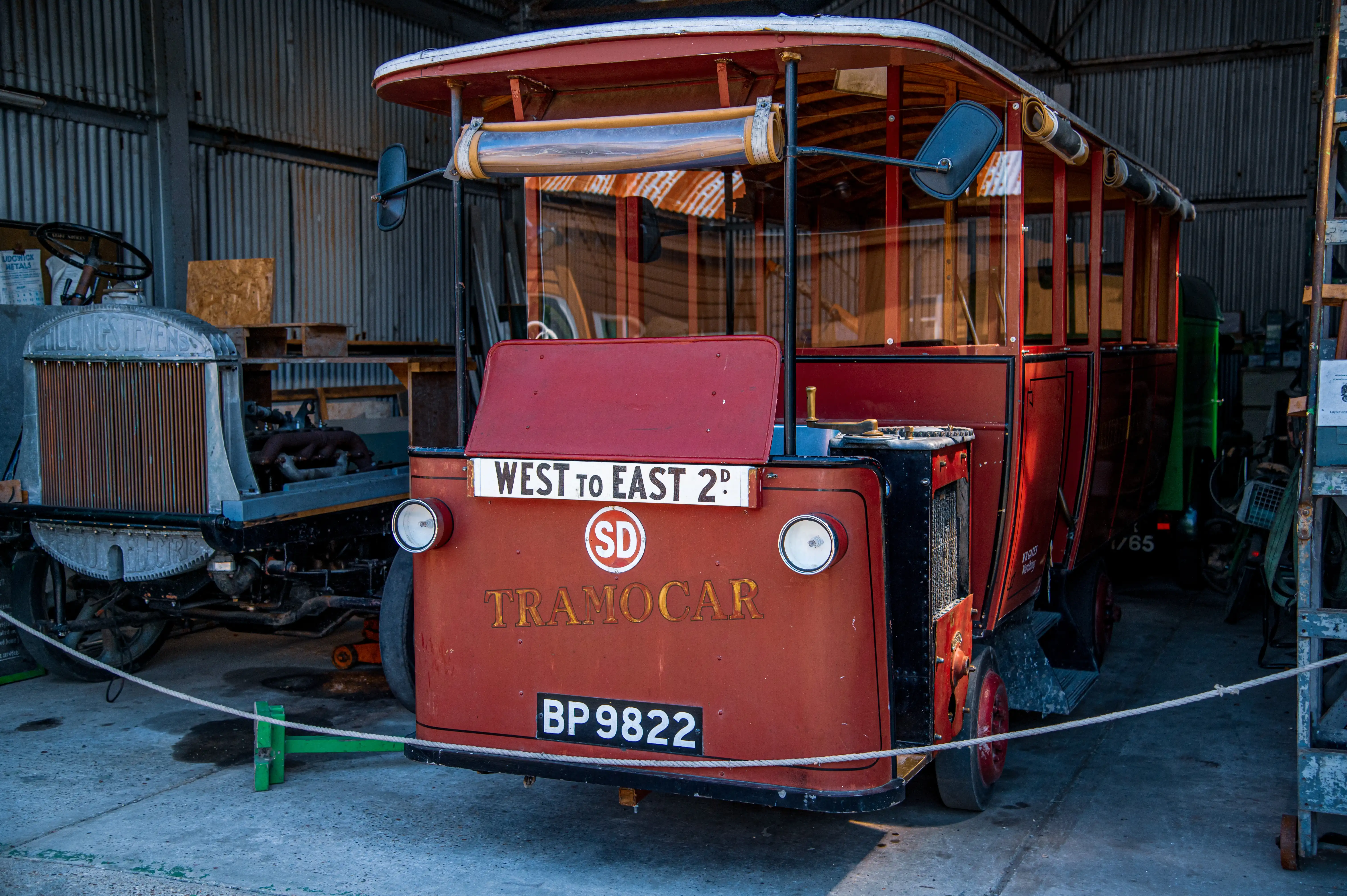
A close-up front view of a vintage red tramocar with wooden accents and a destination sign reading 'WEST TO EAST 2D'. The vehicle has a registration plate 'BP 9822'. Another older vehicle is partially visible to the left.
Vintage Red Tramocar with 'WEST TO EAST 2D' Destination
photo by
©www.mgaylard.co.uk.
Open the full set flickr button this page

Southdown Bus Garage at Amberley Open Air Museum

Era: Mid-20th century

Type: Restored bus garage and depot

Original Operator: Southdown Motor Services

Key Features: Vintage buses, historic tools, original garage fittings, and memorabilia

Focus: History of public transportation and bus travel in the South East of England

Website:

The Southdown Bus Garage at Amberley Open Air Museum is a restored mid-20th-century bus depot that was originally part of the Southdown Motor Services network, one of the most iconic and beloved bus companies in the South East of England. Founded in 1915, Southdown Motor Services became a pioneer in public transportation, providing reliable, efficient, and comfortable bus services to rural and urban communities across Sussex, Hampshire, and Surrey.

During the mid-20th century, bus travel flourished as a primary mode of public transportation, connecting villages, towns, and cities and enabling people to commute, shop, and socialize. Bus garages like the one at Amberley Museum were essential hubs for maintaining, repairing, and dispatching buses, as well as serving as social gathering points for drivers, mechanics, and the local community.

Southdown Motor Services was renowned for its distinctive green and cream livery, which became a symbol of quality and reliability in public transportation. The company’s commitment to innovation, customer service, and community engagement made it a beloved institution in the South East, and its buses and garages played a vital role in the daily lives of thousands of people.

The Southdown Bus Garage was relocated and restored as part of Amberley Museum’s mission to preserve and showcase the industrial and social heritage of the region. The exhibit now serves as a window into the past, allowing visitors to explore the history of public transportation, learn about the craftsmanship of bus mechanics, and appreciate the role of bus garages in connecting communities.
References

Text generated by Mistral AIwww.xprivo.comMicrosoft CoPilot , and AI Image Describer

The Village Garage and Cycle Shop

The Village Garage and Cycle Shop

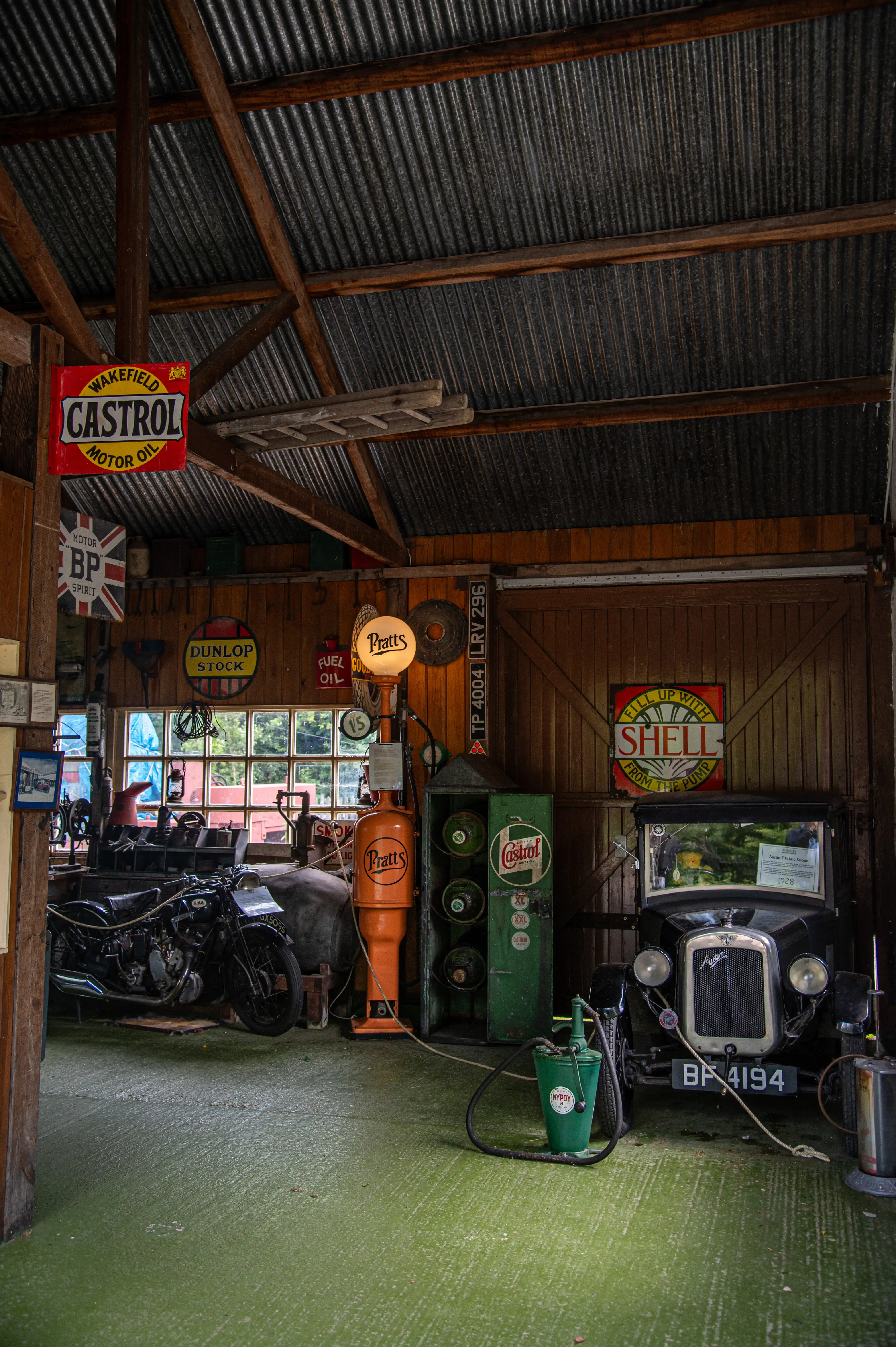
The Village Garage and Cycle Shop at Amberley Open Air Museum is a nostalgic and interactive exhibit that recreates the atmosphere of a early-to-mid 20th-century rural garage and bicycle repair shop. This exhibit highlights the role of local garages and cycle shops in supporting transportation, mobility, and community life in the South East of England. Visitors can explore vintage automobiles, classic bicycles, historic tools, and original shop fittings, offering a glimpse into the craftsmanship, innovation, and daily life of rural mechanics and cyclists.
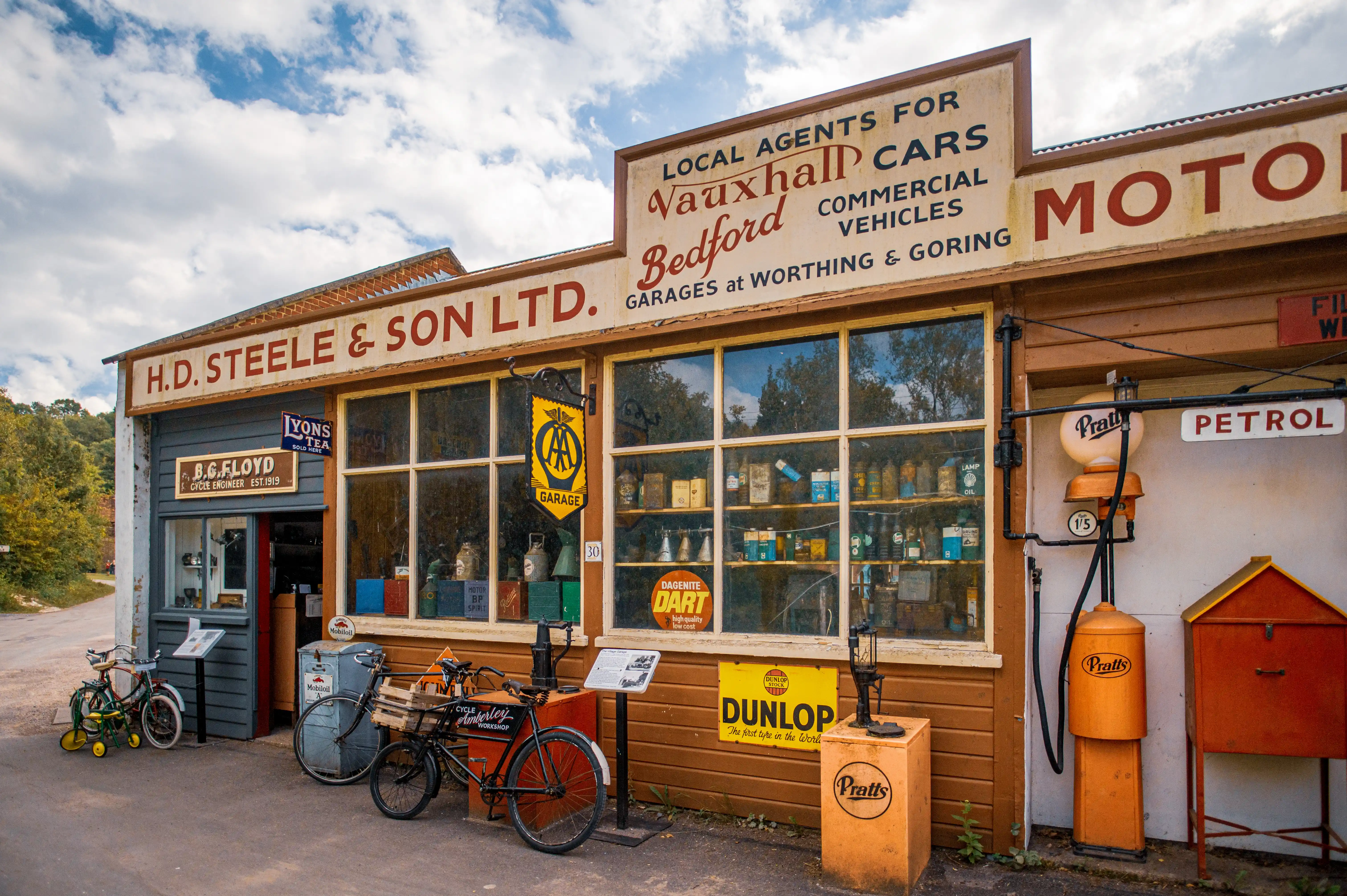
A retro-style garage facade with
H.D. Steele & Son Ltd. - A Vintage Garage Scene
photo by
©www.mgaylard.co.uk.
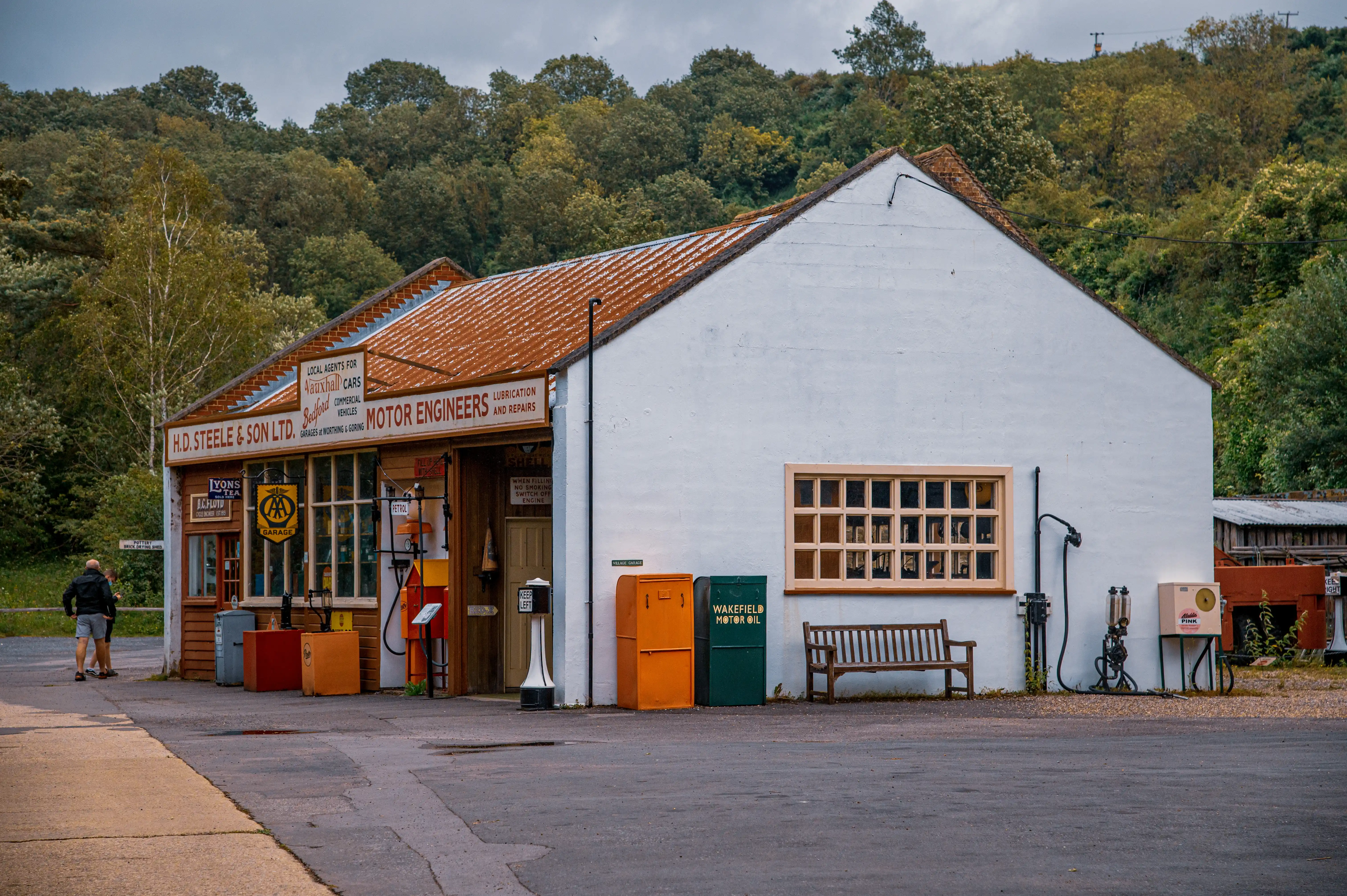
Exterior view of a white-painted, single-storey garage with a rust-coloured corrugated roof. The front of the building features traditional wooden shopfronts advertising
Vintage Motor Engineers Garage
photo by
©www.mgaylard.co.uk.
Vintage garage with classic car BF 4194, motorcycle, retro fuel pumps, and motoring signs under a corrugated roof.
Vintage automotive garage with classic vehicles and fuel pumps  ‐ photo by ,
©www.mgaylard.co.uk .
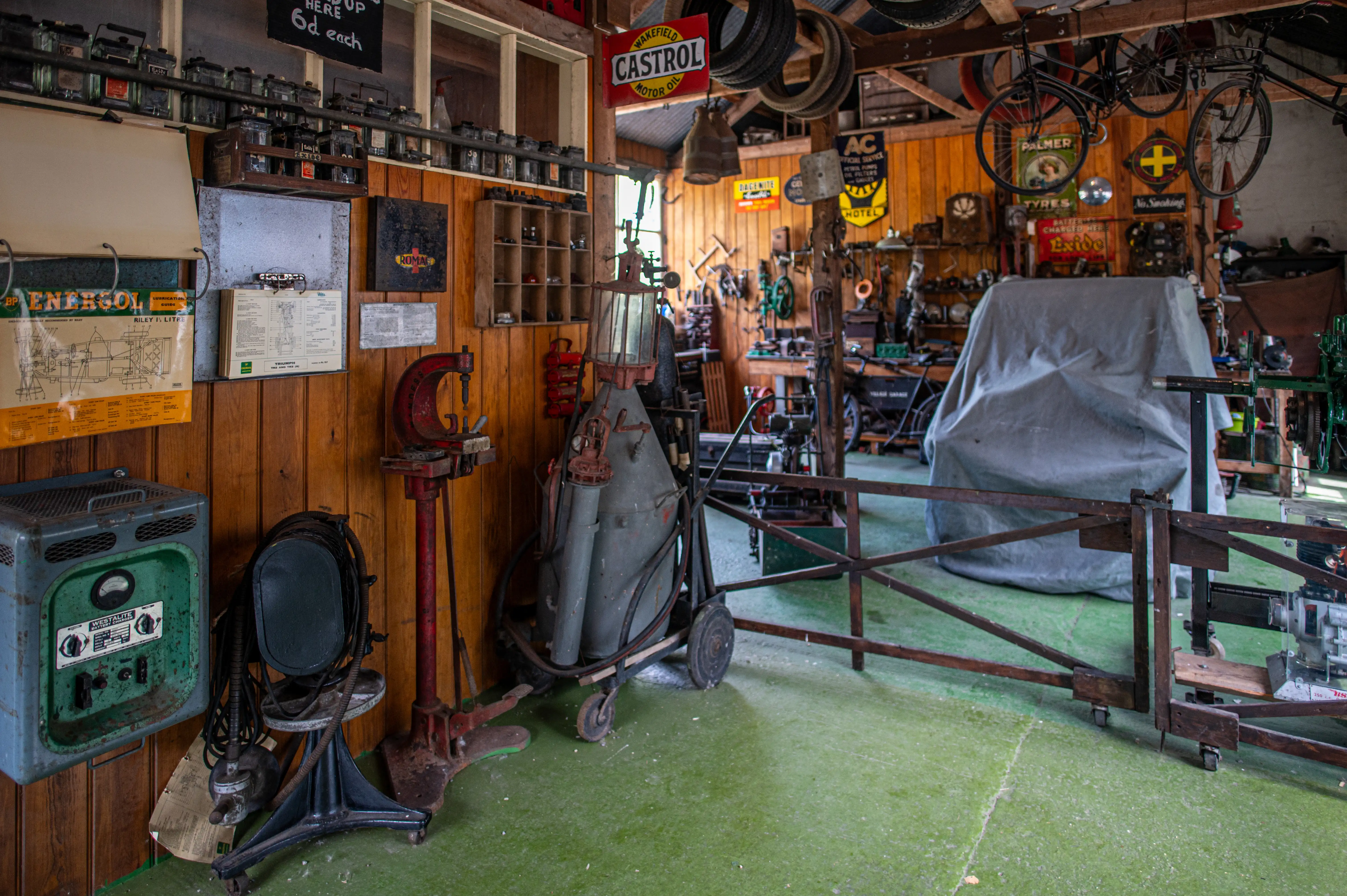
Interior view of a vintage garage workshop, filled with old tools, car parts, vintage signs, and a large object covered by a sheet.
A nostalgic journey into a vintage automotive workshop  ‐ photo by ,
©www.mgaylard.co.uk .
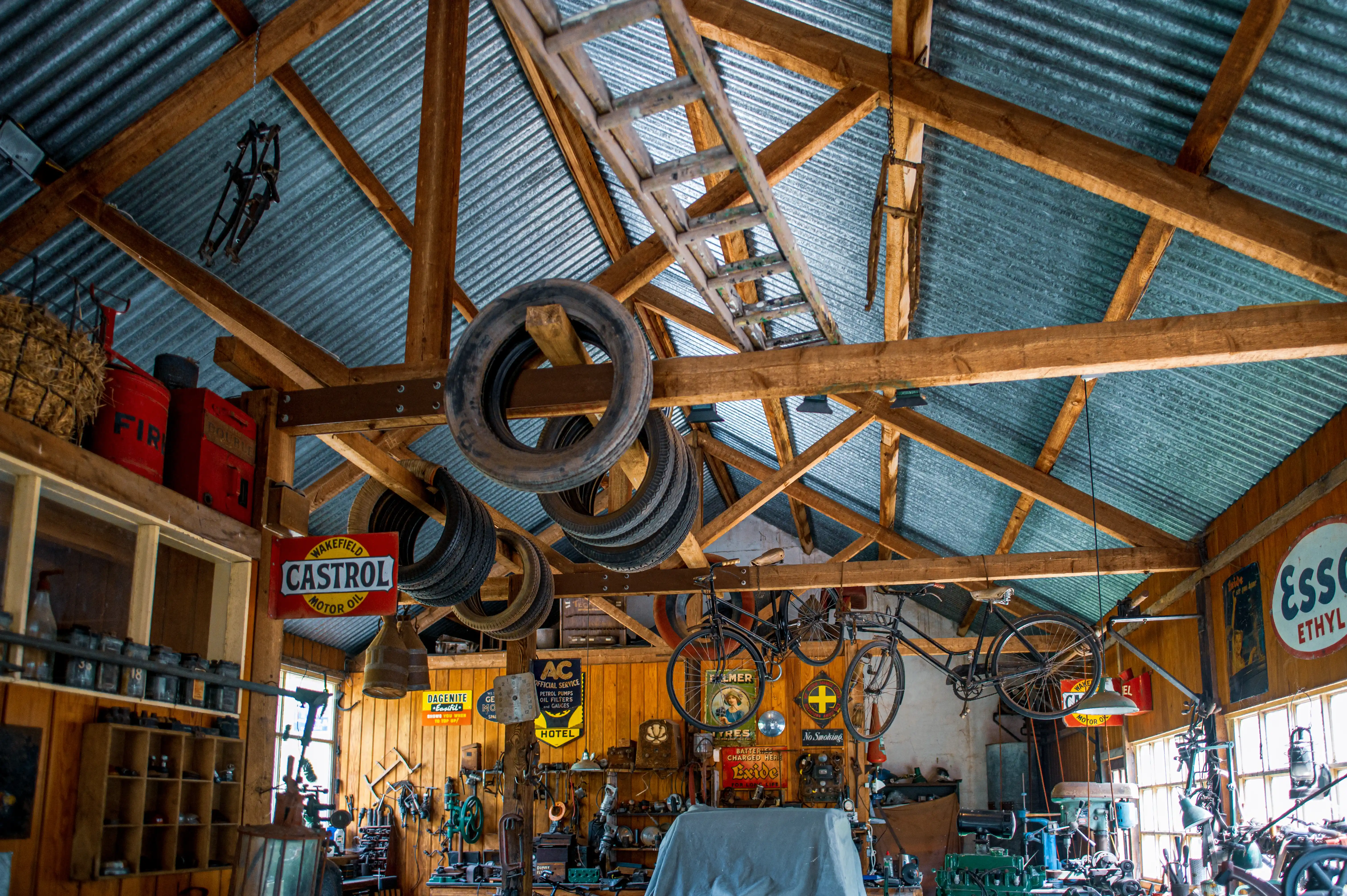
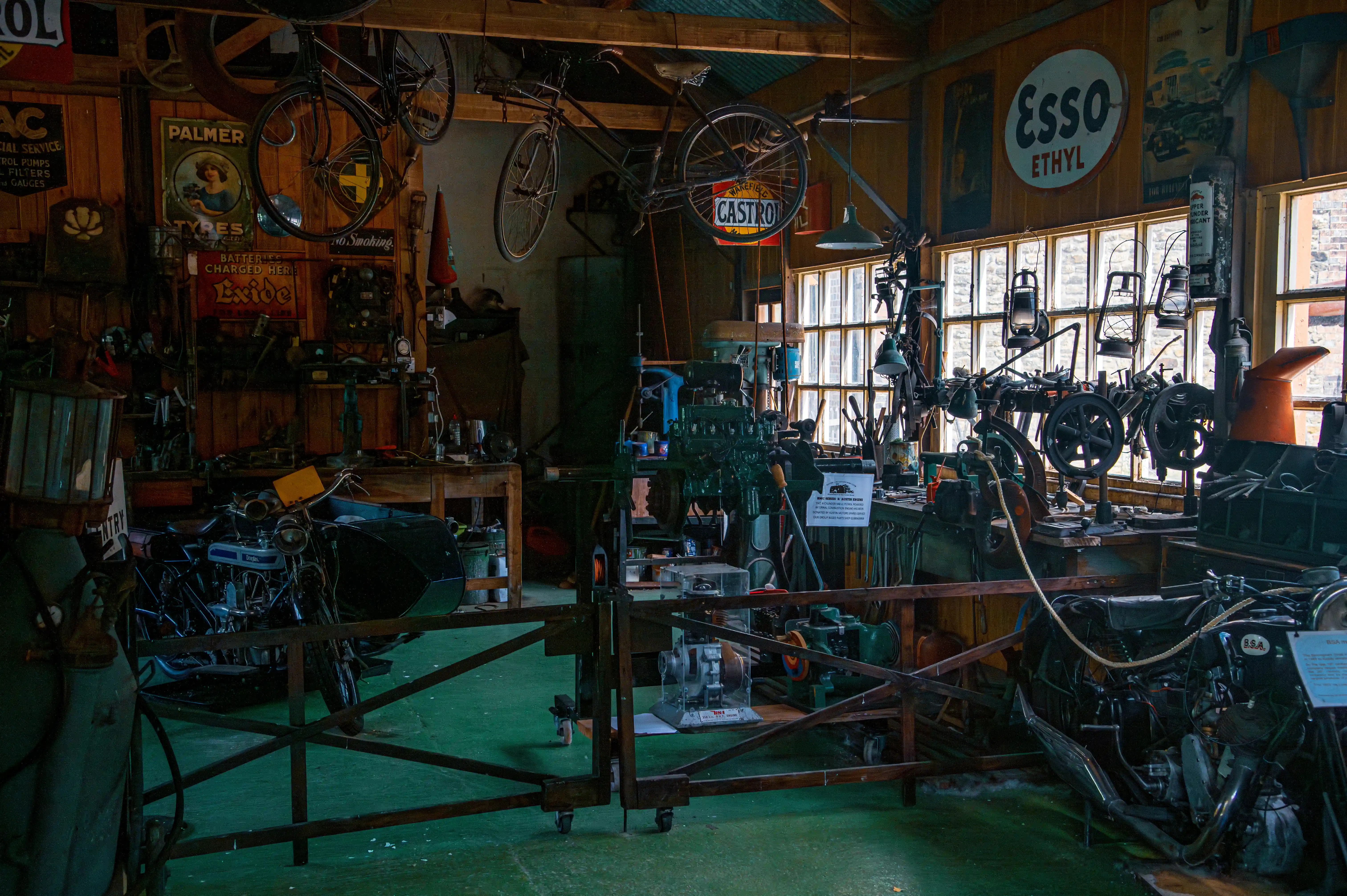
Interior view of a workshop with a corrugated metal roof, exposed wooden beams, and various vintage objects hanging and displayed, such as old tyres, bicycles, and advertising signs for Castrol and Esso.
Nostalgic Vintage Workshop Interior  ‐ photo by ,
©www.mgaylard.co.uk .
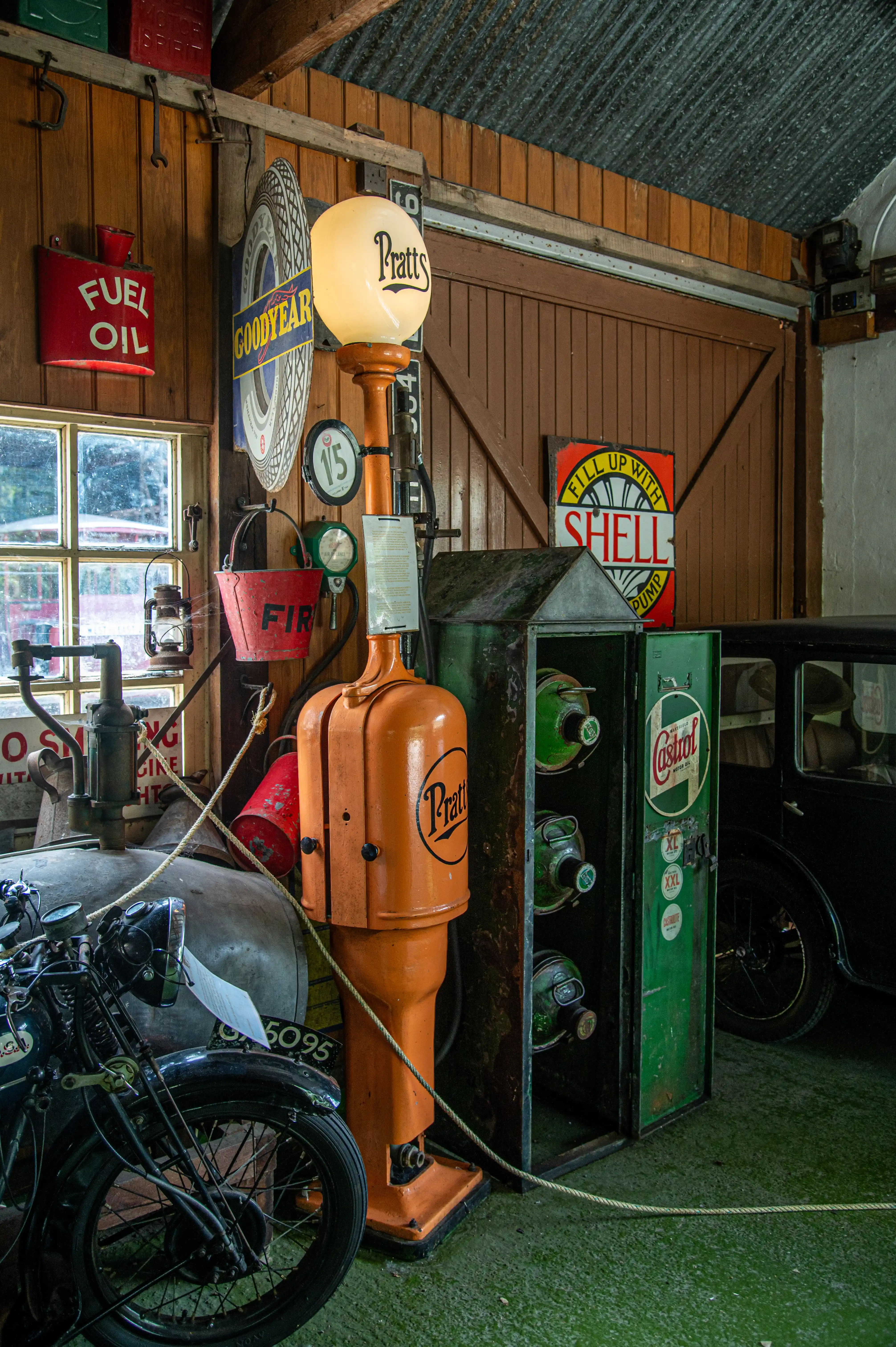
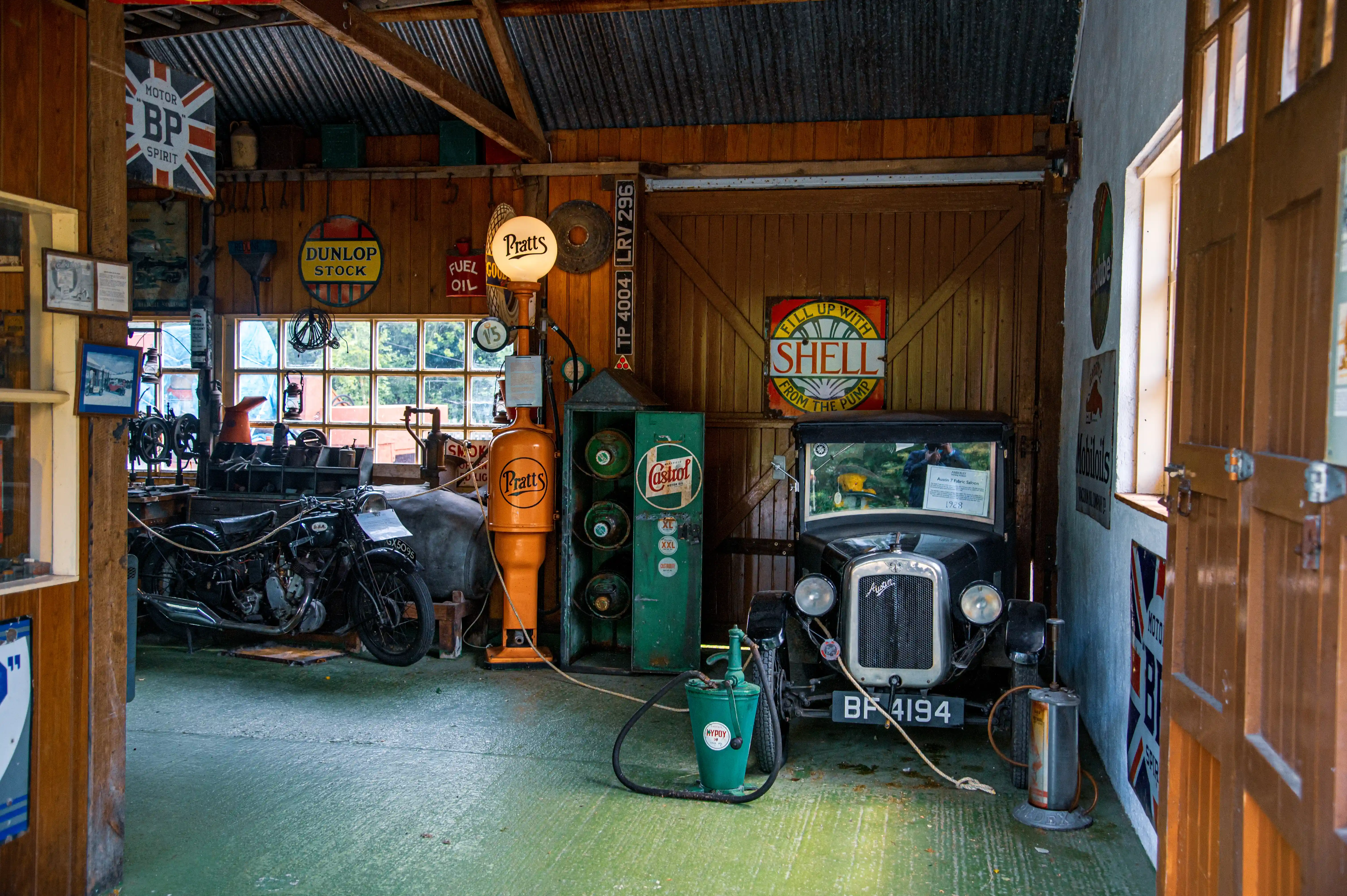
Interior of a vintage garage with an orange Pratt's petrol pump and a green Castrol oil cabinet. A classic motorcycle is parked to the left, and vintage signs for Fuel Oil, Goodyear, and Shell are visible on the wooden walls.
Vintage Petrol Station and Motorcycle Display  ‐ photo by ,
©www.mgaylard.co.uk .
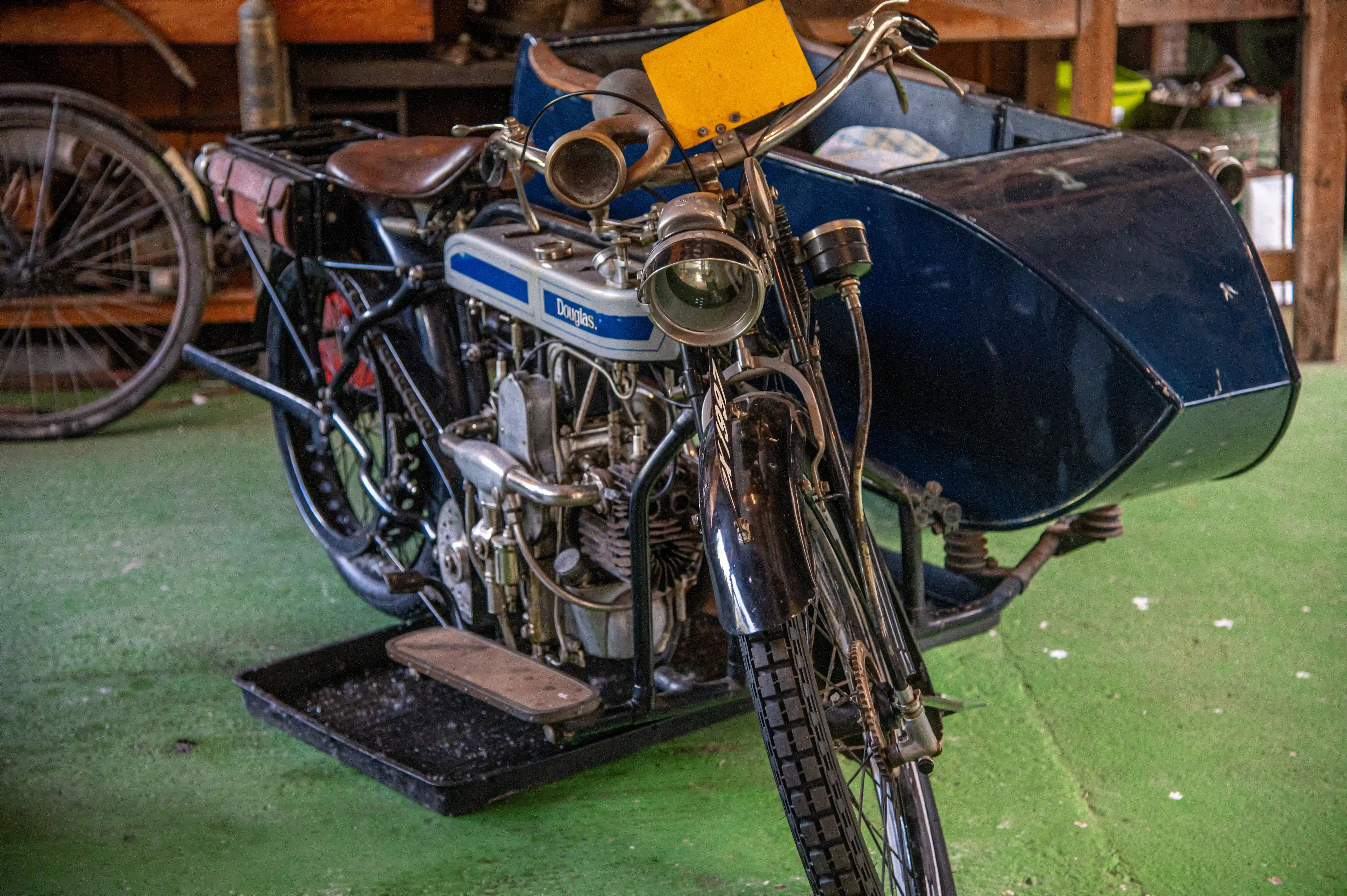
Front-three-quarter view of a vintage silver and blue Douglas motorcycle with a navy blue sidecar. The motorcycle has a large engine, chrome handlebars with a yellow sign, and a brown leather seat. A leather tool bag is on the back. The vehicle is parked on a green floor.
Vintage Douglas Motorcycle and Sidecar  ‐ photo by ,
©www.mgaylard.co.uk .
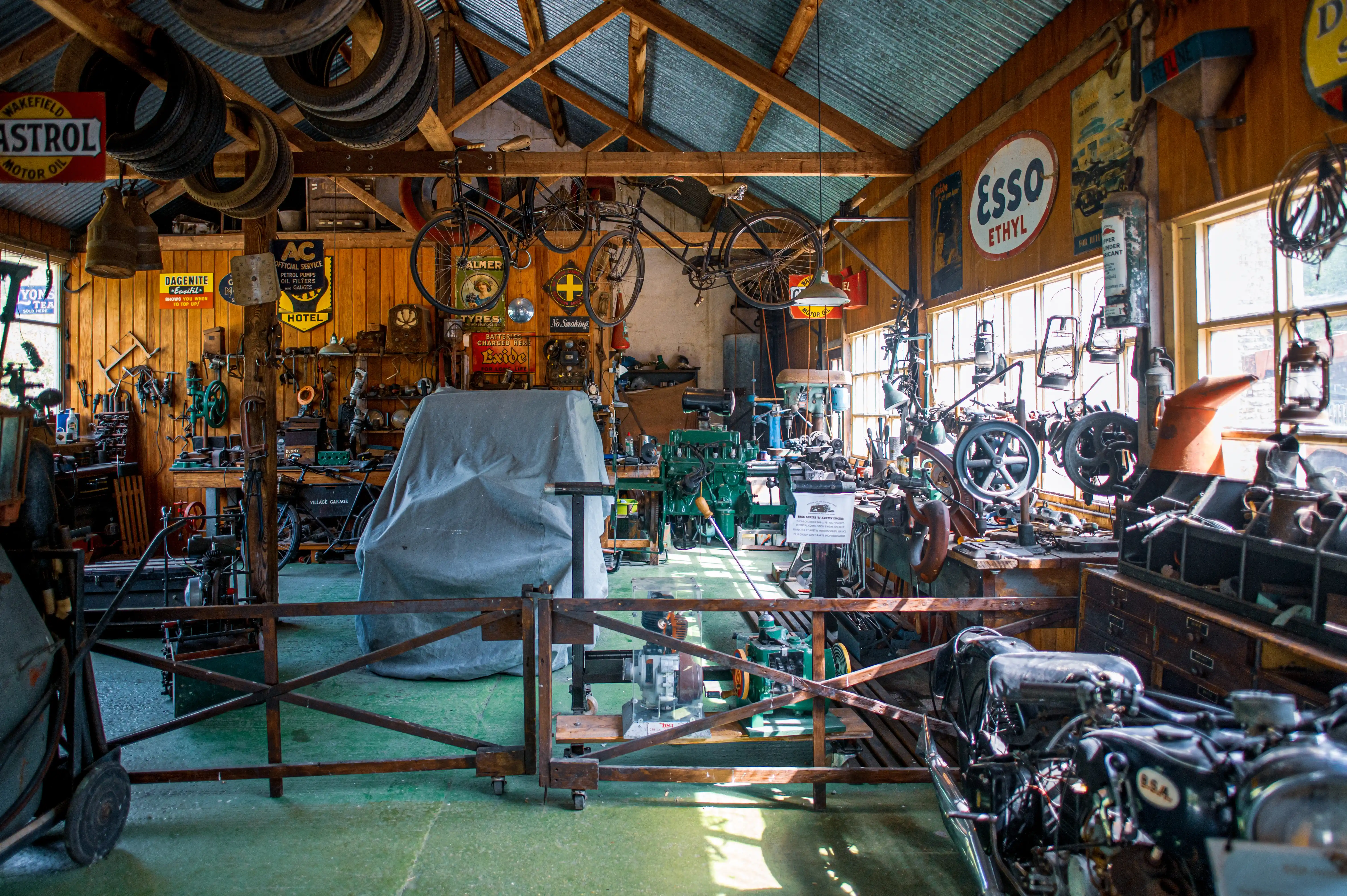
A cluttered workshop interior filled with vintage tools, machinery, bicycles, and old advertising signs. In the foreground, a motorcycle is partially visible, and a covered object sits in the centre.
Vintage Workshop Memorabilia and Machinery  ‐ photo by ,
©www.mgaylard.co.uk .
A vintage black motorcycle and a classic black Austin 7 car are parked in a wooden garage, with numerous vintage advertisements for BP, Shell, Castrol, and Dunlop displayed on the walls.
Vintage Garage Scene with Classic Vehicles and Advertising
photo by
©www.mgaylard.co.uk.
A full view of a workshop interior, with various vintage machinery, tools, bicycles hanging from the ceiling, and old signs, illuminated by natural light from large windows.
A Nostalgic Glimpse into a Vintage Workshop
photo by
©www.mgaylard.co.uk.
Open the full set flickr button this page

The Village Garage and Cycle Shop

Era: Early to mid-20th century

Type: Restored village garage and cycle shop

Key Features: Vintage automobiles, classic bicycles, historic tools, and original shop fittings

Focus: History of automotive and cycling culture in rural England

Website:

The Village Garage and Cycle Shop at Amberley Open Air Museum is a restored early-to-mid 20th-century building that was originally part of a rural community in the South East of England. Garages and cycle shops like this one played a vital role in supporting local transportation, mobility, and economic activity, particularly as automobiles and bicycles became more accessible and popular in the early 20th century.

The rise of the automobile in the early 1900s transformed rural life, providing greater independence and connectivity for communities. Local garages became essential hubs for repairing, maintaining, and fueling vehicles, as well as selling and servicing bicycles. These shops were often family-run businesses that served as social gathering points, where locals could share news, gossip, and stories while their vehicles were being serviced.

The Village Garage and Cycle Shop was relocated and restored as part of Amberley Museum’s mission to preserve and showcase the rural and industrial heritage of the region. The exhibit now serves as a window into the past, allowing visitors to explore the history of automotive and cycling culture, learn about the craftsmanship of rural mechanics, and appreciate the role of local garages in supporting community life.

References

Text generated by Mistral AIwww.xprivo.comMicrosoft CoPilot , and AI Image Describer

Fire Station at Amberley Open Air Museum

Fire Station

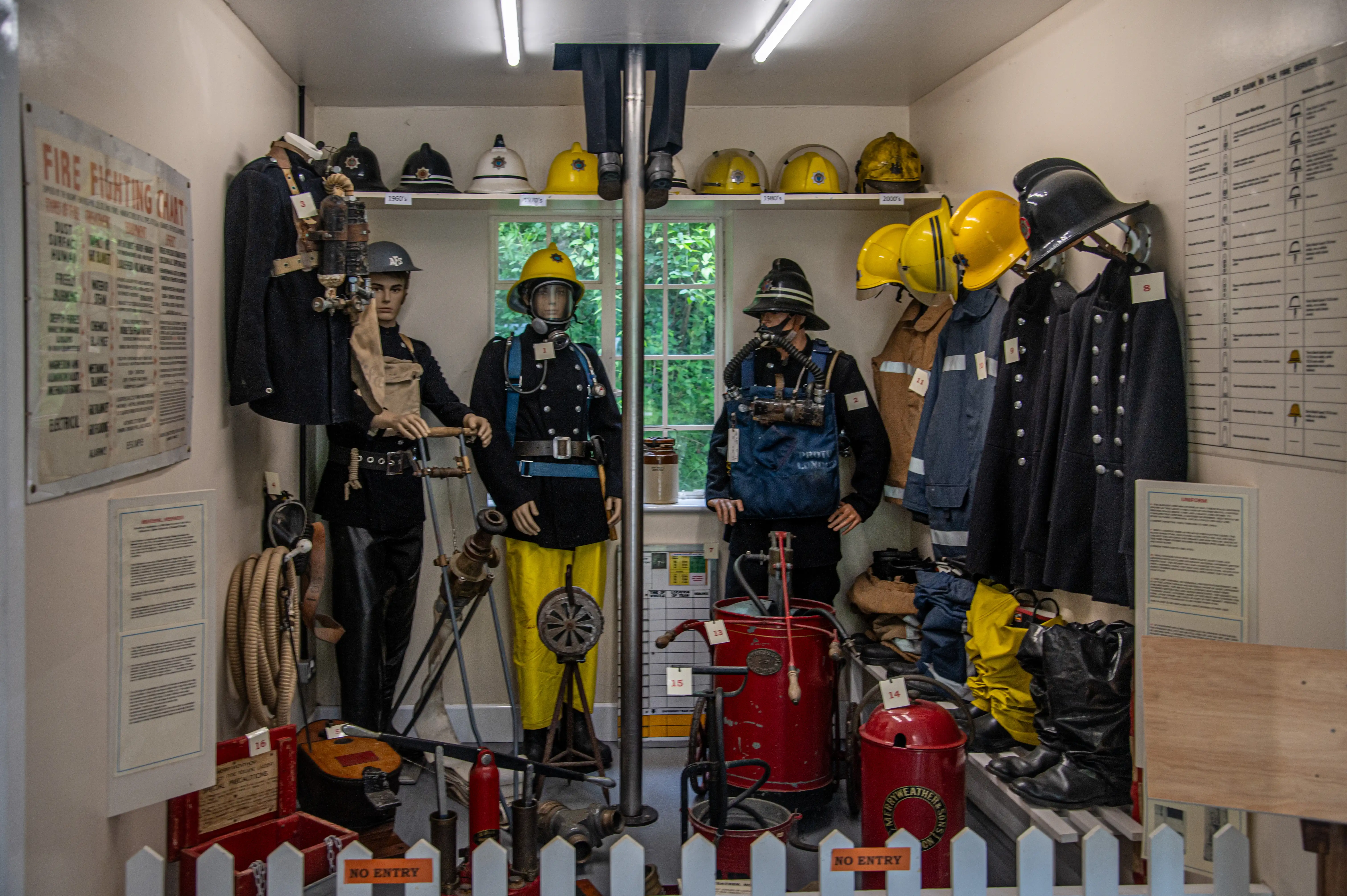
The Fire Station at Amberley Open Air Museum is a historic exhibit that preserves and showcases the evolution of firefighting, equipment, and the role of fire stations in British communities. Housed in a restored early 20th-century fire station building, the exhibit features vintage fire engines, firefighting tools, uniforms, and equipment used by firefighters over the decades. Visitors can explore the history of firefighting, learn about the bravery and dedication of firefighters, and experience the sights and sounds of a working fire station from a bygone era.
A museum display features mannequins in firefighter uniforms from different eras, along with various helmets, protective clothing, hoses, and other firefighting apparatus.
Historical Firefighting Exhibit
photo by
©www.mgaylard.co.uk.
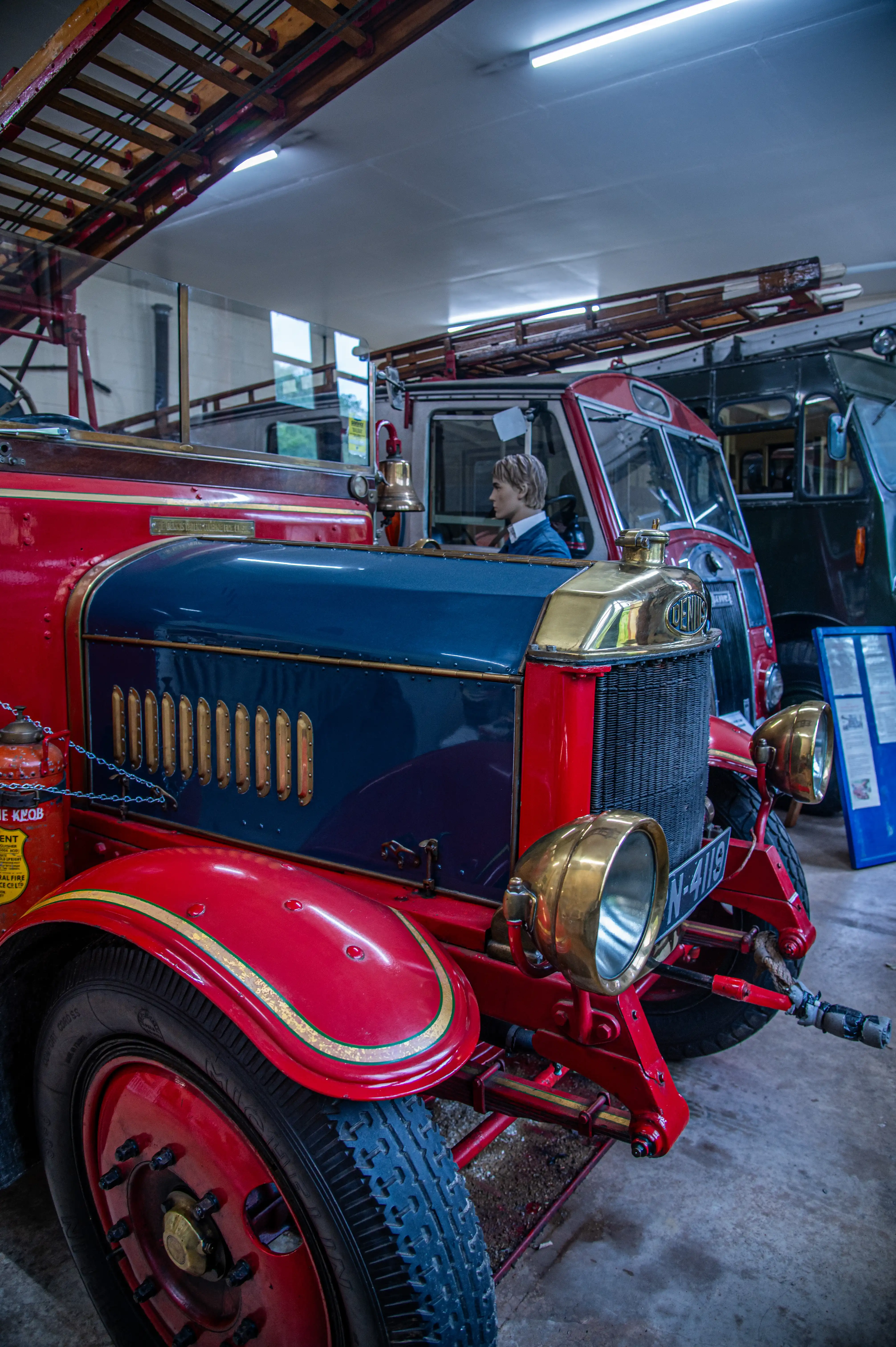
A vintage red and blue fire engine with the number 9 prominently displayed, sits in a garage. Brass headlights and accents gleam on the vehicle, which has a large hose wound around a reel on the side. Other firefighting equipment and large wooden doors with glass panes are visible in the background.
Historic Fire Engine '9'  ‐ photo by ,
©www.mgaylard.co.uk .
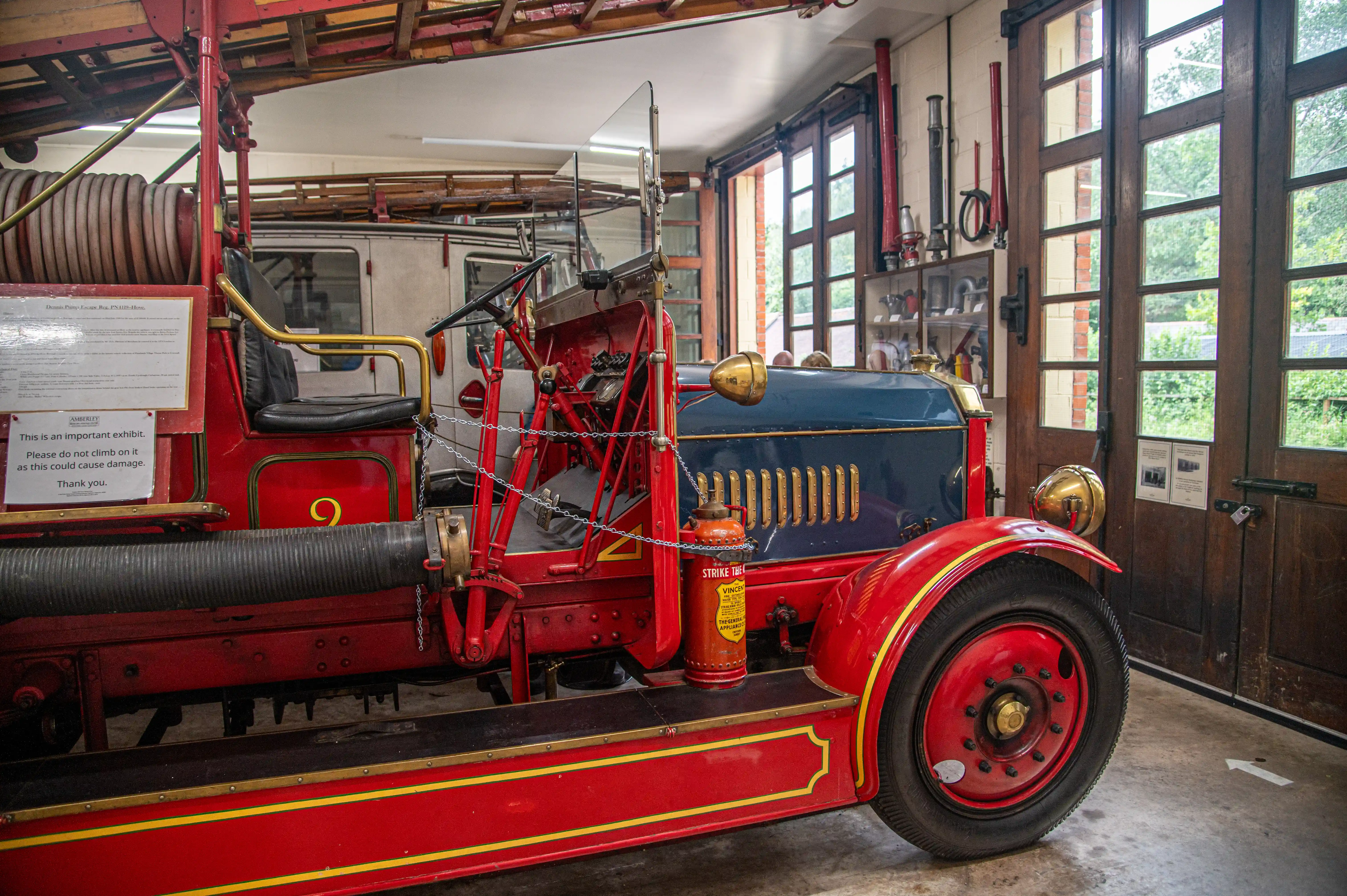
A vintage red and blue fire engine with the number 9 prominently displayed, sits in a garage. Brass headlights and accents gleam on the vehicle, which has a large hose wound around a reel on the side. Other firefighting equipment and large wooden doors with glass panes are visible in the background.
Historic Fire Engine '9'  ‐ photo by ,
©www.mgaylard.co.uk .
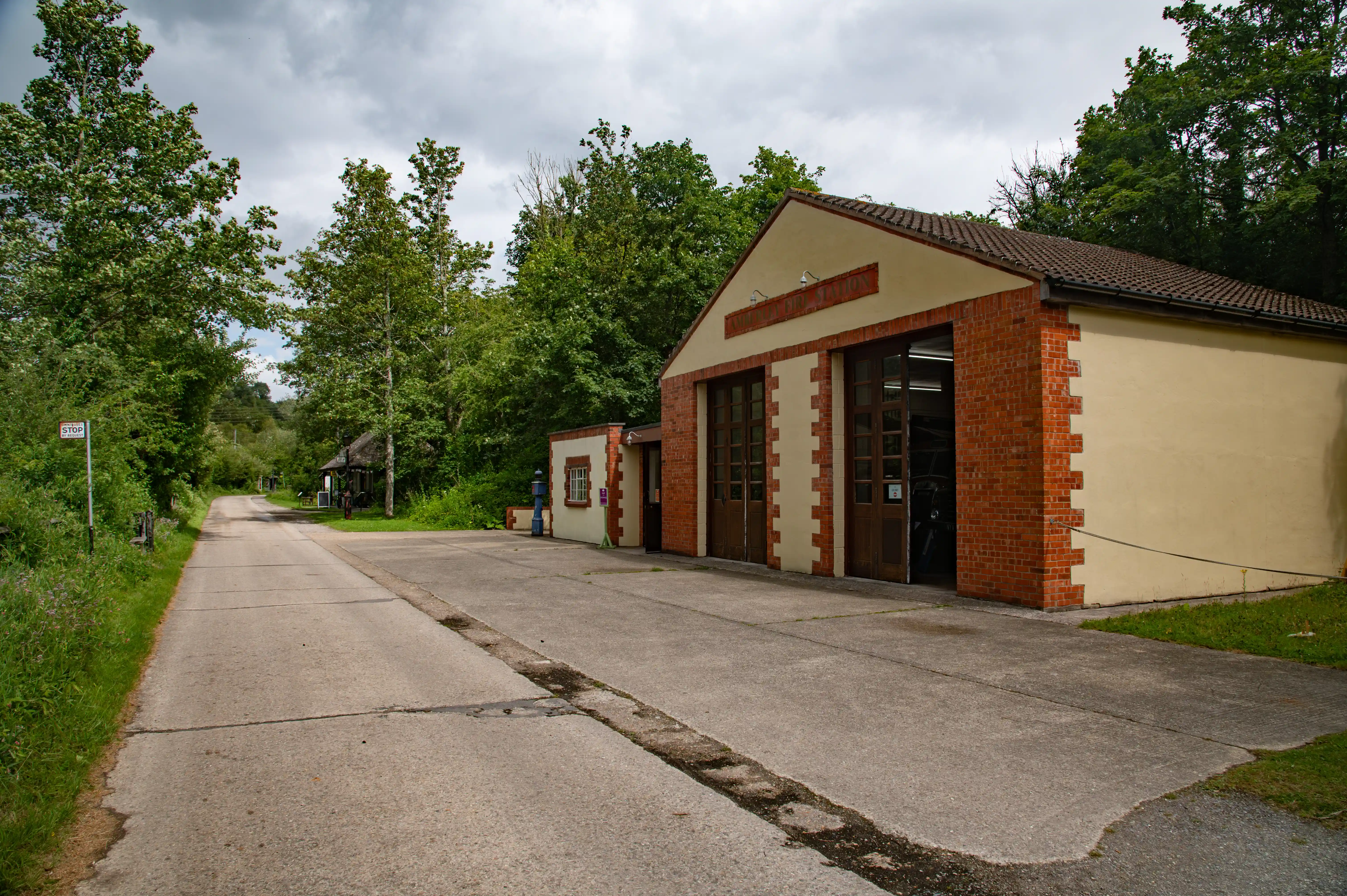
Exterior view of a charming brick and cream-coloured fire station building with large wooden doors, situated on a quiet rural road surrounded by dense trees.
title2  ‐ photo by ,
©www.mgaylard.co.uk .
Open the full set flickr button this page

Interior of a Historic Railway Carriage Living Space

The Fire Station at Amberley Open Air Museum is a restored early 20th-century fire station building that was originally part of a local fire brigade in the South East of England. Fire stations like this one played a vital role in protecting communities from the devastating effects of fires, which were a common and dangerous threat in both urban and rural areas during the 19th and early 20th centuries.

The development of organized firefighting in the UK dates back to the 17th century, but it was during the Industrial Revolution that fire brigades began to form in towns and cities across the country. These brigades were often staffed by volunteers and equipped with basic tools, such as hand pumps, buckets, and ladders. By the late 19th and early 20th centuries, fire stations became more professionalized, with paid firefighters, motorized fire engines, and advanced equipment that improved their ability to respond to emergencies.

The Fire Station at Amberley Museum was relocated and restored as part of the museum’s mission to preserve and showcase the industrial and social heritage of the South East of England. The exhibit now serves as a window into the past, allowing visitors to explore the history of firefighting, learn about the bravery of firefighters, and appreciate the evolution of firefighting technology over the decades.

References

Text generated by Mistral AIwww.xprivo.comMicrosoft CoPilot , and AI Image Describer

Paviors Museum of Roadmaking

Paviors' Museum of Roadmaking

The Paviors' Museum of Roadmaking at Amberley Open Air Museum is a specialized exhibit dedicated to preserving and showcasing the history, craft, and technology of road construction and paving. Located within the 36-acre site of Amberley Open Air Museum in West Sussex, England, this exhibit explores the evolution of roadmaking from ancient times to the modern era, highlighting the tools, techniques, materials, and machinery used by paviors (roadmakers). Visitors can explore the role of roadmaking in shaping modern transportation, trade, and community connectivity, and learn about the ingenuity and hard work of the roadmakers who built the foundations of today’s infrastructure.
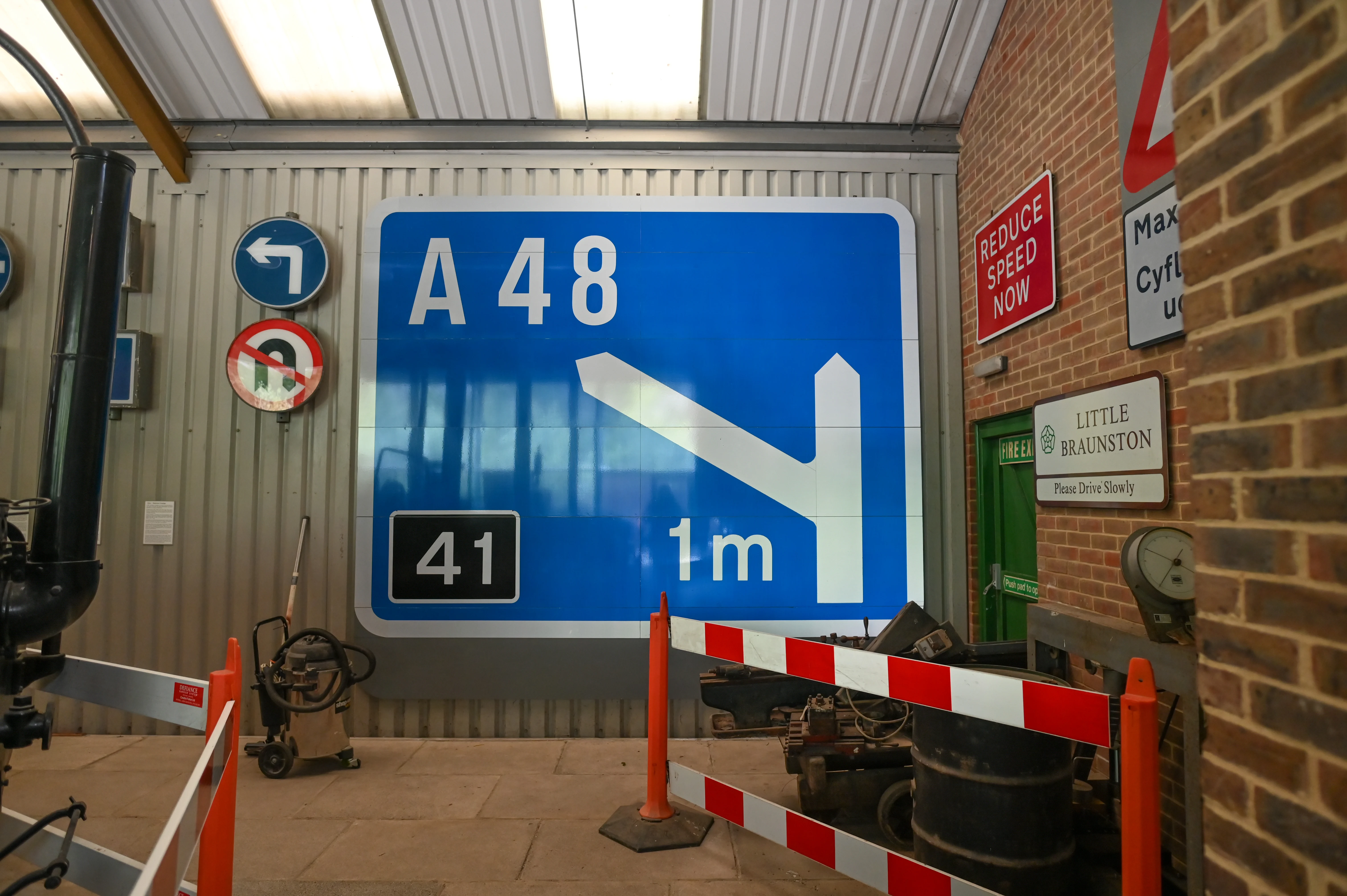
A display of various British road signs mounted on a corrugated metal wall and a brick wall. The most prominent sign is a large blue directional sign for the A48, indicating junction 41 and a distance of 1 metre. Several smaller signs are also visible, along with some industrial equipment and safety barriers.
British Road Signage Display
photo by
©www.mgaylard.co.uk.
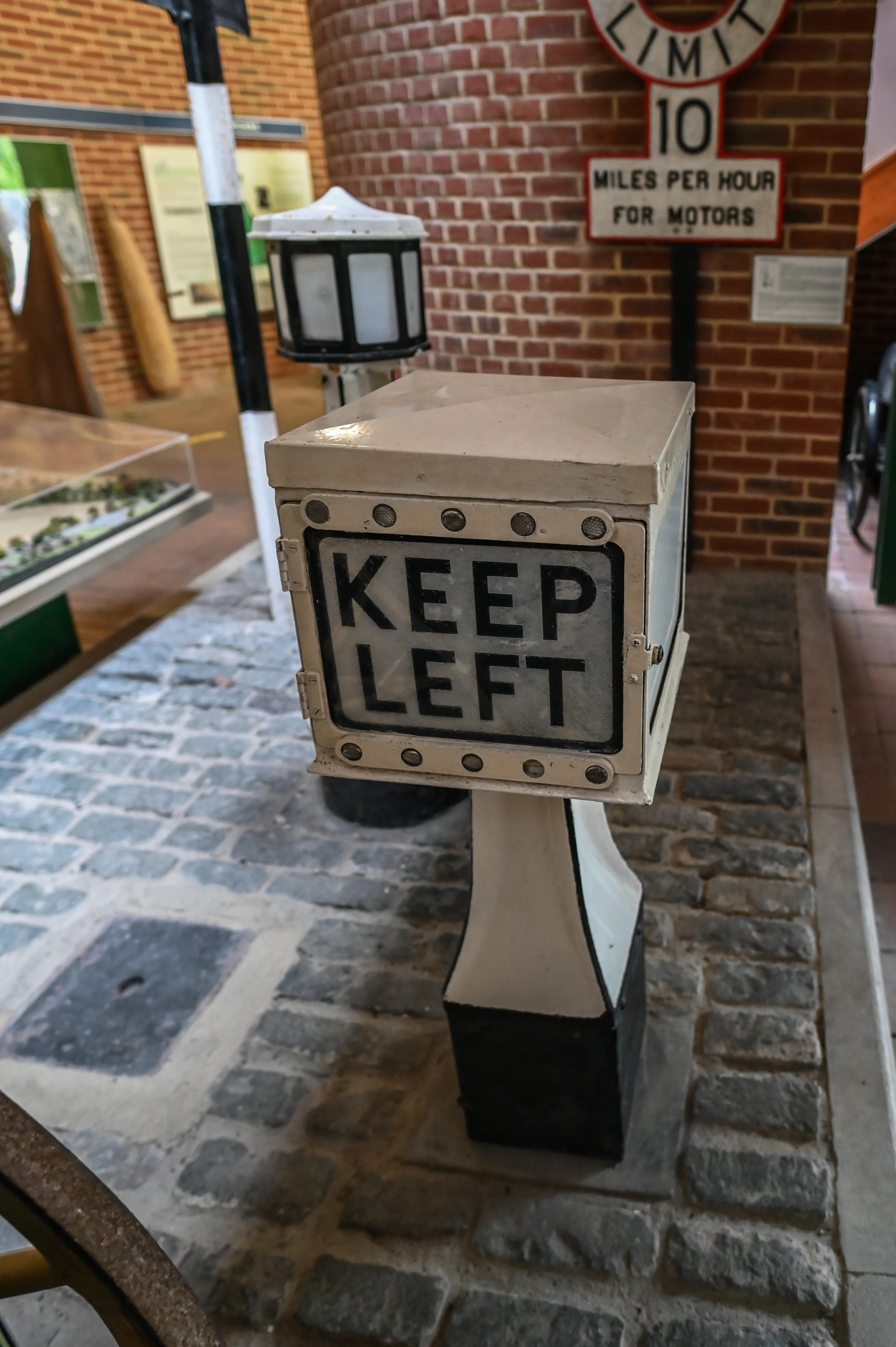
A close-up of an old white metal sign with black text reading 'KEEP LEFT'. The sign is on a pedestal and appears to be in a museum exhibit.
Vintage "Keep Left" Sign and Transport Memorabilia  ‐ photo by ,
©www.mgaylard.co.uk .
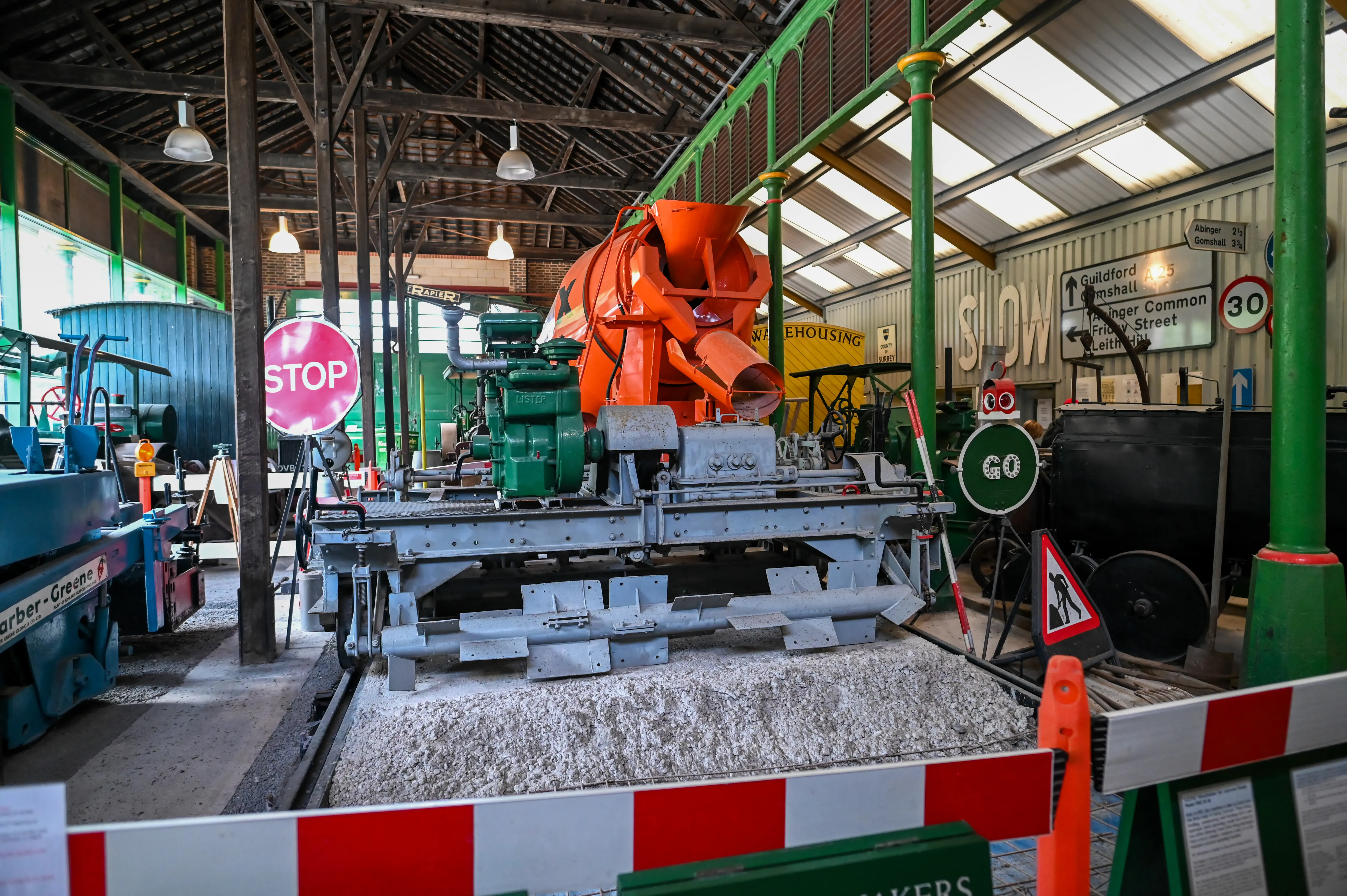
An orange concrete mixer with a green engine sits on a track in a museum. Various industrial machines, signs, and safety barriers are visible around it.
Industrial Heritage: Vintage Concrete Mixer and Machinery Display  ‐ photo by ,
©www.mgaylard.co.uk .
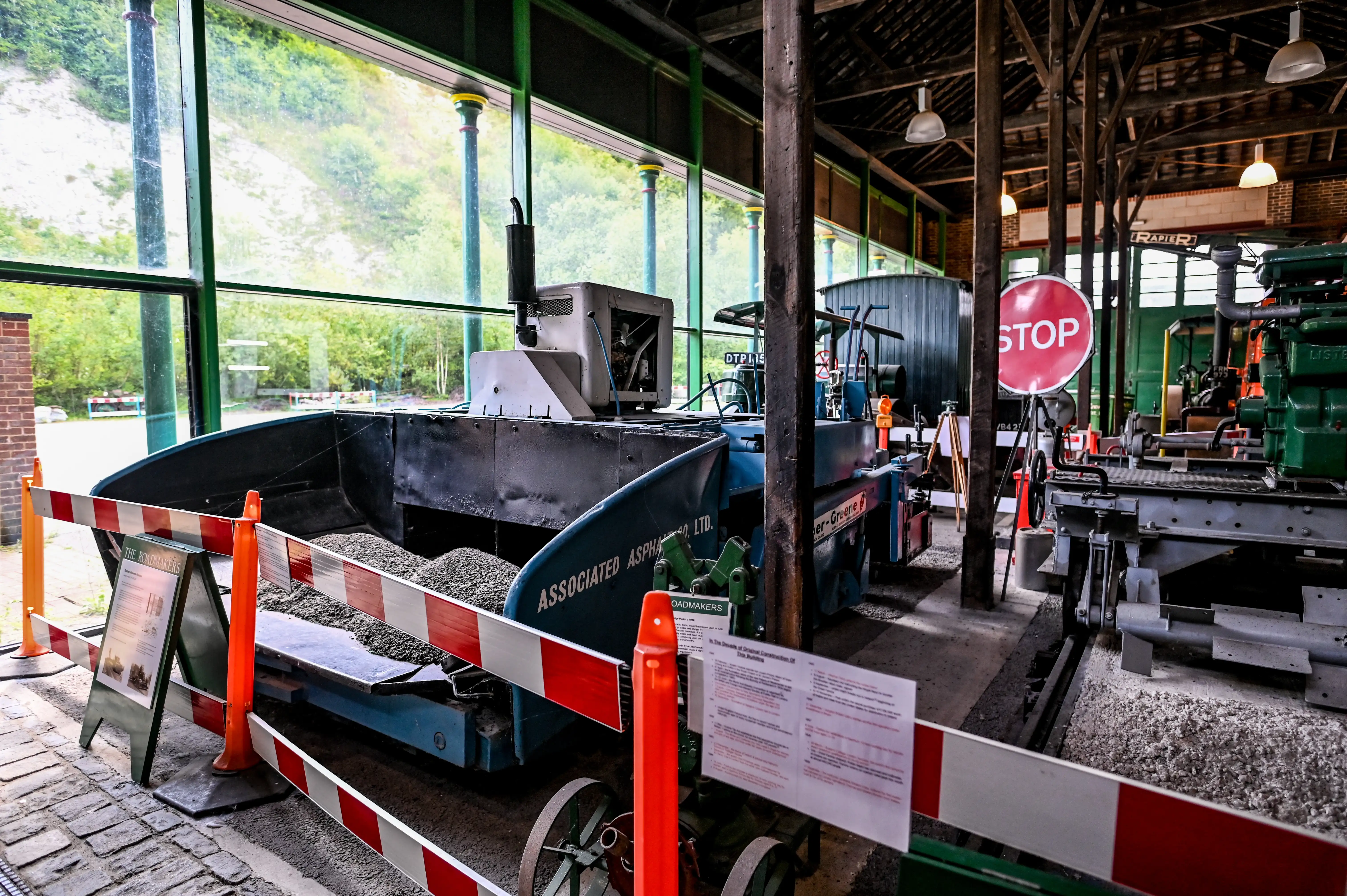
A collection of vintage road construction machines, including a large blue asphalt paving machine filled with gravel and a green engine, displayed in an indoor setting with large windows showing greenery outside. Red and white safety barriers and information signs are positioned around the machinery.
Historical Road Construction Machinery Exhibit  ‐ photo by ,
©www.mgaylard.co.uk .
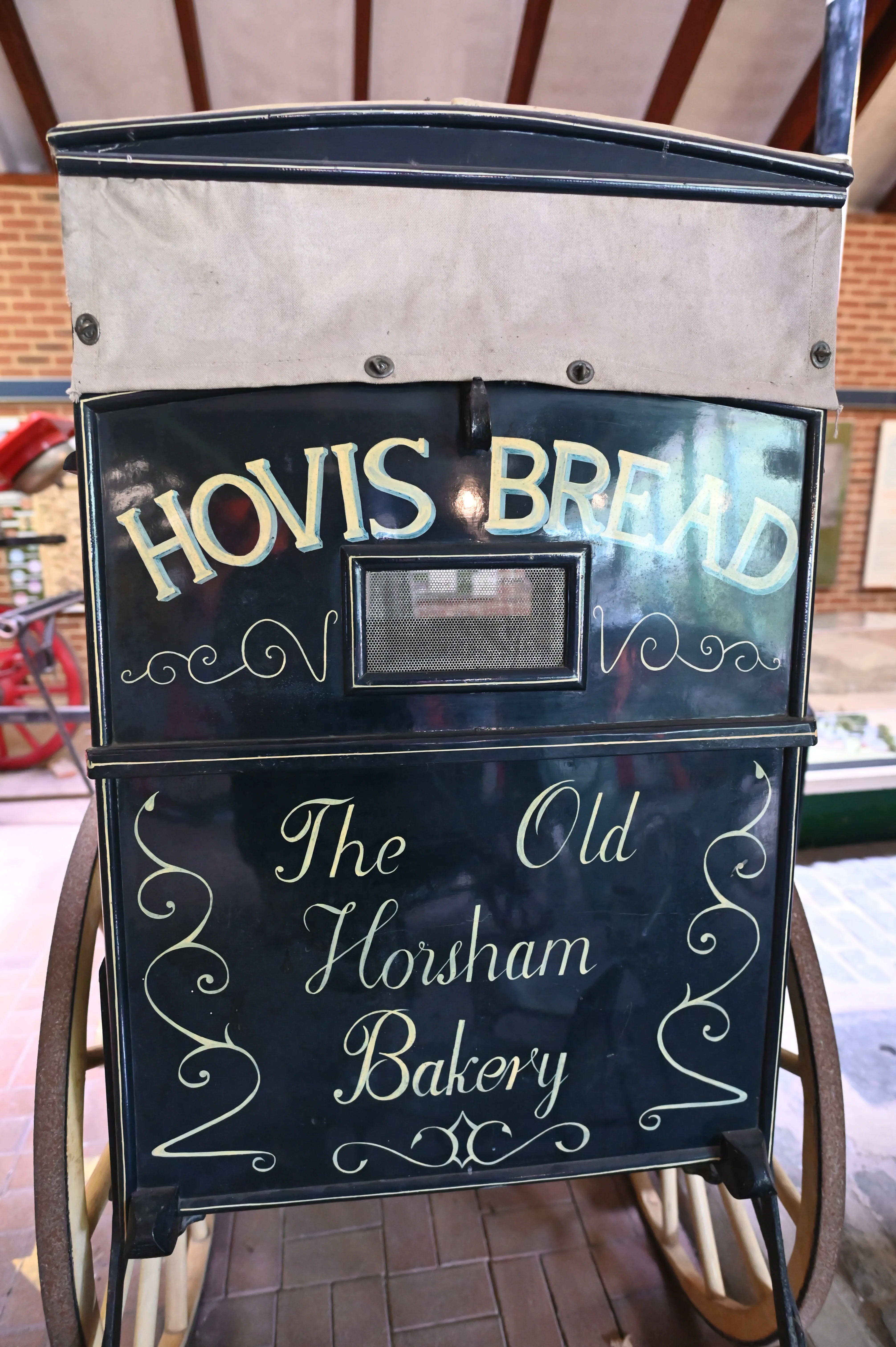
A vintage black Hovis bread delivery cart with ornate lettering. The top panel reads 'HOVIS BREAD' in gold and blue. The lower panel reads 'The Old Horsham Bakery' in elegant script.
Vintage Hovis Bread Delivery Cart  ‐ photo by ,
©www.mgaylard.co.uk .
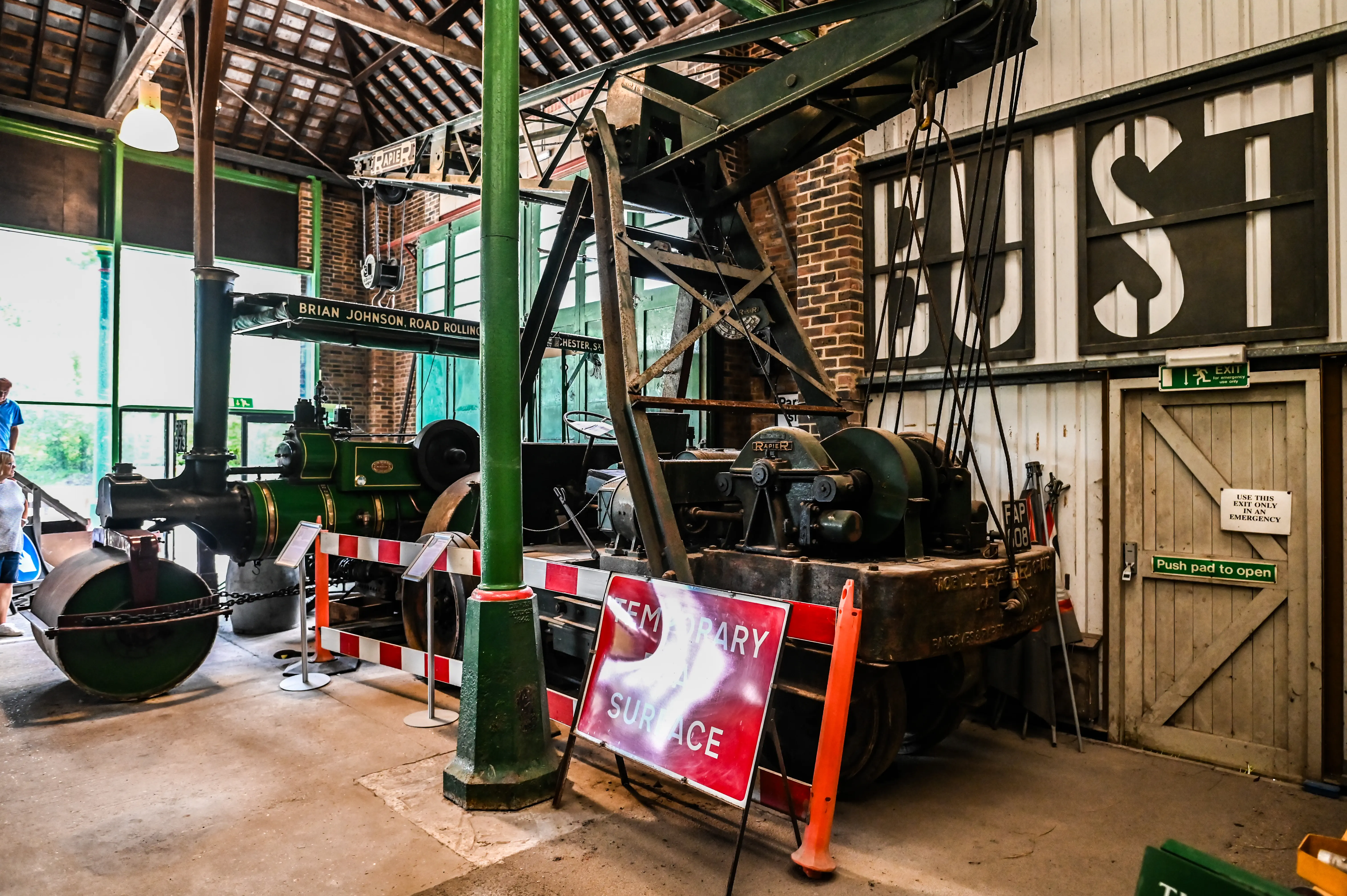
An interior view of a museum exhibit featuring a green vintage steam road roller next to a large industrial crane.
Exhibition of Vintage Industrial Machinery  ‐ photo by ,
©www.mgaylard.co.uk .
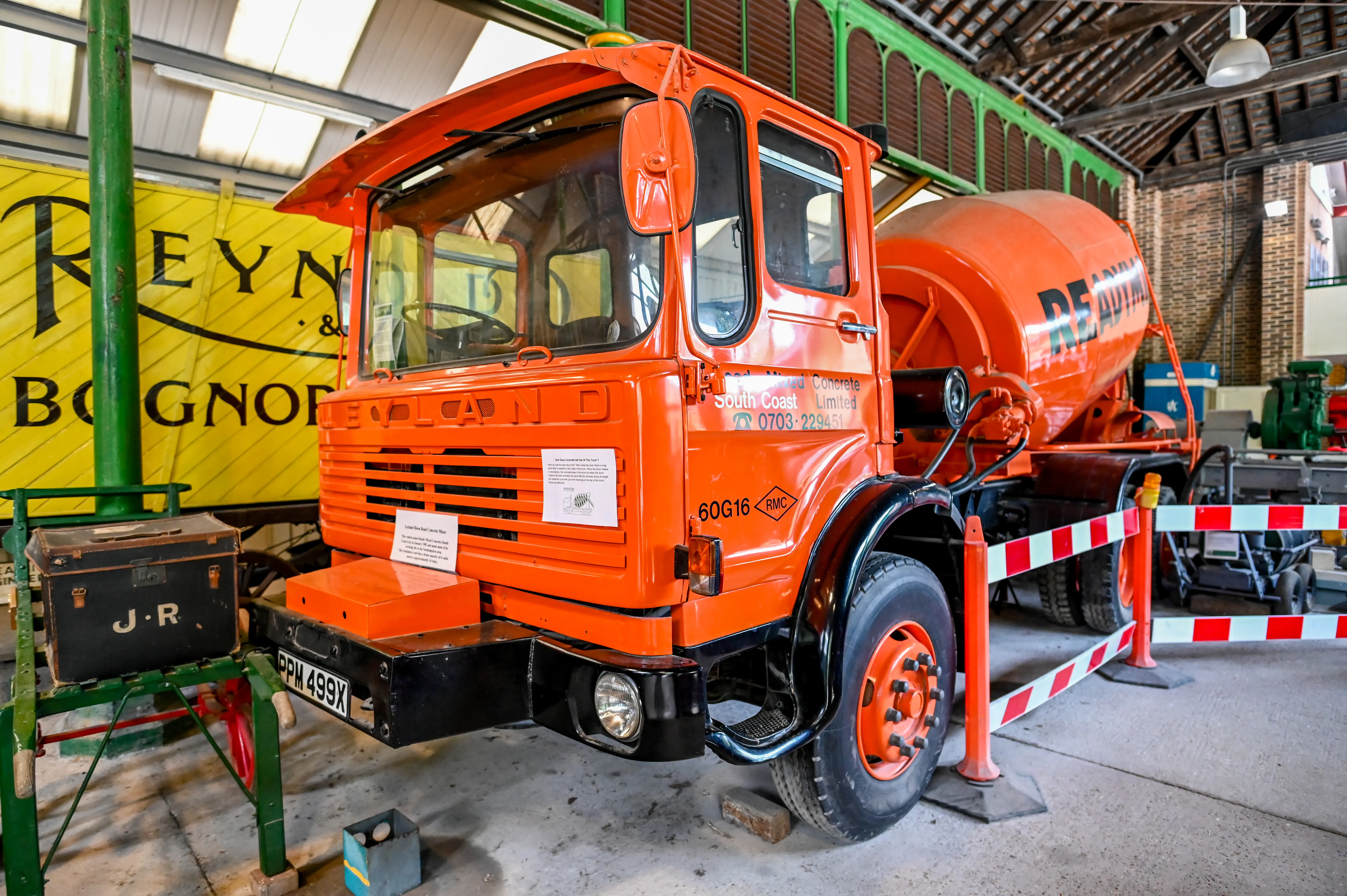
A vintage orange cement mixer truck with the registration plate PPM 499X is on display indoors. In the foreground, a dark trunk with the initials
Vintage Leyland Cement Mixer Truck  ‐ photo by ,
©www.mgaylard.co.uk .
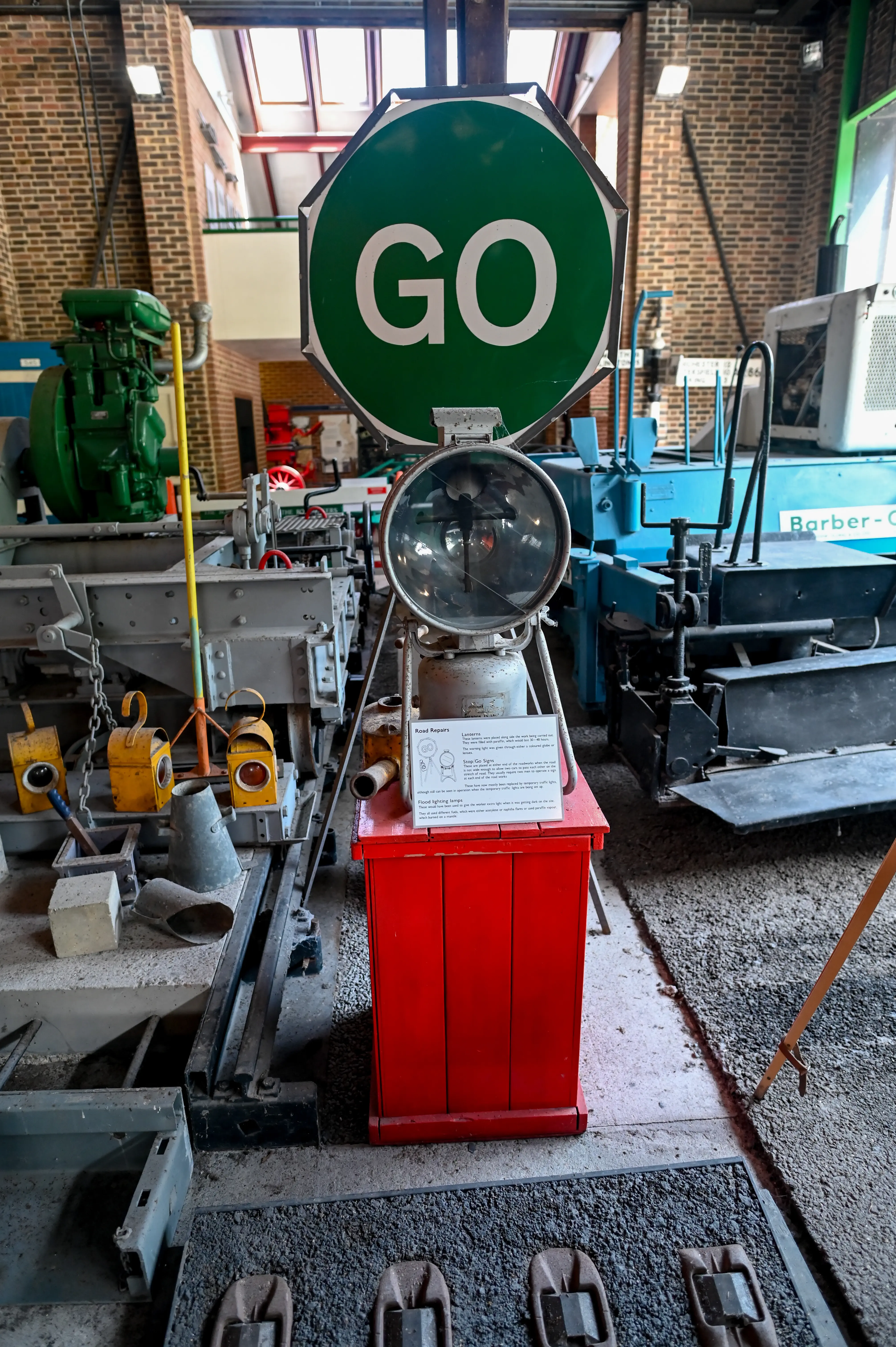
An octagonal green
Historical Railway and Road Safety Equipment Display
photo by
©www.mgaylard.co.uk.
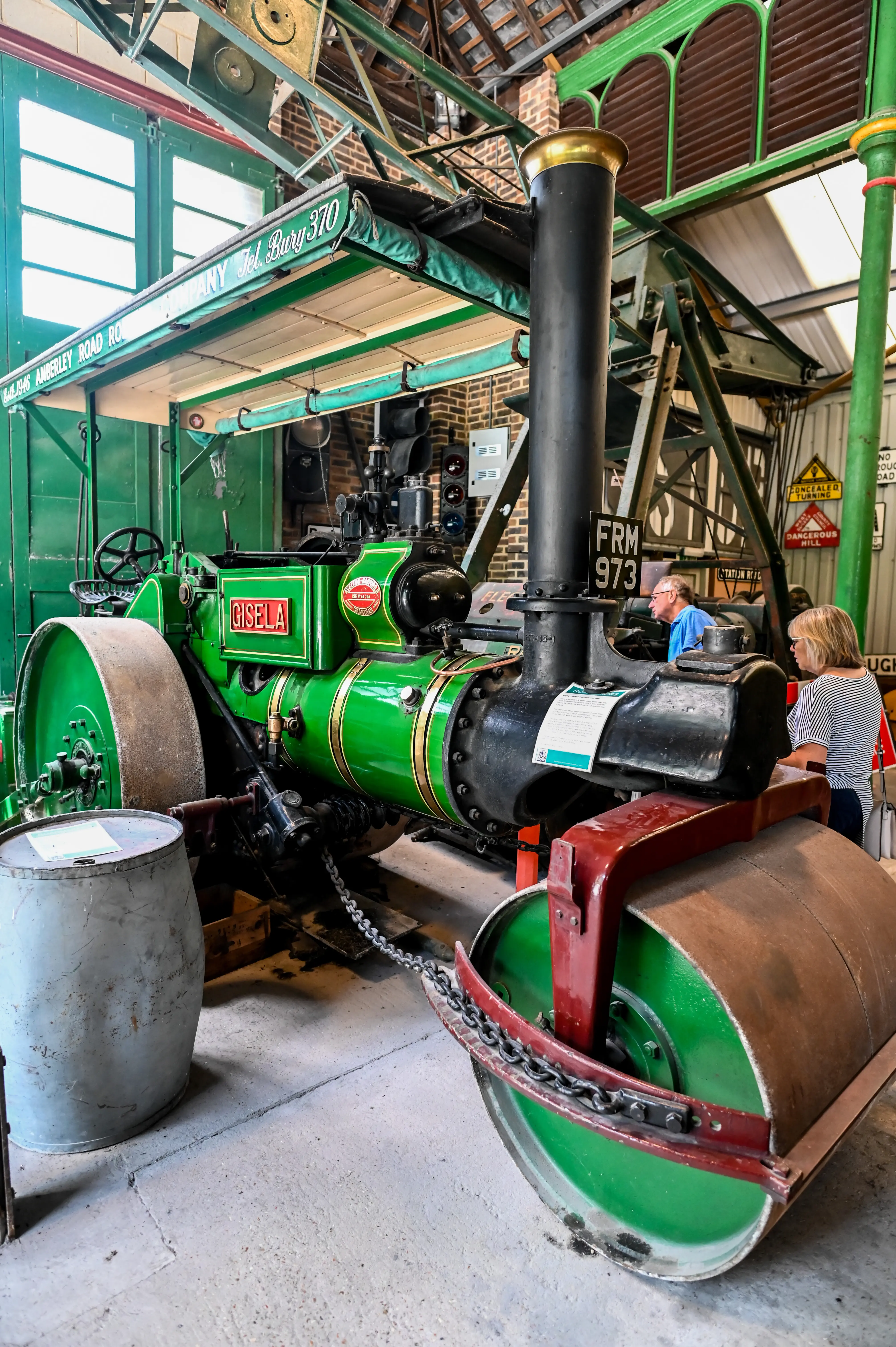
A beautifully restored vintage steam roller painted in green with red and gold accents. The steam roller is marked with 'Cisele' and 'FRM 973' and features a tall chimney, a boiler, and large metal wheels. It is displayed in a museum with industrial artifacts and visitors in the background
A beautifully restored vintage steam roller, painted in vibrant green with red and gold accents, on display in a museum. The steam roller, marked with the name "Cisele" and the number "FRM 973", features intricate details such as a tall chimney, a boiler, and large metal wheels. The background includes industrial artifacts and museum visitors, creating an immersive historical atmosphere.
photo by
©www.mgaylard.co.uk.
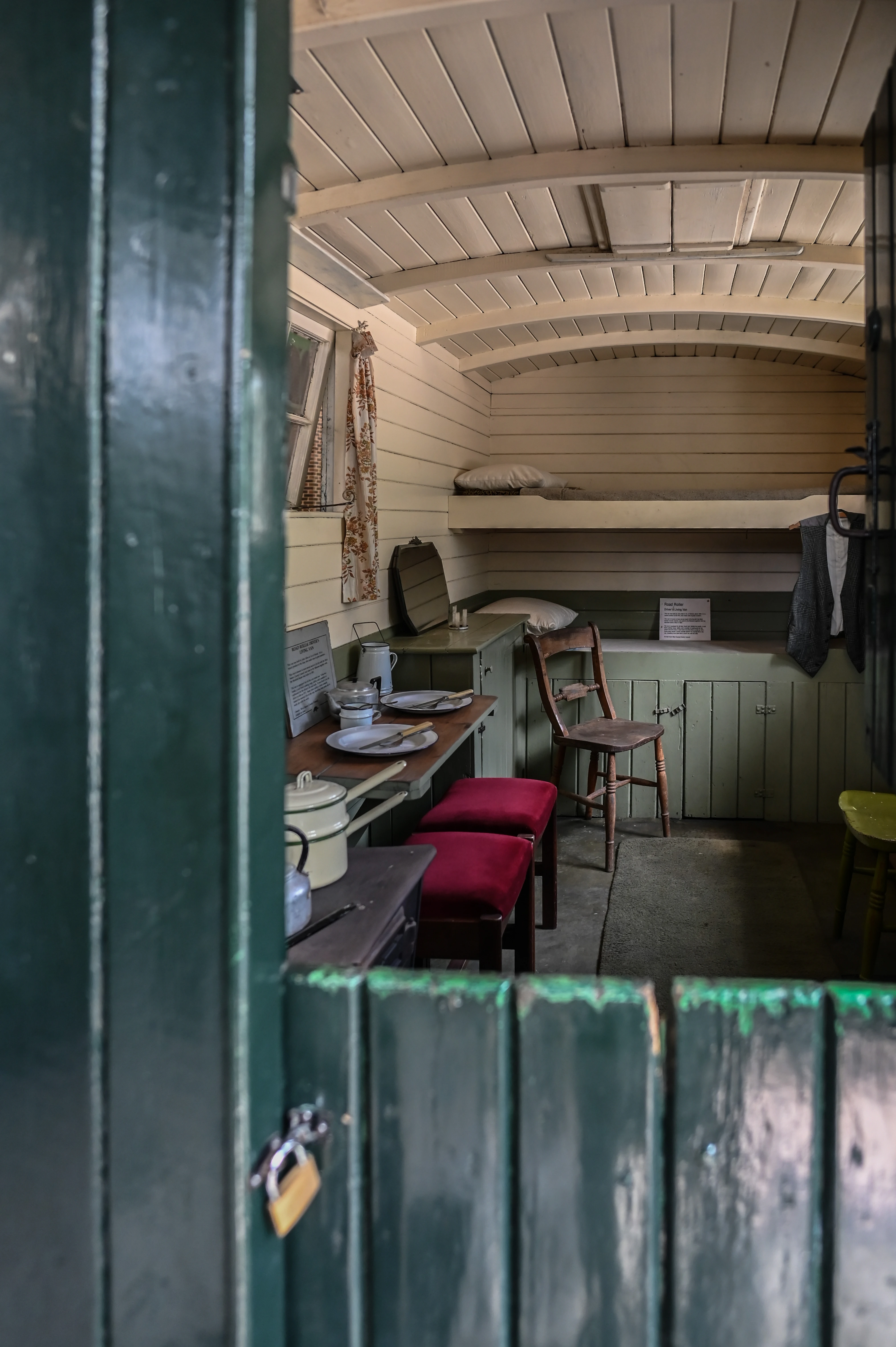
Interior view of a narrow, wooden railway carriage, showing a bunk bed above green cupboards, a table with place settings and cookware, a wooden chair, and red stools, viewed through a partly open, dark green wooden door.
Interior of a Historic Railway Carriage Living Space
photo by
©www.mgaylard.co.uk.
Open the full set flickr button this page

Paviors' Museum of Roadmaking

The Paviors' Museum of Roadmaking at Amberley Open Air Museum is part of the museum’s mission to preserve and celebrate the industrial and rural heritage of the South East of England. Roadmaking has played a critical role in the development of human civilization, enabling the movement of people, goods, and ideas across regions and continents. From ancient cobblestone paths to modern asphalt roads, the craft of roadmaking has evolved significantly, driven by innovation, necessity, and the ingenuity of paviors (roadmakers)

In the UK, roadmaking gained prominence during the Medieval period, with the construction of turnpike roads in the 18th century and the development of macadam roads in the early 19th century. These advancements revolutionized transportation, enabling faster and more efficient movement of people and goods. The Paviors' Museum of Roadmaking at Amberley Museum honors this legacy by showcasing the tools, techniques, and machinery that have shaped the history of road construction in the UK.

The exhibit also highlights the role of paviors in building the foundations of modern society. Paviors were skilled craftsmen who designed, built, and maintained roads, ensuring that communities remained connected and that trade and travel could flourish. The Paviors' Museum of Roadmaking at Amberley Museum ensures that their story and contributions are preserved and celebrated for future generations.

References

Text generated by Mistral AIwww.xprivo.comMicrosoft CoPilot , and AI Image Describer
To the top
Powered by w3.css. The images are all stored on link to www.gaylard.co.uk Photostream on Flickr   This website is hosted by link to 123Reg Web Hosting