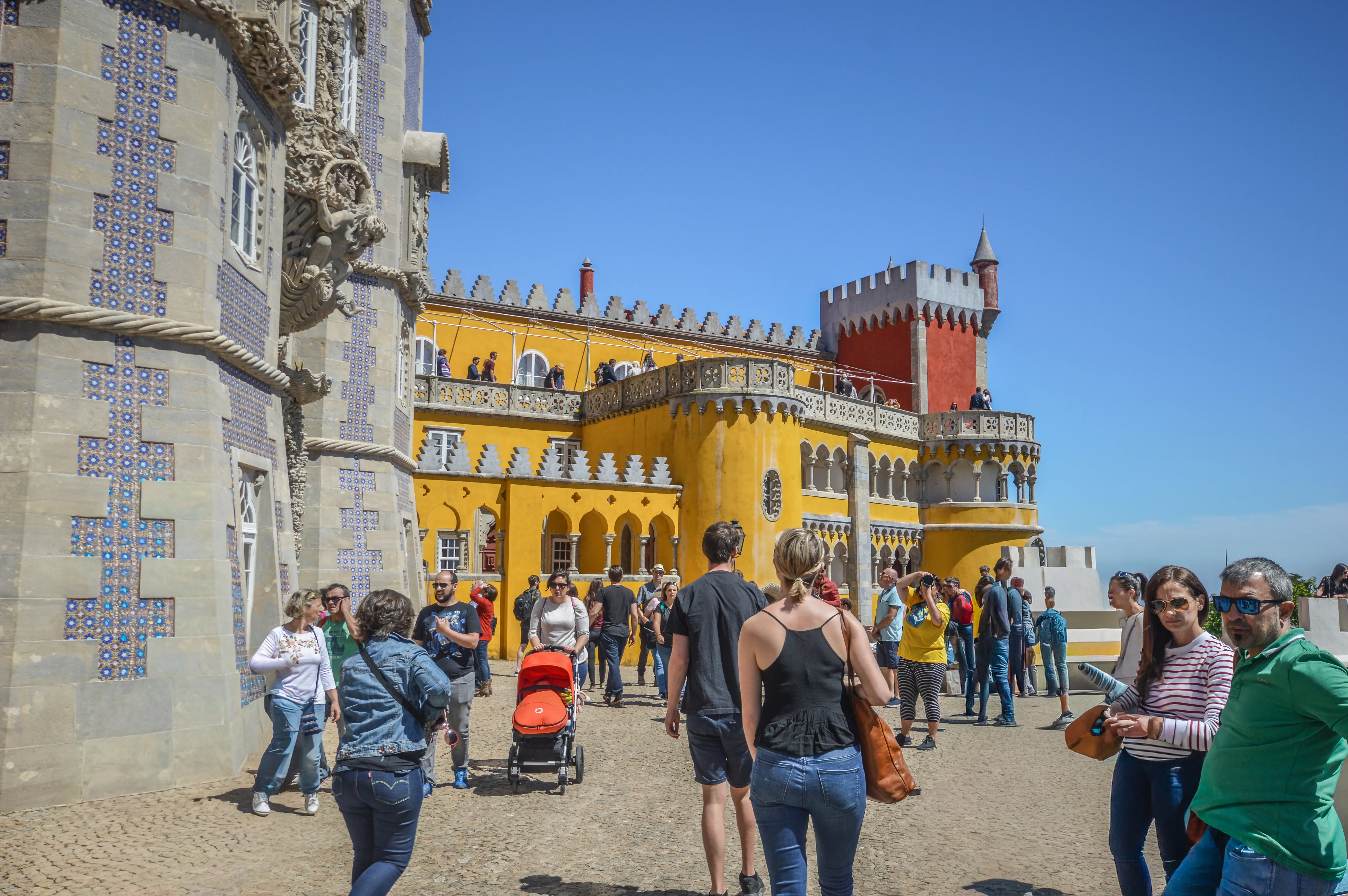
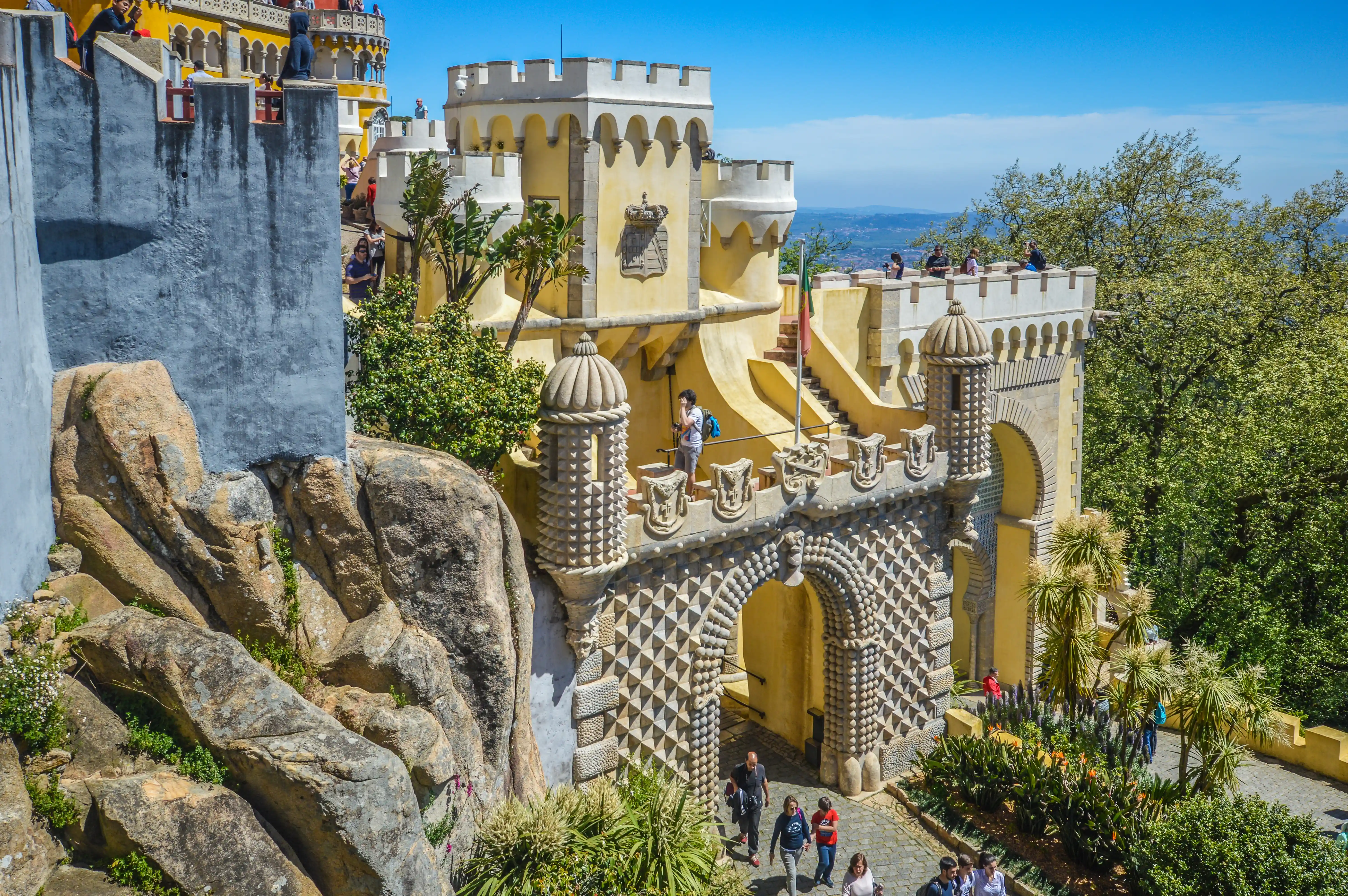
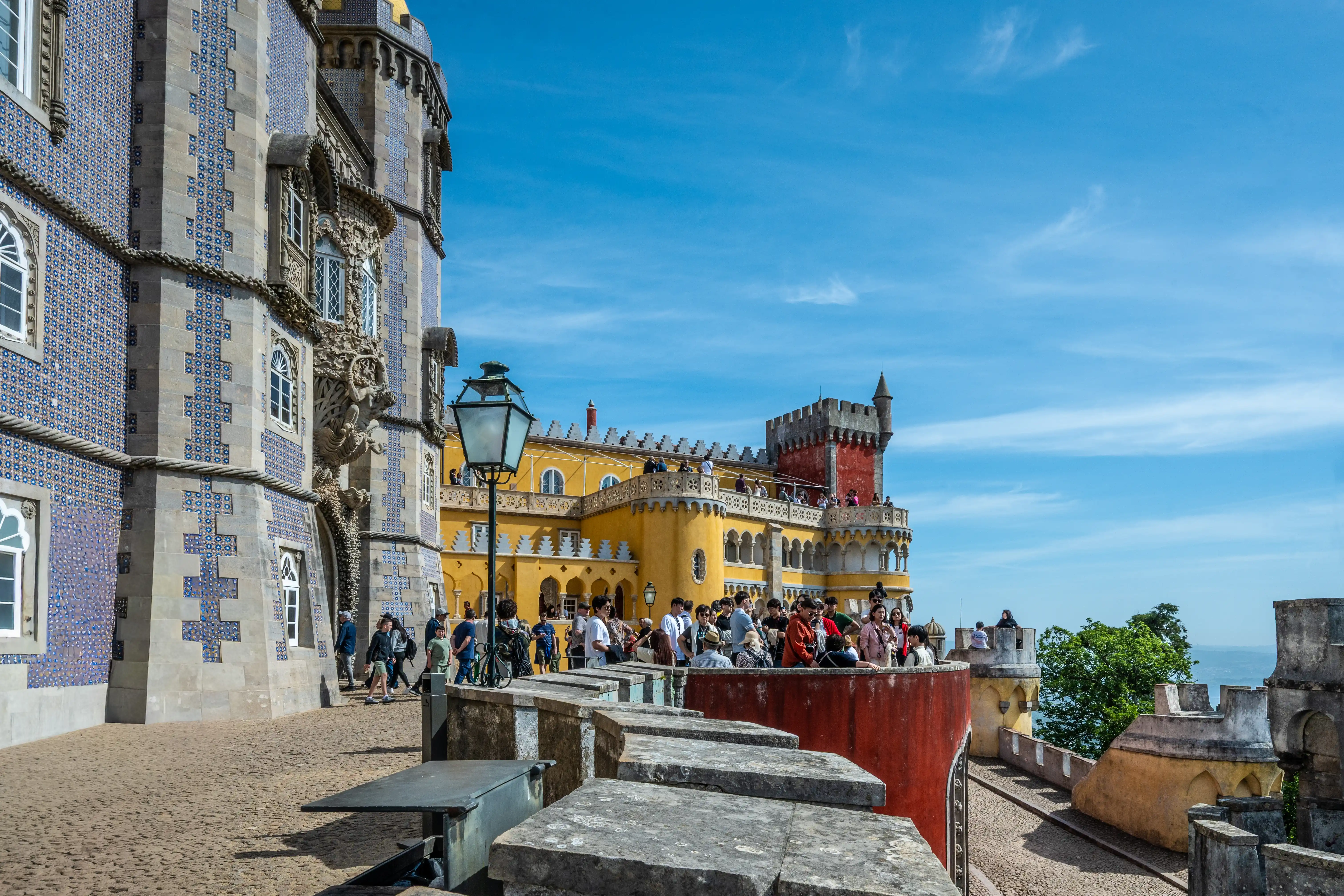
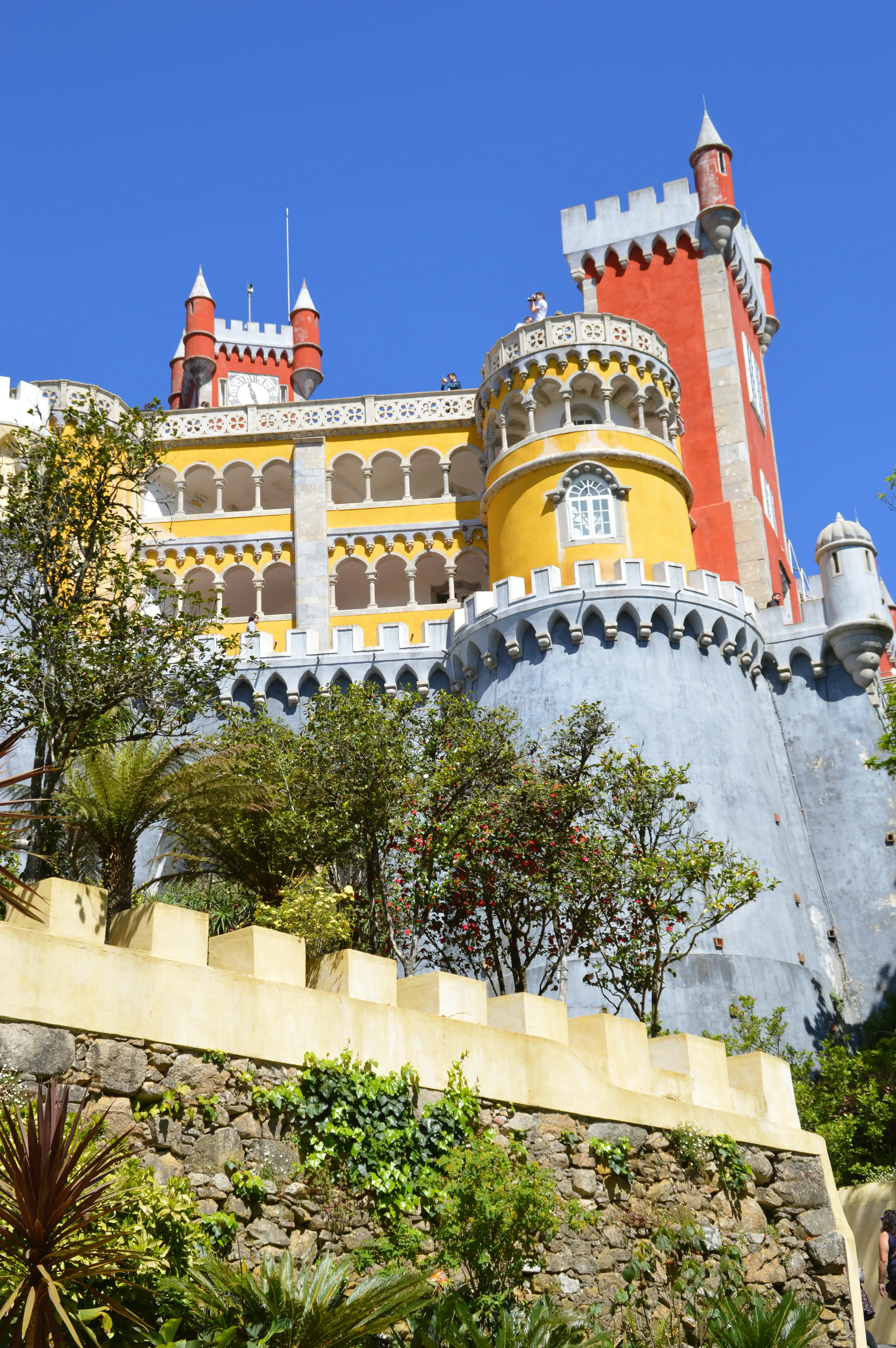


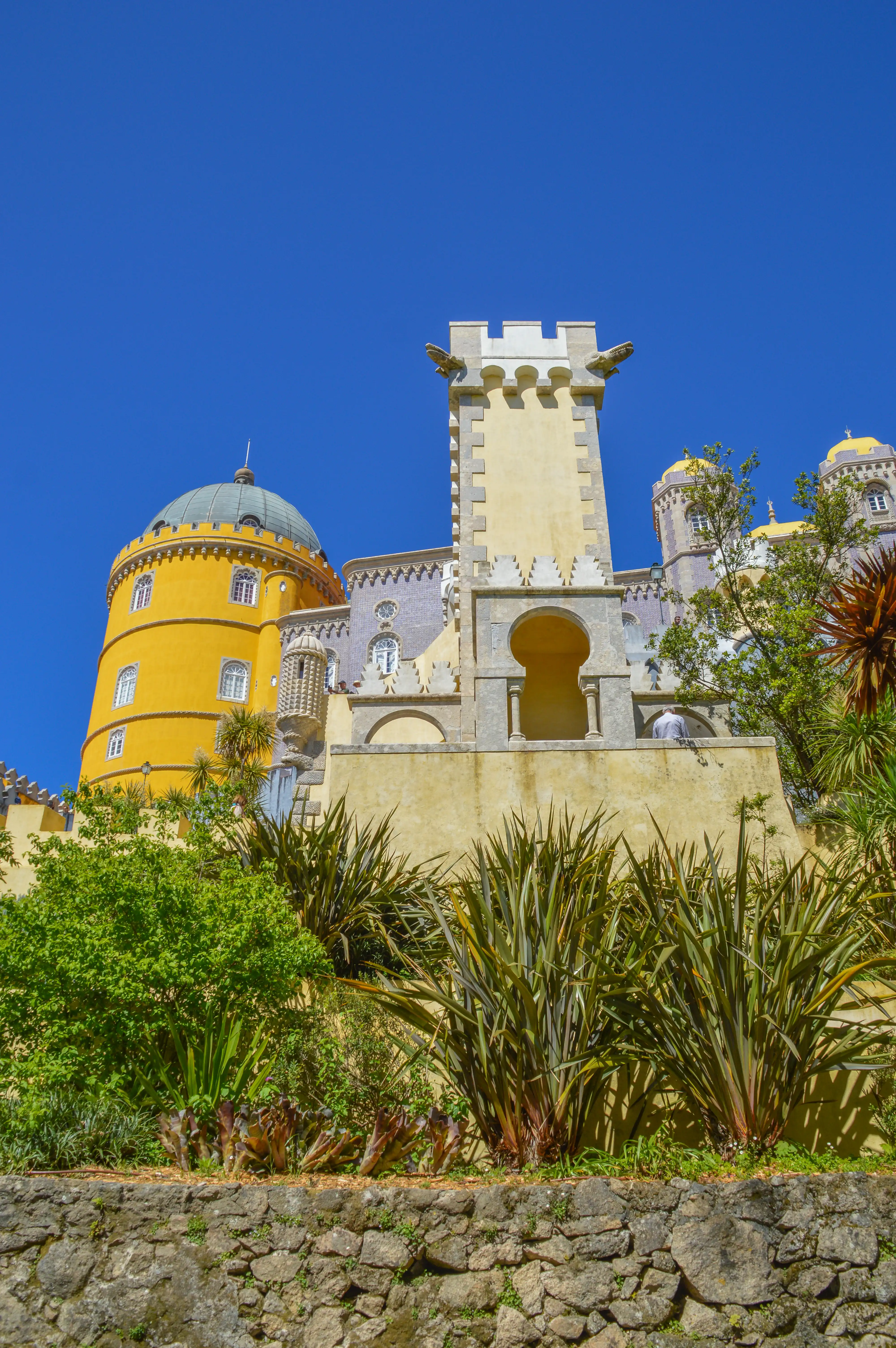
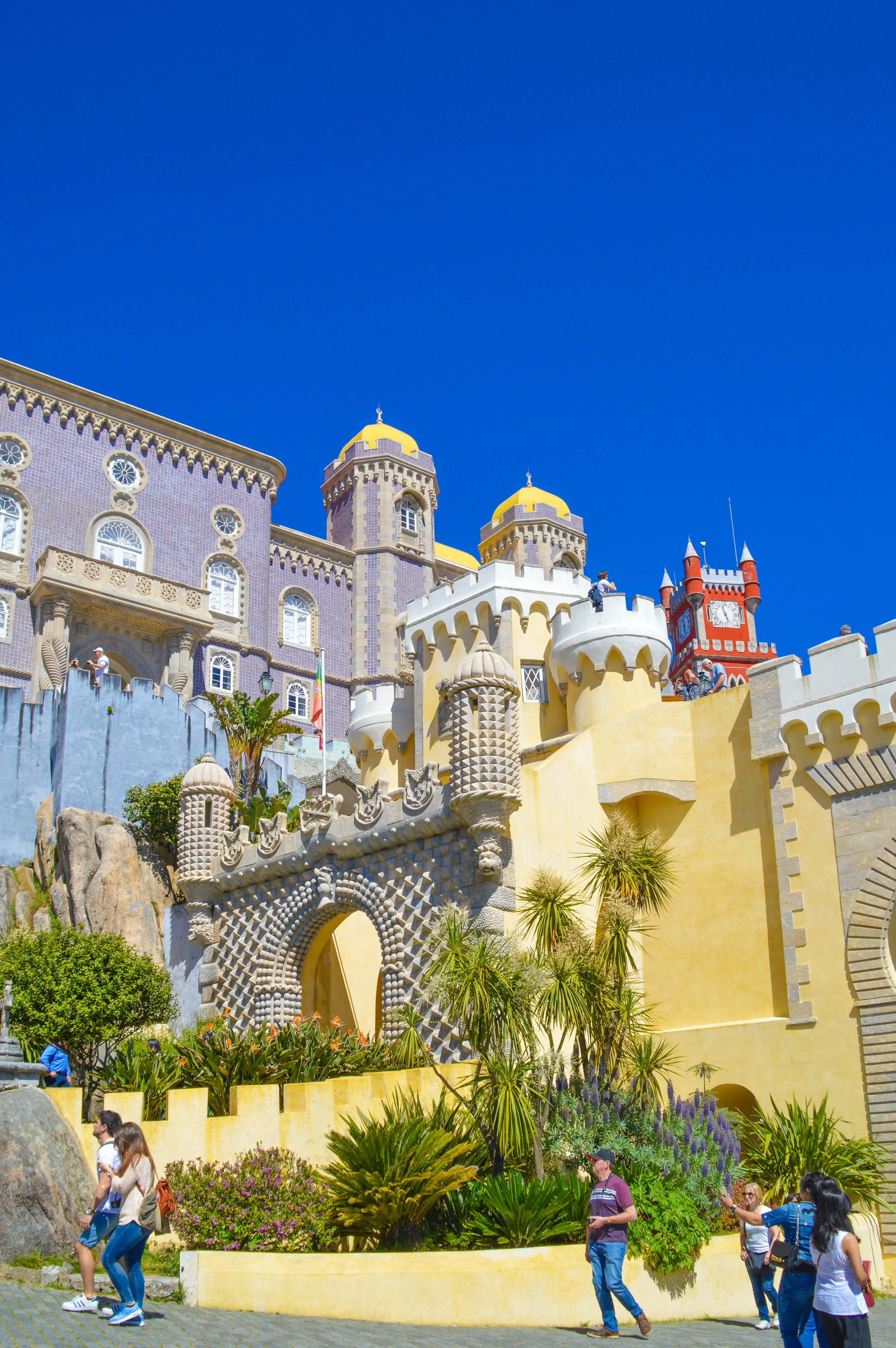
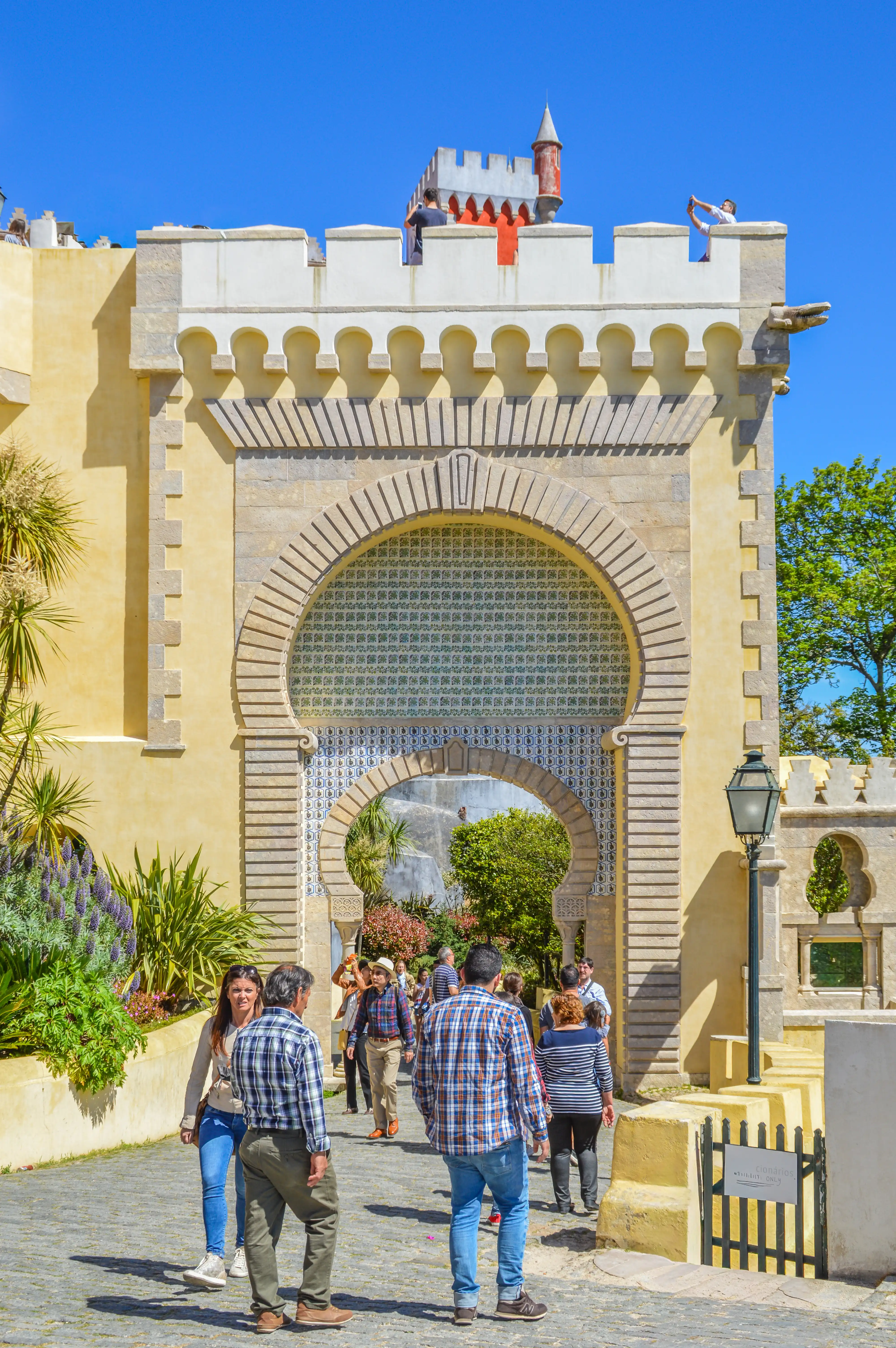
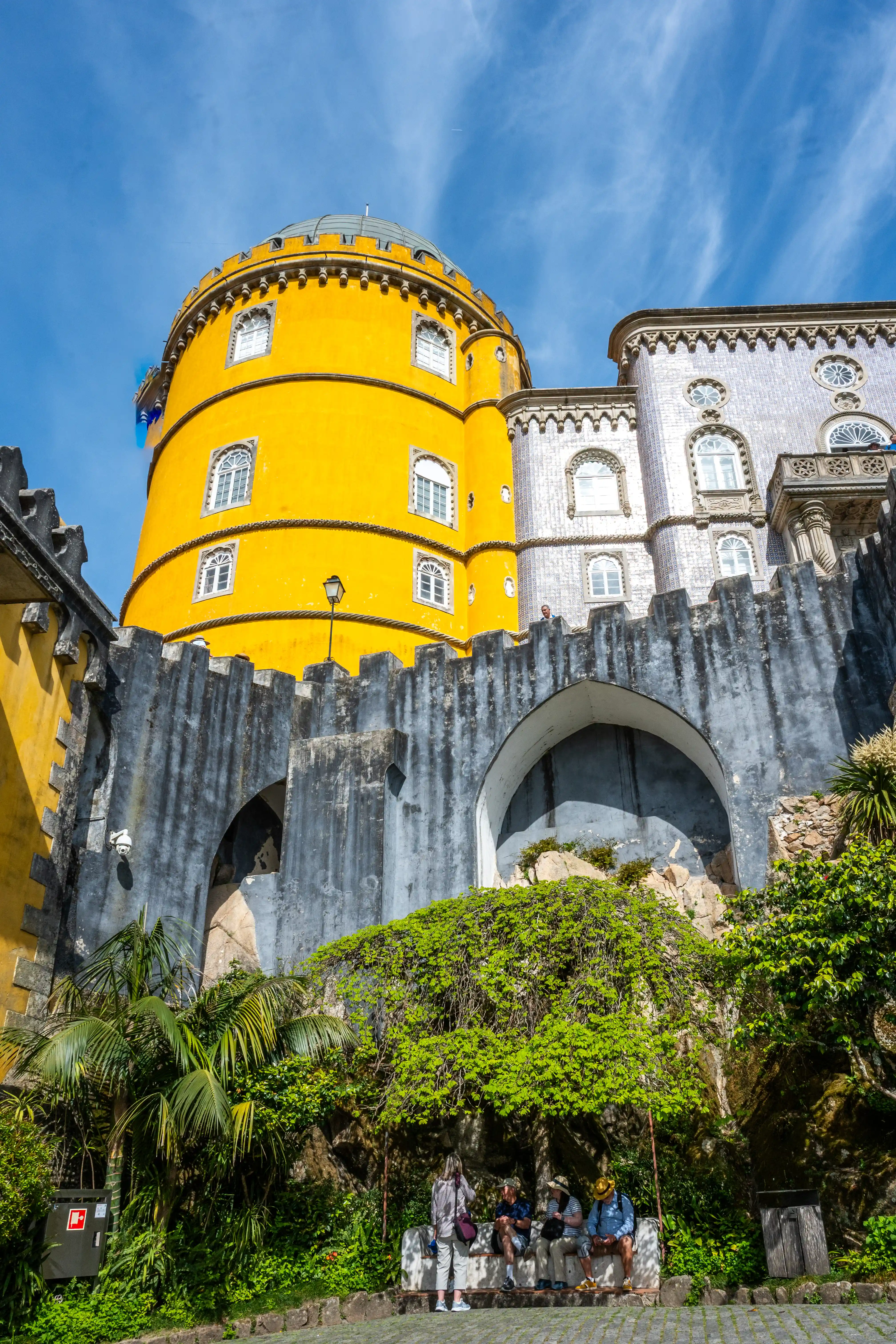


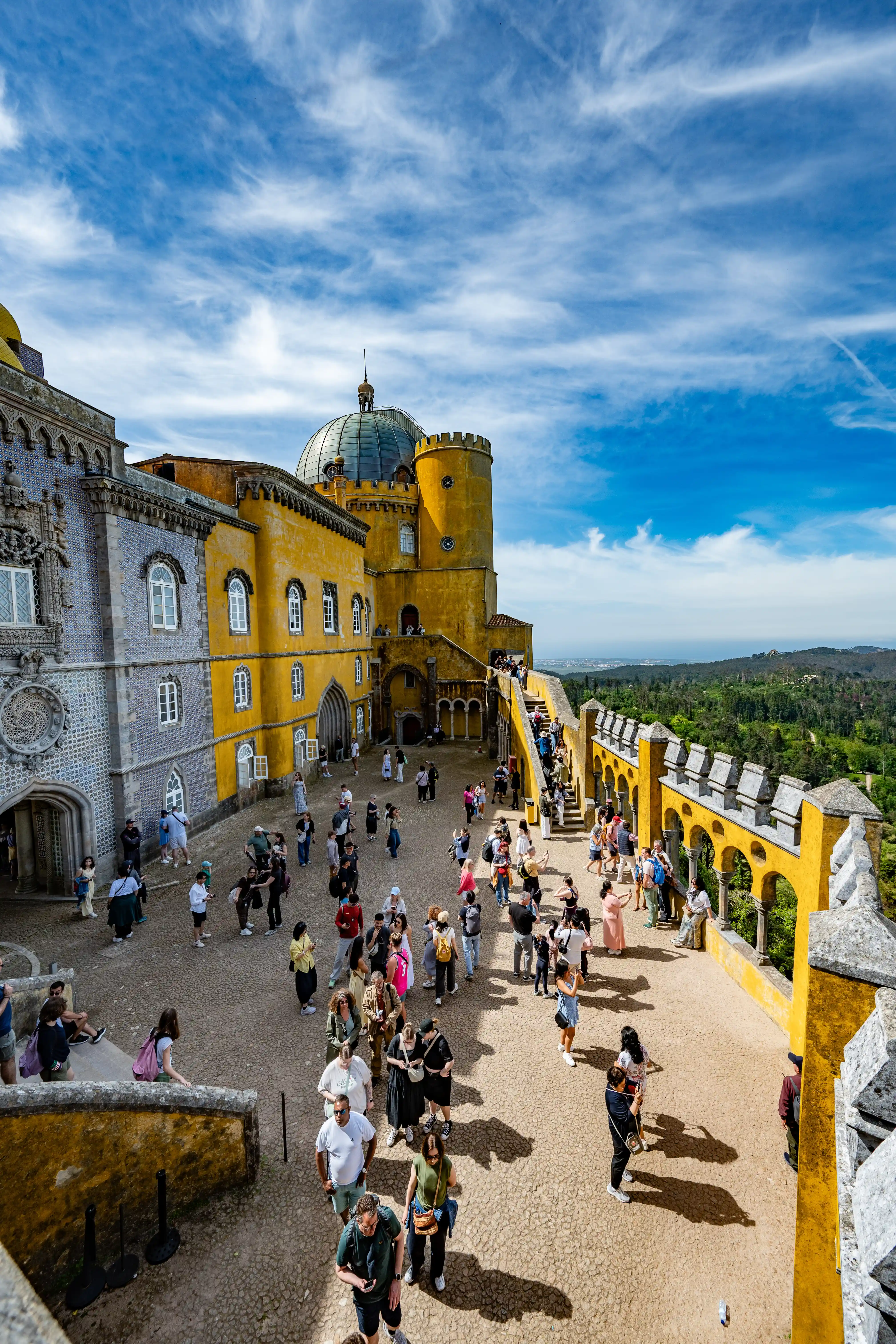
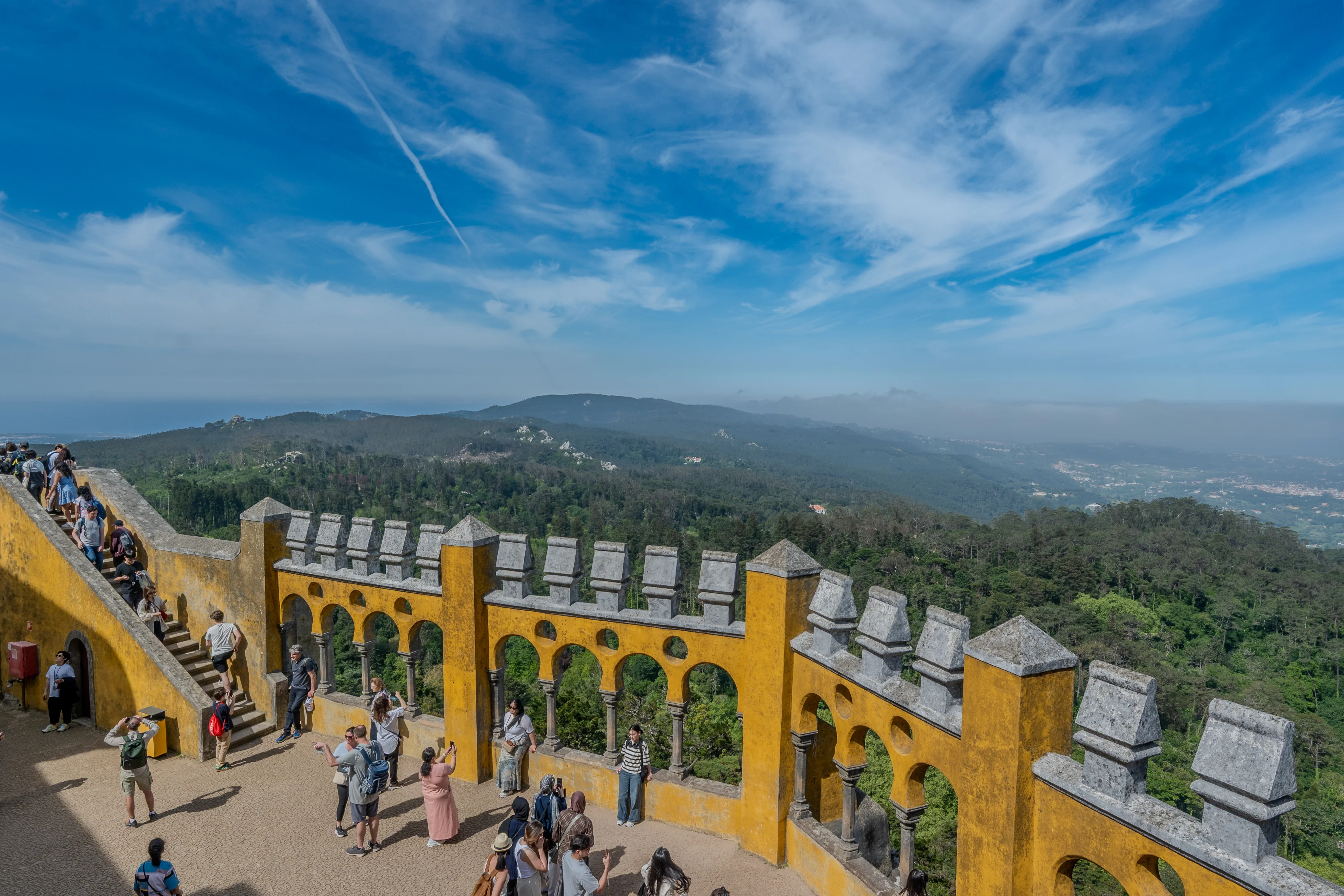
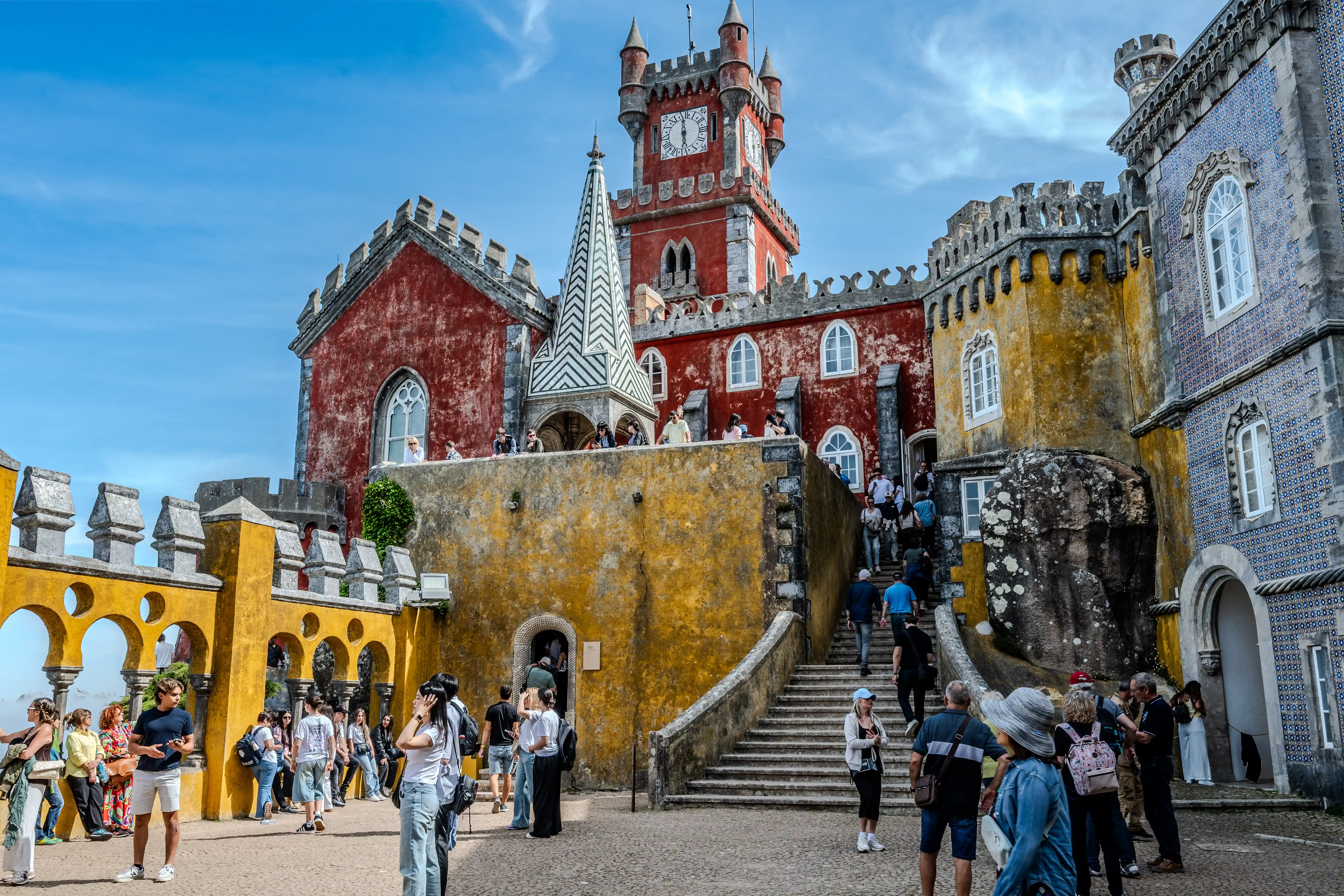





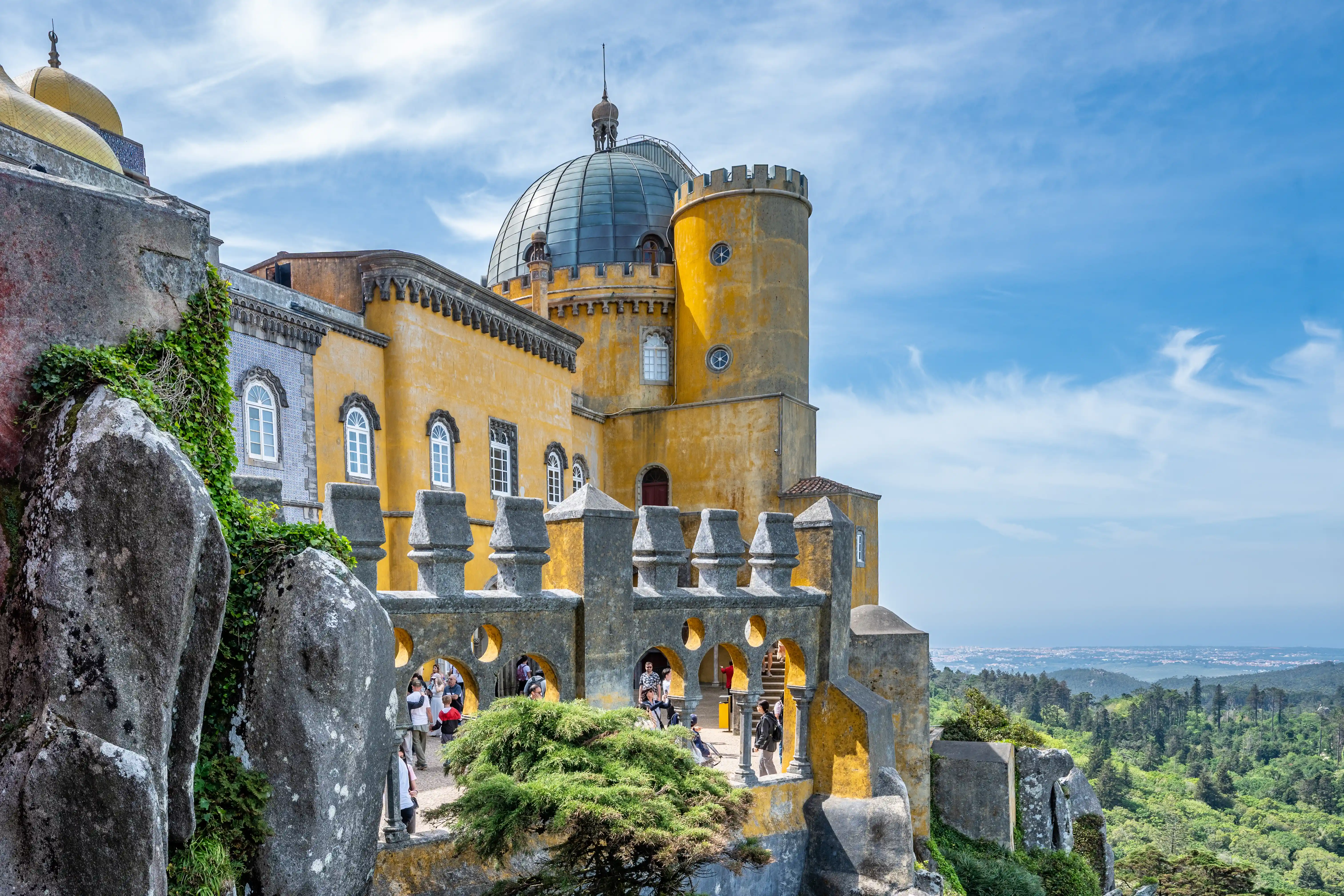
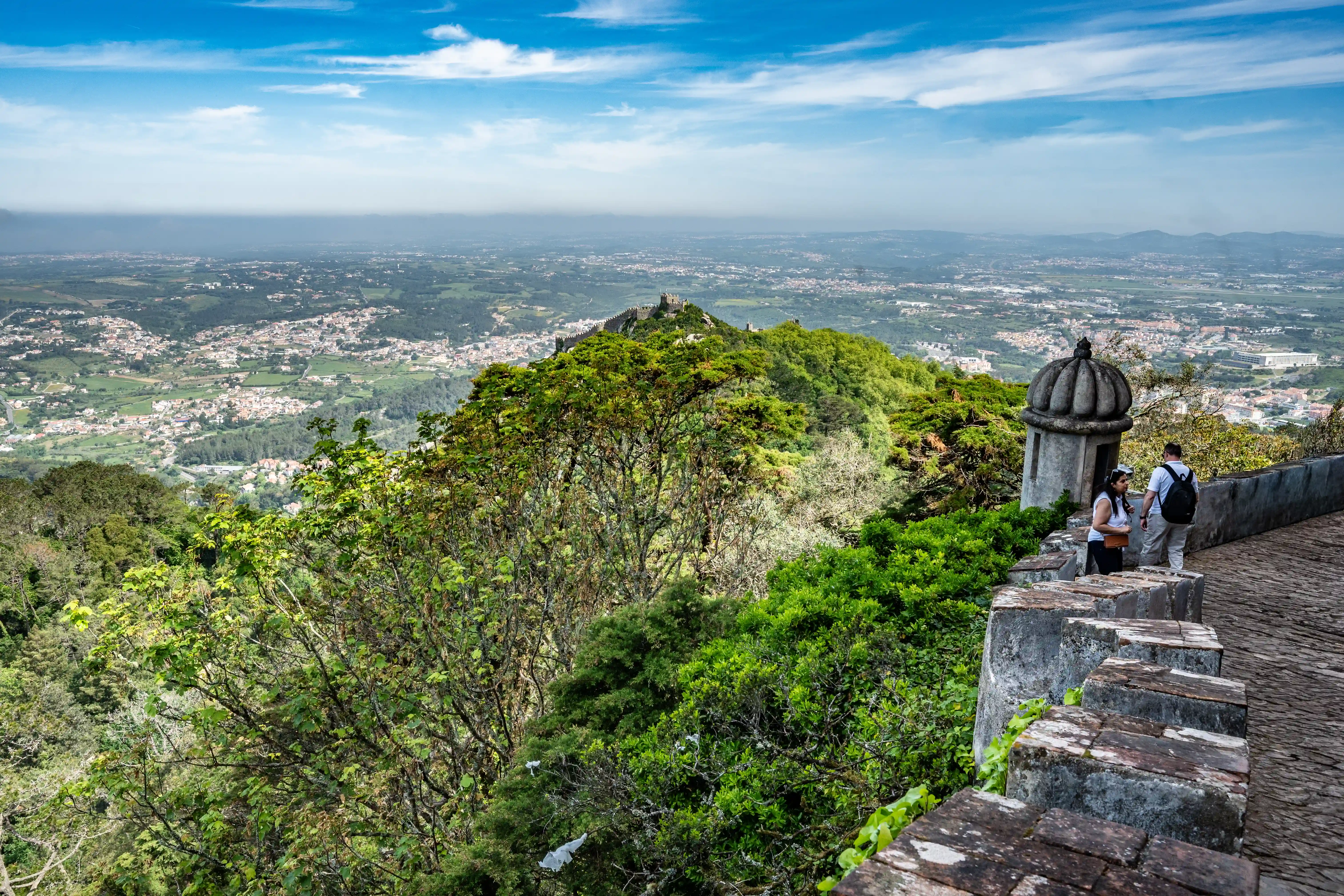
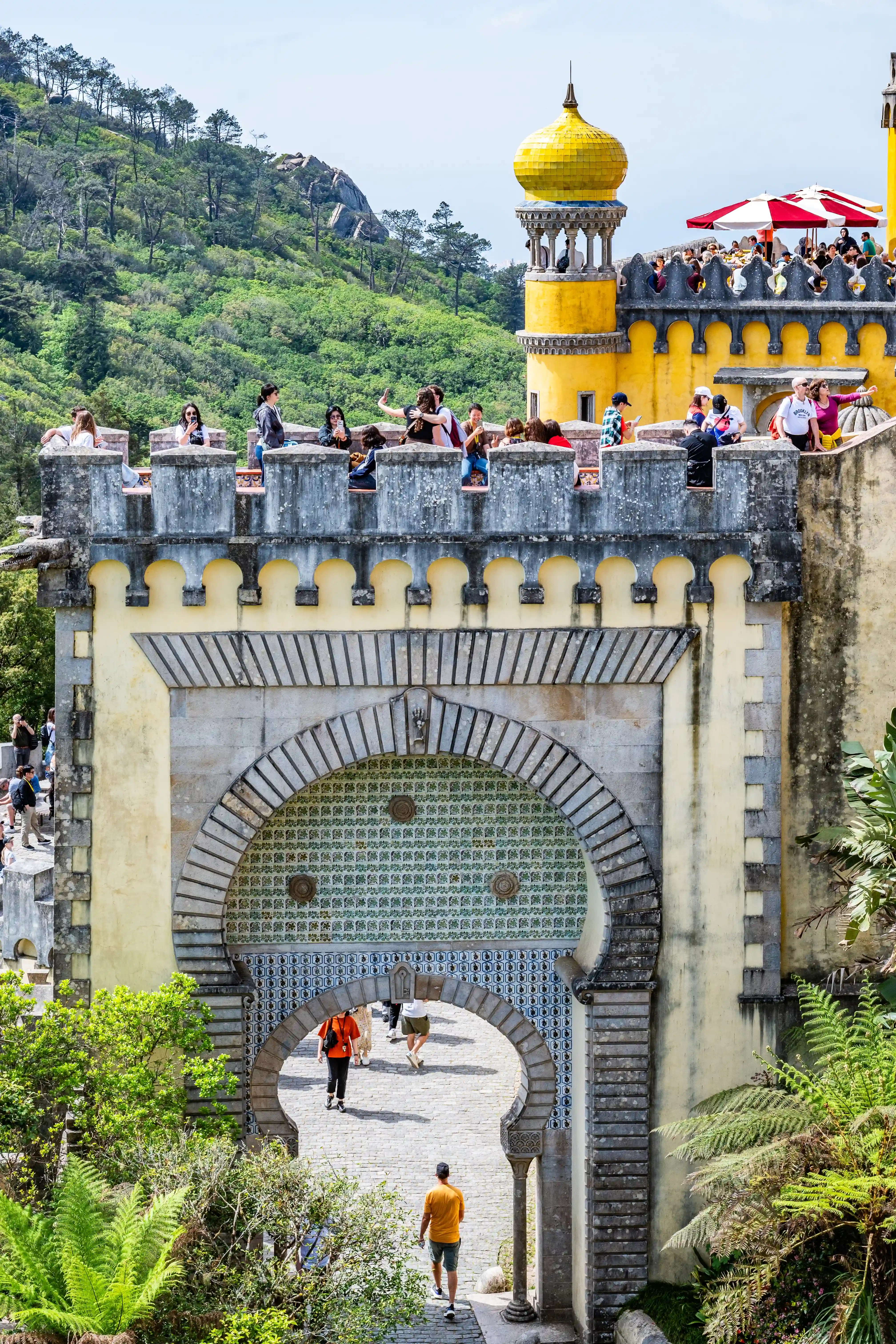
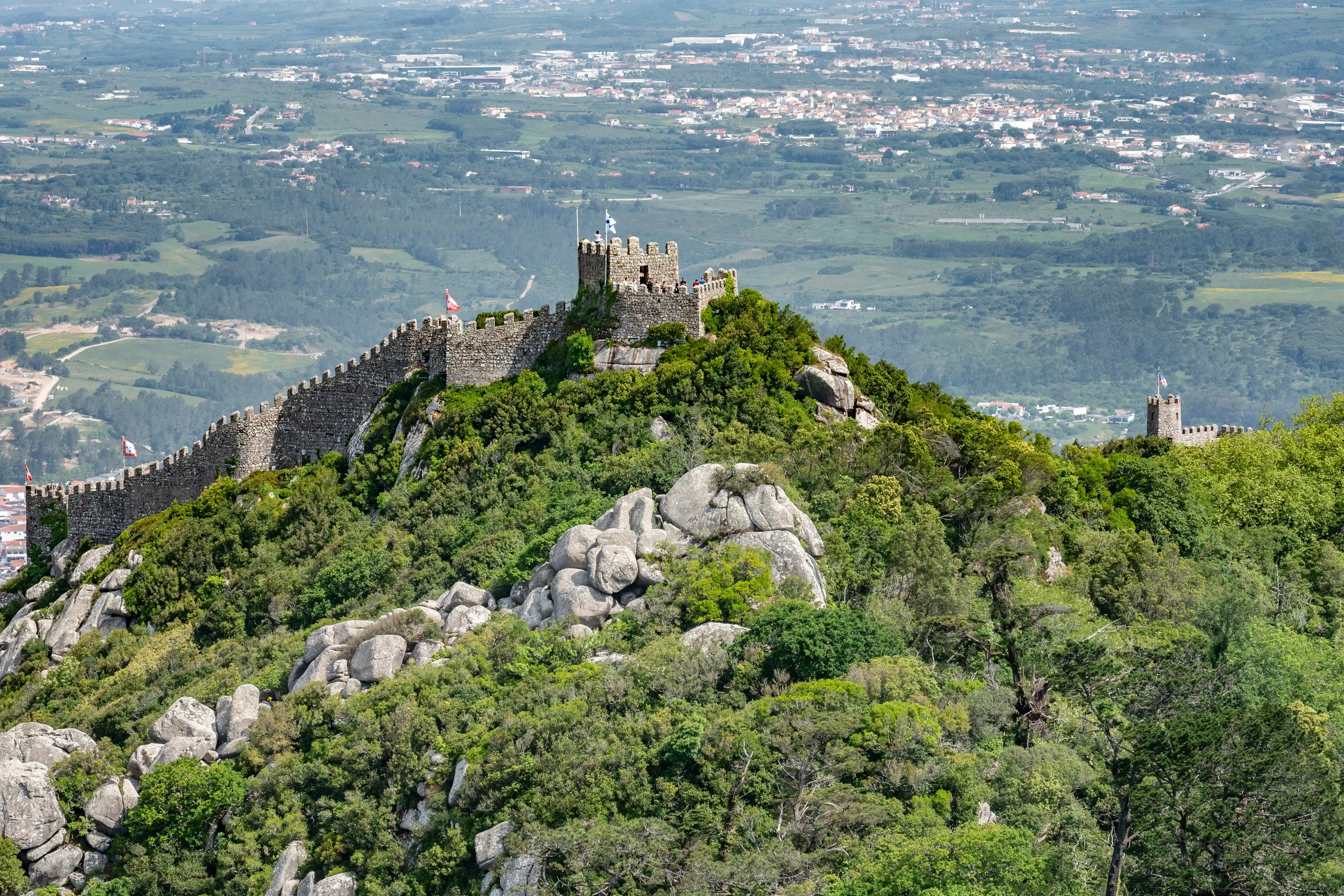
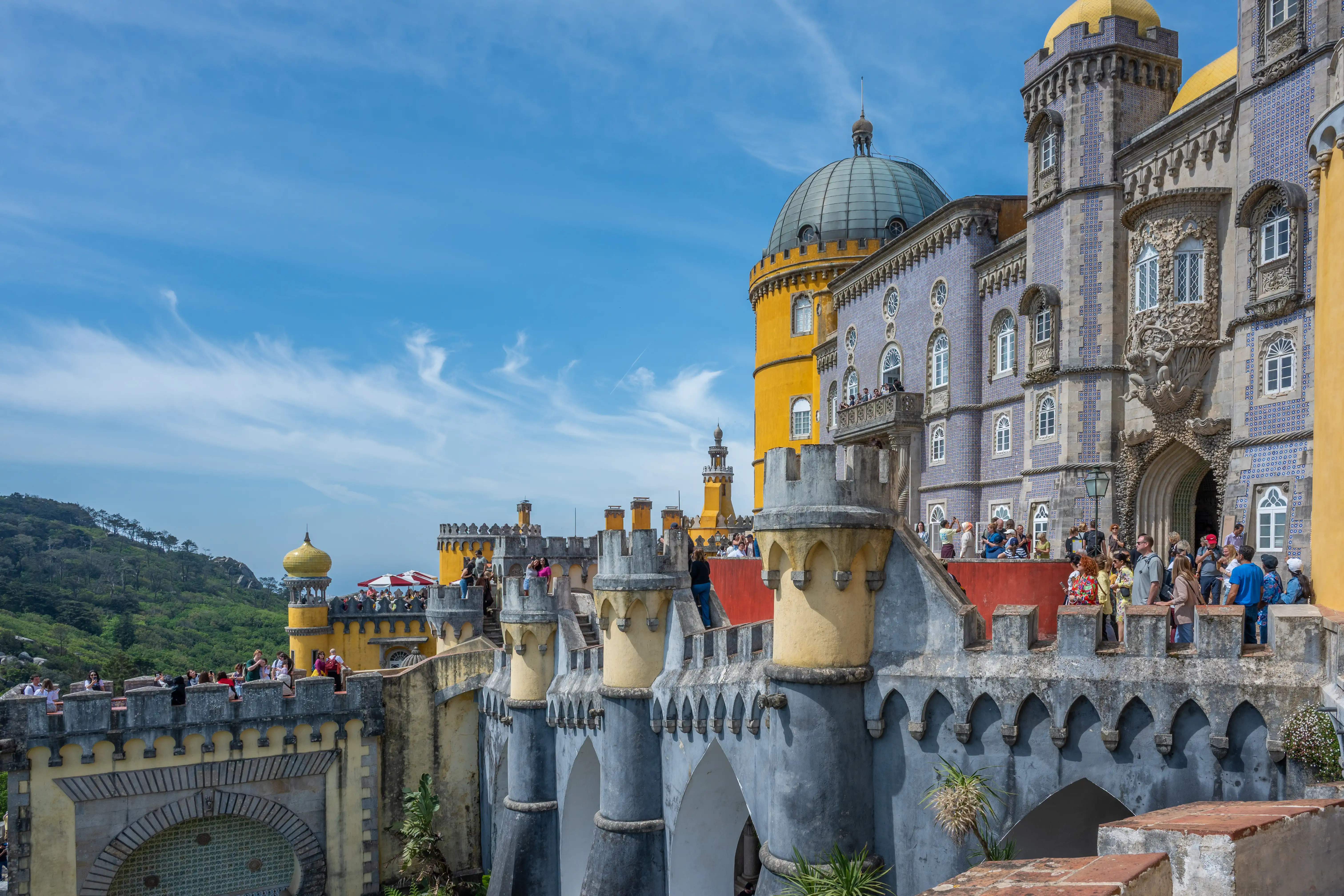

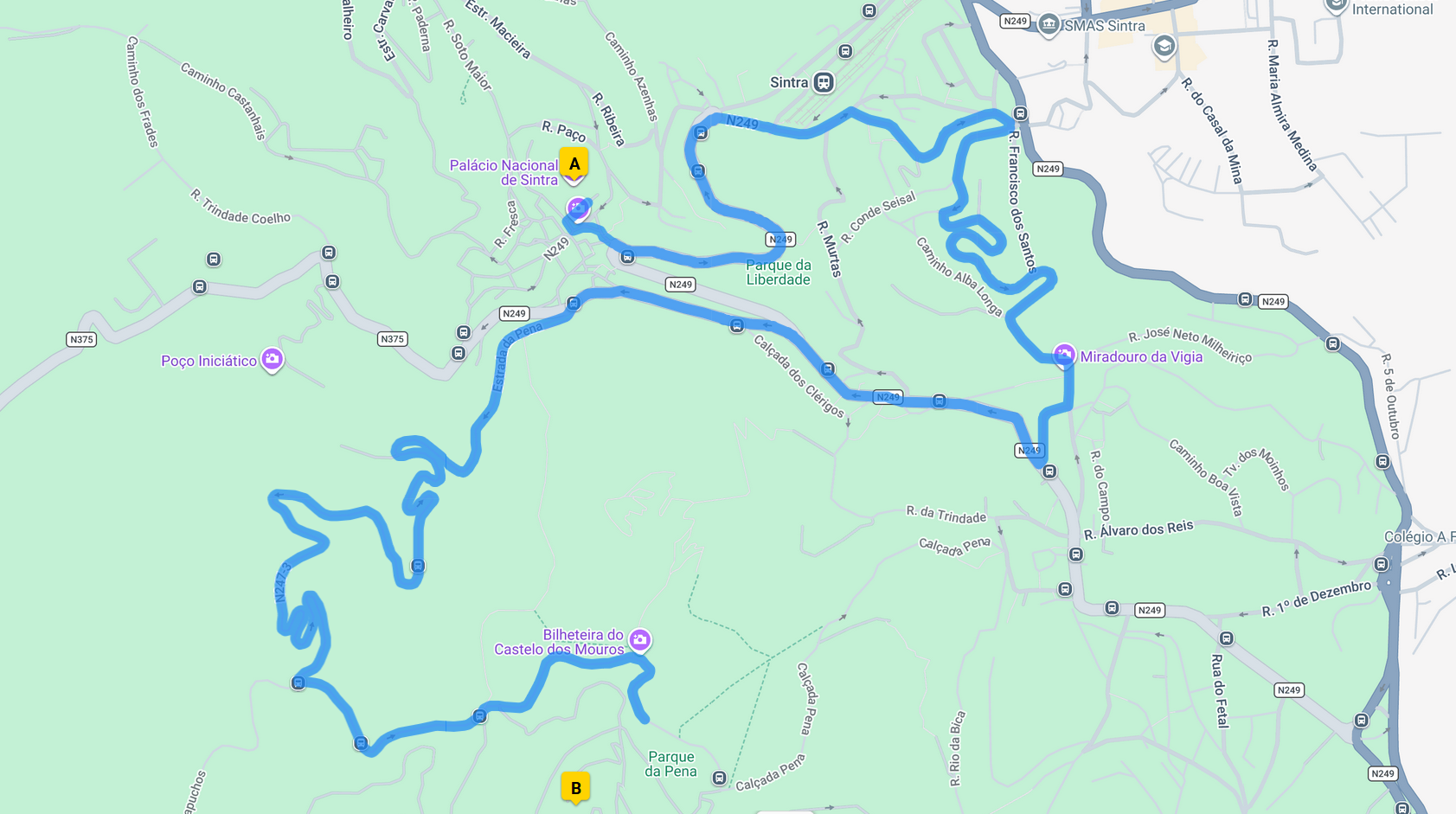
The Palácio da Pena (Pena Palace) is one of Portugal’s most enchanting and iconic landmarks, a colorful, whimsical palace perched on a hilltop in the Sintra Mountains, just outside Lisbon. Built in the 19th century, the palace is a masterpiece of Romanticist architecture, blending Gothic, Manueline, Islamic, and Renaissance styles into a dreamlike fusion that looks as if it were plucked from a storybook. Its vibrant reds, yellows, and blues stand out against the lush greenery of the Sintra-Cascais Natural Park, making it one of the most photographed and visited sites in Portugal
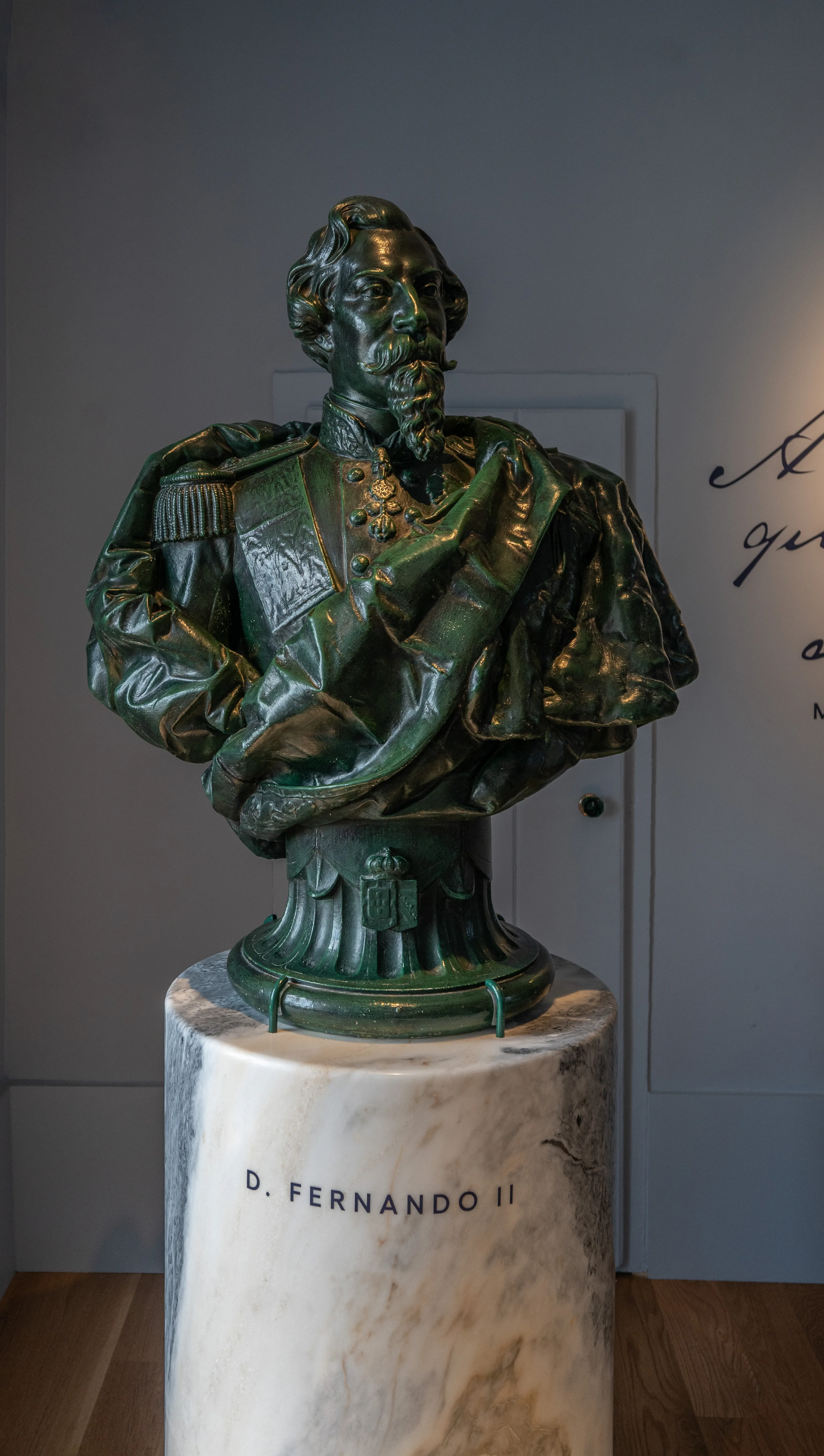
The palace’s history begins in the Middle Ages, when a chapel dedicated to Our Lady of Pena was built on the site. By the 15th century, King Manuel I ordered the construction of a monastery on the hill, which became a favorite retreat for Portuguese royalty. However, the earthquake of 1755 left the monastery in ruins, and it remained abandoned for nearly a century. The palace as we know it today was commissioned in 1838 by King Ferdinand II of Portugal (husband of Queen Maria II), who envisioned a summer residence that would capture the spirit of Romanticism—a movement that celebrated nature, emotion, and the picturesque. The palace was completed in 1854, and its eclectic design reflects Ferdinand’s love of art, history, and fantasy
A Palace of Dreams and Whimsy
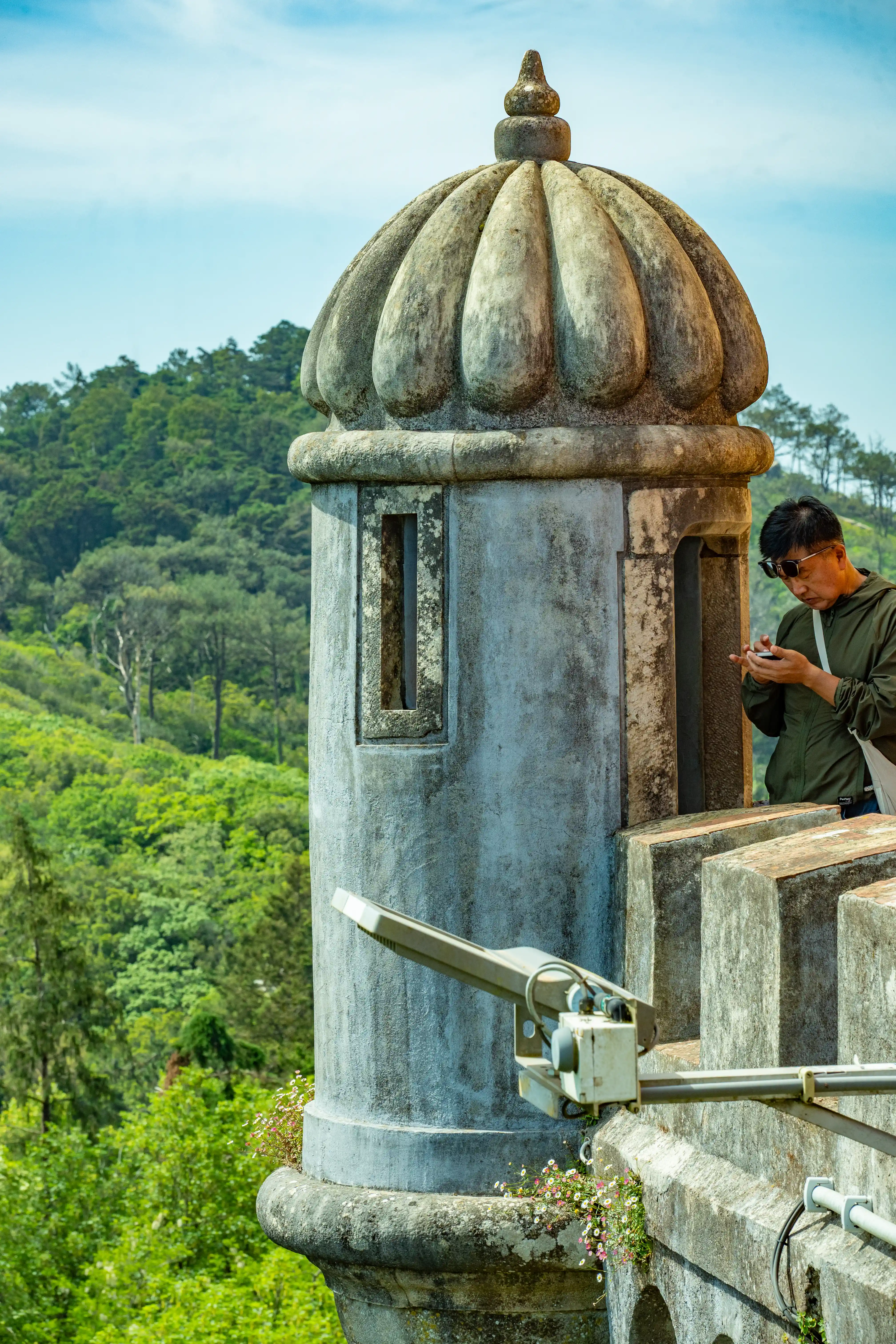
The Palácio da Pena is a testament to the Romantic ideal of a fairy-tale palace. Its architecture is a deliberate mix of styles, with turrets, battlements, and domes that evoke medieval castles, Moorish palaces, and Renaissance villas. The palace’s most striking feature is its vibrant color scheme, which was restored in the 20th century to match the original 19th-century palette. The reds, yellows, and blues were chosen to stand out against the green landscape, creating a dramatic and joyful contrast that has become synonymous with Sintra’s charmA Symbol of Portugal’s Romantic Er
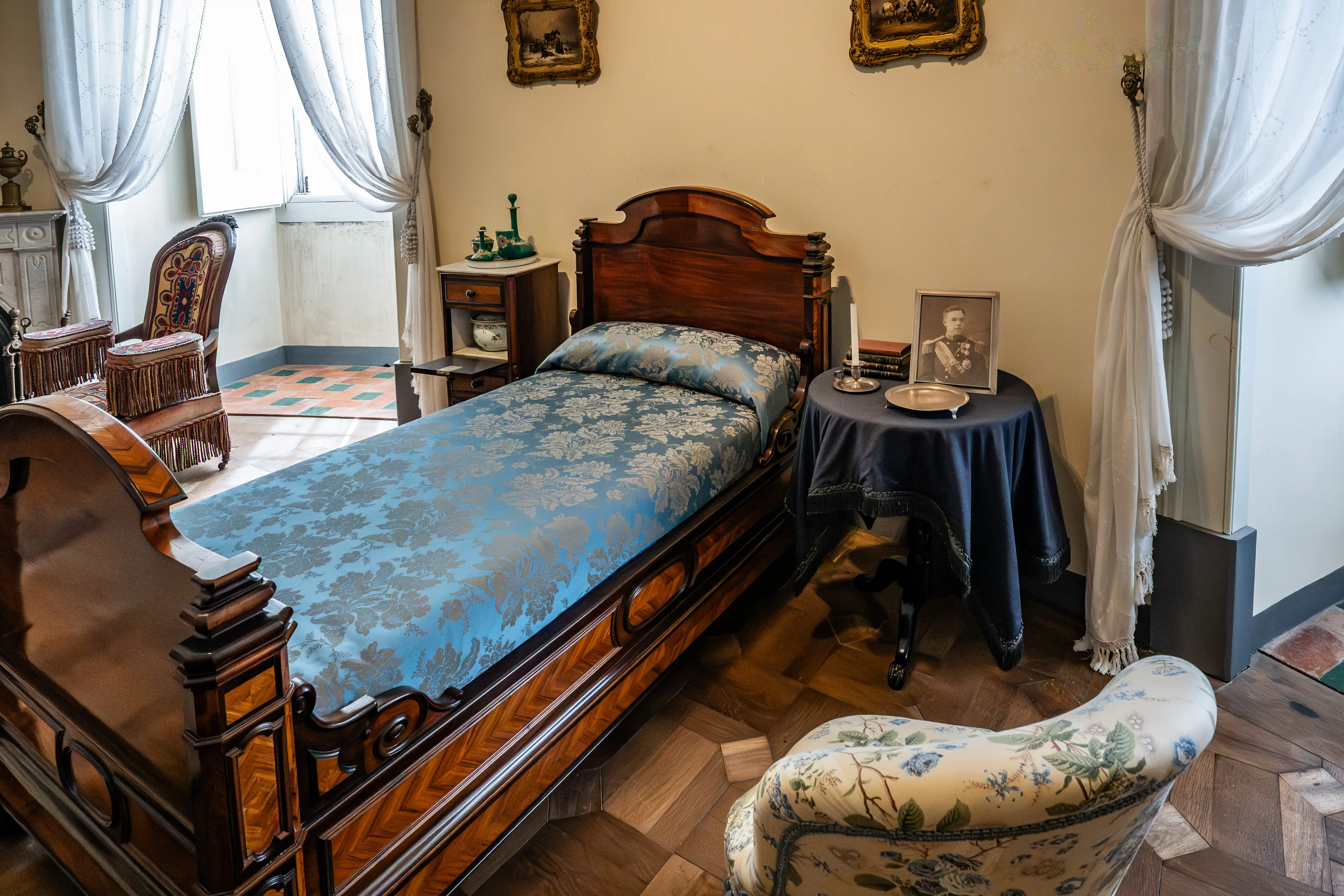
a The Palácio da Pena is more than just a beautiful building—it’s a symbol of Portugal’s Romantic era and the vision of King Ferdinand II, a German prince who fell in love with Portugal and its culture. Ferdinand was a patron of the arts and a collector of antiques, and the palace reflects his eclectic tastes and passion for history. The interiors are lavishly decorated with frescoes, tiles, and furniture from across Europe and the Middle East, creating a rich tapestry of art and design.he palace also hosted some of the most important figures of 19th-century Europe. Queen Victoria of England visited in 1896, and the palace was a favorite retreat for Portuguese royalty until the fall of the monarchy in 1910. After the republic was proclaimed, the palace was abandoned for a time but was later restored and opened to the public in the 20th century. Today, it is a UNESCO World Heritage Site (as part of the Cultural Landscape of Sintra) and one of Portugal’s most visited monuments
A Palace of Mystery and Legend
The Palácio da Pena is shrouded in mystery and legend. One of the most famous stories is that of the Initiation Well, a ritualistic underground tunnel built by King Ferdinand II as part of his interest in Freemasonry and esoteric traditions. The well’s spiral staircase descends 27 meters (88 feet) into the earth, symbolizing a journey of initiation and rebirth. Some believe the well was used for Masonic ceremonies, while others see it as a metaphor for the soul’s descent into the underworld and its subsequent rebirth into enlightenmentAnother legend tells of the ghost of Queen Maria II, who is said to wander the palace grounds on moonlit nights, her spirit lingering in the place she loved so dearly. Whether these stories are true or not, they add to the mystique and allure of the Palácio da Pena, making it a place of wonder and intrigue
